Nintendo Palworld Patent Lawsuit in 2026: The Complete Status Report
Quick Answer
- Nintendo and The Pokémon Company are suing Pocketpair over patent claims, not copyright claims.
- No consumer settlement or payout exists; this is a business-to-business patent dispute.
- The case is in Japanese courts, with no claim deadline or compensation fund for gamers.
If you play Palworld or follow gaming news, you have likely seen headlines about Nintendo suing Pocketpair. You may have also seen misleading posts suggesting a class action settlement or a payout for players. The verified reality is simpler: Nintendo filed a patent infringement lawsuit against Pocketpair in Japan, and that case is still working through the court system in 2026.
This is not a consumer class action. It is a corporate patent dispute. No settlement administrator exists. No claim form exists. No fund has been created to pay Palworld players. Any post claiming otherwise is not based on the court record.
The lawsuit matters to gamers because it could affect Palworld’s availability, future updates, and business model. But it does not create a payout for you. This guide explains what is actually happening, what patents are at issue, and what to watch for in the months ahead.
The Facts
| Case | Nintendo Co., Ltd. and The Pokémon Company v. Pocketpair, Inc. |
| Status | Active patent infringement litigation in Tokyo District Court |
| Fund Size | Not applicable; no consumer settlement fund |
| Est. Per Person | Not applicable; no consumer claims process |
| Claim Deadline | Not applicable; no consumer claims |
| Administrator | Not applicable |
| Proof Needed | Not applicable |
Is the Nintendo Palworld Patent Lawsuit Real?
Yes, the Nintendo Palworld patent lawsuit is real. Nintendo and The Pokémon Company filed a patent infringement suit against Pocketpair, the Japanese developer of Palworld, in the Tokyo District Court on September 18, 2024.
The case seeks an injunction against Palworld sales and distribution in Japan, plus damages. Nintendo has not disclosed the specific dollar amount it is seeking. The lawsuit is a civil patent action, not a criminal case, and not a class action.
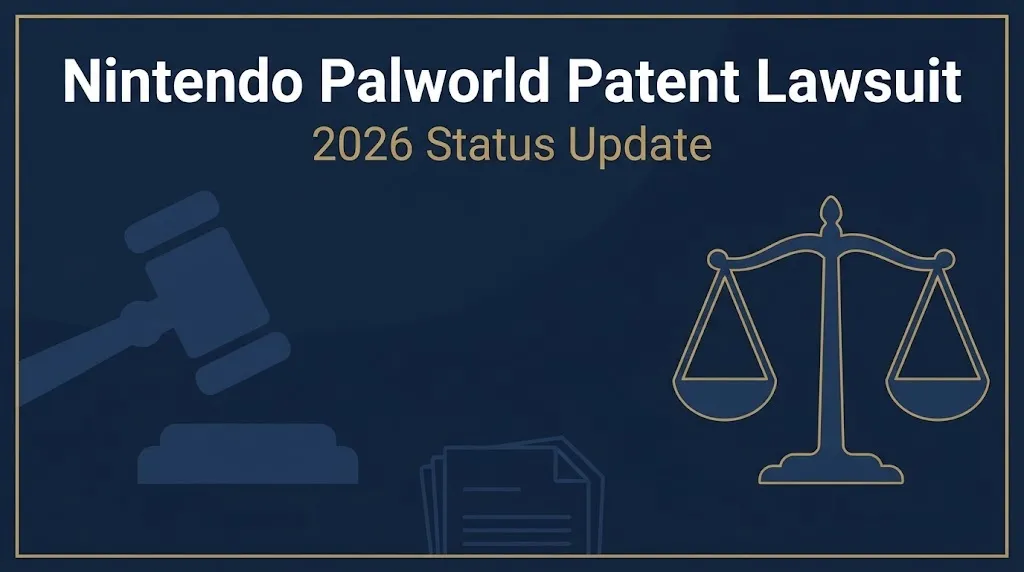
The court has not issued a final ruling as of August 15, 2026. Both sides have filed arguments, and the case continues through the Japanese patent litigation process. Japanese patent cases often take two to four years from filing to trial judgment, which puts a possible ruling somewhere in the 2026 to 2028 window.
This case is separate from any copyright claims. Nintendo chose patent law, not copyright law, for a strategic reason: patents are easier to prove in Japanese courts for game mechanics, while copyright protects creative expression.
What Patents Are at Issue in the Nintendo Palworld Case?
Nintendo’s lawsuit claims Pocketpair infringed multiple Japanese patents. The specific patent numbers were not listed in the initial public filing, but Nintendo later clarified in court documents that the case involves patents related to game mechanics, particularly creature capture and riding mechanics.
The patents at issue cover systems for throwing an item to capture a creature in a virtual field, and mechanics for riding a captured creature. These are Japanese patents, not U.S. patents, which is why the case sits in the Tokyo District Court rather than an American court.
Pocketpair has argued that the patents are invalid or that Palworld does not infringe them. The company has also pointed out that Palworld was in development and publicly shown before Nintendo obtained some of the patents, a priority argument that courts take seriously in patent cases.
The technical details matter less than the strategic picture. Nintendo is using patent law to target specific game mechanics rather than the broader concept of a creature-collecting game. That approach gives Nintendo a narrower but potentially stronger legal claim.
- Throw-item-to-capture mechanic patent
- Riding-captured-creature mechanic patent
- Japanese Patent Office filings, not U.S. or EU patents
- Priority dates and prior public disclosure disputes
Key Takeaway: Nintendo’s case targets specific game mechanics through Japanese patents, not the general idea of Palworld.
What Is the Current Status of the Nintendo Palworld Lawsuit in 2026?
The Nintendo Palworld lawsuit remains active and unresolved as of August 15, 2026. No final judgment, settlement agreement, or injunction order has been confirmed through Japanese court records or official company statements.
Pocketpair continues to operate Palworld and has released updates since the lawsuit was filed. The game remains available for purchase in most markets. That indicates no injunction has been granted against the game’s ongoing sales.
Nintendo has not issued a major public statement about the case since the initial filing. The Pokémon Company has similarly stayed quiet. This silence is normal for Japanese corporate litigation, where companies avoid public comment while cases are pending.
The next likely milestone is either a court hearing date announcement, a settlement filing, or a trial ruling. None of those have been confirmed. Legal news outlets covering Japan report the case as ongoing with no resolution date set.
Key Takeaway: The case is active but unresolved; Palworld remains on sale and no ruling has been issued.
Does the Nintendo Palworld Lawsuit Create Any Payout for Players?
No, the Nintendo Palworld lawsuit does not create any payout, settlement fund, or compensation process for players. This is a business-to-business patent dispute between Nintendo, The Pokémon Company, and Pocketpair.
Consumer class actions create settlement funds. Patent lawsuits between companies do not. If Nintendo wins damages, that money goes to Nintendo and The Pokémon Company, not to Palworld players. If Pocketpair wins, the case ends with no payment to anyone except possibly attorney fees.
Any article or social media post claiming a Palworld player settlement exists is false. No claims administrator has been appointed. No class has been certified. No court has approved any consumer payout. Those are requirements for a real consumer settlement, and none exist here.
The confusion likely comes from a pattern where gaming lawsuits get misreported as class actions. A corporate patent suit, a copyright dispute, and a consumer class action are three different legal things. This case is the first one.
Reality Check: Nintendo suing Pocketpair is a corporate patent fight, not a consumer settlement. No one is mailing you a check because you played Palworld. Any site asking you to register for a Palworld payout is collecting your data for something else.
Key Takeaway: There is no player payout, no settlement fund, and no claims process in this patent lawsuit.
Could the Nintendo Palworld Case Shut Down the Game?
An injunction is possible but not confirmed. Nintendo asked the Tokyo District Court to stop Palworld sales and distribution in Japan. If the court grants that request, Pocketpair could be forced to suspend Palworld sales in the Japanese market.
A Japan-only injunction would not automatically stop sales elsewhere. Pocketpair sells Palworld globally through Steam and other platforms. A Japanese court order applies to Japan. Other markets would remain unaffected unless Nintendo files similar suits in other jurisdictions.
Pocketpair has continued updating and selling Palworld throughout 2025 and 2026. That suggests no injunction has been granted as of the latest confirmed information. The company also launched Palworld on additional platforms, which signals confidence in its legal position.
The practical risk for players is not an immediate shutdown. It is the long-term possibility that a Nintendo win forces Pocketpair to change Palworld’s capture or riding mechanics, or pay licensing fees that reshape the game’s development roadmap.
Key Takeaway: A Japan injunction is possible but not granted; Palworld continues selling and updating normally in 2026.
How Did the Nintendo Palworld Dispute Start?
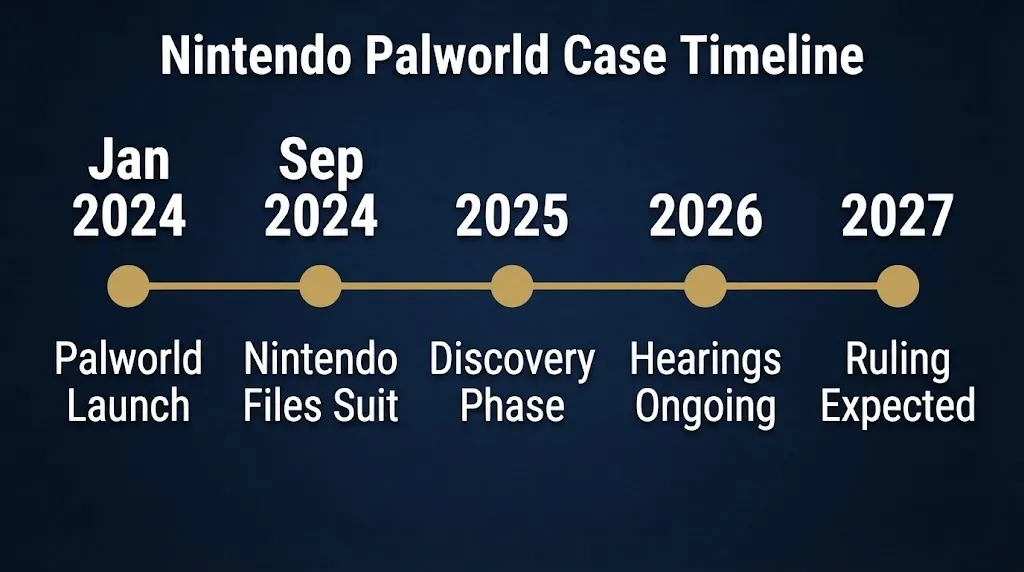
The dispute started when Palworld launched in January 2024 and broke sales records. The game’s creature designs and capture mechanics drew immediate comparisons to Pokémon. Nintendo and The Pokémon Company received pressure from fans and investors to respond.
Nintendo did not sue immediately. The company spent months evaluating its legal options before filing the patent suit in September 2024. That delay was strategic. Nintendo needed to identify which specific patents Pocketpair might infringe and build a case that would survive scrutiny.
Pocketpair’s CEO publicly stated the company had not received any communication from Nintendo before the lawsuit was filed. That statement suggests the filing came as a surprise to the developer.
The lawsuit’s timing also mattered. Palworld had already sold tens of millions of copies by September 2024. Nintendo’s damages claim, if successful, could be substantial based on those sales figures.
- Palworld launched January 19, 2024, selling millions of copies in days
- Nintendo filed the patent suit September 18, 2024
- Pocketpair said it had no prior notice of the legal action
- The suit focuses on capture and riding mechanics, not creature designs
Key Takeaway: The dispute began with Palworld’s explosive 2024 launch, but Nintendo waited eight months to file.
What Does the Nintendo Palworld Case Mean for Palworld Players?
For players, the Nintendo Palworld case means uncertainty, not immediate change. The game remains playable, updates continue, and no court has ordered any modification to Palworld’s mechanics.
The real risk sits further out. If Nintendo wins a final judgment, Pocketpair may need to alter the capture or riding systems in Palworld. That could mean gameplay changes, feature removals, or licensing fees that slow development.
Pocketpair has publicly stated it will fight the case. The company has also diversified its legal position by arguing patent invalidity and prior public disclosure. Those defenses, if successful, would end the case without any changes to Palworld.
Players should watch for specific signals. A Japanese court ruling, a settlement announcement, or a Pocketpair statement about gameplay changes are the things that matter. Until one of those happens, Palworld continues as it has been.
Key Takeaway: Players face no immediate change; the case creates long-term uncertainty rather than short-term disruption.
Why Did Nintendo Sue Over Patents Instead of Copyright?
Nintendo sued over patents because patent claims are easier to win in Japanese courts for game mechanics. Copyright protects creative expression like character designs and story elements. Patent law protects functional inventions like specific gameplay systems.
The distinction is practical. Proving that Palworld copied Pokémon character designs would require Nintendo to show substantial similarity under copyright law, a subjective standard. Proving patent infringement only requires showing that Palworld’s systems fall within the scope of Nintendo’s patent claims, a more technical and objective analysis.
Nintendo also holds a large portfolio of Japanese patents covering game mechanics. The company has patented everything from throwing mechanics to creature capture systems to riding interfaces. Those patents gave Nintendo a ready-made legal toolkit.
Pocketpair has argued that some of Nintendo’s patents were filed after Palworld was publicly announced, which would undermine their validity. The Japanese Patent Office and the Tokyo District Court will weigh those arguments in due course.
Key Takeaway: Nintendo chose patent law because it is a stronger, more technical claim for game mechanics than copyright.
What Happens Next in the Nintendo Palworld Patent Lawsuit?
The next phase of the case depends on the Tokyo District Court’s scheduling. No confirmed hearing dates or ruling dates have been announced. Japanese patent litigation typically moves through several stages before a final judgment.
Expected late 2026: Further technical hearings on patent validity and infringement scope.
Expected early to mid 2027: Possible Tokyo District Court first-instance ruling.
Expected late 2027 to 2028: Appeal to the Intellectual Property High Court, whichever side loses.
Expected 2028 or later: Final resolution or settlement, depending on appeal outcomes.
These dates are estimates based on typical Japanese patent case timelines, not confirmed court orders. The case could settle at any point. Nintendo and Pocketpair could reach a licensing deal that ends the litigation without a public ruling.
Frequently Asked Questions
Is the Nintendo Palworld lawsuit still ongoing in 2026?
Yes, the case remains active in the Tokyo District Court.
No final ruling or settlement has been confirmed.
Both companies continue with normal business operations.
Will I get money from the Nintendo Palworld lawsuit?
No, there is no consumer settlement or payout fund.
This is a patent dispute between companies.
Any post claiming player compensation is false.
What patents did Pocketpair allegedly infringe?
Nintendo claims infringement of Japanese patents for capture and riding mechanics.
The specific patent numbers are in the Tokyo court record.
Pocketpair disputes both validity and infringement.
Could Palworld be shut down?
A Japan-only sales injunction is possible but not granted.
No court order currently blocks Palworld sales anywhere.
Global availability remains unaffected as of August 2026.
Why didn’t Nintendo sue over copyright?
Nintendo chose patent claims because they are easier to prove for game mechanics.
Copyright requires showing substantial similarity in creative expression.
Patents cover functional systems, which is what Nintendo targeted.
When will the Nintendo Palworld case end?
No confirmed end date exists.
Japanese patent cases often take two to four years.
A first-instance ruling could come in 2027.
Where can I check official updates on the case?
Check the Tokyo District Court’s public records for case filings.
Nintendo and Pocketpair issue official statements through their investor relations pages.
Legal news outlets covering Japanese IP litigation provide reliable updates.
The Nintendo Palworld patent lawsuit is real, active, and entirely corporate. It does not involve consumer claims, payouts, or a settlement fund. Your role as a player is to watch for official rulings and gameplay changes, not to file any claim.
The most important date to remember is that no deadline applies to you. This is a business dispute. Keep playing, follow official announcements, and ignore any post that promises free money from a Nintendo or Palworld settlement.