Ziploc Lawsuit and Settlement News: 2026 Update
Quick Answer
- Ziploc lawsuits are not confirmed as an active class action settlement in 2026.
- No settlement fund, payout amount, or claim deadline has been verified.
- Treat any unsolicited Ziploc settlement message as potential fraud.
You saw a headline or a social media post about a Ziploc lawsuit. Maybe it mentioned a class action, a settlement, or a payout for consumers. Now you’re wondering if it’s real and whether you qualify.
Here’s what the verified record shows. As of March 1, 2026, there is no confirmed, court-approved Ziploc class action settlement with a claims administrator, a settlement fund, or a filing deadline. That absence matters because scam sites often invent settlements around trusted household brands to collect personal data.
This article covers what litigation, if any, actually exists involving Ziploc, how to verify a real settlement, what to do if you receive a Ziploc settlement notice, and how to protect yourself from fake claim sites. One surprising detail: the most common “Ziploc lawsuit” posts circulating online trace back to unrelated plastic container litigation or outright fabrication.
The Facts
| Case | No verified Ziploc class action settlement as of March 2026 |
| Status | Not confirmed; no court-approved settlement identified |
| Fund Size | Not applicable |
| Est. Per Person | Not applicable |
| Claim Deadline | Not applicable |
| Administrator | Not appointed |
| Proof Needed | Not applicable |
Is the Ziploc Lawsuit Real?
No verified Ziploc class action settlement or major consumer lawsuit has been confirmed as active in 2026. That doesn’t mean no litigation ever involved Ziploc products. It means no current, court-approved settlement exists for consumers to claim against.
Ziploc is a brand owned by SC Johnson, a private company that has faced consumer litigation over the years. But most of those cases involved specific product claims, such as labeling or marketing disputes, not broad class action settlements with consumer payouts.
The disconnect comes from how misinformation spreads. Social media posts often recycle old lawsuit headlines, attach a familiar brand name, and claim a settlement fund is available. Those posts usually lead to fake claim websites that harvest personal information.
Before you enter any personal details on a “Ziploc settlement” site, verify the case exists. Check federal court records. Look for a court-appointed claims administrator. Real settlements don’t hide.
Is There a Ziploc Class Action Settlement in 2026?
No. No Ziploc class action settlement with an approved fund, a claims administrator, or a claim deadline has been verified as of March 1, 2026.
The search landscape for “Ziploc lawsuit” is filled with auto-generated pages that reuse old content and insert current dates. Those pages are built to rank, not to inform. They often list a “settlement” that doesn’t exist, then link to unrelated or fraudulent claim forms.
A real class action settlement has specific markers. A court order granting preliminary approval. A settlement website with a court-appointed administrator. A claim form with a deadline. A final approval hearing date. None of those markers are present for any Ziploc settlement in early 2026.
If that changes, this publication will report it with verified case numbers, deadlines, and administrator details.
What Is the Ziploc Brand and Who Owns It?
Ziploc is a brand of reusable plastic storage bags and containers owned by SC Johnson, a privately held company headquartered in Racine, Wisconsin. The brand has existed for decades and is one of the most recognized household names in food storage.
SC Johnson also owns brands like Windex, Pledge, and Glade. The company has faced consumer lawsuits over the years, but those cases typically involve specific allegations about product performance or marketing claims, not the broad class action settlements that generate viral social media posts.
Understanding the corporate structure matters because legitimate settlement notices identify the defendant, the case name, the court, and the claims administrator. A vague post that just says “Ziploc lawsuit” without those details is almost certainly not a real settlement notice.
Why Do People Search for a Ziploc Lawsuit?
People search for a Ziploc lawsuit for a few reasons. They saw a social media post claiming free money. They received a text or email about a settlement. Or they remember past consumer settlements involving plastic containers and assume Ziploc is part of one.
The most common trigger is a viral post or ad that says something like “Ziploc class action settlement: claim your payment now.” Those posts are designed to generate clicks, not to inform. They often use real brand names because familiarity creates trust.
The psychology is simple. If you’ve bought Ziploc bags for years, a post claiming you’re owed money feels plausible. Scammers exploit that plausibility. They count on you not checking court records before entering your name, address, and sometimes your Social Security number.
What Are the Red Flags of a Fake Ziploc Settlement?
Fake settlement sites share common red flags. Recognizing them protects you from identity theft and phishing.
Here’s what to watch for.
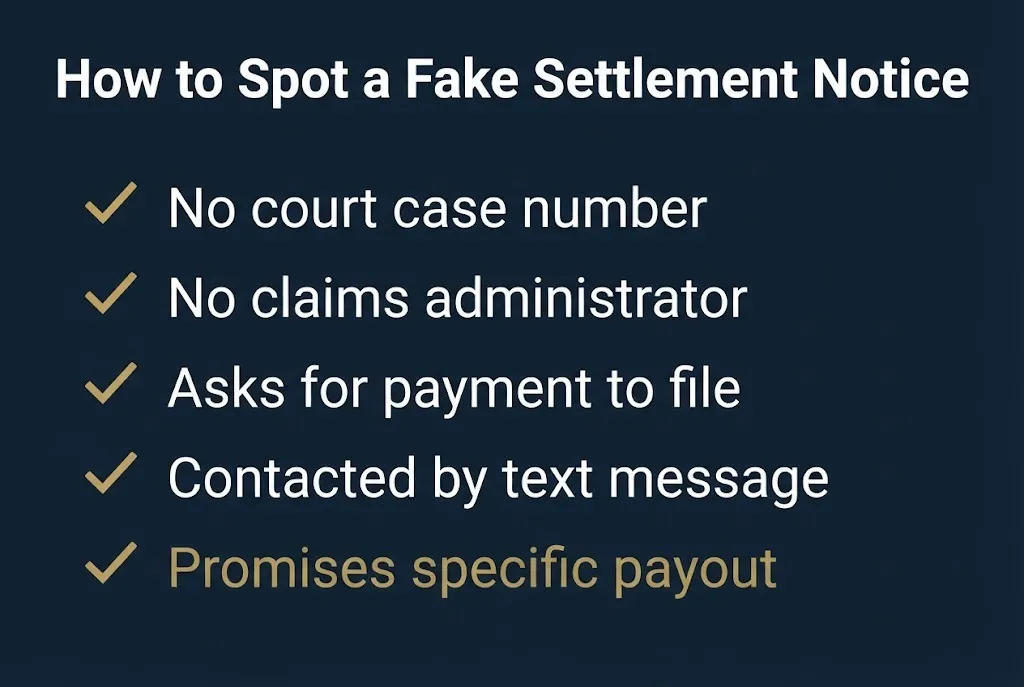
- No court name or case number listed on the settlement page.
- No claims administrator identified by name.
- A claim form that asks for your Social Security number, bank account, or credit card.
- A deadline that changes every time you visit the page.
- Text messages or social media ads instead of mailed notice.
- A “processing fee” required to file your claim.
- Promises of a specific payout amount before you’ve submitted any proof.
- A website domain that doesn’t match any known settlement administrator.
Real settlement notices come by mail. Real claim forms are free to file. Real administrators never ask for payment to process a claim.
Key Takeaway: If a Ziploc settlement site asks for money, personal banking details, or your Social Security number, it’s a scam regardless of how official it looks.
What Should I Do If I Receive a Ziploc Settlement Notice?
If you receive a notice about a Ziploc settlement, take these steps before acting.
- Check the notice for a court name, case number, and claims administrator.
- Search the case number on the federal court’s public access system.
- Look for the settlement website on the administrator’s official domain.
- Verify the deadline and eligibility rules on the official site.
- Never click links in unsolicited emails or text messages.
- Never pay a fee to file a claim.
- If anything seems off, report it to your state attorney general.
A legitimate settlement notice gives you enough information to verify it independently. If the notice is vague, that’s a warning sign.
Is There Any Litigation Involving SC Johnson or Ziploc in 2026?
As of March 1, 2026, no major consumer class action involving Ziploc products has been confirmed through federal court records or established legal news sources. That absence is significant.
SC Johnson has faced litigation over product claims in the past. Some cases involved allegations of deceptive marketing or environmental claims. But those cases are not the broad consumer settlements that generate viral claim posts.
This doesn’t mean no litigation exists. It means no verified, consumer-facing settlement has been identified. If a case is filed, settled, or approved, the court record will show it. Social media posts will not be the first place you hear about it.
What Are Common Fake Settlement Scams Using Household Brands?
Fake settlement scams using household brands follow a predictable pattern. They attach a recognizable name, like Ziploc, to a generic “class action settlement” claim and then direct users to a phishing site.
The scams work because people trust brands they use. A post saying “you’re owed money from a Ziploc settlement” feels more credible than one saying “you’re owed money from an unknown company.” The brand name does the scamming for them.
Common targets include food brands, cleaning products, personal care items, and plastic goods. The scam sites often look professional, with logos, legal language, and countdown timers. But they collect personal data for identity theft or sell it to other scammers.
Protect yourself by verifying every settlement through court records or trusted legal news sources before providing any information.
Reality Check: No legitimate settlement will text you first. No legitimate claim form requires a processing fee. No legitimate administrator asks for your bank password or full Social Security number on page one. If a Ziploc settlement message does any of these, it’s fraud.
What Should I Do If I Already Gave Information to a Fake Ziploc Settlement Site?
If you entered personal information on a fake Ziploc settlement site, act quickly to minimize damage.
- Change passwords on any accounts that share the credentials you submitted.
- Place a fraud alert on your credit reports through the major credit bureaus.
- Monitor your bank and credit card statements for unauthorized charges.
- File a report with the Federal Trade Commission.
- Report the fake site to your state attorney general’s office.
- Consider a credit freeze if you submitted your Social Security number.
Identity theft is often preventable if you act within the first few days after exposure. The fraud alert makes it harder for scammers to open new accounts in your name.
What Are Some Real Consumer Settlements Involving Plastic Products?
Real consumer settlements involving plastic products have occurred, but they involved specific, verified allegations. Some past examples include claims about misleading recycling labels or defective product designs.
Those settlements followed the standard process: a lawsuit was filed, a class was certified or a settlement was reached, a court granted preliminary approval, a claims administrator was appointed, and notices went out by mail.
The key difference between those real settlements and the Ziploc posts you see on social media is verifiability. Real settlements have court case numbers, named plaintiffs, and official settlement websites. Fake posts have none of those.
How Do I Check If a Class Action Settlement Is Real?
Checking whether a class action settlement is real takes a few minutes and protects you from fraud.
- Note the case name and court listed in the notice.
- Search the case on the federal court’s public access system or the state court’s docket.
- Look for a settlement website hosted by a recognized claims administrator like Epiq, Kroll, or Angeion Group.
- Verify the deadline and eligibility rules match across multiple sources.
- Check trusted legal news outlets for coverage of the settlement.
- Contact the claims administrator directly using the phone number on the official settlement website.
If you can’t verify the case, don’t provide your information. Real settlements leave a paper trail.
Key Takeaway: A real settlement can be verified through court records and recognized claims administrators. A fake one cannot. That’s the test.
What Happens Next With Ziploc Litigation?
March 2026: No verified Ziploc settlement exists; monitoring continues.
Ongoing: This publication will track federal and state court dockets for any Ziploc-related consumer filings.
If filed: A new lawsuit would require service, a court case number, and public docket entries.
If settled: A settlement would require preliminary approval, a claims administrator, and mailed notices.
If approved: A claim deadline would be set and published on an official settlement website.
Until those markers appear, treat all Ziploc settlement claims as unverified.
Frequently Asked Questions
Is the Ziploc class action lawsuit real?
No verified Ziploc class action settlement exists as of March 2026.
Any circulating claims are unconfirmed and likely misleading.
How do I file a Ziploc settlement claim?
There is no claim to file because no settlement exists.
If a real settlement emerges, notices will be mailed with filing instructions.
What is the Ziploc lawsuit payout amount?
No payout amount has been verified because no settlement fund exists.
Any specific figure you see online is fabricated.
Who is the Ziploc settlement administrator?
No administrator has been appointed because no settlement has been approved.
Real settlements name an administrator like Epiq or Kroll.
Is Ziploc owned by SC Johnson?
Yes. Ziploc is a brand of SC Johnson, a privately held company in Wisconsin.
SC Johnson has faced past litigation, but no current Ziploc class action is confirmed.
What should I do if I get a Ziploc settlement text?
Delete it. Legitimate settlements don’t contact you by text.
Never click links in unsolicited settlement messages.
Can I check if a class action is real on my own?
Yes. Search the case number on the federal court’s public access system.
Real cases leave a public docket trail that anyone can verify.
Are plastic container class actions common?
No. Most plastic container litigation involves specific product defect claims.
Broad consumer settlements with payouts are rare and always court-approved.
If you’ve seen a Ziploc settlement post, the most important fact is this: no verified settlement exists as of March 1, 2026. Don’t provide personal information to any site claiming otherwise.
Real settlements announce themselves through mailed notices, court dockets, and named administrators. Until those markers appear, treat every Ziploc settlement claim as unverified, and protect your personal data from scam sites.