Is a civil litigation defense lawsuit attorney legit or a scam?
Quick Answer
- Civil litigation defense means hiring a lawsuit attorney to respond to a complaint filed against you.
- Attorney costs vary widely, from flat fees to $200 to $700 per hour, depending on case complexity.
- The most important deadline is the one in your summons, usually 20 to 30 days to respond.
A lawsuit attorney for civil litigation defense is the lawyer you hire after someone sues you. The court gives you a short window to respond, and missing it can mean an automatic loss.
If you were served with a complaint, your first job is not to win the case. It is to avoid a default judgment. In most state and federal courts, you have 20 to 30 days to file an answer or a motion.
This article covers what a civil litigation defense attorney actually does, what it costs in 2026, how to check if a lawyer is legitimate, and the exact steps to take after being served. One surprising verified detail: many people pay nothing for the first consultation and still never call, which is the single most expensive mistake in a lawsuit.
The Facts
| Case | Civil litigation defense services, no single class action |
| Status | Active regulatory focus on fee transparency in 2026 |
| Fund Size | Not applicable, private attorney fees, not a settlement |
| Est. Per Person | $200 to $700 per hour, flat fees $3,000 to $75,000 |
| Claim Deadline | Court response deadline, typically 20 to 30 days after service |
| Administrator | Not applicable, no settlement administrator |
| Proof Needed | Summons, complaint, any contracts or communications |
Is a civil litigation defense lawsuit attorney legit or a scam?
A civil litigation defense attorney is legitimate if licensed and in good standing with the state bar. You can verify this in under two minutes.
Every state has a bar directory. Search the lawyer’s name, check the license status, and look for discipline history. In 2026, several states including California and Florida added fee disclosure rules because complaints about surprise legal bills kept rising.
Scam risks exist, but they usually come from people posing as lawyers after a data breach or accident. They cold-call, demand upfront cash, and promise to erase a lawsuit that does not exist. A real defense attorney never guarantees an outcome.
Key Takeaway: Verify the law license before paying anything, and never trust a caller who says you are being sued but cannot name the court.
How much does a civil litigation defense attorney cost in 2026?
Most civil defense attorneys charge $200 to $700 per hour. Flat fees run $3,000 to $75,000 depending on case type and stage.
Small disputes like breach of contract under $50,000 often cost $5,000 to $15,000 through trial. Complex commercial cases can exceed $100,000. Many lawyers now offer unbundled services, where you pay only for drafting an answer or one hearing.
A 2026 survey of legal billing data showed the median hourly rate for civil defense work in major metros hit $385. Rural rates stayed closer to $225. Retainers typically start at $2,500 to $10,000.
| Fee Type | Typical Range | Best For |
| Hourly | $200 to $700 per hour | Ongoing, contested cases |
| Flat fee | $3,000 to $75,000 | Motions, answers, simple cases |
| Retainer | $2,500 to $10,000 upfront | Hourly representation |
| Contingency | Rare for defense, used in counterclaims | Counterclaim plaintiffs |
Defense work is almost never contingency-based. You pay as the case moves. Some firms offer payment plans, but they still require an initial deposit.
Key Takeaway: Ask for a written fee agreement with the scope of work spelled out before the first court appearance.
How much could a defense attorney save you in a civil lawsuit?
A defense attorney can save more than their fee by preventing default judgments, inflated damages, and missed deadlines. The savings are often indirect but real.
If you ignore a lawsuit, the plaintiff can get a default judgment for the full amount demanded. Courts rarely second-guess that later. Paying $5,000 for a defense that knocks a $60,000 claim down to $15,000 is a gain, not a cost.
In 2026, court data from several large counties showed default judgments requested in roughly 30 percent of civil filings. Most were in cases where the defendant never responded. That is the most expensive silence in the legal system.
Reality Check: No one can guarantee you will win or settle for pennies
Promises like “we make lawsuits disappear” are marketing, not reality. A legitimate lawyer gives you options, odds, and costs, never a guaranteed outcome. If someone asks for payment before checking the court docket, walk away.
How do I file a response or hire a civil litigation defense attorney?
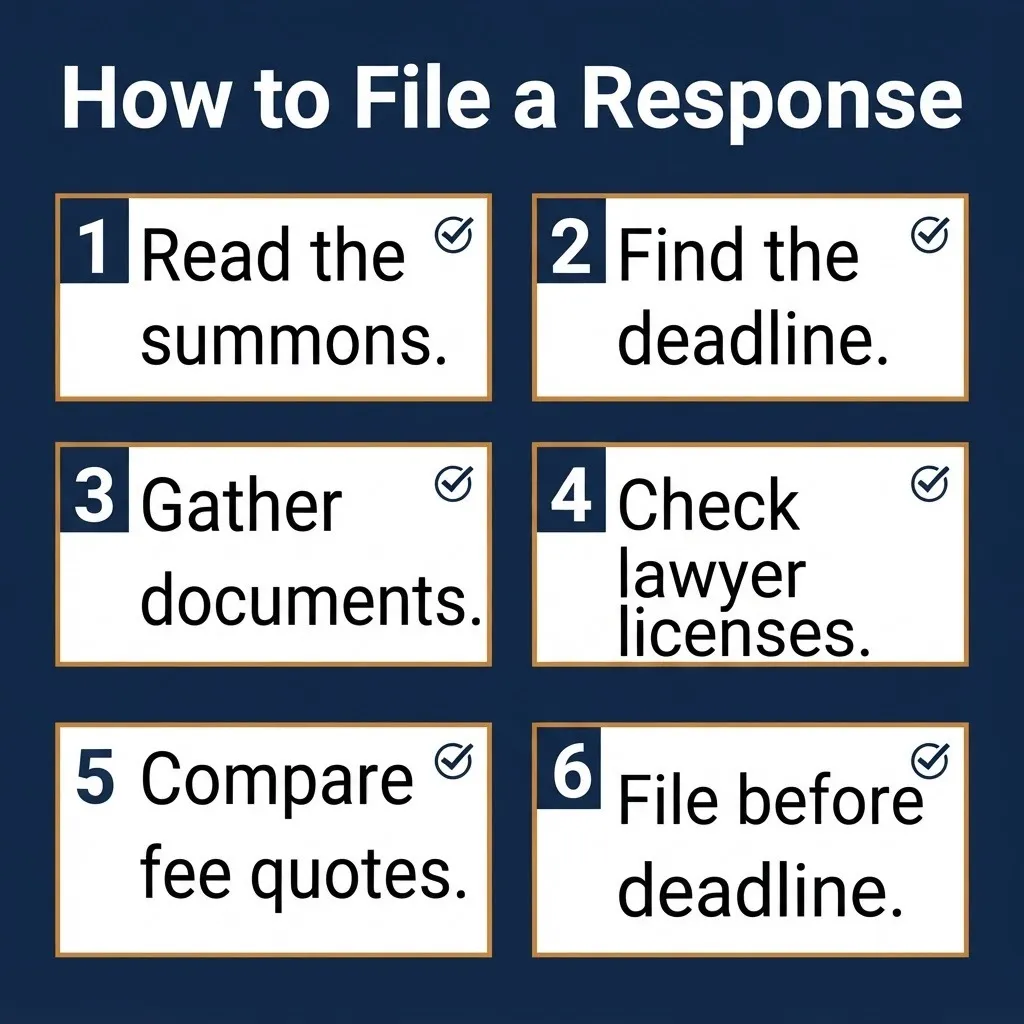
When you are served, act in this order.
- Read the summons and find the response deadline.
- Mark the deadline on a calendar, at least five days early.
- Gather every document named in the complaint.
- Search state bar directories for licensed defense lawyers.
- Call three firms and ask about flat fees or unbundled services.
- Choose one and sign a written fee agreement.
- Let your attorney file the answer or motion before the deadline.
Do not call the plaintiff’s lawyer and negotiate on your own if you already have representation. Once an attorney is on record, opposing counsel usually cannot contact you directly.
Key Takeaway: The response deadline controls everything. Hiring a lawyer one week late can do more damage than hiring no lawyer at all.
What is the civil litigation defense process after you hire an attorney?
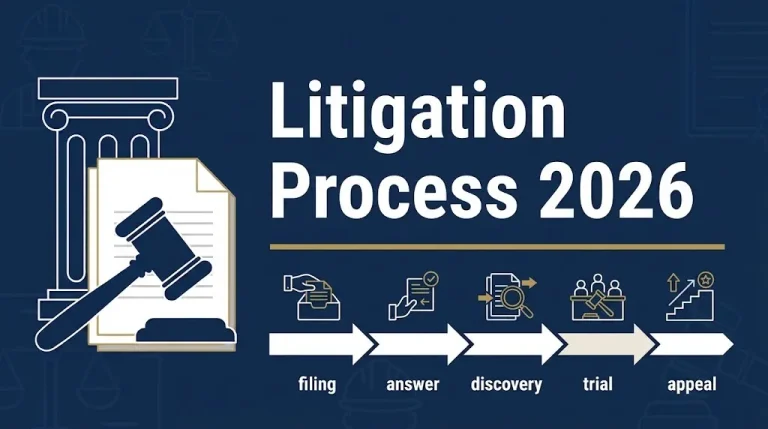
Your attorney files an answer, then discovery begins. Discovery is where both sides exchange documents, answer written questions, and sit for depositions.
After discovery, many cases hit summary judgment. The judge decides if there are real factual disputes. If not, the case ends without trial. If yes, mediation usually follows.
Most civil cases never reach trial. According to federal court data through 2025, under 2 percent of civil filings went to verdict. The rest settled, were dismissed, or ended on motions.
Can I defend myself in a civil lawsuit without a lawsuit attorney?
You can, but courts hold self-represented defendants to the same rules as lawyers. There is no leniency for not knowing procedure.
Small claims court is the exception. Many states bar lawyers from small claims entirely or limit their role. For district or superior court cases, self-representation gets dangerous fast.
One wrong filing can waive defenses you never knew you had. That is why even a flat-fee unbundled attorney, paid just to draft the answer, beats guessing.
Key Takeaway: Self-representation makes sense in small claims, not in general civil court where rules of evidence and procedure apply in full.
What is the difference between a plaintiff attorney and a civil defense attorney?
A plaintiff attorney files the lawsuit and tries to win money for the person who sued. A civil defense attorney represents the person or business being sued.
Their incentives differ. Plaintiff attorneys often work on contingency and only get paid if they win or settle. Defense attorneys usually bill hourly or by flat fee because they are paid to reduce or defeat a claim.
Knowing the difference matters when you read legal advertising. “We sue for you” is plaintiff work. “We defend against claims” is defense work. You need the second one if you were served.
How do I know if a lawsuit filed against me is real?
Check the court docket. Every legitimate civil lawsuit has a public case number and a court where it was filed.
If someone says you are being sued but cannot provide the court name and case number, treat it as unverified. If you receive papers by email only, check whether your state allows electronic service. Many states still require physical service for the initial complaint.
You can search civil court records by your name or business name. Most state and federal courts have free online access to basic docket information.
What happens if I ignore a civil lawsuit?
You likely lose by default. The court enters a judgment for the amount the plaintiff requested. Then collection efforts begin, including wage garnishment, bank levies, and property liens.
Default judgments are hard to undo. You usually need a strong excuse for missing the deadline, like never being properly served. “I was busy” does not work.
In many states, you have a short window to ask the court to set aside a default. But the clock starts the moment you learn of the judgment, and the standard is high.
Key Takeaway: The cheapest response is always the one filed on time, even if it is just a one-page answer drafted with unbundled help.
What types of cases do civil litigation defense attorneys handle?
They handle any civil case where someone seeks money or a court order against you.
Common types include breach of contract, real estate disputes, employment defense, personal injury defense, debt collection, fraud allegations, and business partner disputes. Insurance companies also hire defense lawyers when their policyholders get sued.
Some defense lawyers specialize. A lawyer who defends car accident cases may not take commercial lease disputes. Match the lawyer to the subject of the complaint.
How long does a civil lawsuit take to resolve?
Plan for 12 to 24 months from filing to resolution. Simple breach of contract cases can settle in six months. Complex commercial cases can run three years or more.
The biggest variable is discovery. If both sides fight over documents and depositions, months get added. Courts in 2026 still carry backlogs from pandemic-era delays in some jurisdictions.
Your attorney can often move for early dismissal. A motion to dismiss can end a case in 60 days if the complaint fails to state a legal claim.
Key Takeaway: The calendar is part of the cost. A case that drags on for two years burns fees even when you are right.
Are attorney fees recoverable if I win a civil lawsuit?
Usually not, unless a contract or statute allows it. The American rule says each side pays their own legal fees.
Some contracts include fee-shifting clauses. If the agreement says the prevailing party gets attorney fees, then winning can mean the other side pays part of your defense costs. Certain statutes, like consumer protection laws, also allow fee awards.
Ask your lawyer early whether fee recovery is possible in your case. It changes the settlement math and the incentive to fight.
What should I do before meeting a civil litigation defense attorney?
Prepare a simple file, not a story. Lawyers need facts, dates, and documents.
Bring the summons and complaint. Bring every contract, email, text, invoice, or photo related to the dispute. Write a one-page timeline of events in chronological order.
Do not spend hours preparing a speech. The lawyer will ask questions. Having the documents organized matters more than anything else you can do.
What is the difference between civil litigation defense and criminal defense?
Civil cases involve money and court orders. Criminal cases involve jail, fines, and prosecutors. You need different lawyers for each.
A civil litigation defense attorney cannot represent you in a criminal matter unless they are also licensed and experienced in criminal defense. If a dispute could lead to criminal charges, say so in the first call. That changes strategy immediately.
Key Dates Timeline
September 2026: Multiple state bar associations continue fee transparency rule reviews for civil litigation retainers.
October to December 2026: Expected updated billing disclosure templates from the American Bar Association.
2027: Likely additional state rules requiring written fee agreements in all civil matters.
What Happens Next
Here is the expected path for 2026 civil litigation fee rules and practical deadlines.
- Now: If served, confirm your exact response deadline on the summons.
- Within 5 days: Contact at least two defense attorneys for fee quotes.
- Before deadline: File an answer, a motion, or a notice of appearance through counsel.
- Expected late 2026: More states adopt mandatory written fee disclosure forms.
- 2027: Courts in several circuits are expected to update local rules on electronic service and response timing.
Frequently Asked Questions
How fast do I need to hire a lawsuit attorney after being served?
Immediately. Most courts allow 20 to 30 days to respond, but the clock does not pause while you shop around.
Can a civil litigation defense attorney get my case dismissed?
Possibly. If the complaint fails to state a legal claim, a motion to dismiss can end the case early.
Is it worth hiring a lawyer for a small civil lawsuit?
Yes, for anything outside small claims court. An unbundled flat-fee lawyer can draft the answer without full representation.
What happens if a default judgment is entered against me?
You may be able to file a motion to set it aside, but you must act quickly and show a valid reason.
Do defense attorneys offer free consultations?
Many do, especially in consumer and small business cases. Ask before scheduling.
Can I sue someone while I am also being sued?
Yes, if your claim is a counterclaim arising from the same facts. Your attorney can evaluate that in the first week.
How do I check if my attorney has a disciplinary record?
Search the state bar website by license number or full name, and review any public discipline entries.
What is the most common mistake defendants make?
Ignoring the deadline. Default judgments are the quiet engine behind most collection nightmares.
The one action that matters today is checking your summons for the response deadline. Then call two or three licensed defense attorneys and ask about flat fees or unbundled help.
If you were served, remember the deadline is a hard wall, not a suggestion. Courts do not care how busy you were. They care whether you filed.