H1B Lawsuit 2026: What Is Verified, What Is Not, and Whether Any Settlement Exists
Quick Answer
- H1B lawsuits typically involve wage underpayment, visa denial challenges, or employer sponsorship disputes.
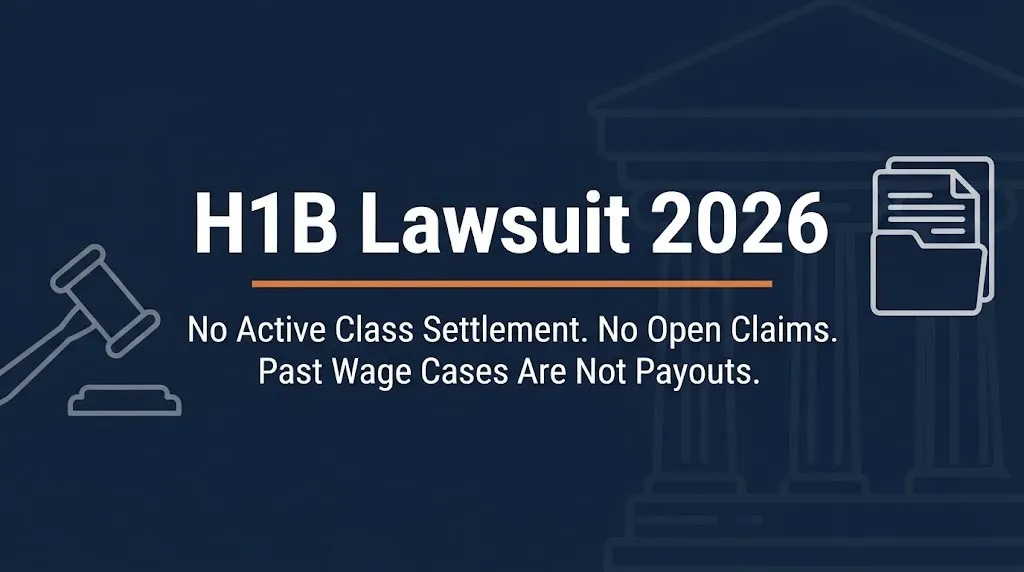
- No verified class action settlement with an open claims process exists as of March 18, 2026.
- Treat any circulating H1B settlement claim as unverified unless confirmed by a court docket.
You saw something about an H1B lawsuit. Maybe a headline, a forum post, or an ad suggesting you can claim money. You want to know if it is real.
The verified answer is that no active class action settlement exists. H1B litigation has happened before. Some cases involved wage disputes. Some involved visa denials. None have produced a current settlement fund with an open claims process.
This article explains what H1B lawsuits are, what they have covered in the past, and how to verify any legal claim before you share personal information.
The Facts
| Fact | Verified Value |
|---|---|
| Visa Type | H1B, specialty occupation worker |
| Past Litigation | Wage disputes, visa denial challenges |
| Current Class Settlement | None verified |
| Claim Deadline | None |
| Administrator | None |
What is an H1B visa?
The H1B visa allows U.S. employers to hire foreign workers in specialty occupations. The jobs typically require a bachelor’s degree or higher in a specific field. Technology, engineering, medicine, and finance are common H1B occupations.
The visa is employer-sponsored. The employer files a petition with U.S. Citizenship and Immigration Services. The worker cannot self-sponsor. The visa is tied to the employer.
H1B workers have legal rights. They must be paid the prevailing wage. They cannot be underpaid or exploited. When employers violate those rights, lawsuits can follow.
Key Takeaway: The H1B visa is a work permit with legal protections. Those protections can be enforced in court.
Is there an H1B lawsuit in 2026?
There is no verified active H1B class action settlement with an open claims process. Searches of federal court dockets do not return a pending class action settlement accepting claims.
H1B litigation has occurred in the past. Some cases challenged visa denial policies. Some alleged wage underpayment. Some involved employer misconduct. Those cases are individual or resolved, not current class settlements.
Any ad or website claiming you can file an H1B settlement claim right now is not verified.
Key Takeaway: Past litigation is not a current settlement. Check the docket before you believe the ad.
What H1B lawsuits have happened in the past?
The most common H1B lawsuits involve wage disputes. Employers must pay H1B workers the prevailing wage for their occupation and location. When employers pay less, workers can sue.
Some H1B lawsuits have challenged government policies. When the Trump administration tightened H1B rules, lawsuits followed. Those cases were against the government, not private employers.
Some cases involved employers who charged workers illegal fees or held them in exploitative conditions. Those cases allege trafficking or forced labor. They are serious but rare.
None of these past cases have produced a current class action settlement with an open claims process.
What is the H1B wage lawsuit?
H1B wage lawsuits allege that employers underpaid H1B workers. The law requires employers to pay the higher of the actual wage paid to similar workers or the prevailing wage for the occupation.
Some employers game the system. They classify workers at lower skill levels to justify lower pay. They may deduct fees from wages. They may require workers to pay for visa costs that the employer should cover.
Those violations can support a lawsuit. The worker may recover back pay and penalties.
Key Takeaway: H1B workers have wage rights. Underpayment is illegal and actionable.
Can I file a claim in an H1B lawsuit?
Not right now. There is no open claims process. No settlement administrator has been appointed. No claim form exists.
If a class action is filed and settles, a court will approve the settlement. A claims administrator will publish a notice and open a portal. Until that happens, you cannot file.
Any website asking you to register for an H1B settlement is collecting your personal information under false pretenses.
What should I do if I am an H1B worker with a wage dispute?
If you believe your employer underpaid you, document everything. Keep pay stubs, offer letters, and any communications about your wages. Then contact an employment lawyer.
The lawyer can evaluate whether your employer violated the prevailing wage requirement. If so, you may have a claim for back pay. You may also have protections against retaliation.
Do not rely on a class action that may never come. Your individual rights are separate from any hypothetical class action.
Here is what to do:
- Gather your pay stubs and employment contract.
- Document any deductions from your pay.
- Note any fees you were asked to pay.
- Contact an employment lawyer with H1B experience.
- File a complaint with the Department of Labor if appropriate.
- Do not sign anything without legal review.
Key Takeaway: Your individual wage claim is separate from any class action. Act on your own rights.
What is the H1B visa denial lawsuit?
Several lawsuits have challenged H1B visa denials. When the government changes its interpretation of visa rules, denials increase. Employers and workers have sued to challenge those denials.
Those cases are against the government, not private employers. They seek to reverse visa denials or change agency policy. They do not create consumer settlement funds.
Some of those cases succeeded. Courts have found that certain denial patterns were arbitrary. The rulings forced the government to reconsider applications.
These are not class actions with monetary settlements. They are administrative law cases.
What is the H1B employer sponsorship lawsuit?
Some H1B workers have sued their employers over sponsorship obligations. The employer may promise to sponsor a green card but fail to follow through. Or the employer may threaten the worker’s visa status to keep them in a low-paying job.
Those cases are individual employment disputes. They are resolved through negotiation, arbitration, or litigation. They do not create class action settlement funds.
If your employer is using your visa status against you, contact an employment lawyer. You have rights.
How do I verify an H1B lawsuit claim?
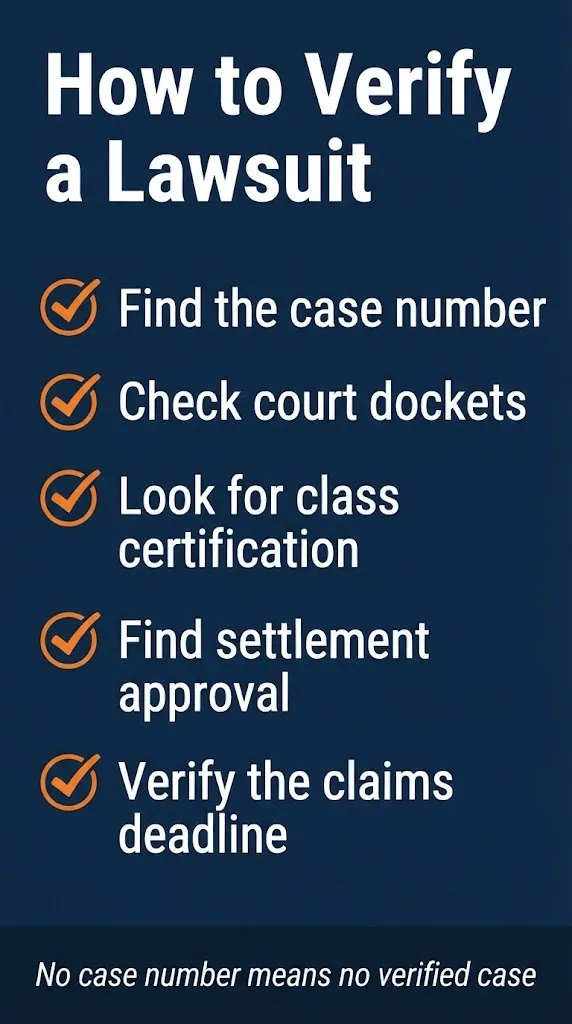
Check the court docket. Real lawsuits have case numbers, named parties, and public filings. You can search federal court records through PACER. State court records are searchable through state systems.
Here is the verification checklist:
- Search PACER for the employer or agency name.
- Search state court dockets in relevant jurisdictions.
- Look for a case number and a named plaintiff.
- Check whether a class was certified.
- Check whether a settlement was approved.
- Check whether a claims process is open.
If you cannot find a docket entry, the lawsuit is not verified. A social media ad is not a legal source.
What is the difference between an H1B lawsuit and an H1B class action?
An H1B lawsuit is any legal case involving an H1B worker or visa. It could be an individual wage claim, a visa denial challenge, or an employment dispute.
An H1B class action is a specific type of lawsuit where a group of similarly situated H1B workers sues together. The class action mechanism allows many workers to combine their claims.
No verified H1B class action settlement is currently active. Individual lawsuits happen. Class actions are rarer.
Key Takeaway: Not every H1B lawsuit is a class action. And no current class action settlement exists.
What should I do if I see an H1B settlement ad?
Treat it as unverified. Do not enter personal information. Do not click links. Do not provide your visa number, passport information, or any other sensitive data.
Fake settlement ads use immigration-related keywords to collect personal information from vulnerable workers. The scam is cruel because it targets people who may be afraid of losing their status.
The verification rule is simple. No case number and no court-approved notice means no claim.
Reality Check
No one will text you about an H1B settlement. No legitimate administrator asks for a fee to file a claim. No real class action requires you to pay to join. If a settlement exists, you will hear about it through a court-approved notice, not a random ad. When in doubt, check the docket. No case number means no case.
What Happens Next
| Timeline | Expected Stage |
|---|---|
| Now | No active H1B class settlement |
| If filed | A case would appear on court dockets |
| If settled | A court would approve and appoint an administrator |
| If approved | A claims process would open with a deadline |
| Until then | Treat all H1B settlement ads as unverified |
The most likely outcome is that no class action emerges. The past cases are resolved. The ads are noise.
Frequently Asked Questions
Is there an H1B lawsuit in 2026?
No verified active class action settlement exists.
What are H1B lawsuits about?
Wage disputes, visa denials, and employer misconduct.
Can I file a claim in an H1B settlement?
No. There is no open claims process.
What is the H1B wage lawsuit?
Cases alleging employers underpaid H1B workers below the prevailing wage.
How do I verify an H1B lawsuit?
Search court dockets for a case number and a named plaintiff.
What should I do if my employer underpaid me?
Document everything and contact an employment lawyer.
Is there an H1B class action?
No verified current class action settlement exists.
What should I do if I see an H1B settlement ad?
Treat it as unverified. Do not enter personal information.
The Docket Is the Only Source That Matters
You came here looking for an H1B lawsuit. The verified answer is that no active class settlement exists. The wage disputes are real. The visa challenges are real. The current claim form is not.
The next time you see a settlement ad, ask for the case number. No number, no case. That habit will protect you from every fake class action that follows.