Temu Class Action Lawsuit 2026: Privacy Claims, Settlement Status, and Consumer Rights
Quick Answer
- Temu faces multiple active class action lawsuits in the U.S., none of which have reached a settlement as of mid-2026.
- No settlement fund exists, so no per-person payout is available. Do not expect a check soon.
- There is no claim deadline because there is no settlement. Watch for updates, but verify any “Temu refund” offer you see online.
If you downloaded the Temu app, browsed its endless scroll of ultra-cheap products, or made a purchase, you may have seen ads or social media posts about a Temu class action lawsuit payout. The lawsuits are real. The settlement rumors are not. Temu, the Chinese-owned e-commerce platform that rocketed to the top of app store charts in 2023 and 2024, faces a growing stack of legal challenges in U.S. courts. But none of them have produced a consumer payout.
This article covers every verified Temu lawsuit filed in U.S. courts as of 2026, what each case claims, whether any settlement is near, how to avoid the scams already exploiting Temu’s legal troubles, and what your actual legal rights are if you used the app. One important detail: the most serious allegations involve what Temu’s app did on your phone when you were not using it. The data privacy claims in these lawsuits go far beyond typical e-commerce tracking.
The Facts
| Case | Multiple active class actions; lead cases consolidated in various U.S. district courts |
| Status | Active litigation. No settlement. No claims process open. |
| Fund Size | No settlement fund exists. Any fund amount quoted online is fabricated. |
| Est. Per Person | No payout exists. Ignore any dollar figure you see. |
| Claim Deadline | None. No claims process has opened. |
| Administrator | None appointed. |
| Proof Needed | Not applicable until and unless a settlement is reached and approved. |
Is the Temu Class Action Lawsuit Real?
Yes, real lawsuits have been filed against Temu in U.S. federal courts. Multiple class action complaints name Temu and its parent company, PDD Holdings, as defendants. These cases are at various stages of litigation. None have settled. None have produced a claims process or a payout.
The lawsuits are not rumors or internet hoaxes. They exist in court dockets. Attorneys have filed them on behalf of proposed classes of U.S. consumers. The court has not yet certified any class, which means the cases are still proposed class actions, not certified ones. Class certification is a legal step that must happen before a case can proceed as a true class action. In the Temu litigation, that step is still pending.
The confusion comes from how the allegations are being marketed. Law firms seeking plaintiffs run ads that say things like “You may be entitled to compensation” and “Temu data privacy lawsuit.” These ads are real attorney solicitations. They are not settlement announcements. A law firm looking for clients is not the same as a court approving a settlement. The distinction matters.
If you see a website claiming to offer a “Temu class action settlement claim form,” it is likely a lead-generation site collecting your information for law firms, not an official claims portal. There is no official Temu settlement portal because there is no Temu settlement.
Key Takeaway: The lawsuits are real and filed in federal court. No settlement exists. Any website offering a Temu settlement payout is either speculative, a lead-generation site, or a scam.
What Is the Temu Lawsuit About?
The Temu lawsuits make several categories of allegations. The most prominent involve data privacy, and those claims are unusually aggressive for an e-commerce case.
Plaintiffs allege the Temu app collects far more data from users’ phones than a shopping app needs or should be allowed to take. The complaints say Temu’s app accesses a phone’s clipboard, camera, microphone, location data, contact lists, and even data from other apps installed on the device. The allegation is not that Temu uses this data for targeted ads. It is that Temu harvests personal data at a scale and depth that violates federal and state privacy laws, including the Computer Fraud and Abuse Act and state wiretap statutes.
One specific claim that has drawn attention: the lawsuits allege Temu’s app can read and transmit the contents of a user’s clipboard, meaning anything you copy on your phone, including passwords, messages, and financial information, could be scooped up. Temu has denied these allegations. The company says its data practices comply with all applicable laws and its privacy policy. The court has not ruled on the truth of any allegation.
Other lawsuits target Temu’s marketing practices. The company’s aggressive affiliate and social-sharing programs, which offer credits and free products for referring friends and downloading additional apps, are alleged to constitute deceptive advertising. Some lawsuits also raise forced labor allegations, claiming Temu’s supply chain relies on goods produced under conditions that violate U.S. trade laws and consumer protection statutes.
What Is the Temu Data Privacy Lawsuit?
The data privacy cases are the most significant legal threat Temu faces. Several lawsuits have been filed on behalf of U.S. consumers who downloaded and used the Temu app.
The complaints describe a shopping app that behaves more like spyware. Specific technical allegations include that Temu’s app requests permissions far beyond what a shopping app needs, that it accesses and transmits clipboard data without user knowledge, that it collects data from other apps installed on the device, that it tracks location even when the app is not in use, and that it transmits this data to servers in China.
The plaintiffs argue this conduct violates the federal Computer Fraud and Abuse Act, which prohibits unauthorized access to computers and devices, and the federal Wiretap Act, which prohibits unauthorized interception of electronic communications. Some complaints add state law claims under the California Invasion of Privacy Act and similar statutes in other states.
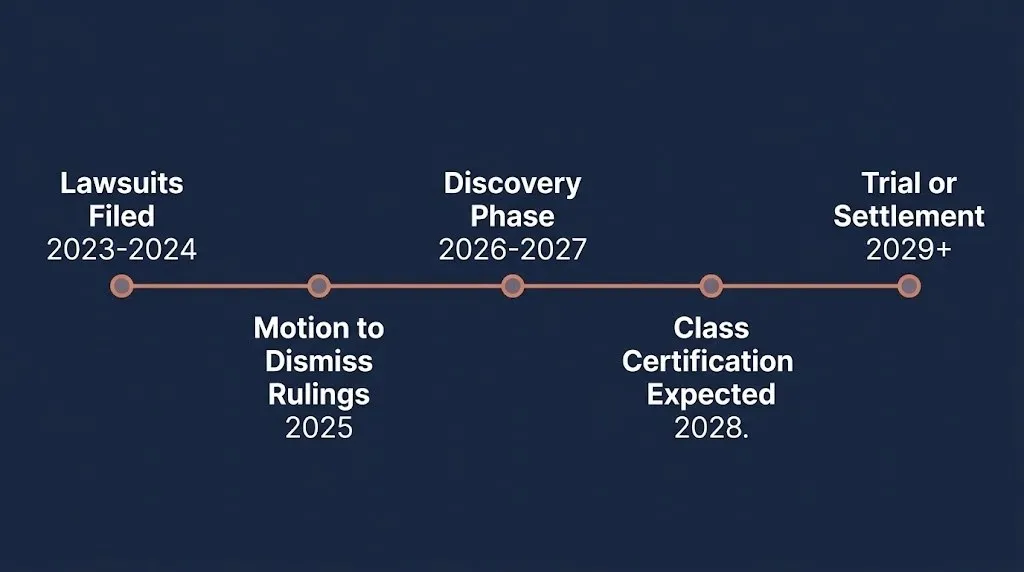
Temu moved to dismiss these cases. The company argued its privacy policy disclosed its data collection practices and that users consented by installing the app. In 2025, a federal judge in the Northern District of Illinois allowed several of the privacy claims to proceed past the motion to dismiss stage. That ruling does not mean Temu violated the law. It means the plaintiffs alleged enough facts that, if true, could establish a violation. The case is now in discovery, the pretrial phase where both sides exchange documents and take depositions.
What Are the Temu Forced Labor Allegations?
Separate from the privacy claims, some lawsuits allege Temu knowingly sells products made with forced labor, specifically Uyghur forced labor in China’s Xinjiang region.
These claims invoke the Uyghur Forced Labor Prevention Act, a U.S. law that creates a rebuttable presumption that goods made wholly or partly in Xinjiang are produced with forced labor and are therefore barred from import. The plaintiffs argue Temu sells such goods and fails to disclose their origin to U.S. consumers. They claim this constitutes fraud and violates state consumer protection laws.
These cases face significant legal hurdles. Proving a specific product on Temu’s platform was made with forced labor is difficult. Temu is a marketplace. It does not manufacture most goods sold on its platform. The company argues it is a technology platform connecting buyers and sellers, not a manufacturer or importer responsible for supply chain conditions. Courts have not yet resolved whether U.S. consumer protection laws can be applied to forced labor allegations against an e-commerce marketplace under these circumstances.
The forced labor cases are earlier in the litigation pipeline than the privacy cases. No significant rulings have been issued as of mid-2026. They are worth watching but are unlikely to produce a consumer settlement in the near term.
Has There Been a Temu Settlement?
No. As of July 16, 2026, no Temu class action lawsuit has reached a settlement. No settlement fund has been established. No claims administrator has been appointed. No claim form exists. No money is being distributed.
This is the single most important fact in this article. The internet is full of content claiming a Temu settlement is imminent or has already happened. It has not. Law firm advertising creates the impression of a settled case when the reality is early-stage litigation. The firms want your contact information so they can sign you up as a potential client. That is legitimate attorney marketing, but it is not a settlement.
A settlement may eventually happen. Class actions often settle rather than go to trial. But a Temu settlement in 2026 is not guaranteed, not imminent, and not yet valued at any dollar amount. When and if a settlement is reached, it will be publicly filed in court, approved by a judge, and administered through an official settlement website. That has not happened.
Reality Check: If you see an ad or social media post saying “Temu owes you money” or “Claim your Temu settlement now,” it is not a real settlement payout. It is an attorney advertising for clients or a straight-up scam. Legitimate settlements come with a court order, an official website, and a claims administrator. Temu has none of these.
Why Are There So Many Temu Lawsuit Ads?
You are seeing Temu lawsuit ads because law firms are investing heavily in client acquisition for these cases. Mass tort and class action firms use digital advertising to find potential plaintiffs. The bigger the potential defendant, the bigger the ad spend. Temu is a large, well-known brand with hundreds of millions of downloads. That makes it an attractive target for plaintiff advertising.
The ads are not fake, but they are misleading if you do not understand the context. A law firm saying “You may be entitled to compensation” is stating a legal possibility, not a fact. They are recruiting clients for a case that may or may not succeed. If the case succeeds, you might receive compensation. If it fails, you receive nothing. The ads rarely explain this.
Clicking a Temu lawsuit ad typically leads to a law firm’s intake form. You enter your contact information, answer a few questions about your Temu app usage, and the firm evaluates whether to add you as a client. You are not filing a claim for a settlement. You are signing up with a lawyer. That distinction is what the ads often blur.
How to Protect Your Data If You Used the Temu App
The allegations in the privacy lawsuits are concerning. Whether or not the court ultimately finds Temu liable, you can take steps to protect your phone data right now.
- Delete the Temu app if you no longer use it. This stops any ongoing data collection.
- Review app permissions on your phone. Go to your settings and check what permissions Temu and other apps have. Revoke any that seem unnecessary.
- Change passwords that may have been copied to your clipboard while the Temu app was installed. This includes email, banking, and social media passwords.
- Monitor your financial accounts for unusual activity. The lawsuits do not allege Temu committed financial fraud, but clipboard access could theoretically expose financial information.
- Use a password manager that does not rely on clipboard copying between apps. Most modern password managers use auto-fill APIs that do not expose the clipboard.
- Check your phone for unknown apps. Some of the affiliate marketing lawsuits allege Temu’s referral programs led users to install other apps with their own data practices.
These steps are reasonable precautions given the allegations, not conclusions that Temu actually misused your data. The litigation will determine what happened. Until then, caution is free.
What Are the Legal Claims Against Temu?
The lawsuits assert several legal theories. Understanding them helps you evaluate what the cases are actually about.
The Computer Fraud and Abuse Act claim argues Temu accessed users’ phones in ways that exceeded the authorization users gave. Installing a shopping app authorizes data collection necessary for shopping. The plaintiffs argue clipboard reading, app monitoring, and background location tracking go beyond that authorization.
The Wiretap Act claim argues Temu intercepted electronic communications, specifically the data transmitted between the clipboard and other apps, without consent. Wiretap claims are unusual in consumer privacy cases but are being tested here.
State privacy laws, including the California Invasion of Privacy Act and Illinois biometric privacy laws, provide additional claims with potentially higher statutory damages. State consumer protection laws, which prohibit deceptive and unfair trade practices, underpin claims about Temu’s marketing and disclosure practices.
The forced labor claims rely on federal trade law and state consumer fraud statutes. The legal theory is that selling goods made with forced labor without disclosing that fact constitutes a deceptive practice.
Each claim faces its own legal defenses. Temu has argued that its privacy policy provides the necessary consent, that the plaintiffs have not suffered concrete harm, and that the court lacks jurisdiction over a Chinese company for certain claims. These defenses will be litigated for years before any final resolution.
Key Takeaway: The legal claims are serious and grounded in federal statutes. The litigation is real. The outcomes are uncertain. No one, including the lawyers filing the cases, knows whether Temu will ultimately pay anything.
What Is Temu’s Response to the Lawsuits?
Temu has denied all allegations and is fighting the cases in court. The company’s public statements and legal filings take several positions.
Temu says its data collection practices are consistent with industry standards and disclosed in its privacy policy. The company argues that users consent to data collection when they install the app and agree to the terms of service. Temu says the allegations of clipboard snooping and unauthorized access are false.
On forced labor, Temu says it prohibits the use of forced labor in its supply chain and requires sellers to comply with all applicable laws. The company describes itself as a marketplace platform, not a manufacturer, and argues it is not responsible for the labor practices of individual sellers.
Temu has moved to dismiss or stay several of the cases. Some of those motions have been denied in part, allowing the cases to proceed. Others are still pending. The company has not publicly signaled any interest in settlement discussions as of mid-2026.
PDD Holdings, Temu’s parent company, is also named in some lawsuits. PDD is a publicly traded company listed on the Nasdaq. The lawsuits pose a risk to the company’s U.S. operations and stock price, which may eventually create settlement pressure. That pressure has not yet produced a settlement offer.
What Other Regulatory Actions Has Temu Faced?
The class actions are not the only legal pressure on Temu. Regulatory agencies in multiple countries have opened investigations or taken action.
The European Union designated Temu as a Very Large Online Platform under the Digital Services Act in 2024. That designation imposes obligations related to content moderation, transparency, and risk assessment. The EU has opened formal investigations into whether Temu is complying with these requirements.
South Korea’s privacy regulator suspended Temu’s app in 2024 over data collection concerns. The suspension was later lifted after Temu agreed to changes. Other countries, including Indonesia and Vietnam, have restricted or investigated Temu over various regulatory concerns.
In the U.S., members of Congress have called for investigations into Temu’s data practices and supply chain. The FTC has not publicly announced a formal investigation as of mid-2026, but the agency’s interest in digital privacy and Chinese-owned apps makes future action possible.
These regulatory actions are separate from the private class actions. They can produce fines, restrictions, or mandated business changes. They do not produce consumer payouts. A regulatory fine goes to the government, not to you. Only a class action settlement or a successful individual lawsuit produces a consumer recovery.
What Happens Next in the Temu Lawsuits?
The litigation will take years to resolve. Here is the expected trajectory based on the current posture of the cases.
- 2026 through 2027: Discovery continues in the privacy cases. Both sides exchange documents and depose witnesses. The forced labor cases work through motions to dismiss.
- Late 2027 to 2028: Class certification briefing and hearings. The court decides whether the cases can proceed as class actions.
- 2028 to 2029: If classes are certified, the cases move toward trial or settlement. Summary judgment motions may narrow or resolve some claims.
- 2029 or later: A trial or settlement. If a settlement is reached, a claims process opens. If the cases go to trial, appeals could add years.
This timeline is an estimate. Litigation can move faster or slower. The point is simple: do not wait for a Temu settlement check. It is not coming soon. If you are concerned about your privacy, take the protective steps outlined above. If you want to join the litigation, contact a law firm handling the cases. Do not rely on a settlement rumor you saw on TikTok.
Frequently Asked Questions
Is there a Temu class action settlement in 2026?
No. No settlement has been reached.
Any website or ad claiming a Temu settlement payout exists is inaccurate.
Can I file a Temu lawsuit claim right now?
You cannot file a settlement claim because no settlement exists.
You can contact a law firm to discuss joining one of the active lawsuits as a plaintiff.
What is the Temu data privacy lawsuit about?
The lawsuits allege Temu’s app secretly collected clipboard data, location, and app usage.
Plaintiffs claim this violated federal wiretap and computer fraud laws.
How much will the Temu settlement pay?
There is no way to know because no settlement exists.
Any dollar figure you see online is a guess or a fabrication.
Did Temu steal my data?
The lawsuits allege Temu’s app collected data without proper consent.
Temu denies this. A court has not ruled on the truth of the allegations.
Should I delete the Temu app?
That is a personal decision based on your privacy concerns.
If you are worried about the allegations, deleting the app stops ongoing data collection.
Is the Temu forced labor lawsuit real?
Yes, real lawsuits raise forced labor allegations against Temu.
These cases are in earlier stages and face significant legal hurdles.
How do I know if a Temu lawsuit ad is legitimate?
Real ads come from law firms looking for clients, not from a settlement administrator.
They are lead generation, not settlement payouts. Verify before giving personal information.
The Temu class action lawsuits are real, active, and serious. The privacy claims, in particular, have survived initial legal challenges and are moving into discovery. But the cases have not settled. There is no payout, no claim form, and no check coming. Anyone who tells you otherwise is either recruiting you as a client or trying to scam you.
If you are concerned about your data, delete the app, change your passwords, and monitor your accounts. If you want to join the litigation, find a law firm handling the cases and go through their intake process. If you want to know whether a settlement eventually happens, watch the court dockets, not social media. We will update this article when and if a settlement is announced.