Experian Phone Number Data Privacy Lawsuit 2026: Trigger Lead Claims, Eligibility, and Deadlines
Quick Answer
- The lawsuit alleges Experian illegally sells phone numbers to lenders without consent under the FCRA.
- No settlement exists yet. No claims deadline, payout amount, or administrator has been announced.
- You are included if your phone number was disclosed by Experian since June 2023 for a credit application.
Experian phone number data privacy lawsuit searches are climbing because people are getting hammered by calls after applying for a loan. Within minutes of submitting a mortgage or auto loan application, their phone starts ringing. Lenders they never contacted are suddenly calling with competing offers.
That is not a coincidence. It is what the lawsuit calls a “trigger lead.”
The proposed class action filed in June 2025 alleges Experian identifies consumers as “credit-active” the moment they apply for credit, then sells their contact information, including phone numbers, to a swarm of competing lenders . The Fair Credit Reporting Act permits name and address disclosure for firm offers of credit. It does not permit phone number disclosure without consent, according to the complaint .
This article explains what a trigger lead is, who might be covered, what happens next, and how to protect yourself while the case moves through court.
The Facts
| Item | Detail |
|---|---|
| Case Name | Proposed class action against Experian Information Solutions |
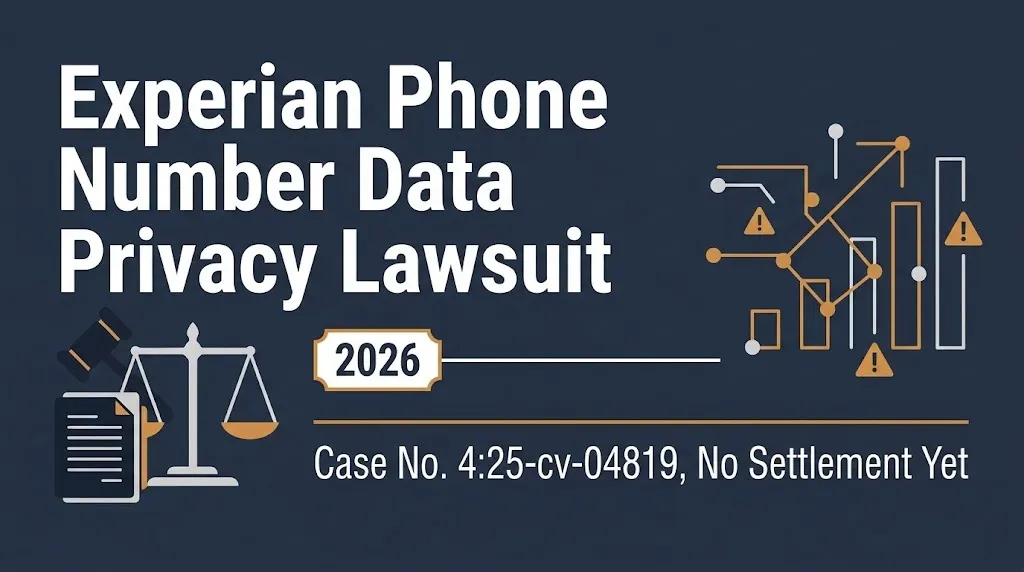
| Case Number | 4:25-cv-04819 |
| Filed | June 2025 |
| Current Status | Class certification phase, no settlement announced |
| Settlement Fund | Not yet confirmed |
| Claim Deadline | Not yet determined |
| Alleged Violation | FCRA disclosure of phone numbers without consent |
| Class Definition | U.S. consumers whose phone numbers were disclosed since June 2023 |
Is the Experian phone number data privacy lawsuit legitimate?
The Experian phone number data privacy lawsuit is a legitimate proposed class action filed in federal court, alleging Experian violates the Fair Credit Reporting Act by selling phone numbers as part of trigger leads. It is not a scam, but it is also not a settlement you can claim today.
The lawsuit was filed by plaintiff Darryl Davis of Richmond, California, in June 2025. Davis applied for a home equity loan with AmeriSave Mortgage Loan Corporation around June 26, 2024 . The same day, AmeriSave pulled his Experian credit report.
After that inquiry, Davis says Experian sold his phone number and credit data to third-party lenders as a trigger lead. He began receiving eight to ten unsolicited calls per day from unknown lenders offering loans .
The lawsuit seeks to represent any U.S. consumer whose phone number was disclosed by Experian to a third-party lender since June 2023 .
What makes this case notable:
- It targets Experian’s lead generation business model, not just a data breach.
- It argues the FCRA’s plain language does not permit phone number disclosure.
- It seeks class certification, which would bind Experian to a single outcome for all covered consumers.
Experian has not settled, and no court has ruled on the merits. The case remains active.
Key Takeaway: The lawsuit is real and filed in federal court, but it is a proposed class action, not a settlement with money waiting.
What is a trigger lead and how does Experian allegedly sell your phone number?
A trigger lead is a sales lead generated when a consumer applies for credit, and a credit bureau alerts other lenders who may then contact the consumer with competing offers. Experian’s trigger lead product allegedly includes unmasked phone numbers, which the lawsuit says violates the FCRA.
The FCRA permits credit bureaus to sell “firm offers of credit” using a consumer’s name and address. That is how prescreened credit card offers work. But the lawsuit argues that phone numbers are different .
How the alleged trigger lead process works:
- You apply for a mortgage, auto loan, or other credit product.
- The lender pulls your Experian credit report.
- Experian flags you as “credit-active” and packages your contact info as a lead.
- The lead is sold to competing lenders who may call or text you.
- Your phone rings constantly with offers you never requested.
The FCRA only permits releasing the name and address for trigger leads and firm credit offers, according to the lawsuit . Phone numbers are not part of that permitted disclosure.
If the court agrees, Experian could face damages for every consumer whose phone number was disclosed without consent.
Key Takeaway: Trigger leads are legal in concept, but the lawsuit claims including phone numbers crosses the FCRA line.
Who may qualify for the Experian phone number data privacy lawsuit?
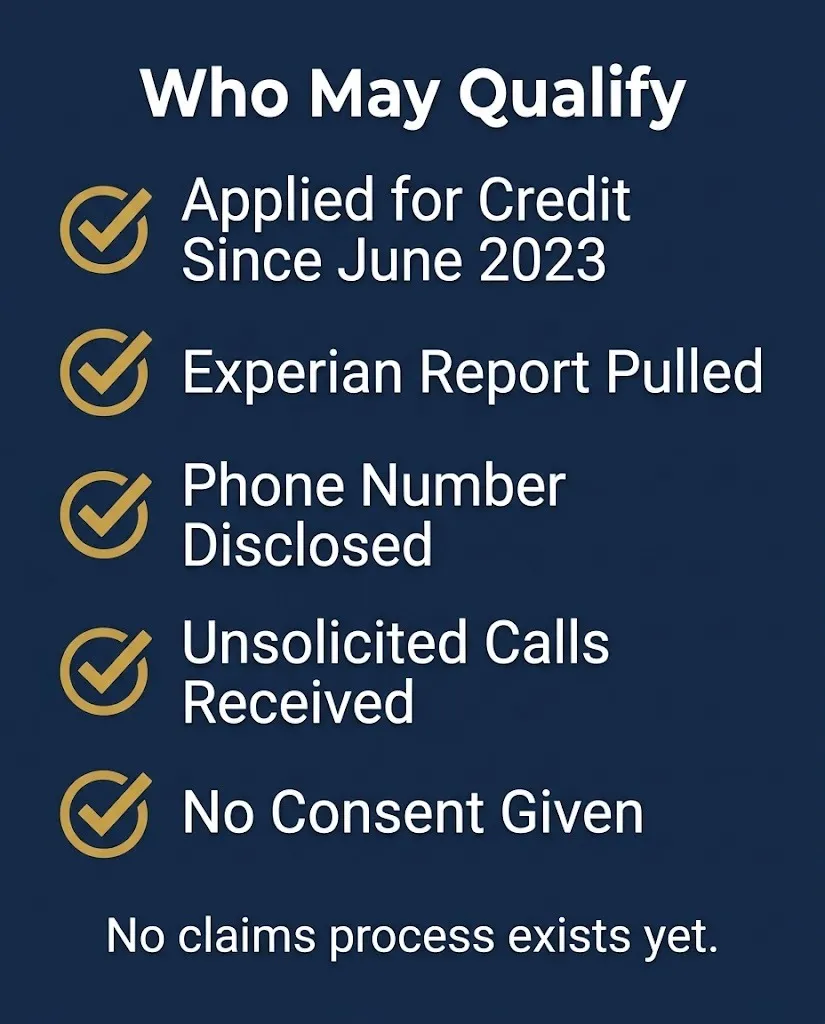
You may qualify if Experian disclosed your phone number to a third-party lender without your consent since June 2023, according to the proposed class definition. The class covers any U.S. consumer whose phone number was shared under these circumstances .
Eligibility is based on what Experian allegedly did, not on whether you remember getting calls. If your phone number was in Experian’s system and was disclosed in connection with a credit application, you may be covered.
Factors that may indicate you are in the proposed class:
- You applied for a mortgage, auto loan, or personal loan since June 2023.
- The lender pulled your Experian credit report as part of that application.
- You received unsolicited calls or texts from lenders you did not contact.
- Those calls came within hours or days of your credit application.
You do not need to prove you received calls to be in the class, if the class is certified. The question is whether Experian disclosed your phone number, not whether you answered it.
There is no claim form to file right now. No administrator has been appointed. No deadline exists. If a settlement is reached, class members will receive notice with instructions.
Key Takeaway: You may be covered if your phone number was shared after a credit application, but there is nothing to file today.
Reality Check
No one is collecting claims for this lawsuit, and no money is available. If you get a text, email, or social media message saying you qualify for an Experian settlement payout and need to submit your information or pay a fee, it is a scam. The lawsuit has not settled. There is no official settlement website. Do not provide personal information to anyone claiming otherwise.
How much could the Experian phone number lawsuit payout be?
No payout amount has been determined, and it is not yet known whether a settlement will happen. The lawsuit seeks class certification, damages, and changes to Experian’s practices . Until a settlement is reached or a judgment is entered, there is no fund to distribute.
Why a payout figure cannot be estimated yet:
- No settlement has been announced. The case is in the class certification phase .
- No fund has been created. Money for payouts comes from a settlement or verdict, neither of which exists.
- No class has been certified. Until a judge certifies the class, the scope of who is covered remains uncertain.
If the case settles, payout amounts would depend on the size of the fund and the number of valid claims. Statutory damages under the FCRA can range from $100 to $1,000 per violation for willful violations. But that is a ceiling for individual claims, not a promise of what any class member would receive.
Class action settlements typically pay a pro rata share of the fund after attorney fees and administrative costs. For a large class, individual payments are often modest.
Key Takeaway: There is no payout amount because there is no settlement. Do not trust anyone promising a specific figure.
What do you need to do right now about the Experian phone number lawsuit?
You do not need to file anything right now. The lawsuit is in the class certification phase, and no claims process has been established. Filing a claim before a settlement exists is impossible, and anyone offering to help you “file” is misleading you.
Steps you can take today:
- Document your experience if you received unsolicited calls after applying for credit.
- Save your phone records showing the dates and volumes of calls.
- Keep your loan application records to confirm the timing of credit inquiries.
- Opt out of prescreened offers at the official opt-out website to reduce future calls.
- Freeze your credit if you want to stop unauthorized access to your file .
- Do not pay anyone who claims they can get you money from this lawsuit.
If a settlement is reached, the court will require notice to all identifiable class members. You will not need to hunt for a claim form. It will come to you, or the official settlement website will be published in court records.
Key Takeaway: Document your calls and wait for official court notice. No action is required today.
What is the difference between this lawsuit and Experian’s other legal troubles?
This phone number lawsuit is separate from Experian’s other legal matters, including the T-Mobile data breach settlement and a CFPB lawsuit over dispute investigations. Each case has its own class, its own claims process, and its own timeline.
Experian faces multiple legal fronts in 2026.
The T-Mobile data breach settlement: A $170 million settlement resolved claims that Experian failed to protect data of 15 million T-Mobile customers whose information was stolen in a 2015 breach . That case is settled, and claim deadlines have passed.
The CFPB lawsuit: Filed in January 2025, the Consumer Financial Protection Bureau alleges Experian ran “sham” investigations of consumer disputes, failing to properly reinvestigate errors . That case is in litigation.
The phone number lawsuit: The trigger lead case filed in June 2025 is the one this article covers. It is distinct from the data breach and the CFPB action .
If you are looking for a payout from the T-Mobile breach, that settlement is closed. If you are wondering about this phone number case, nothing has been decided.
Key Takeaway: Experian faces multiple lawsuits, but each is separate. The phone number case has no settlement or claims process.
What happens next in the Experian phone number lawsuit?
The case will proceed through class certification, then either settlement or trial. Class certification is the next major milestone. If the judge certifies the class, Experian will face the prospect of litigating against millions of consumers at once.
Expected timeline:
- June 2025: Lawsuit filed in federal court .
- 2026: Class certification phase, ongoing .
- Expected 2027: Court ruling on class certification.
- If certified: Settlement negotiations or trial preparation.
- If settled: Notice to class members, claims process, payout distribution.
Class certification is not guaranteed. Experian will oppose it, arguing the claims require individualized proof. If certification is denied, the case could proceed only for the named plaintiff, and a nationwide class settlement would not happen.
If certification is granted, settlement talks typically intensify. Most class actions settle after certification because the defendant faces massive exposure.
Key Takeaway: Class certification is the next hurdle. No settlement is possible until the court decides whether the case can proceed as a class action.
Frequently Asked Questions
Is the Experian phone number data privacy lawsuit a real settlement?
No. It is a proposed class action filed in June 2025. There is no settlement, no fund, and no claims process.
How much will I get from the Experian phone number lawsuit?
Not yet determined. No payout amount exists because there is no settlement or judgment.
How do I file a claim in the Experian phone number lawsuit?
You cannot file a claim now. No claims process has been established. If a settlement happens, you will receive notice with instructions.
Who is eligible for the Experian phone number lawsuit?
You may be covered if Experian disclosed your phone number to a third-party lender without consent since June 2023.
What is a trigger lead?
A trigger lead is a sales lead generated when you apply for credit. Credit bureaus alert other lenders, who may contact you with competing offers.
Did Experian settle the phone number lawsuit?
No. The case remains in the class certification phase. No settlement has been announced.
Should I pay anyone to file a claim for me?
No. There is no claim to file. Anyone charging a fee for this lawsuit is scamming you.
How do I stop trigger lead calls?
You can opt out of prescreened offers at the official opt-out website and freeze your credit. These steps reduce but do not eliminate trigger lead calls.
Your Next Step
Save your phone records if you received unsolicited calls after applying for credit. Note the dates and volumes. Keep your loan application records to confirm the timing.
The single most important fact: no claims process exists today. Do not pay anyone who says otherwise. Watch for official court notices if the case settles. The next major date is the court’s ruling on class certification, expected in 2027.