Gmail Lawsuit 2026: What’s Real, What Pays, and What’s Just a Scam Text
Status as of July 14, 2026: No dedicated “Gmail lawsuit” is currently paying cash. The real money is coming from a separate $700 million Google Play Store antitrust settlement, finally approved April 30, 2026, while a related Google privacy case pays users nothing directly.
Quick Answer
- The “Gmail lawsuit” people search for is usually one of two real cases: a Google Play Store settlement (pays money) or a Google ad-tracking privacy settlement (pays no money to users).
- Payout amounts from the Play Store settlement depend on your purchase history and are not yet determined per account; most people get paid automatically, no claim form needed.
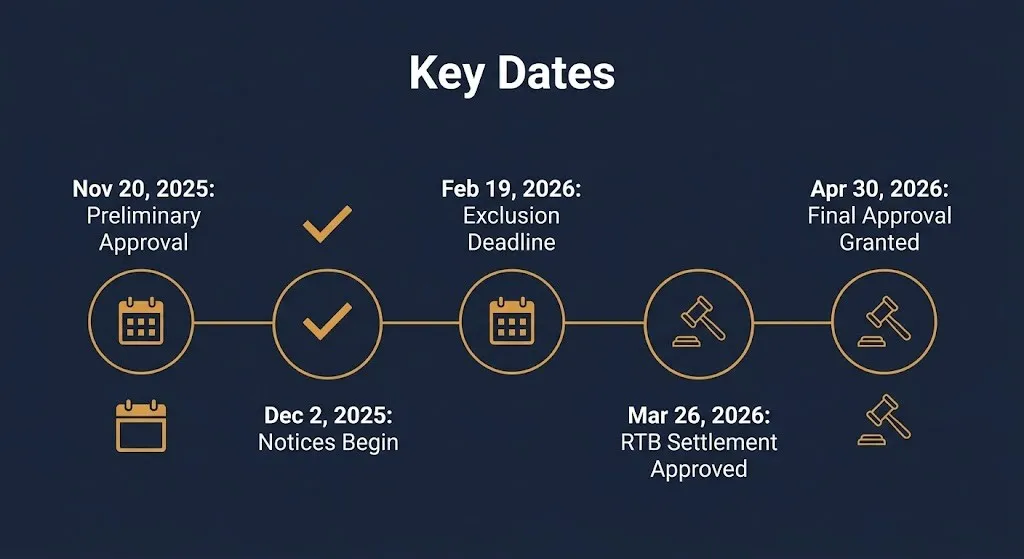
- The Play Store objection and exclusion deadline was February 19, 2026, and final court approval came April 30, 2026.
If you searched “Gmail lawsuit,” you probably saw a text, an email, or a headline promising a payout. Here’s the direct answer: there’s no single active Gmail-specific case cutting checks in 2026.
What’s actually happening involves two real, separate Google cases. One is a $700 million Play Store antitrust settlement now paying consumers. The other is a privacy case over ad tracking that changed Google’s practices but wrote no checks.
This article breaks down both cases, exposes the vague “$25 to $400 Gmail claim” language circulating on some sites, and gives you verified deadlines, court names, and next steps. One detail worth knowing upfront: the Play Store fund has grown by tens of millions of dollars in investment earnings while sitting in escrow.
The Facts
| Case | State of Utah, et al. v. Google LLC, et al. (Google Play Store Antitrust Litigation), Case No. 3:21-cv-05227-JD, coordinated under MDL No. 21-md-02981-JD |
| Court | U.S. District Court, Northern District of California (Judge James Donato) |
| Status | Final approval granted April 30, 2026; automatic payments distributing |
| Fund Size | $700 million ($630 million consumer fund plus $70 million to states), grown to roughly $735 million combined through investment earnings |
| Est. Per Person | Not yet determined; based on individual Google Play purchase history, no flat per-person figure confirmed |
| Claim Deadline | No claim form required for most consumers; supplemental claims registration is open on the official site for those who can’t be paid automatically |
| Administrator | A.B. Data, Ltd. |
| Proof Needed | None for automatic payment; supplemental claimants may need to verify their Google Play account details |
Is the Gmail Lawsuit in 2026 Real?
There is no single, active “Gmail lawsuit” writing checks to Gmail users in 2026. That phrase gets used loosely for at least two separate, real Google court cases.
The first is the Play Store antitrust settlement described above. It pays real money but has nothing to do with email content or Gmail specifically.
The second is a privacy case, formally built around Calhoun v. Google, Case No. 20-cv-03664-YGR, consolidated with related suits in the Northern District of California. That case resulted in final approval on March 26, 2026, but it pays class members no direct cash.
Key Takeaway: The “Gmail lawsuit” people search for is really two unrelated Google cases, and only one of them pays money, and it isn’t the privacy one.
Is the Google Class Action Lawsuit a Scam Text or Email?
Some texts and emails claiming to be from a “Gmail lawsuit” claims center are not tied to any verified settlement administrator. Real settlement notices come from named, court-approved administrators like A.B. Data, Ltd., not random short-code text messages asking you to click a link first.
Legitimate settlement communication about the Play Store case came through official state attorney general offices and a dedicated settlement website beginning December 2, 2025. If a message asks for a processing fee, banking login, or Social Security number before you can “unlock” a payout, that’s a signal to stop.
A handful of sites currently publish specific dollar ranges (commonly $25 to $400) tied to three named “Gmail lawsuits” over email scanning, data sharing, and Workspace privacy. Search of court dockets, official settlement sites, and state AG releases turns up no verified case matching those names or figures as of this writing.
Until an official settlement site or court order confirms those numbers, treat them as unconfirmed. Filing through a real case costs nothing and never requires payment upfront.
How Much Money Can You Get From the Google Settlement?
How much you can get depends entirely on which Google case applies to you, and for most people searching “Gmail lawsuit,” the honest answer is not yet determined or zero.
The Play Store case is the only one of the two major 2026 Google cases paying consumers directly. Your individual payout is based on how much you actually spent on Google Play purchases and in-app billing between August 16, 2016, and September 30, 2023.
No official source has published a flat per-person dollar figure. Courthouse News reported the consumer restitution fund started at $630 million and grew to roughly $660 million through investment earnings by the time of final approval, on top of $70 million (grown to about $75 million) reserved for states.
Pennsylvania alone expects to receive roughly $20.5 million as its share of the state portion, which shows the scale involved, even though individual consumer amounts still depend on personal purchase history.
Google Play Store Settlement Payout: What $700 Million Actually Covers
The $700 million Google Play Store settlement covers consumers who bought apps or in-app content through Google Play between August 16, 2016, and September 30, 2023. It does not cover Gmail content, email scanning, or ad tracking.
| Fund Component | Original Amount | Value as of Final Approval |
|---|---|---|
| Consumer restitution fund | $630 million | About $660 million |
| State and territory fund | $70 million | About $75 million |
| Total | $700 million | Roughly $735 million |
You qualify if your Google payments profile listed an address in one of the 50 states, the District of Columbia, Puerto Rico, or the U.S. Virgin Islands during that window. Most eligible consumers don’t submit anything; payment arrives automatically through PayPal or Venmo tied to the email or phone number on their Google Play account.
Does the Gmail Privacy Settlement Pay Cash?
No. The Google privacy case tied to ad tracking, built around Calhoun v. Google and related suits, pays class members no direct money. This is the single most important thing people searching “gmail settlement claim” get wrong.
Instead of cash, Google agreed to build a new “RTB Control” tool. RTB stands for real-time bidding, the ad auction system Google runs billions of times a day to sell ad space using your personal data.
The class covers an estimated 169 million, and potentially more than 200 million, active U.S. Google account holders. Everyone in that group can toggle the RTB Control on or off for three years, regardless of whether they ever noticed targeted ads.
The named plaintiffs received $15,000 service awards each. Plaintiffs’ attorneys asked for more than $128 million in fees, arguing the settlement carried a $1.4 billion economic value; the court rejected that math as speculative and awarded closer to $21.9 million instead.
Reality Check: No legitimate settlement administrator sends a text asking you to “confirm your Gmail payout” by clicking a link first. Filing a real claim is always free, and the Play Store settlement pays most people automatically with zero forms. Anyone charging a fee to “process” your Google settlement claim is not affiliated with the actual case.
How to File a Google Lawsuit Claim Form
Most people affected by the Play Store settlement do not need to file anything. Here’s how to confirm your situation and act if you do need to:
- Check your inbox and Google Play account email for a notice sent after December 2, 2025.
- Confirm your PayPal or Venmo account uses the same email or phone number as your Google Play profile.
- If they match, no action is required; payment routes automatically.
- If they don’t match, create a PayPal or Venmo account using that same email or phone number.
- Visit the official Google Play State AG Antitrust Litigation settlement site to register for the supplemental claims process.
- Watch for a follow-up notice once the supplemental claims window opens.
- Never pay a third party to “file” this claim for you.
- Keep any purchase receipts from the 2016 to 2023 window in case you’re asked to verify eligibility later.
Key Takeaway: Filing anything is only necessary if your PayPal, Venmo, email, or phone details don’t already match your Google Play account, and the process is free either way.
Gmail Lawsuit Claim Form Online: Does One Exist?
No verified, court-recognized “Gmail lawsuit claim form” exists for a cash payout tied specifically to Gmail email content in 2026. If you’ve seen one online, it isn’t confirmed against any court docket, settlement administrator listing, or state AG release found in this research.
The two real Google forms you might actually need are the Play Store settlement’s supplemental claims registration, and, in unrelated older cases, historical notices tied to specific Gmail-content lawsuits like Matera v. Google that have already closed with no monetary payout.
If a site shows you a generic “Gmail Lawsuit Claim Form” with a dollar amount already filled in, or asks you to enter payment details to “activate” your claim, that form is not tied to any settlement verified through official court or government sources.
How to Check Your Google Play Settlement Eligibility
You can check eligibility yourself in a few steps, similar to checking whether an old store credit is still valid before you toss the receipt.
- Recall or search your Google Play purchase history for anything bought between August 16, 2016, and September 30, 2023.
- Confirm your Google payments profile address was in the U.S., D.C., Puerto Rico, or the U.S. Virgin Islands during that time.
- Search your email for a settlement notice sent on or after December 2, 2025.
- Check whether your PayPal or Venmo account matches your Google Play contact details.
- If nothing matches and you never got a notice, register on the official settlement site anyway to be safe.
Eligibility here is about purchase history, not email use. Gmail activity alone does not qualify you for this settlement.
Google Lawsuit Settlement Status Update for July 2026
As of July 14, 2026, the Play Store settlement has cleared final court approval and is in the payment distribution stage. Judge James Donato granted final approval on April 30, 2026, after the exclusion and objection deadline passed on February 19, 2026.
The separate RTB privacy settlement also reached final approval, on March 26, 2026. Google had 30 days from that order to launch the RTB Control tool and notify account holders, and rollout emails began going out by late April 2026.
Neither case is still accepting objections or opt-outs. Both are past the litigation phase and into the implementation or payment phase, which means the biggest legal uncertainty (whether the deals hold up) is largely resolved.
Key Takeaway: Both major 2026 Google cases have already cleared final court approval, so the main open question now is distribution timing, not whether the settlements will happen.
Is There a Google Class Action Lawsuit Sign Up Page?
There is no general “sign up for the Google lawsuit” page that covers every Google case at once. Each settlement runs its own registration process tied to its own court docket.
For the Play Store settlement, the closest thing to a sign-up page is the supplemental claims registration on the official settlement website, meant for people who can’t be paid automatically. For the RTB privacy case, there’s no registration at all, since the benefit (the RTB Control toggle) applies automatically to eligible account holders.
Be skeptical of any site with a generic “Google Class Action Lawsuit Sign Up” button that doesn’t name a specific case number or link to an official court-approved administrator.
When Will Google Play Settlement Checks Arrive?
Automatic payments began distributing after the April 30, 2026 final approval, though an exact universal payment date has not been published for every consumer. Payment timing depends on when your PayPal or Venmo details are confirmed against your Google Play account.
If you’re waiting on a supplemental claim instead of an automatic payment, that process opens after the automatic payment wave finishes, and no fixed date for that window has been confirmed publicly yet.
Think of this like a delayed tax refund: the government has approved it, the money exists, but your specific deposit date depends on your own account details lining up correctly.
What Is the Gmail Class Action Lawsuit About?
The lawsuits people loosely call “the Gmail lawsuit” trace back more than a decade of litigation over how Google handles email and account data, not one single case filed in 2026.
The most cited early case is Matera v. Google, Inc., Case No. 15-CV-04062-LHK in the Northern District of California, which covered people who emailed Gmail users without having a Gmail account themselves. That case settled years ago with business practice changes only, no money to class members.
More recently, Calhoun v. Google and related suits (Brown, Delahunty, Toronto) targeted how Google’s real-time bidding ad system shares personal data across Google’s account ecosystem, including Gmail-linked accounts. That’s the case that reached final approval in March 2026 with the RTB Control tool as the outcome, not a check.
Key Takeaway: “Gmail lawsuit” searches usually lead back to either a years-old, already-closed case with no payout, or the 2026 RTB privacy settlement, which also pays no direct cash.
What Is the Google Play Store Class Action About?
The Google Play Store class action is an antitrust case, not a privacy case. Plaintiffs, joined by 53 states and territories, argued Google monopolized Android app distribution and in-app billing, forcing developers and consumers into inflated prices.
The case began in 2020 and 2021 as multiple related lawsuits, including Epic Games’ high-profile suit, later consolidated as MDL No. 21-md-02981-JD before Judge James Donato. A jury found Google liable on antitrust counts in December 2023, and the $700 million consumer and state settlement followed as part of resolving related claims.
Google also agreed to business changes, including letting app developers offer alternative payment options for at least five years.
Other Google Settlements: Assistant, Play Store Apps, and What’s Still Unconfirmed
Search interest around “google assistant settlement” and similar terms shows people looking for other Google-related payouts beyond these two cases. As of this research, no verified, court-confirmed Google Assistant settlement with a payout schedule was found through official court or government sources.
If a Google Assistant, Google Play developer-side, or other Google privacy settlement becomes active later in 2026, it would carry its own case number, its own administrator, and its own claim deadlines, separate from the two cases in this article.
Treat any site listing specific payout amounts for a “Google Assistant settlement” without naming a case number or court as not yet confirmed until you can verify it against an official settlement site or court docket.
The History Behind Google’s Gmail and Privacy Lawsuits
Google has faced privacy litigation over Gmail and account data practices for more than a decade, dating back to early scanning-for-ads controversies in the 2010s. Most of those early cases either settled for business practice changes or were dismissed.
The pattern repeats: plaintiffs allege a specific data practice violates privacy law, Google disputes that users didn’t consent, and courts often side partly with each side. The 2024 Ninth Circuit ruling in Calhoun v. Google, reversing an earlier dismissal over Chrome data collection, is one example of that back-and-forth playing out over years before any settlement emerges.
Key Takeaway: Google’s Gmail and privacy litigation history is long and mostly ends in practice changes, not payouts, which is why the 2026 RTB settlement’s no-cash outcome fits the historical pattern.
What Happens Next
April 30, 2026: Final approval granted for the $700 million Play Store settlement.
March 26, 2026: Final approval granted for the Google RTB privacy settlement.
Ongoing through mid-to-late 2026: Automatic Play Store payments continue distributing via PayPal and Venmo.
Expected later in 2026: Supplemental claims process opens for Play Store consumers who couldn’t be paid automatically.
Expected ongoing: Google maintains the RTB Control tool for eligible account holders for three years from launch.
Frequently Asked Questions
Is the Gmail lawsuit legit?
There’s no single “Gmail lawsuit” paying money in 2026.
The real, verified cases are the Play Store antitrust settlement, which pays money, and the RTB privacy settlement, which does not.
Confirm any claim against official court or settlement administrator sources before acting.
How much is the Google settlement worth per person?
The Play Store settlement fund totals roughly $735 million combined as of final approval.
Individual payout amounts are not yet determined and depend on your personal Google Play purchase history.
No flat per-person dollar figure has been officially published.
Do I need to file a claim form for the Google settlement?
Most eligible Play Store consumers do not need to file anything.
Payment happens automatically through PayPal or Venmo tied to your Google Play account.
A supplemental claims form only applies if automatic payment isn’t possible.
What is the Google class action lawsuit deadline?
The exclusion and objection deadline for the Play Store settlement was February 19, 2026, and has passed.
Final court approval was granted April 30, 2026.
No new deadline currently applies for standard automatic payments.
Does the Gmail privacy settlement pay money?
No, the RTB privacy settlement pays no direct cash to class members.
Instead, Google built a new RTB Control tool that lets users limit ad-auction data sharing.
Named plaintiffs received individual service awards, not the broader class.
Is the Google Play Store settlement the same as a Gmail lawsuit?
No, they are separate cases with different courts, different case numbers, and different subject matter.
The Play Store case is about antitrust and app pricing.
It has nothing to do with email content or Gmail data specifically.
How do I know if a Google lawsuit text message is real?
Real settlement notices come from named administrators like A.B. Data, Ltd., tied to a specific case number.
Legitimate claims never require a fee upfront.
If a message pressures you to click fast or pay to “unlock” money, treat it as unverified.
Where can I check the official Google Play settlement status?
Check the official Google Play State AG Antitrust Litigation settlement website directly.
State attorney general offices, including those in Oregon, California, Texas, and others, also posted official consumer instructions.
Avoid third-party sites that don’t name the case number or court.
The one deadline that already passed and mattered most was February 19, 2026, for exclusion and objections. From here, watch your Google Play account email and your PayPal or Venmo details for automatic payment activity.
Sources checked July 14, 2026: New Hampshire Department of Justice, Oregon Department of Justice, Massachusetts Attorney General’s Office, Texas Attorney General’s Office, Courthouse News Service, official Northern District of California court filings (Case No. 3:21-cv-05227-JD, MDL No. 21-md-02981-JD, and Case No. 20-cv-03664-YGR), and the Matera v. Google settlement website.
lawcompensate.com is an independent news publisher, not a law firm. This article is information, not legal advice. Verify current details on the official settlement website before filing.