Personal Injury Lawsuit Lawyers 2026: Fees, Costs, and Net Pay
Quick Answer
- What they do: most personal injury lawyers work on contingency, typically taking one-third to 40 percent of a recovery.
- Money: not yet determined. Your payout depends on injuries, fault, insurance limits, and state law.
- Deadline: state filing limits run from one year to six years, so check your state’s deadline early.
Personal injury lawsuit lawyers usually work on contingency, taking about one-third to 40 percent of a recovery. Most don’t bill hourly.
This affects anyone hurt by another party’s negligence. The date that matters most is your state’s filing deadline, which runs from one year to six years.
This guide covers fees, costs, net payouts, tort reform, and red flags. One surprising detail: the July 2026 insurer study says represented bodily injury claimants waited a median of nearly 440 days to close their claims.
| The Facts | |
|---|---|
| Case | No single case: a guide to hiring personal injury and injury settlement lawyers |
| Status | Active; Florida (2023) and Georgia (April 21, 2025) changed injury rules |
| Fund Size | Not applicable |
| Est. Per Person | Not yet determined; typical lawyer fee is one-third to 40 percent |
| Claim Deadline | Set by state: one year to six years |
| Administrator | None; state bars regulate lawyers |
| Proof Needed | Medical records, bills, accident evidence, and a signed fee agreement |
Are personal injury lawyers really free unless you win?
Most personal injury lawyers charge no hourly fee and collect only if you recover, but case costs can still reach your share.
A contingency fee means the lawyer takes a percentage of the money you win. If you win nothing, you generally owe no fee. Costs are a separate question, and your agreement should answer it.

Costs include medical record fees, expert witnesses, and court filing fees. Some firms advance them and deduct them from your recovery. Some jurisdictions, such as D.C., require the agreement to say whether you owe expenses even if you lose.
Ask these questions first:
- Do I owe anything if the case loses?
- Who pays costs while the case is open?
- Are costs deducted before or after the fee?
How do you know a personal injury lawyer is legit?
A legitimate lawyer holds an active license, has a checkable discipline record, and gives you a written fee agreement.
Start with the state bar’s lookup tool. Confirm the lawyer is admitted where your case would be filed. That matters when you were hurt in another state or the firm’s office is elsewhere.
A formal disciplinary record isn’t the same as an online review. Read the order if one exists, and ask the lawyer to explain it. Past discipline doesn’t automatically rule someone out.
Here are signs to slow down:
- A promise of a specific payout before reviewing your records
- Pressure to sign today
- No written fee agreement
- A caller who found you right after the accident
How much do personal injury lawyers take from a settlement?
Most take one-third to 40 percent, and the percentage often rises as the case advances.
Law firm fee guides report 33 percent as the most common figure. They also report ranges from 25 to 40 percent. Fee agreements that rise by stage look like this:
| Stage | Typical percentage |
|---|---|
| Settled before a lawsuit is filed | About 33 percent; some firms use 25 percent |
| Lawsuit filed, before trial | 33 to 40 percent |
| Trial begins | Often 40 percent |
One firm’s example scale charges 15 percent after a demand letter, 25 percent once suit is filed, and 40 percent once trial begins. Fees are negotiable, so ask.
Percentages are per-firm and per-state, so compare agreements before you sign.
Key Takeaway: Most injury lawyers take one-third to 40 percent, and the stage at which your case settles often changes the percentage.
Are case costs taken before or after the lawyer’s fee?
Both orders exist, and the order changes your take-home pay, so your agreement must say which one applies.
On a $100,000 settlement with $10,000 in costs and a one-third fee, the difference looks like this:
| Order | Lawyer’s fee | You receive |
|---|---|---|
| Fee first, then costs | $33,333 | $56,667 |
| Costs first, then fee | $30,000 | $60,000 |
That’s a $3,333 swing on the same case. Think of a restaurant tip. Tipping on the pre-tax bill costs you more than tipping on the post-tax total.
The ABA Model Rule requires the agreement to state whether expenses come out before or after the fee. An Arizona ethics opinion said this can’t be left open for later interpretation.
Do injury victims net more with a lawyer?
It depends, and a July 2026 insurer-funded study complicates the claim that lawyers always raise your net.
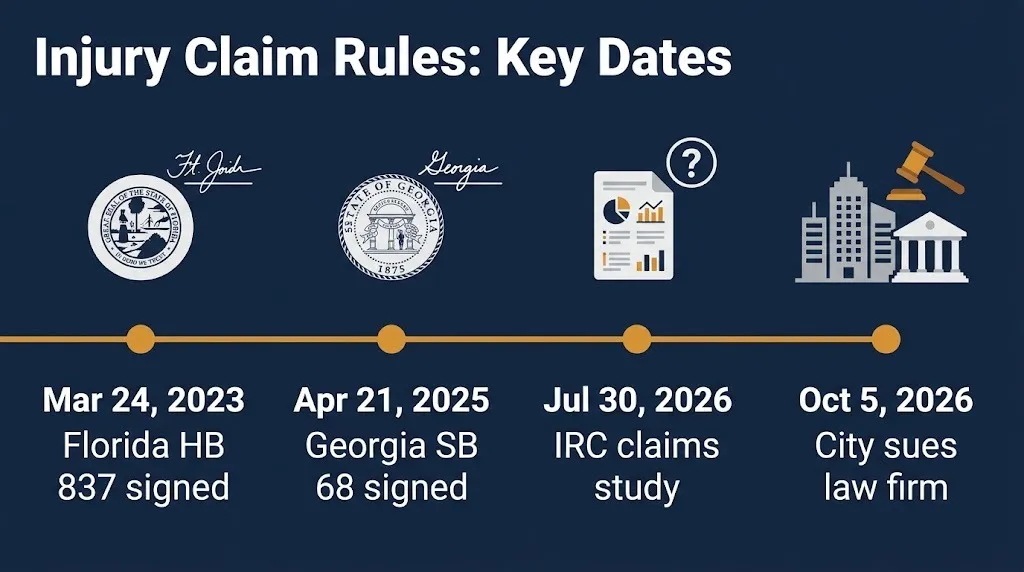
The Insurance Research Council released its report on July 30, 2026. It used 7.4 million auto injury claims from nine insurers, about 43 percent of the U.S. private passenger auto market. Claims closed between mid-2017 and mid-2022.
| Finding | Figure |
|---|---|
| Net per dollar of medical bills, represented bodily injury claimants | $1.40 |
| Net per dollar of medical bills, unrepresented | $1.80 |
| Median wait to close, represented | Nearly 440 days, more than double |
| Share of claimants represented | 40 percent (2017) to nearly 50 percent (2022) |
| Claimants in litigation | 10 percent to 18 percent |
Figures are after medical costs and legal fees. The IRC is funded by insurers, and its release doesn’t say whether it adjusts for injury severity. Firms often cite an older IRC finding that represented claimants received about 3.5 times more. That is a gross figure from a 2004 study.
Reality Check: No lawyer can promise a payout before reviewing your medical records. “No fee unless we win” doesn’t mean no costs. A caller who finds you right after a crash is a red flag, not a favor.
How do you hire a personal injury lawyer?
You hire one by checking the license, comparing fee terms, and signing a written contingency agreement. Here are the steps:
- Write down what happened, when, and who was involved.
- Check each candidate’s license and discipline record on the state bar site.
- Ask for the percentage at each stage: before filing, after filing, and at trial.
- Ask whether costs come out before or after the fee.
- Ask what you owe if the case loses.
- Read the signed contingency agreement before you sign it.
- Keep your own copies of bills, records, and messages.
Compare at least two lawyers if you can. A free consultation gives you a way to ask these questions.
Key Takeaway: Get the fee percentage, cost treatment, and what you owe if you lose in a signed writing before you hire anyone.
What must a contingency fee agreement say?
A contingency fee agreement must be in writing and state how the fee is calculated, under the ABA Model Rule 1.5(c).
The Model Rule requires the agreement to include:
- The percentages for settlement, trial, and appeal
- The litigation and other expenses to be deducted from the recovery
- Whether expenses come out before or after the fee is calculated
The rule requires a written statement at the end showing the outcome, the money sent to you, and how it was figured. Some states add details. Ohio’s rule, for example, requires the lawyer and client both to sign the agreement and the closing statement.
Fees must still be reasonable. A written agreement doesn’t make an excessive fee acceptable.
What should you ask a personal injury lawyer before signing?
Ask for the fee at each stage, how costs are treated, and who will work on your case.
Here are questions worth asking:
- What percentage do you take if the case settles before filing?
- What percentage applies after filing and at trial?
- Do costs come out before or after your fee?
- Do I owe costs if we lose?
- Who will handle my case day to day?
- What’s a realistic timeline for a case like mine?
- Can the fee be negotiated?
Ask how medical bills and any treatment arrangements will be handled. Get answers in the signed agreement, not just in conversation.
What changed for injury claims in 2026?
Several states changed injury rules in recent years, and the changes can shape your claim’s value and deadline.
| State | Change | Effective |
|---|---|---|
| Florida (HB 837) | Negligence deadline cut from four years to two; a plaintiff over 50 percent at fault recovers nothing | Signed March 24, 2023 |
| Georgia (SB 68) | Limits on “anchoring” pain-and-suffering figures; limits on “phantom” medical damages; letters of protection discoverable | Signed April 21, 2025 |
Florida’s 2026 session ended March 13, 2026, with HB 837 intact, according to one law firm summary. Georgia’s phantom-damages rule applies to causes of action arising after April 21, 2025. SB 68 doesn’t cap total damages.
Defense and plaintiff firms describe these laws differently. Check which rules apply to your accident date.
Key Takeaway: State tort reform can change both your filing deadline and how a jury values your injuries, so the accident date and state matter.
What is the personal injury filing deadline?
The deadline is set by state law and runs from one year to six years, with two or three years most common.
| Range | States |
|---|---|
| One year | Kentucky, Tennessee |
| Two years | Florida (after HB 837), most states |
| Three years | North Carolina, South Dakota, many others |
| Six years | Maine, North Dakota |
Louisiana moved from one year to two for injuries on or after July 1, 2024, per one firm’s table. Claims against governments often have shorter notice deadlines. Medical malpractice deadlines can differ too.
The clock works like a warranty claim window. Once it runs out, the claim is usually gone, even if it was strong.
How long does a personal injury settlement take?
It varies, but represented bodily injury claims in the IRC data closed in a median of nearly 440 days.
That’s more than double the unrepresented time. Litigation rates nearly doubled in the study, from 10 percent to 18 percent of claimants. Lawsuits add time.
One firm says injury claims take several months at a minimum and sometimes years. A median isn’t a promise for your case. Ask your lawyer for a range based on your injuries and your state.
Is it legal for a lawyer to call you after an accident?
Rules vary by state, and many restrict contact right after an accident.
Nevada restricts solicitation at a crash scene, medical facility, or jail, and within 72 hours of the incident. Targeted written solicitations are generally barred for 30 days after the incident there. Georgia also bars mail solicitation in the first 30 days.
Case runners are callers who offer to find you care and a lawyer. You don’t have to talk to them. You can report improper solicitation to your state bar.
Key Takeaway: Unsolicited contact right after an accident is a warning sign, and you can pick a lawyer on your own schedule.
What is a letter of protection in an injury case?
A letter of protection is an arrangement where a medical provider treats you in exchange for a share of your recovery.
It lets people without insurance get care while a claim is pending. Georgia’s SB 68 made these agreements discoverable for injuries on or after April 21, 2025. Defense firms say that exposes inflated billing, while plaintiff lawyers say it penalizes people who needed care.
Ask any lawyer who recommends a provider how the treatment will be paid and what you’d owe. Florida’s 2023 law also added medical referral disclosure rules, according to one firm summary.
Are personal injury law firms being sued for fraud in 2026?
Yes, in some cases. On October 5, 2026, New York City sued the law firm Asher & Associates, alleging a personal injury fraud scheme.
The city’s complaint, filed in the Southern District of New York, alleges the firm filed more than a dozen notices of claim seeking tens of millions of dollars for scooter, moped, and bicycle accidents. The city seeks treble damages under RICO and the City and State False Claims Acts. These are allegations, and I haven’t confirmed the firm’s response.
A new report counts 25 civil RICO actions filed from January 2024 to July 2026 that name lawyers, law firms, or litigation funders. Honest claims don’t need embellishing, and your lawyer’s conduct can affect your case.
What happens next in a personal injury claim?
Timing varies, and these stages are typical rather than guaranteed.
Expected, first weeks: You consult lawyers, sign a written fee agreement, and the lawyer notifies the insurer.
Expected, months: Treatment continues, and your lawyer gathers records and may send a demand letter.
Expected, before your deadline: The insurer makes an offer, or a lawsuit is filed before your state’s filing limit.
Expected, if litigated: The case moves through litigation; 18 percent of claimants in the IRC data were in litigation.
Expected, at the end: A settlement or verdict arrives, and your lawyer provides a closing statement showing the fee, costs, and your remittance.
Frequently Asked Questions
How much do personal injury lawyers charge?
Most charge one-third to 40 percent of a recovery.
The percentage often rises if a lawsuit is filed or the case goes to trial.
Do I have to pay a personal injury lawyer upfront?
Most personal injury lawyers don’t charge hourly or collect a fee up front.
Case costs are handled by your agreement, so ask who pays them.
Can I negotiate a lawyer’s contingency fee?
Yes, contingency fees are negotiable according to some firms.
Get the final percentage and cost terms in writing.
Is a lawyer worth it for a small injury claim?
It depends on your case.
The July 2026 IRC data found represented claimants netted $1.40 per medical dollar versus $1.80.
Ask a lawyer to estimate your net after fees and costs.
How long do I have to file a personal injury lawsuit?
It’s one to six years depending on your state.
Florida’s deadline for negligence is now two years.
Check your state before you wait.
How can I check a lawyer’s license?
Use your state bar’s online lookup.
Look for an active license and any public discipline.
What if a lawyer calls me after an accident?
You don’t have to talk or decide.
Many states restrict solicitation right after accidents, so check your state’s rule.
You can report improper contact to the state bar.
Before you sign, get three things in writing: the fee at each stage, whether costs come out first, and what you owe if you lose.
Then confirm your state’s filing deadline. It runs from one year to six years, and missing it can end the claim.