How Long Does a Lawsuit Take to Settle in 2026? Timelines by Case Type
Quick Answer
- Most personal injury lawsuits settle in 12 to 24 months from filing, often sooner if liability is clear.
- Class actions and mass torts typically take 2 to 5 years because certification and claims administration add time.
- The statute of limitations, not settlement speed, is the deadline that matters most for filing.
If you are involved in a lawsuit, you want to know when it will end. The honest answer is that it depends. Some cases settle in months. Others drag on for years. The type of case, the complexity of the facts, and the willingness of both sides to negotiate all matter.
No judge sets a deadline for settlement. A case settles when both sides agree on a number, or it goes to trial. Trial is the alternative, not the default.
This article explains realistic timelines for different case types, what slows cases down, and how to avoid unnecessary delays.
The Facts
| Detail | Verified Information |
|---|---|
| Typical Settlement Timeline | 12 to 24 months |
| Class Action Timeline | 2 to 5 years |
| Mass Tort Timeline | 3 to 5 years or longer |
| Statute of Limitations | Usually 1 to 3 years, varies by state |
| Discovery Duration | 6 to 18 months |
| Trial Wait Time | 1 to 3 years in many courts |
| Settlement Approval | 30 to 90 days after agreement |
How Long Does a Personal Injury Lawsuit Take to Settle?
A personal injury lawsuit typically takes 12 to 24 months to settle from the date of filing. Some settle faster. Some take years.
The timeline depends on several factors. If liability is clear and the insurance company wants to resolve the case, settlement can happen in months. If liability is disputed and the injuries are severe, the case may take years.
The process moves through stages. A complaint is filed. The defendant responds. Discovery occurs. Settlement negotiations happen throughout. If no settlement is reached, the case goes to trial.
Personal injury cases settle because trials are expensive and unpredictable. Both sides usually prefer a known outcome to a jury verdict.
Key Takeaway: Personal injury cases typically settle in 12 to 24 months, faster when liability is clear and slower when disputed.
How Long Does a Class Action Lawsuit Take to Settle?
A class action lawsuit typically takes 2 to 5 years to reach a settlement. The timeline is longer than individual cases because of certification and claims administration.
First, the court must certify the class. That process alone can take a year or more. The defendant often challenges certification. The court holds hearings and issues a ruling.
If the class is certified, settlement negotiations may follow. A tentative settlement requires preliminary approval, notice to class members, a claims period, and final approval. Each stage adds months.
After final approval, payments are distributed. That can take another 6 to 12 months.
Key Takeaway: Class actions take 2 to 5 years because certification, notice, and claims administration add time.
How Long Does a Mass Tort Lawsuit Take?
A mass tort lawsuit typically takes 3 to 5 years or longer. Mass torts are collections of individual lawsuits consolidated for pretrial purposes.
The timeline is long because there are thousands of cases, complex scientific evidence, and bellwether trials. Bellwether trials are test cases that gauge how juries respond to the evidence. Those trials take years to prepare and try.
After bellwether verdicts, settlement negotiations often accelerate. But the settlement process for thousands of individual cases is complex. Each plaintiff’s case must be evaluated individually.
Mass torts like the Suboxone tooth decay litigation or the Elmiron litigation are examples. Those cases are years old and still active.
Key Takeaway: Mass torts take 3 to 5 years or longer due to bellwether trials and complex settlement administration.
What Factors Determine How Long a Lawsuit Takes?
Several factors determine how long a lawsuit takes. The most important are case complexity, court congestion, and settlement willingness.
Complex cases take longer. Medical malpractice cases with multiple experts take longer than simple car accident cases. Products liability cases with scientific evidence take longer than slip and fall cases.
Court congestion matters. Some courts have backlogs that delay trials by years. Federal courts often move faster than state courts, but not always.
Settlement willingness is the biggest variable. If both sides want to settle, a case can resolve quickly. If either side wants to fight, the timeline extends.
Key Takeaway: Complexity, court congestion, and settlement willingness are the three biggest factors in lawsuit duration.
What Is the Discovery Phase and How Long Does It Take?
Discovery is the phase where both sides exchange information. It typically takes 6 to 18 months, depending on the case.
During discovery, parties exchange documents, answer written questions, and sit for depositions. Expert witnesses are hired and produce reports. Motions to compel may be filed if one side withholds information.
Discovery is often the longest single phase of litigation. It is also where most cases settle. Once both sides see the evidence, they can evaluate the likely outcome and negotiate realistically.
Think of discovery like a warranty claim on a major appliance. The diagnosis takes time. The resolution comes after the facts are known.
Key Takeaway: Discovery takes 6 to 18 months and is where most cases settle because both sides see the evidence.
Reality Check: No One Can Guarantee a Fast Settlement
No one can guarantee a fast settlement. Lawyers who promise quick results are selling, not advising. The timeline depends on the evidence, the defendant’s willingness to negotiate, and the court’s schedule. Some cases that look simple become complex. Some cases that look complex settle quickly. The only thing you control is how promptly you file. Missing the statute of limitations guarantees no settlement at all.
How Long Does It Take to Get Paid After a Settlement?
After a settlement is reached, it typically takes 30 to 90 days to receive payment. The exact timeline depends on the type of case.
In personal injury cases, the insurance company issues a check after the release is signed. That usually takes 2 to 4 weeks. The attorney deducts fees and costs, then pays you.
In class actions, the timeline is longer. After final approval, the claims administrator processes claims. Payments may take 6 to 12 months.
In mass torts, payment timing depends on the settlement structure. Some pay quickly. Others pay in stages.
Key Takeaway: Payment takes 30 to 90 days after settlement in individual cases, longer for class actions and mass torts.
What Happens If a Case Does Not Settle?
If a case does not settle, it goes to trial. Trial is the resolution mechanism of last resort.
Trials take months to prepare and days or weeks to try. After the trial, the jury or judge issues a verdict. That verdict can be appealed. Appeals add months or years.
Most cases settle before trial. The exact percentage varies by case type, but it is often 90 to 95 percent for personal injury cases. The parties usually prefer a known settlement to an unpredictable verdict.
If your case does not settle, the timeline extends significantly. A trial followed by an appeal can add 2 to 3 years.
Key Takeaway: If a case does not settle, trial and possible appeals add years to the timeline.
How Long Do Different Types of Lawsuits Take?
Different types of lawsuits have different typical timelines. Here is a breakdown.
| Case Type | Typical Time to Resolution |
|---|---|
| Car accident | 6 to 18 months |
| Slip and fall | 12 to 24 months |
| Medical malpractice | 2 to 4 years |
| Products liability | 2 to 4 years |
| Class action | 2 to 5 years |
| Mass tort | 3 to 5 years or longer |
| Employment discrimination | 1 to 3 years |
| Breach of contract | 1 to 2 years |
These are general ranges, not guarantees. Your case may differ.
Key Takeaway: Car accidents and contract disputes resolve fastest. Medical malpractice, class actions, and mass torts take longest.
How Can You Speed Up a Lawsuit Settlement?
You can speed up a lawsuit settlement by being prepared, responsive, and realistic.
Provide documents promptly. Respond to discovery requests on time. Show up for depositions. Delays on your end slow the case.
Be realistic about value. If you demand far more than the case is worth, the defendant may refuse to negotiate. A reasonable demand invites a reasonable response.
Stay in communication with your lawyer. Return calls and emails. Make decisions quickly when a settlement offer arrives.
These steps do not guarantee speed. But they remove unnecessary delays.
Key Takeaway: Prompt document production, realistic demands, and quick decisions remove delays you control.
What Is the Statute of Limitations and Why Does It Matter?
The statute of limitations is the legal deadline to file a lawsuit. It varies by state and case type, usually one to three years for personal injury.
The clock starts on the date of the injury or the date you discovered the injury. Once the deadline passes, you lose the right to sue. The court will dismiss the case no matter how strong the evidence.
The statute of limitations is not the same as the settlement timeline. You must file before the deadline, but the case may settle long after.
If you are considering a lawsuit, find out your state’s deadline immediately. Do not wait for settlement negotiations to begin.
Key Takeaway: The statute of limitations is the most important deadline. Missing it ends your case before settlement can occur.
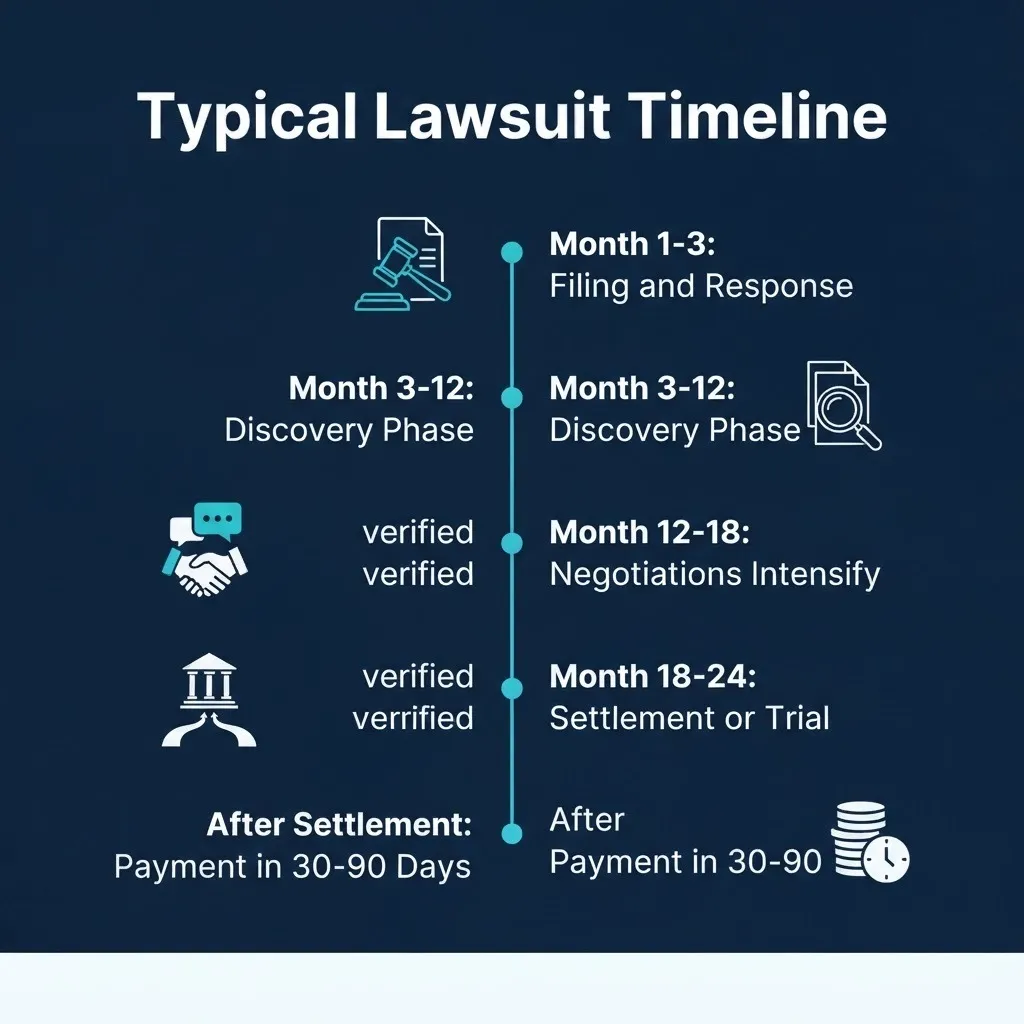
What Happens Next While You Wait for a Settlement
While you wait for a settlement, the case moves through predictable stages.
Month 1 to 3: Complaint filed, defendant responds, early settlement discussions.
Month 3 to 12: Discovery begins, documents exchanged, depositions scheduled.
Month 12 to 18: Discovery ends, expert reports filed, settlement negotiations intensify.
Month 18 to 24: Settlement reached or trial scheduled.
After settlement: Payment within 30 to 90 days.
These timelines are general. Your case may move faster or slower.
Frequently Asked Questions
How long does a typical lawsuit take to settle?
Most lawsuits settle in 12 to 24 months from filing.
Can a lawsuit settle before trial?
Yes. Most cases settle before trial, often during discovery.
How long does a class action settlement take?
Class actions typically take 2 to 5 years from filing to final approval.
What is the quickest type of lawsuit to settle?
Car accident cases with clear liability often settle in 6 to 18 months.
How long after settlement do I get paid?
Usually 30 to 90 days in individual cases, longer for class actions.
What happens if I miss the statute of limitations?
Your case is dismissed. You lose the right to sue permanently.
Can I speed up my lawsuit?
You can avoid delays by providing documents promptly and responding quickly to your lawyer.
How long do mass tort lawsuits take?
Mass torts typically take 3 to 5 years or longer due to bellwether trials and complex administration.
The most important fact about lawsuit timelines is that they vary. Most cases settle in 12 to 24 months. Some take years. The deadline you control is the statute of limitations. File promptly. Gather evidence. Be realistic about value. Then let the process work. A settlement comes when both sides see the same facts and agree on a number. That takes time, but it usually comes.