Chances of Winning a Personal Injury Lawsuit in 2026: What the Data Shows
Quick Answer
- Federal studies show plaintiffs winning about half of tort trials, but most cases settle before trial.
- Payout: not yet determined. The median tort trial award in the 2005 federal study was $24,000.
- Deadlines vary by state and defendant. New Jersey, for example, generally allows two years.
Your chances of winning a personal injury lawsuit depend on your evidence, your state’s fault rules, and the type of case. No single official number exists. At trial, federal data show plaintiffs winning about half of tort cases.
But trials are rare. Estimates put settlements at 90 percent to more than 95 percent of cases, so “win rate” mostly means “settlement rate.” Your state deadline matters most.
This guide covers win rates by case type, fault rules, and how to strengthen a claim. One surprise: medical malpractice plaintiffs won under a third of trials in every federal study we checked.
| The Facts | |
|---|---|
| Case | Not a single case. A civil injury claim, usually based on negligence |
| Status | General rules as of October 20, 2026. No 2026 national win-rate dataset found |
| Fund Size | Not applicable. No settlement fund exists |
| Est. Per Person | Not yet determined. Median tort trial award was $24,000 in 2005 data |
| Claim Deadline | Set by state. New Jersey generally allows two years from the incident |
| Administrator | None. Insurers and courts handle these claims |
| Proof Needed | Evidence the other party caused your injury, plus proof of your losses |
What are the chances of winning a personal injury lawsuit?
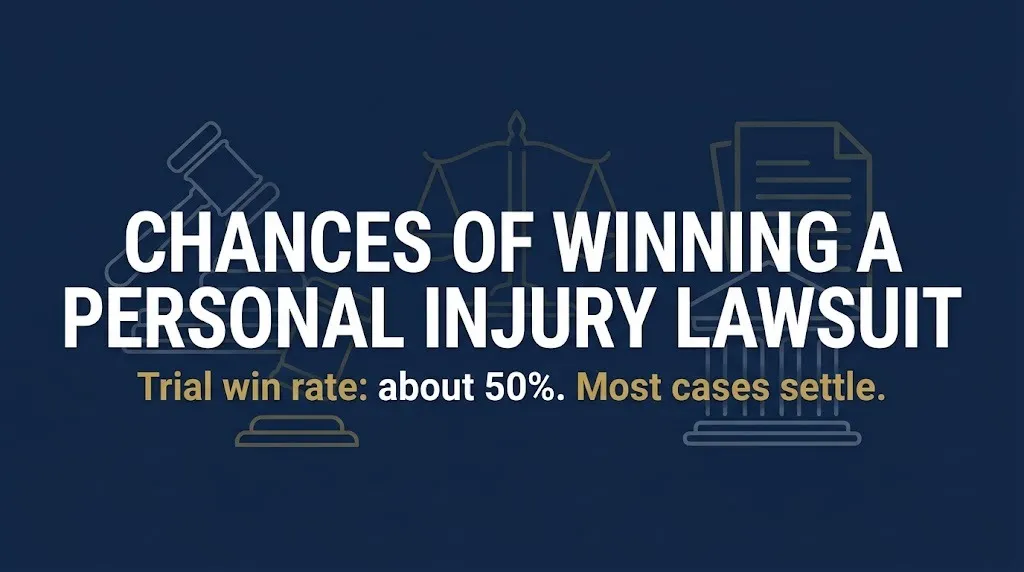
There’s no single official number, but federal data show plaintiffs winning roughly half of tort trials, and most cases settle before any trial happens. Where you land depends on how the injury happened, the evidence of fault, and whether you have counsel.
That’s the honest version. Pages quoting one clean percentage are mashing three questions together: odds at trial, odds of settling, and odds of getting paid.
Here’s the reference sheet:
- Trial win rate (all tort cases): about half, per Bureau of Justice Statistics studies
- Cases that settle: estimates run from about 90 percent to more than 95 percent
- Cases that reach trial: roughly 4 percent, by one reading of BJS data
- Median tort trial award: $24,000 in the 2005 federal study
Every figure above comes with a caveat about age and sampling. The next sections spell those out.
Is the “50 percent win rate” statistic real?
Yes, but it only describes cases that went to trial. The Bureau of Justice Statistics found plaintiffs prevailed in about half of tort trials in its 2001 study of the nation’s largest counties.
Now look at what that number leaves out. Roughly 4 percent of personal injury cases reach trial, according to one law firm’s reading of BJS data. That reading also excludes cases that settled or disappeared before any lawsuit was filed.
So the 50 percent figure covers a thin slice. Trials tend to hold the cases both sides couldn’t price, which likely skews them toward real disputes.
Don’t treat it as a coin flip on your claim. A strong claim often wins in negotiation long before a jury sees it. A weak one rarely gets rescued by a trial.
What is the win rate by personal injury case type?
Win rates swing widely by case type: plaintiffs won 75 percent of animal attack trials but only 16 percent of false arrest trials in the 2005 federal study. That study analyzed a national sample of state courts.
| Case type (tried in 2005) | Plaintiff win rate |
|---|---|
| Animal attack | 75% |
| Automobile accident | 64% |
| Asbestos | 55% |
| Intentional tort | 52% |
| Medical malpractice | 23% |
| Product liability (not asbestos) | 20% |
| False arrest or imprisonment | 16% |
| All general civil trials | 56% |
Auto accident cases dominate the courtroom. Nearly 60 percent of tort trials in the 2005 tort-specific report were auto cases, and about 15 percent involved medical malpractice.
Key Takeaway: Plaintiffs won about half of tort trials in federal data, but the figure runs from 75 percent for animal attacks to 16 percent for false arrest, so case type matters more than any average.
How much do personal injury plaintiffs actually win?
Not yet determined is the honest answer, because no fixed payout exists and the newest federal trial figures are from 2005. Half of plaintiff winners in tort trials got $24,000 or more that year.
Auto cases ran lower. The median final award in auto cases was around $15,000. Medians hide big outliers, so a serious injury can fall far outside them.
Here’s what the verified figures say:
| Metric | Figure | Source and year |
|---|---|---|
| Median tort trial award | $24,000 | BJS, 2005 |
| Median tort trial award, large counties | $27,000 | BJS, 2001 |
| Median auto trial award | About $15,000 | BJS, 2005 |
| Average bodily injury liability claim | $28,278 | Insurance Information Institute, 2024 (as reported August 2026) |
| Plaintiff winners awarded punitive damages | About 5% | BJS, 2001 |
The risk side matters too. A plaintiff who takes a case to trial can lose and walk away with $0. Neither number predicts your case.
What percentage of personal injury cases settle before trial?
Most do. Estimates range from about 90 percent to more than 95 percent, depending on the source and how cases are counted.
One law firm attributes a 90 to 95 percent settlement rate to Department of Justice data. Another puts it above 95 percent. A third reads BJS data as showing about 4 percent reaching trial.
Cases can settle at any time. That includes before a lawsuit is filed, during litigation, and even mid-trial.
Think of it like a disputed repair bill. Both sides compromise because proving every line item costs more than the gap between them.
Not every settlement is fair, though. Accidentally taking blame or accepting a lowball offer can hurt your position. Know what your claim is worth before you sign a release.
Does having a lawyer improve your chances of winning?
Law firm sources say yes, but no neutral dataset checked here measures the effect. That’s worth saying plainly, because every page claiming it comes from a firm that sells legal services.
Two firms state that odds depend partly on reliable counsel. Another says an experienced lawyer can raise the odds of a good settlement or a win. Treat those as informed opinion, not statistics.
Several firms advertise free initial consultations. The fee percentage isn’t confirmed here, and it varies, so ask for it in writing.
Questions worth asking before you sign anything:
- What percentage do you take, and is it before or after costs?
- Who covers expert and filing costs if the case doesn’t pay?
- Who will handle my case day to day?
- How do you value a claim like mine?
Reality Check: Nobody texts you injury settlement money first. Be wary of any caller, website, or “claim helper” quoting your odds or payout before reading your records. No honest source can promise a win.
Key Takeaway: Most injury claims end in settlement, so your realistic goal is a well-documented claim that an insurer prices fairly, not a courtroom victory.
How can you improve your chances of winning a personal injury lawsuit?
You improve your chances by proving three things: the other party was careless, that carelessness caused your injury, and what it cost you. The burden of proving causation sits with the injured person.
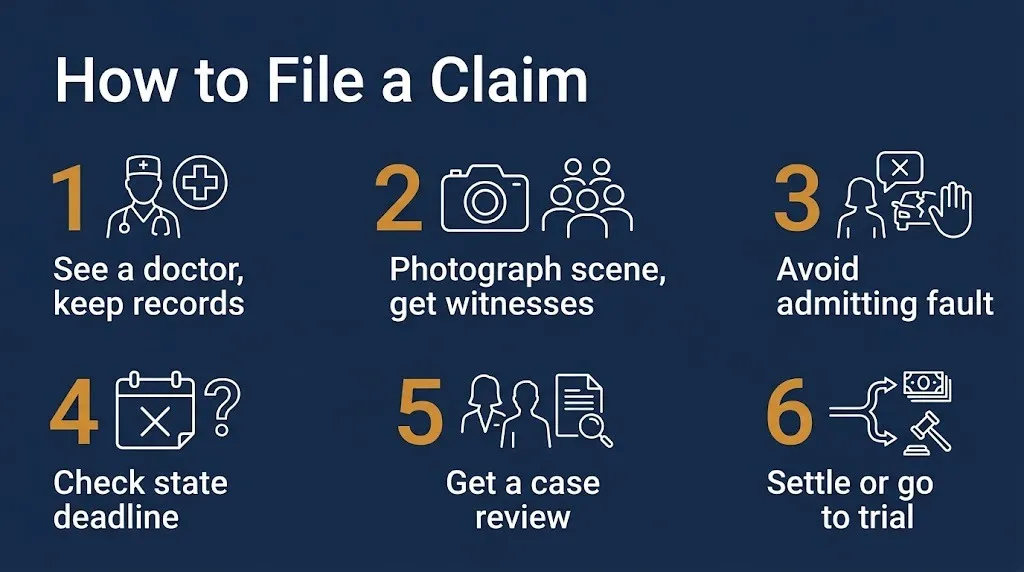
Law firm guides commonly point to the same practical steps. None guarantees an outcome.
- Get medical care and keep every record and bill.
- Photograph the scene and get witness names.
- Avoid admitting fault, even casually.
- Track missed work and out-of-pocket costs.
- Keep evidence of the other party’s conduct.
- Check your state’s fault rule and deadline.
- Get a case review before accepting any offer.
- Read any release carefully before signing.
Evidence about your own behavior counts too. Seatbelt use, phone activity, and speed get extra weight in states with a strict fault cutoff.
What if you were partly at fault for the injury?
Partial fault rarely ends a claim in most states, but it can reduce or bar your recovery depending on your state’s rule. Most states use some form of modified comparative negligence.
| System | How it works | Examples from sources |
|---|---|---|
| Pure comparative | Recovery reduced by your share of fault, no cutoff | California, New York |
| Modified, 50% bar | Barred once your fault reaches 50% | Tennessee |
| Modified, 51% bar | Barred at 51% or more at fault | Pennsylvania, Texas, Kansas, Massachusetts |
| Contributory negligence | Any fault can bar recovery | Maryland, Virginia, North Carolina, D.C. |
Washington, D.C. carved out an exception for pedestrians, cyclists, and other vulnerable road users, moving those claims to a 51 percent threshold. State rules change, so confirm yours.
Who has to prove fault also varies. In Pennsylvania, the defendant must establish comparative negligence. Insurers elsewhere may use fault allegations to undervalue or deny claims.
What is the deadline to file a personal injury lawsuit?
The deadline is set by state, and missing it usually ends your claim. New Jersey, for example, generally allows two years from the date of the incident.
Some defendants run on different clocks. A claim against a government body usually needs written notice first, and that notice deadline is often much shorter than the normal limit. Federal claims must be presented to the right agency within two years, and the agency must actually receive them.
Other claim types, such as medical malpractice, can carry their own rules. Ask early which clock controls.
- Identify the state where the injury happened.
- Look up the filing deadline for your claim type.
- Check whether a government body is involved.
- If so, find the written notice deadline immediately.
- Calendar a date well before the final deadline.
Key Takeaway: State fault rules and filing deadlines can decide your case before the evidence does, so check both first.
How long does a personal injury lawsuit take?
Not yet confirmed. No reliable national timeline appeared in the sources checked, and court speed varies widely.
Here’s the common order of events. It runs on the court’s schedule, not yours, like a delayed tax refund where nothing’s wrong but nothing moves on your calendar.
| Stage | What happens |
|---|---|
| Claim and negotiation | You or your lawyer present the claim to the insurer |
| Filing | A lawsuit starts if talks stall |
| Discovery | Both sides gather evidence and question witnesses |
| Mediation | A neutral third party tries to resolve the case |
| Trial | Held only if no deal is reached |
In New Jersey, the court usually requires mediation before a trial date is set. Other states differ.
Ask your attorney for a realistic estimate for your specific court. Don’t trust a flat number from a website.
What happens if your personal injury case goes to trial?
If your case goes to trial, a jury usually decides it, and you could receive nothing. BJS found juries decided an estimated 96 percent of medical malpractice, 93 percent of auto, 92 percent of product liability, and 91 percent of premises liability tort trials.
That’s a high-variance moment. Plaintiffs won about half of tort trials, which means roughly half lost. A plaintiff can also win but see the award reduced by their own share of fault.
What a trial typically involves:
- A jury, not a judge, in most tort trials
- Evidence and witness testimony from both sides
- A verdict that can be zero, partial, or full
- Punitive damages in a small minority of wins (about 5 percent in 2001 data)
Even trial-bound cases can settle before a verdict. Many do, which is part of why trial numbers stay so low.
Why do most personal injury cases settle instead of going to trial?
Most cases settle because trials are expensive, slow, and uncertain for both sides. Defendants tend to avoid the risk of an adverse verdict, and plaintiffs avoid the risk of getting nothing.
Insurers play a major role. Cases with clear liability settle more often, while disputed liability pushes some toward trial. One source adds that low policy limits tend to settle and higher limits may go to trial more often.
Here’s the skeptical read. An insurer’s first offer reflects its risk math, not your injuries. Offers that ignore documented losses are negotiating positions, not verdicts.
That’s why evidence matters before any courtroom date. It’s your leverage.
Key Takeaway: Both sides settle because trial is costly and unpredictable, which makes your evidence of fault and losses your real leverage.
Which personal injury cases are hardest to win?
Medical malpractice and product liability cases are among the hardest, with plaintiffs winning 23 percent and 20 percent of tried cases in the 2005 federal study. False arrest cases were lower still at 16 percent.
Medical malpractice has stayed in a narrow, low band across decades of federal data. Law firm guides often call these cases among the most difficult and note that they commonly require expert witnesses.
| Case type | Plaintiff trial win rate |
|---|---|
| Medical malpractice | 23% (2005) |
| Product liability (not asbestos) | 20% (2005) |
| False arrest or imprisonment | 16% (2005) |
Low odds don’t mean no case. They mean tried cases in these categories often involve disputed facts and expensive proof.
Which personal injury cases are easiest to win?
Animal attack and auto accident cases had the highest plaintiff win rates in the 2005 federal study, at 75 percent and 64 percent. “Easiest” is relative, since every case still depends on proof.
The pattern is intuitive. Facts like a bite or a rear-end collision are often easier to document than a disputed standard of care.
Easy to win doesn’t mean big to win. The median final award in auto trials was around $15,000, below the overall tort median of $24,000.
- Animal attacks: 75%
- Auto accidents: 64%
- Asbestos: 55%
- Intentional torts: 52%
Win rate and payout are different questions. Ask both.
Do the older federal win-rate numbers still apply in 2026?
Roughly, but treat them as a rough guide. The newest BJS tort-trial figures verified here are from 2005, and no 2026 national dataset turned up.
Across four BJS studies, the numbers held in similar ranges. Samples differ, though. Some covered only the 75 largest counties, and one covered jury trials only.
| Study year | Auto accident | Medical malpractice |
|---|---|---|
| 1992 (jury, large counties) | 60% | 30% |
| 1996 (large counties) | 58% | 23% |
| 2001 (large counties) | Not confirmed | 27% |
| 2005 (national sample) | 64% | 23% |
One law firm notes that lawyers are better served by knowing local judges and juries than by leaning on national stats. That’s fair. Your county, your defendant, and your evidence outweigh any average.
Key Takeaway: Win rates held in similar ranges from 1992 to 2005, but no 2026 national figure exists, so treat every percentage as a rough guide, not a prediction.
What Happens Next
- Now: Confirm your state’s filing deadline and whether a government body is involved.
- Expected early stage: Document your injuries and losses, and consider a case review.
- Expected next stage: Insurer negotiation, or a lawsuit filed before the deadline.
- Expected pretrial stage: Discovery and, in some states such as New Jersey, mediation.
- Expected final stage: Settlement, the most common outcome, or a trial verdict.
Frequently Asked Questions
What are the odds of winning a personal injury lawsuit?
No single official number exists.
Federal data show plaintiffs winning about half of tort trials.
Most cases settle before reaching trial.
What percentage of personal injury cases go to trial?
Roughly 4 percent, by one reading of BJS data.
Other sources say 4 to 5 percent.
Counts exclude claims resolved before a lawsuit is filed.
What percentage of personal injury cases settle?
Estimates range from about 90 percent to more than 95 percent.
Cases can settle at any stage, even during trial.
What is the hardest personal injury case to win?
Among cases checked, false arrest had the lowest plaintiff trial win rate at 16 percent in 2005.
Product liability was 20 percent and medical malpractice 23 percent.
Can I still win if I was partly at fault?
It depends on your state.
Pure comparative states reduce your award by your share of fault.
Modified states bar recovery at 50 or 51 percent, and a few states bar any fault.
How much is the average personal injury settlement?
Not yet determined for your case.
The Insurance Information Institute put the average bodily injury liability claim at $28,278 in 2024, as reported in August 2026.
What happens if I lose a personal injury trial?
You can receive $0.
A plaintiff who loses at trial isn’t guaranteed any compensation.
Ask your attorney about the risk before declining a settlement.
Does hiring a lawyer increase my chances?
Law firm sources say yes.
No neutral dataset checked here measures the effect.
Free consultations are common, so compare before choosing.
Start with two checks today: your state’s fault rule and your filing deadline. Gather medical records and photos while they’re easy to find.
If a government body may be involved, ask about written notice right away. Your deadline is the one number you can’t recover once it passes.