Mesothelioma Lawsuits 2026: Payouts, Deadlines, and How to File
Quick Answer
- Mesothelioma lawsuits are individual personal injury claims against asbestos companies, not class actions, and each case is filed separately.
- Recent payouts include a $33.38 million verdict in February 2026 and $6.5 million settlements in late 2025.
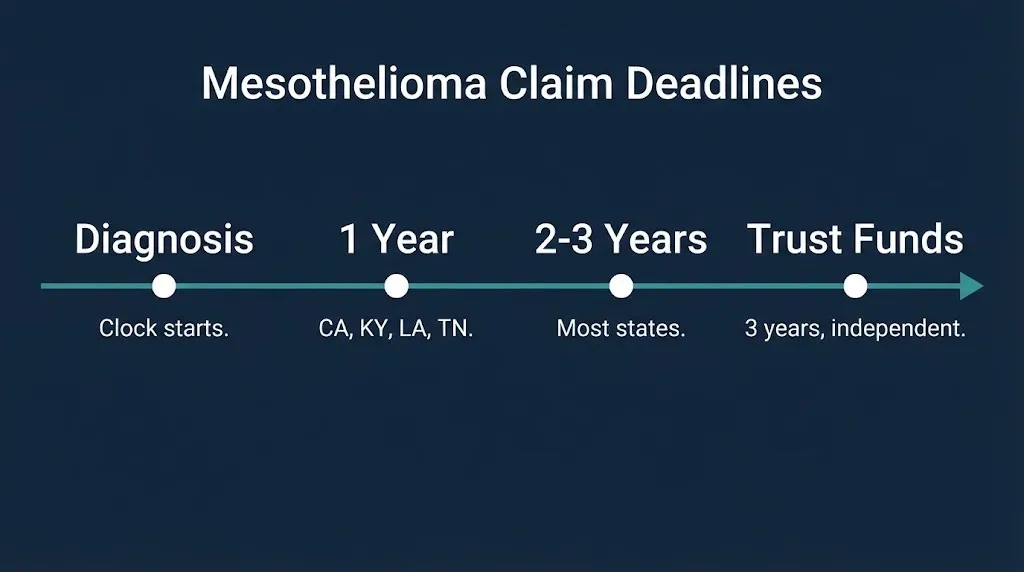
- Most states give you one to three years from diagnosis to file, and some are as short as one year.
What Is a Mesothelioma Lawsuit?
A mesothelioma lawsuit is a personal injury claim filed by a person diagnosed with mesothelioma against the companies that manufactured, sold, or used asbestos products that caused their exposure. It’s not a class action. It’s not a settlement fund you can simply claim from. Every case is filed individually.
The disease has a latency period of 20 to 50 years between exposure and diagnosis. That means the companies that caused your exposure may no longer exist, may have gone bankrupt, or may have reorganized. That’s why mesothelioma litigation involves two parallel tracks: lawsuits against companies still operating, and trust fund claims against companies that have gone bankrupt.
You can pursue both at the same time. A lawsuit goes through state or federal court. A trust fund claim goes through an administrative process set up by a bankruptcy court. They don’t reduce each other, though some states now require disclosure of trust fund recoveries to defendants.
How Much Can You Get From a Mesothelioma Lawsuit?
There’s no fixed amount. Mesothelioma compensation depends on your age, the severity of your illness, lost income, pain and suffering, and which companies are found liable. Recent case results show the range.
| Case | Outcome | Amount | Date |
|---|---|---|---|
| George Stephenson v. Mole-Richardson | Jury verdict | $33,384,400 | Feb 2026 |
| Linda Weaver v. Vanderbilt Minerals | Jury verdict | $12,250,000 | Aug 2025 |
| Richard Long v. 3M et al. | Jury verdict | $33,000,000 | Sept 2025 |
| Stephen Anderson v. BorgWarner Morse | Default judgment | $24,630,165 | Feb 2026 |
| Bay Area pipefitter settlement | Settlement | $6,500,000+ | Nov 2025 |
The Stephenson case involved an elderly patient who developed mesothelioma from asbestos-containing lighting equipment made by a Hollywood manufacturer. The jury found malice and awarded $33.38 million in non-economic damages after just two and a half hours of deliberation.
The Anderson case was a talc-related asbestos claim. The defendant lost its counsel, failed to appear, and the court entered a $24.6 million default judgment. That’s not typical. Most cases settle for confidential amounts.
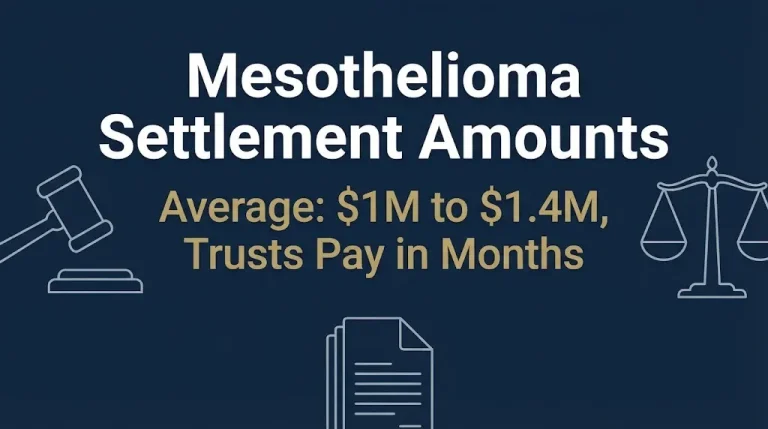
Average settlement values for mesothelioma lawsuits typically fall between $1 million and $2.4 million, according to compensation data. Trial verdicts run higher but take longer and carry risk.
Who May Qualify to File a Mesothelioma Lawsuit?
You may qualify if you were diagnosed with mesothelioma and can trace your exposure to asbestos-containing products or work sites. The exposure doesn’t have to be recent.
Qualifying exposure often comes from:
- Industrial jobs: Shipyards, construction, manufacturing, refineries, power plants.
- Military service: Navy veterans have the highest rates of asbestos exposure.
- Trades: Pipefitters, boilermakers, insulators, electricians, mechanics.
- Take-home exposure: Family members exposed to asbestos fibers on a worker’s clothing.
- Environmental exposure: Living near asbestos mines or processing facilities.
- Consumer products: Talc-based powders, certain older appliances, brake pads.
The Weaver case is notable because it involved environmental exposure. Anna Bishop lived less than a mile from a talc mine in upstate New York for two decades. The jury found Vanderbilt Minerals liable for $12.25 million.
Foreign nationals may also qualify if the asbestos product was made by a U.S. company, the exposure occurred under U.S. jurisdiction, or a U.S. entity distributed the product.
Key Takeaway: Mesothelioma lawsuits don’t require proof that a single product caused your disease. You need to show that asbestos exposure was a substantial factor, and that the defendant’s product contributed to it.
What Is the Statute of Limitations for Mesothelioma Lawsuits?
The statute of limitations for mesothelioma lawsuits ranges from one to six years from diagnosis, depending on your state. Missing the deadline almost always bars your claim permanently.
Four states have the shortest window at one year: California, Kentucky, Louisiana, and Tennessee. Most states allow two or three years. Maine, Minnesota, and North Dakota offer the longest at six years.
| State | Personal Injury Deadline | Wrongful Death Deadline |
|---|---|---|
| California | 1 year | 1 year |
| Kentucky | 1 year | 1 year |
| Louisiana | 1 year | 1 year |
| Tennessee | 1 year | 1 year |
| New York | 3 years | 2 years |
| Pennsylvania | 2 years | 2 years |
| New Jersey | 2 years | 2 years |
| Texas | 2 years | 2 years |
| Florida | 4 years | 2 years |
| Maine | 6 years | 2 years |
The discovery rule applies in virtually all states. That means the clock starts when you’re diagnosed or when you reasonably should have known you had an asbestos-related disease, not when you were exposed. Without the discovery rule, these claims would be impossible because exposure usually happened decades before diagnosis.
Louisiana is an exception that changed recently. Its one-year prescriptive period was repealed effective July 1, 2024, and replaced with a two-year period. But the change is prospective only. Claims arising before that date are still governed by the old one-year rule. No Louisiana court has yet decided how the amendment applies to long-latency diseases like mesothelioma.
What Are Asbestos Trust Funds?
Asbestos trust funds are pools of money set up by bankrupt asbestos companies to compensate current and future mesothelioma victims. There are over 60 active trusts holding more than $16 billion in remaining assets.
Trust fund claims work differently from lawsuits. There’s no court, no jury, and no adversarial proceeding. You file a claim with the trust, provide proof of diagnosis and exposure, and the trust evaluates it. Most claims resolve in 3 to 12 months, and expedited review is available for urgent cases.
Each trust has its own filing deadline, typically three years from diagnosis. These deadlines are independent of state statutes of limitations. A patient whose lawsuit deadline has expired may still have valid trust fund claims.
You don’t need to know which trusts apply to you. An attorney can identify all applicable trusts, often five to ten for a single patient, and file claims in parallel. Missing even one deadline means leaving money on the table.
The Johns Manville Trust, Owens Corning Trust, and W.R. Grace Trust are among the largest and most active.
How Do You File a Mesothelioma Lawsuit?
Filing a mesothelioma lawsuit starts with contacting a specialized attorney, but the process itself follows a predictable path. Here are the steps.
- Contact a mesothelioma attorney. Most offer free consultations and work on contingency, meaning you pay nothing unless you recover.
- Provide your work history and exposure details. Jobs, products, work sites, military service, and any secondhand exposure.
- Gather medical evidence. Pathology reports, imaging scans, and treatment records confirming the diagnosis.
- Identify responsible companies. Your attorney traces the asbestos products back to manufacturers and suppliers.
- File the lawsuit in the appropriate court. Venue can be where exposure occurred, where the company did business, or where you live.
- File trust fund claims in parallel. Your attorney identifies all applicable trusts and submits claims.
- Give a deposition if needed. Most depositions are conducted remotely and typically from home.
- Reach settlement or go to trial. Most cases settle within 12 to 18 months.
You don’t have to file in your home state. Some courts have more experience with asbestos cases and move faster. Illinois, New York, and California are among the top filing venues.
Reality Check: No legitimate mesothelioma attorney charges upfront fees. No one texts you settlement money. If a company asks you to pay to “process” a trust fund claim, walk away. Filing is handled by your attorney, and payment comes only after recovery.
How Do VA Benefits Work for Mesothelioma?
Veterans with service-connected asbestos exposure may qualify for VA disability benefits, and these claims have no statute of limitations. You can file at any time.
The VA recognizes mesothelioma as a presumptive condition for certain veterans. If you served in a job with likely asbestos exposure (Navy, shipyards, construction, demolition), you may qualify for 100% disability. As of 2026, that’s $3,938.58 per month for a single veteran with no dependents.
VA benefits don’t reduce what you can recover from lawsuits or trust funds. They’re a separate compensation pathway. Filing early means earlier compensation, so don’t wait.
You can pursue VA benefits, trust fund claims, and lawsuits simultaneously. Each has its own rules and deadlines.
What Happens Next in a Mesothelioma Case?
Immediately after diagnosis: Contact an attorney. In one-year states like California and Kentucky, every week matters.
Within weeks: Your attorney gathers medical records, work history, and exposure evidence.
Within months: Lawsuits filed, trust fund claims submitted, and VA claims initiated if applicable.
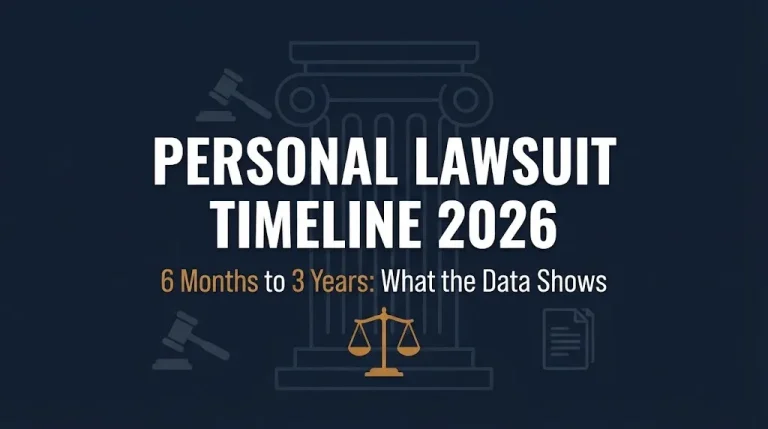
12 to 18 months: Most lawsuits settle. Trust fund claims resolve faster, often in three to six months.
2 to 3 years: If a case goes to trial, expect this timeline. Appeals can add more time.
Ongoing: Trust fund claims can be filed even after a lawsuit resolves. Identify all applicable trusts early.
Frequently Asked Questions
Is a mesothelioma lawsuit real or a scam?
Mesothelioma lawsuits are real personal injury claims, and they’ve produced verified verdicts exceeding $33 million. But there’s no class action settlement or claim form you can simply fill out. Every case is filed individually.
How much can I get from a mesothelioma lawsuit?
Amounts depend on your age, illness severity, lost income, and the companies found liable. Recent verdicts range from $12.25 million to $33.38 million, while settlements often fall between $1 million and $2.4 million.
How long do I have to file a mesothelioma lawsuit?
Most states give you one to three years from diagnosis, but California, Kentucky, Louisiana, and Tennessee allow only one year. The discovery rule means the clock starts at diagnosis, not exposure.
Can family members file a mesothelioma lawsuit?
Yes. Surviving spouses, children, and dependents can file wrongful death claims. The deadline is typically one to three years from the date of death, depending on the state.
Do asbestos trust funds have the same deadline as lawsuits?
No. Each trust sets its own deadline, typically three years from diagnosis. These deadlines are independent of state statutes of limitations, so you may still have trust fund claims even if the lawsuit deadline passed.
Do I need to go to court for a mesothelioma claim?
Most mesothelioma lawsuits settle before trial. Trust fund claims never go to court. If your case does go to trial, your attorney handles it, and you typically don’t need to appear.
Can veterans file mesothelioma lawsuits?
Yes. Veterans can pursue VA benefits, lawsuits, and trust fund claims simultaneously. VA claims have no statute of limitations, but earlier filing means earlier compensation.