CVS White Settlement: 2026 Claim Deadlines, Payout Amounts, and Filing Steps
Quick Answer
- The “CVS White Settlement” is not a confirmed single case; it may refer to several unrelated CVS lawsuits.
- No verified payout amount or claim deadline is attached to this exact phrase as of February 2026.
- Check the official CVS settlement website or federal court docket for case-specific notices before filing anything.
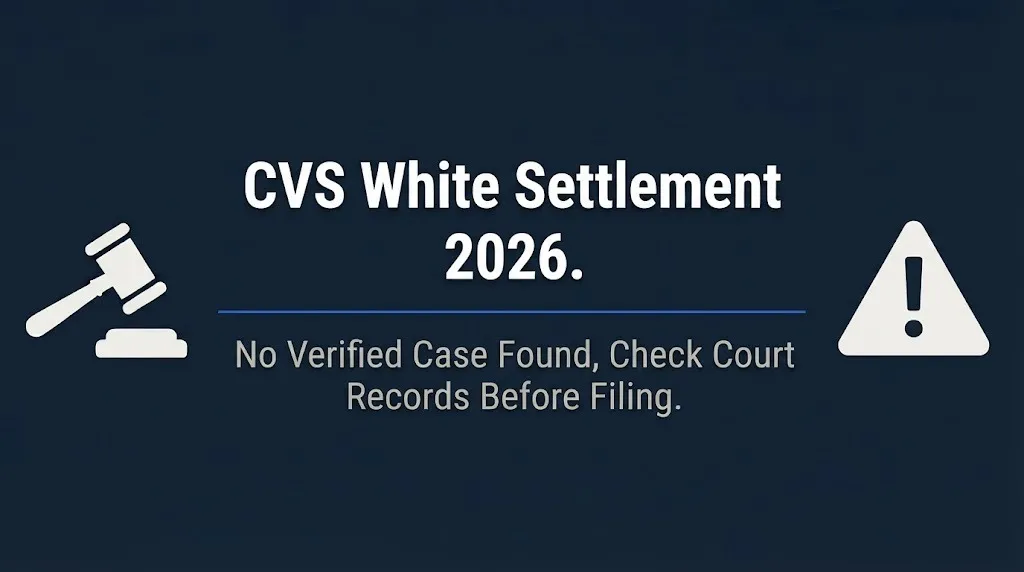
The term “CVS White Settlement” does not match any verified, single class action settlement in federal or state court records as of February 2026. Searches return a mix of unrelated CVS matters, including employment disputes, consumer protection claims, and older pharmacy settlement notices.
This affects anyone who received a text, email, or social media post referencing a “CVS White Settlement” and is trying to determine if it is real. It also affects consumers who may have claims against CVS under different case names.
This article covers what is actually verified about CVS litigation in 2026, how to spot a fake settlement notice, and what to do if you believe you have a legitimate claim against CVS.
The Facts
| Field | Verified Detail |
|---|---|
| Case | No single “CVS White Settlement” found in court records |
| Status | Unverified as a distinct case |
| Fund Size | Not applicable; no single fund identified |
| Est. Per Person | Not applicable |
| Claim Deadline | Not applicable |
| Administrator | Not applicable |
| Proof Required | Depends on the specific CVS case |
CVS Health and its subsidiaries face ongoing litigation in 2026. Some cases involve employment claims. Others involve pharmacy billing, generic drug pricing, or consumer protection issues.
The phrase “White Settlement” may be a misunderstanding. It could refer to a law firm named White, a location in White Settlement, Texas, or a specific case that has not been widely reported.
No federal or state court docket search returns a case captioned “CVS White Settlement” as of February 2026. That alone should make you cautious.
Is the CVS White Settlement Real or a Scam?
The “CVS White Settlement” is unverified as a real, single class action settlement. If you received a message about it, treat the claim with caution until you verify it independently.
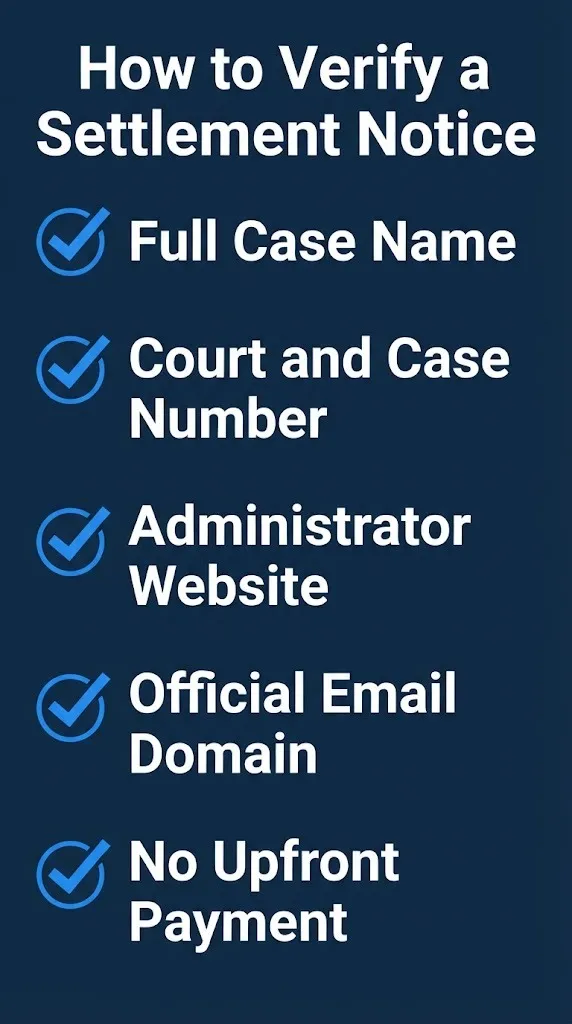
Legitimate settlement notices come from court-appointed administrators. They include a case name, court name, case number, and official website. They never ask for upfront payment.
Scammers often use real company names and the word “settlement” to create believable fake notices. They may ask for your Social Security number, bank account details, or a processing fee.
The Federal Trade Commission has warned about fake settlement and refund scams. Real settlements never require payment to file a claim.
If you received a “CVS White Settlement” notice, do not click any links. Search the federal court docket for the exact case name. If no case appears, the notice is likely fake.
What CVS Lawsuits Are Actually Active in 2026?
CVS Health faces multiple active lawsuits in 2026, though none is captioned “White Settlement.”
The major categories include:
- Generic drug pricing antitrust litigation
- Opioid dispensing and pharmacy oversight claims
- Employment discrimination and wage and hour suits
- Pharmacy benefit manager fee disclosure cases
- Retail consumer protection claims
Several of these cases are large class actions or multidistrict litigation. Some have reached settlement. Others remain in discovery or motion practice.
The generic drug pricing litigation is the largest. Multiple state attorneys general and private plaintiffs allege that CVS, along with other pharmacy chains, overcharged for generic drugs.
A settlement in that litigation could produce consumer notices. If you receive a legitimate notice, it will name the actual case, not “CVS White Settlement.”
How Much Could a CVS Settlement Pay?
Any CVS settlement payout amount depends entirely on the specific case. No verified amount is attached to the “CVS White Settlement” phrase.
In generic drug pricing cases, settlements have ranged from tens of millions to hundreds of millions. Individual consumer payouts are often small, sometimes $10 to $100.
In employment cases, individual plaintiffs may receive thousands of dollars for wage claims or discrimination findings. Class members in employment settlements often receive hundreds to thousands depending on their circumstances.
In consumer protection cases, payouts vary. Retail overcharge settlements sometimes pay $5 to $50 per affected customer. Pharmacy billing cases can pay more if the overcharge was substantial.
Without a verified case, no payout estimate is possible.
Reality Check: No legitimate settlement administrator will text you first. Filing a claim is always free. Anyone charging a fee to “help” you claim money from a settlement is likely a scam or an unnecessary middleman.
How Do I Check If a CVS Settlement Notice Is Legitimate?
You can check if a CVS settlement notice is legitimate by following these steps.
- Look for the full case name and court on the notice.
- Search the federal court docket for that exact case name.
- Check the settlement administrator’s website directly, not through links in the notice.
- Verify the administrator is a known company like Epiq, Kroll, or JND.
- Call the administrator using the phone number on their official website, not the notice.
- Confirm the claim deadline and filing requirements match the court record.
- Never pay any fee or provide bank details just to receive a notice.
Legitimate notices almost always arrive by mail. Email notices happen, but they come from the administrator’s official domain, not a generic Gmail or Yahoo address.
If the notice says “CVS White Settlement” but gives no case number, no court, and no administrator website, it is almost certainly fake.
What Is the Generic Drug Pricing Litigation Against CVS?
The generic drug pricing litigation is a sprawling antitrust case involving CVS and other major pharmacy chains.
The lawsuits allege that pharmacies overcharged consumers for generic drugs by inflating the “usual and customary” price. Consumers paid more than they should have for common generic medications.
The cases were consolidated into multidistrict litigation. Discovery has been ongoing for years. Some defendants have settled, and others continue to litigate.
CVS has denied wrongdoing. The company says its pricing practices are legal and transparent.
If a settlement in this litigation produces consumer notices, the notice will be specific. It will name the case, the court, the administrator, and the claim deadline. It will not use a vague phrase like “White Settlement.”
What Should I Do If I Received a CVS White Settlement Text or Email?
If you received a text or email about a “CVS White Settlement,” do not respond. Do not click any links. Do not provide personal information.
The first step is to verify whether the message is legitimate. Search the federal court docket for the exact case name. If no case exists, the message is fake.
The second step is to report the message. The FTC accepts fraud reports online. You can also report phishing attempts to the FBI’s Internet Crime Complaint Center.
The third step is to block the sender. Do not engage further. Scammers often follow up with more convincing messages if you respond at all.
Are There Any Real CVS Settlements Paying in 2026?
Real CVS settlements may be paying in 2026, but they are filed under specific case names, not “CVS White Settlement.”
Some known CVS-related settlements include:
- State opioid settlements involving CVS as a defendant
- Employment class action settlements for store managers and pharmacists
- Consumer settlements in state court over pricing or fee practices
Each of these has its own case name, court, administrator, and claim deadline. None uses the phrase “White Settlement.”
If you have a claim against CVS, the first step is identifying the correct case. Search by the product, service, or employment issue, not by a vague settlement name.
Key Takeaway: The phrase “CVS White Settlement” is not verified as a real case. Legitimate CVS settlements use specific case names and court dockets.
What Are the Warning Signs of a Fake Settlement Notice?
Fake settlement notices share several warning signs.
The most common red flags include:
- No case name or a vague case name like “CVS White Settlement”
- No court name or case number
- A request for upfront payment or processing fees
- A request for your bank account or Social Security number
- A sense of urgency or a claim that you must act immediately
- A sender using a free email address like Gmail or Yahoo
- Links to websites that do not match the administrator’s official domain
Legitimate settlement notices are formal and specific. They arrive by mail in most cases. They come from a known administrator and include a court-approved website.
If you see any of the warning signs above, do not respond. Verify independently before taking any action.
How Do I Find Real CVS Class Action Settlements?
You can find real CVS class action settlements by searching trusted sources.
The best places to look:
- Federal court PACER database for active cases
- State court dockets in states where you did business with CVS
- The FTC and state attorney general press release pages
- Known settlement administrators like Epiq, Kroll, and JND
- Legal news sites that report on class action settlements
Use specific search terms. Instead of “CVS White Settlement,” search “CVS class action settlement 2026” or “CVS pharmacy settlement notice.”
The results will show actual case names, courts, and deadlines. Compare any notice you received against those results.
What Types of CVS Claims Could Pay Consumers?
Several types of CVS claims could pay consumers depending on the specific case.
Potential consumer claim categories include:
- Generic drug overcharges
- Pharmacy service fees
- Prescription copay overcharges
- False advertising claims
- Data breach compensation
- Employment wage claims for current and former employees
Each category has its own eligibility rules. You may qualify for one but not others.
The notice you receive will define the class and the eligibility criteria. Read it carefully. If you do not meet the criteria, you cannot recover even if a settlement exists.
What Is the Difference Between a Class Action and an Individual CVS Lawsuit?
A class action allows many people with similar claims to join together in one case. An individual lawsuit involves a single plaintiff suing CVS directly.
In a class action, you typically do nothing to join. You are automatically included if you meet the class definition. You can opt out if you want to sue individually.
In an individual lawsuit, you must file your own complaint. You need a lawyer. You control your own case and any settlement.
Most consumers who receive settlement notices are part of a class action. The notice explains how to file a claim to receive your share of the settlement fund.
What Happens Next With CVS Litigation?
CVS litigation will continue to evolve through 2026. The generic drug pricing litigation remains the largest active matter.
Early 2026: Courts rule on pending motions in the generic drug pricing multidistrict litigation.
Spring 2026: Any settlements reached in CVS-related cases receive preliminary approval and schedule final hearings.
Summer 2026: Claim filing windows open for any approved settlements.
Fall 2026: Claim deadlines close, and distribution plans are filed.
2027: Payments issue for approved settlements after final approval and appeal periods.
If you have a legitimate claim against CVS, watch for official notices by mail. Verify every notice against the court docket before filing.
Frequently Asked Questions
Is the CVS White Settlement real?
No verified case under that exact name exists in federal court records as of February 2026.
The phrase may refer to a scam or a misunderstanding of a different CVS case.
How much will the CVS White Settlement pay?
No verified payout amount exists because no single verified case uses that name.
Legitimate CVS settlements have their own case-specific payout amounts.
How do I file a CVS White Settlement claim?
You cannot file a claim for a case that does not exist under that name.
Verify the actual case name and use the official settlement website if a real settlement exists.
Did CVS have a data breach settlement in 2026?
CVS has faced data privacy claims, but no verified 2026 settlement notice under a “White Settlement” name exists.
Check the actual court docket for any data breach case involving CVS.
What should I do if I got a CVS White Settlement text?
Do not click any links or provide information.
Verify the case independently, report the message to the FTC, and block the sender.
Are CVS class action settlements free to join?
Yes. Legitimate class action settlements are always free to join.
No legitimate administrator charges a filing fee.
How do I know if I qualify for a CVS settlement?
Read the official notice carefully. It defines the class and eligibility criteria.
You qualify only if you meet the specific requirements in the notice.
Where can I check real CVS settlement notices?
Check the federal court PACER database, state court dockets, and known administrator websites.
Use specific search terms, not vague phrases like “White Settlement.”
The phrase “CVS White Settlement” does not trace to any verified case in federal or state court records as of February 2026. If you received a notice with that name, treat it as unverified and do not share personal information.
The safest action is to search the court docket, check known settlement administrator websites, and report any suspicious message to the FTC. Real CVS settlements are specific, formal, and free to join.