Motor Vehicle Accident Compensation 2026: What You Can Claim, How Much It Pays, and the Deadlines That Matter
Quick Answer
- Motor vehicle accident compensation covers medical bills, lost wages, pain and suffering, and property damage.
- Payouts range from a few thousand dollars for minor injuries to six or seven figures for severe or fatal crashes.
- The most important deadline is your state’s statute of limitations, typically two to three years from the crash date.
You were in a crash. The other driver was at fault. Now the bills are arriving and the insurance adjuster is calling.
Motor vehicle accident compensation is the money you may recover for injuries, lost income, and vehicle damage after a crash. That is the direct answer.
This article explains what compensation covers, how much you might receive in 2026, how the claim process works, and what deadlines you cannot miss.
The Facts
| Topic | Motor Vehicle Accident Compensation |
| Status | Governed by state law, no federal standard |
| Typical Settlement Range | $3,000 to $75,000 for moderate injuries, higher for severe cases |
| Statute of Limitations | 2 to 3 years in most states, varies by jurisdiction |
| Insurance Claim Notice | Usually within 24 to 72 hours, check your policy |
| Contingency Fee | 33% to 40% of recovery if you hire a lawyer |
| Proof Needed | Police report, medical records, wage loss documents, photos |
Is motor vehicle accident compensation real?
Yes. It is one of the most common types of personal injury compensation in the United States.
Every state has a system for compensating crash victims. In at-fault states, the negligent driver’s insurance pays. In no-fault states, your own insurance covers certain losses regardless of fault.
The money is real, but the amount depends on your injuries, your insurance coverage, and the other driver’s policy limits. It is not automatic. You must file a claim and prove your losses.
What does motor vehicle accident compensation cover?
Compensation after a crash typically covers four categories of loss.
- Medical expenses, including hospital bills, surgery, physical therapy, and future care
- Lost wages for time you missed from work
- Pain and suffering for physical and emotional harm
- Property damage to your vehicle and personal belongings
In fatal crashes, surviving family members may also seek wrongful death compensation, including funeral costs and loss of financial support.
How much is the average motor vehicle accident settlement?
There is no single average. Settlement amounts vary by injury severity, insurance limits, and fault.
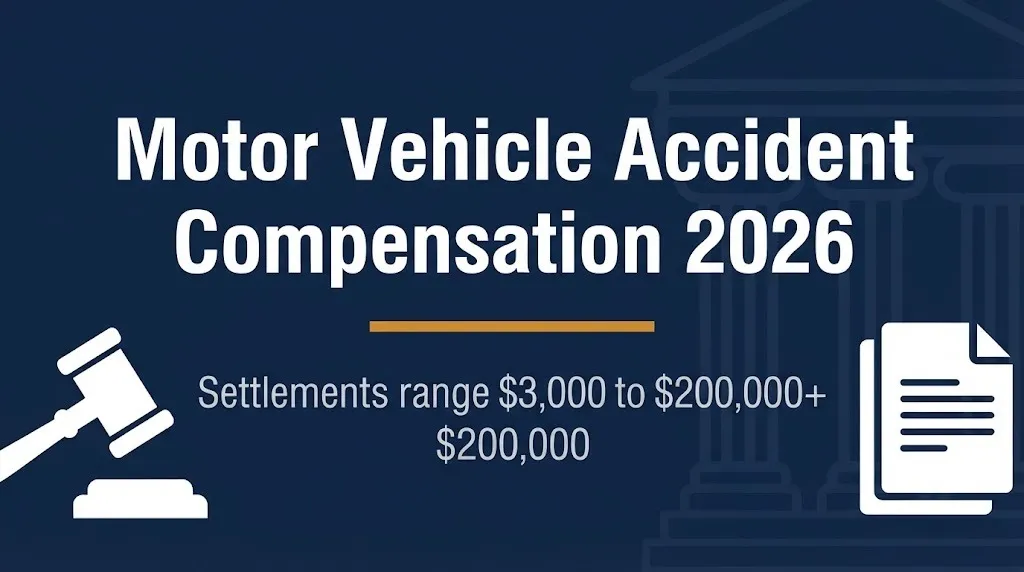
For minor injuries with soft tissue damage, settlements often range from $3,000 to $25,000. For fractures, surgeries, or permanent injuries, amounts can reach $50,000 to $200,000 or more.
| Injury Type | Typical Settlement Range |
|---|---|
| Minor soft tissue | $3,000 to $15,000 |
| Fractures | $15,000 to $75,000 |
| Surgery required | $50,000 to $150,000 |
| Permanent disability | $100,000 to $500,000 |
| Fatal crash | $250,000 to $1,000,000+ |
These are estimates, not guarantees. Your case value depends on your specific facts.
Key Takeaway: Anyone promising you a specific settlement amount before reviewing your medical records and insurance policy is guessing. Real amounts depend on documented losses.
What is the deadline to file a motor vehicle accident claim?
The deadline depends on your state’s statute of limitations. Most states allow two to three years from the crash date to file a lawsuit.
Some states allow as little as one year. A few allow four or more. The clock starts on the date of the crash, or in some cases the date you discovered your injury.
Missing the statute of limitations bars your claim completely. That is the single most important date in your case.
How soon must you report a car accident to insurance?
You should report the accident to your insurance company as soon as possible. Most policies require notice within 24 to 72 hours.
Failing to report promptly can give the insurer a reason to deny coverage. Even if you were not at fault, your own insurer needs to know about the crash.
The report is not the same as filing a claim. It is a notice that a crash occurred. You can file the formal claim later once you understand your injuries.
What proof do you need for an accident compensation claim?
The strength of your claim depends on your documentation. The more evidence you have, the harder it is for the insurer to lowball you.
Here is what you need.
- Police report from the crash scene
- Medical records from every treatment visit
- Photographs of vehicle damage and injuries
- Wage loss documentation from your employer
- Insurance policy information for both drivers
- Witness contact information
- Receipts for out-of-pocket expenses
The paper trail is your leverage. Missing documents weaken your position.
How does the motor vehicle accident claim process work?
The process follows a predictable path from crash to resolution.
| Stage | What Happens |
|---|---|
| Day 1 | Report the crash to insurance and police |
| Week 1 to 4 | Medical treatment and documentation |
| Month 1 to 3 | Insurance investigation and demand letter |
| Month 3 to 6 | Negotiation and settlement talks |
| Month 6 to 12 | Lawsuit filed if settlement fails |
| Year 1 to 2 | Trial or final settlement |
Most cases settle before trial. Only a small percentage go to a jury.
What is the difference between a settlement and a lawsuit?
A settlement is a voluntary agreement between you and the insurance company. You accept a lump sum and give up your right to sue.
A lawsuit is a formal court case filed when settlement talks fail. You ask a judge or jury to decide what your claim is worth.
Most motor vehicle accident cases settle. Lawsuits are the exception, not the rule.
Reality Check: No one from a government agency will call you about crash compensation. Insurance adjusters may call, but they work for the insurer, not for you. Filing a claim is free except for attorney contingency fees. Anyone charging upfront fees to “process” your accident claim is running a scam.
What is a contingency fee in a motor vehicle accident case?
A contingency fee means your lawyer gets paid only if you win or settle. The fee is a percentage of your recovery.
In motor vehicle accident cases, the contingency fee is usually 33% to 40% of the settlement. If your case settles for $50,000, the attorney fee would be $16,500 to $20,000.
You pay nothing upfront. Costs like filing fees and medical record fees are usually separate. Ask your lawyer to explain the fee and cost structure in writing before you sign.
What if the other driver has no insurance?
If the at-fault driver has no insurance, your own uninsured motorist coverage may pay your claim.
Uninsured motorist coverage is optional in some states and required in others. It protects you when the other driver has no insurance or not enough coverage.
Underinsured motorist coverage fills the gap when the other driver’s policy limits are too low to cover your losses. Check your own policy to see what you have.
Key Takeaway: Your own insurance coverage matters as much as the other driver’s. Uninsured and underinsured motorist coverage can be the difference between full compensation and a partial recovery.
How do no-fault insurance states affect compensation?
In no-fault states, your own insurance pays your medical bills and lost wages regardless of who caused the crash. You can only sue the other driver if your injuries meet a certain severity threshold.
No-fault states include Florida, Michigan, New York, and several others. The rules vary widely. In some no-fault states, you cannot claim pain and suffering unless your injury is serious or permanent.
The type of state you live in changes how you seek compensation. An attorney who practices in your state will know the rules.
What should you do immediately after a motor vehicle accident?
The first minutes and hours after a crash shape your entire claim.
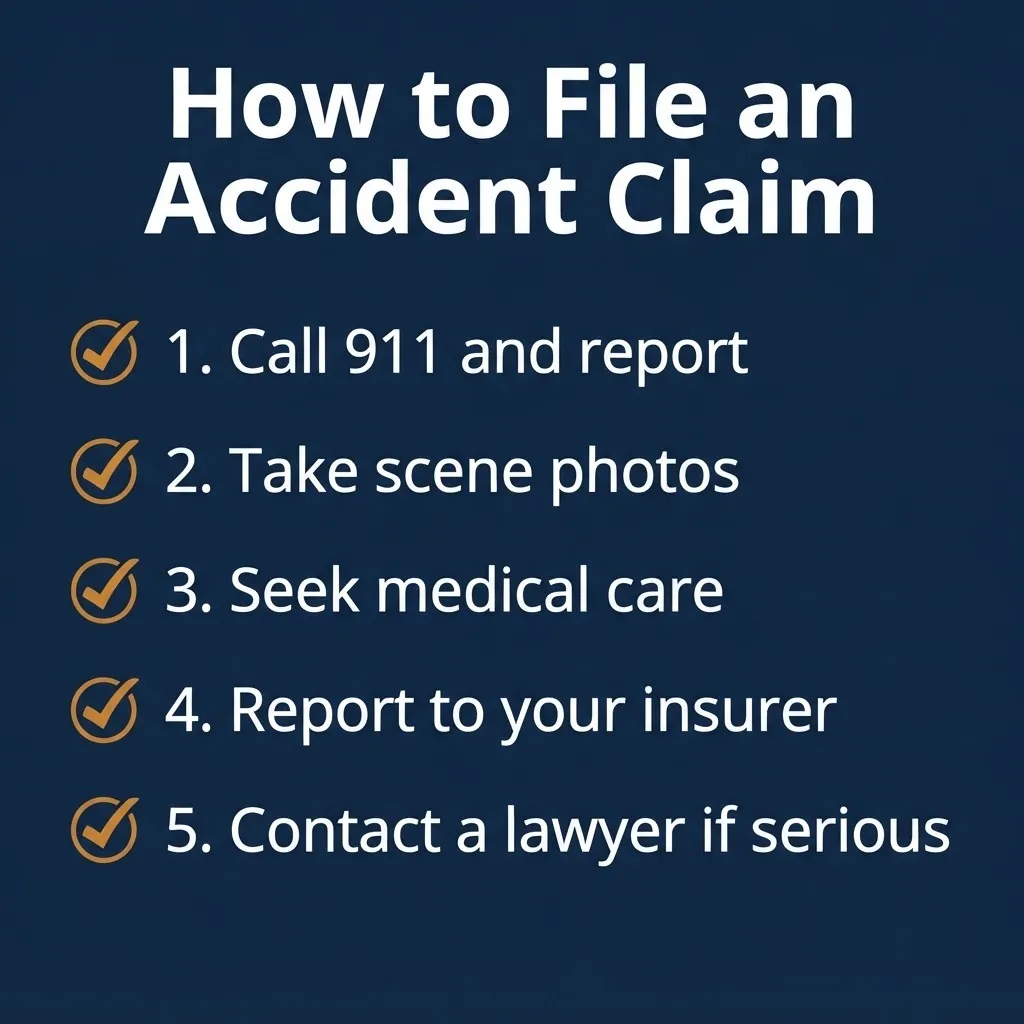
- Call 911 and get a police report.
- Take photos of the scene, vehicles, and injuries.
- Get the other driver’s insurance and contact information.
- Seek medical care even if you feel fine.
- Report the crash to your insurer.
- Keep a file with every document and receipt.
- Contact a personal injury lawyer if injuries are serious.
The more you document, the stronger your claim.
What happens next after you file an accident compensation claim?
Once you file a claim, the insurance company investigates and assigns an adjuster.
| Timing | Expected Stage |
|---|---|
| Week 1 to 2 | Insurer assigns adjuster and reviews the claim |
| Week 2 to 6 | Medical records and wage loss documents collected |
| Month 2 to 4 | Demand letter sent with settlement request |
| Month 3 to 6 | Negotiation and counteroffers |
| Month 6 and beyond | Settlement or lawsuit filing |
The process is slower than most people expect. Patience and documentation help.
Frequently Asked Questions
How much compensation will I get for a car accident?
Your amount depends on your injuries, insurance limits, and fault.
Minor injuries may pay $3,000 to $15,000; severe cases can reach six figures.
What is the deadline to file a car accident claim?
Most states allow two to three years from the crash date.
Check your state’s statute of limitations immediately.
Do I need a lawyer for a motor vehicle accident claim?
For minor claims, maybe not.
For serious injuries, a lawyer usually increases the settlement enough to justify the fee.
What does pain and suffering mean in a car accident claim?
It means the physical and emotional distress caused by the crash.
It is a separate category from medical bills and lost wages.
Can I claim compensation if I was partly at fault?
In many states, yes, under comparative negligence rules.
Your compensation may be reduced by your percentage of fault.
How long does it take to get a car accident settlement?
Most cases settle within 6 to 12 months.
Severe cases can take two years or more.
What if the insurance company denies my claim?
You can appeal the denial or file a lawsuit.
A lawyer can help you challenge a wrongful denial.
Motor vehicle accident compensation is real, but it is not automatic. The amount you receive depends on your documentation, your injuries, and your state’s rules.
The most important number in your case is the statute of limitations deadline. Find out what it is in your state today. Then gather your records, file your claim, and do not accept the first lowball offer.