Average Pain and Suffering Settlement in 2026: What You Can Actually Expect
Quick Answer
- Pain and suffering settlements aren’t a fixed payout. Most range from $5,000 to over $100,000 depending on injury severity.
- Insurers typically multiply your medical bills by 1.5x to 5x. Severe or permanent injuries can push that multiplier past 7x.
- Some states cap non-economic damages. Maryland’s 2026 cap sits at $965,000 for injury claims.
There’s no single “average pain and suffering settlement” number that applies to every case. What exists instead is a formula, a range, and a handful of state laws that can cap what you’re allowed to collect.
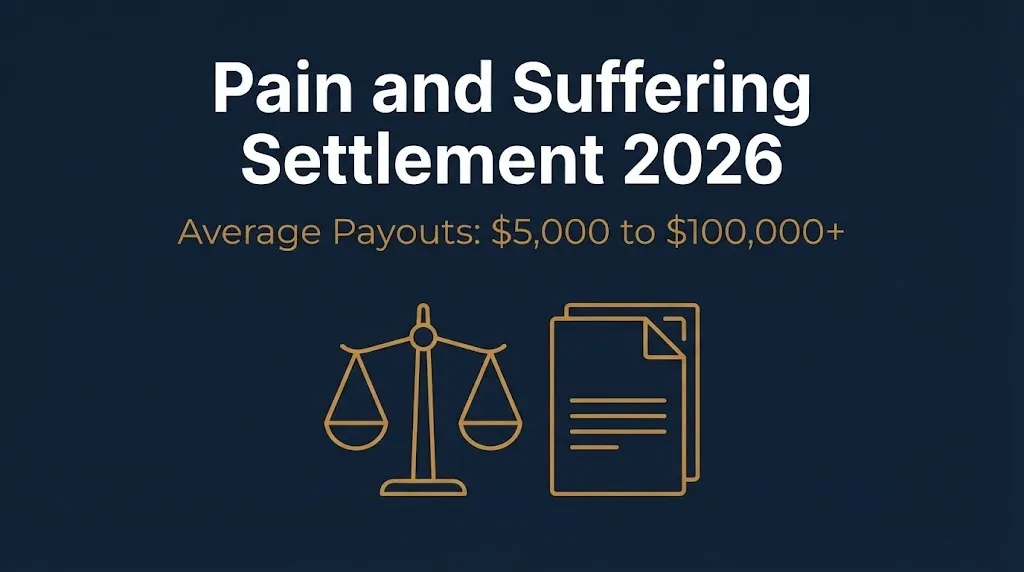
If you’re dealing with a car accident, a slip and fall, or a workplace injury, the number you’re picturing depends on your medical bills, how long you were in pain, and where you live. Most claims settle somewhere between $5,000 and $100,000, though severe or permanent injuries routinely clear six figures.
This article breaks down how adjusters and attorneys actually calculate these numbers in 2026, state by state where it matters. One detail that surprises most people: insurers use a documented industry average of roughly 2.3 times your medical expenses, not a random guess.
The Facts
| Item | Detail |
|---|---|
| Topic | General pain and suffering settlement calculation, not a single lawsuit |
| Typical Range | $5,000 to $100,000+, depending on injury severity |
| Standard Multiplier | 1.5x to 5x economic damages (up to 7x or higher for severe cases) |
| Industry Average Multiplier | Roughly 2.3x medical expenses, per Insurance Research Council data |
| National Median (all PI claims) | Estimates range from $25,000 to $31,000 across industry datasets |
| State Caps | Vary widely. Maryland’s 2026 general injury cap is $965,000 |
| Proof Needed | Medical records, a pain journal, photos, and witness statements |
Is a Pain and Suffering Settlement Real, or Just a Marketing Term?
Pain and suffering is a real, legally recognized category of damages, not a scare tactic or a gimmick.
It falls under “non-economic damages,” the legal term for losses that don’t come with a receipt. That includes physical pain, emotional distress, and loss of enjoyment of life.
Courts in states like Virginia and Michigan leave the exact dollar figure up to a jury’s judgment, guided by evidence. Insurance adjusters, on the other hand, use formulas long before a case ever reaches a jury.
Both paths lead to the same question: how much is your suffering worth in dollars. The honest answer is that it depends heavily on documentation, injury type, and state law.
How Much Is the Average Pain and Suffering Settlement in 2026?
The average pain and suffering settlement in 2026 falls somewhere between $15,000 and $31,000, depending on which dataset you check.
That spread exists because “average” gets calculated differently across sources. Some blend every personal injury claim together. Others isolate just the non-economic portion.
Here’s how a few widely cited figures compare:
| Source Type | Reported Average or Median |
|---|---|
| General personal injury settlement median | Around $31,000 |
| Pain and suffering specific average | Around $15,000 to $25,000 |
| Most common payout range | $5,000 to $100,000 |
Key Takeaway: There is no fixed national average. Your real number depends on your injury, your documentation, and your state’s laws.
How Much Is the Average Settlement for a Car Accident?
Car accident pain and suffering settlements typically run from $5,000 for minor soft tissue injuries to well over $100,000 for serious ones.
Whiplash and similar soft tissue injuries make up the bulk of auto claims. Jury verdict databases show these typically settling between $12,000 and $30,000 when the case escalates past a quick insurance payout.
Cases involving surgery, herniated discs, or long recovery times run higher. Insurers generally apply a 2.5x to 3.5x multiplier once treatment moves past basic physical therapy.
A rough example: $50,000 in medical bills with a 6-month recovery and a 1.5x multiplier produces $75,000 in pain and suffering, on top of the medical bills and lost wages.
How Do Insurers Calculate Pain and Suffering? (The Multiplier Method)
The multiplier method calculates pain and suffering by multiplying your total economic damages by a number between 1.5 and 5.
Economic damages include your medical bills and lost wages. That total gets multiplied based on how severe and lasting your injury is.
Here’s the breakdown adjusters actually use:
| Severity | Typical Multiplier | Example Injury |
|---|---|---|
| Minor, quick recovery | 1.5x to 2x | Bruising, mild whiplash |
| Moderate, surgery required | 2.5x to 3.5x | Fractures, torn ligaments |
| Severe, permanent | 4x to 5x (or higher) | Traumatic brain injury, chronic pain |
A case with $40,000 in economic damages and a multiplier of 3 produces a $120,000 pain and suffering estimate. Add the original $40,000 back in, and the total settlement value climbs from there.
What Is the Per Diem Method, and When Do Lawyers Use It?
The per diem method calculates pain and suffering by assigning a daily dollar value to your suffering, then multiplying it by your recovery days.
Instead of scaling off medical bills, this method treats each day of documented pain as its own line item. Attorneys often use a person’s daily wage as a stand-in for what a “day” is worth.
Research published in the Washington University Law Review found that per diem arguments can improve a plaintiff’s expected case value. They work by making an abstract concept, suffering, feel concrete and countable to a jury.
Think of it like a hotel bill instead of a flat vacation package. Every night you couldn’t work or function normally gets its own price tag.
Average Pain and Suffering Settlement by Injury Type
Settlement ranges shift dramatically based on the specific injury, even within the same accident type.
| Injury Type | Typical Range |
|---|---|
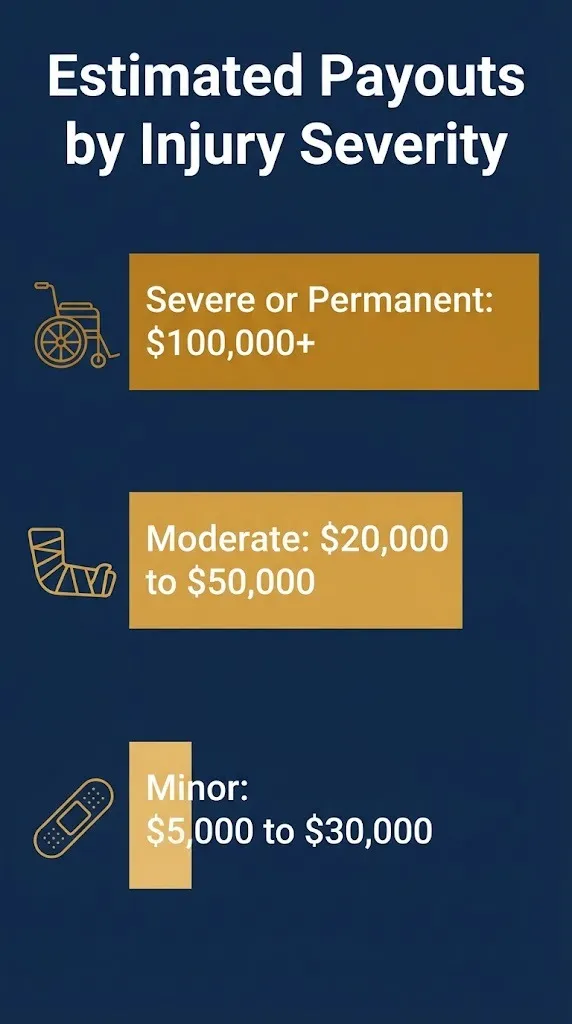
| Soft tissue (whiplash, sprains) | $5,000 to $30,000 |
| Moderate injury requiring surgery | $20,000 to $50,000 |
| PTSD or emotional trauma | $10,000 to $120,000 |
| Severe, permanent, or disfiguring | $100,000 to seven figures |
Key Takeaway: Severity and permanence drive the number far more than the type of accident that caused the injury.
Chronic, long-lasting pain consistently settles higher than short-term pain, even when the initial injury looks similar on paper. A broken arm that heals in eight weeks is valued very differently from one that causes permanent nerve damage.
Does Your State Cap Pain and Suffering Damages?
Yes, in some states, pain and suffering damages are legally capped, and the limit depends heavily on whether your case is medical malpractice or general personal injury.
As of 2026, roughly 28 states maintain some form of damages cap on non-economic damages in medical malpractice cases specifically. Twenty-two states have no such cap, and a few court rulings have struck existing caps down as unconstitutional, including in Alabama and Florida.
Caps vary widely by state and by case type:
| State | 2026 Cap (Approximate) | Case Type |
|---|---|---|
| Maryland | $965,000 (general injury), $920,000 (malpractice) | Both, increases annually |
| Alaska | $400,000, or $1 million for severe permanent injury | General personal injury |
| Arizona | $250,000 | Medical malpractice |
| Pennsylvania | $500,000 | Medical malpractice |
| Wisconsin | $750,000 | Medical malpractice |
Most states cap malpractice claims specifically and leave general accident cases uncapped. Always confirm current limits with your state’s statutes, since several states adjust these figures every year.
Reality Check
No legitimate settlement process starts with a text message or a cold call promising instant cash for your pain and suffering.
Filing a personal injury claim costs nothing upfront in nearly every case, since most attorneys work on contingency. Any company demanding an upfront “processing fee” to unlock your settlement is not part of the actual legal system.
What Factors Actually Increase or Decrease Your Settlement?
Several concrete factors move your pain and suffering number up or down, beyond the basic injury type.
- Injury severity and whether damage is permanent
- How long your recovery and treatment lasted
- Quality of your medical documentation and pain journal
- Strength of liability evidence against the other party
- The at-fault party’s insurance policy limits
- Your state’s specific damage cap laws, if any apply
Key Takeaway: Documentation quality can swing your settlement by 30 percent or more, according to industry claims data. Weak records consistently produce lower offers, regardless of how much pain you actually experienced.
How Do You Calculate Your Own Pain and Suffering Estimate?
You can estimate your pain and suffering by multiplying your total medical bills and lost wages by a severity factor between 1.5 and 5.
Start with your verified economic damages only. Don’t include estimated future costs unless a medical expert has documented them.
- Add up all medical bills related to the injury.
- Add documented lost wages from missed work.
- Choose a multiplier based on your injury’s severity.
- Multiply your economic total by that multiplier.
- Add the multiplier result back to your economic damages.
This gives you a starting estimate, not a guaranteed number. Insurers and juries can land anywhere near it, above it, or below it.
What Proof Do You Need to Support a Claim?
You need documented, dated evidence connecting your pain directly to the incident and its ongoing effects.
Insurance adjusters and juries respond to specifics, not general claims of discomfort. A vague description of “a lot of pain” carries far less weight than a dated pain journal.
Strong supporting evidence typically includes:
- Complete medical records and treatment notes
- A daily pain journal noting severity and limitations
- Photos of visible injuries over time
- Witness statements about behavior changes
- Therapist or counselor notes for emotional trauma
- Proof of missed work or reduced capacity
How Do You File a Pain and Suffering Claim, Step by Step?
Filing starts with medical treatment and ends with a demand letter or lawsuit, depending on how negotiations go.
- Get medical treatment immediately and follow through fully.
- Document everything: photos, journal entries, and receipts.
- Report the incident to the relevant party or authority.
- Consult a personal injury attorney about your specific case.
- Send a demand letter outlining your damages and evidence.
- Negotiate with the insurance company or opposing counsel.
- File a lawsuit if negotiations stall or the offer is too low.
Key Takeaway: Treatment consistency matters as much as the injury itself. Gaps in care are one of the most common reasons adjusters cut settlement offers.
How Long Does It Take to Get a Pain and Suffering Settlement?
Most pain and suffering settlements take several months to two years, depending on injury complexity and whether litigation becomes necessary.
Simple, low-dispute cases with clear liability can resolve in three to six months. Cases requiring surgery, ongoing treatment, or litigation routinely stretch past a year.
Think of it like a home insurance claim after storm damage. The straightforward roof leak gets paid fast, while the disputed structural damage claim drags through adjusters and appraisals.
Should You Accept the First Settlement Offer?
You generally shouldn’t accept a first settlement offer without understanding whether it covers your full documented damages.
First offers from insurance companies are typically calculated to minimize payout, not to reflect fair value. This is standard business practice, not a sign of bad faith on its own.
Before accepting anything, confirm your medical treatment is complete or that future costs are accounted for. Once you sign a release, you generally can’t come back for more money later.
Common Mistakes and Scams to Avoid
The biggest mistake people make is settling before treatment is finished, which locks in a number before the full injury cost is known.
Watch for these red flags:
- Anyone offering “guaranteed” settlement amounts before reviewing evidence
- Pressure to sign quickly, especially within days of the incident
- Requests for upfront payment to “process” your claim
- Unsolicited texts or calls claiming to represent a settlement fund
Key Takeaway: A real settlement negotiation takes time and documentation. Speed and pressure are the two biggest warning signs of a scam.
What Happens Next
Expected 2026 to 2027: Ongoing case-by-case negotiations continue nationwide, since pain and suffering has no fixed national payout schedule.
Expected late 2026: Several states, including Maryland, adjust their annual damage cap figures as scheduled by statute.
Expected 2027: More states may revisit tort reform legislation, given continued debate over non-economic damage caps.
Ongoing: Insurers continue relying on the multiplier and per diem methods as the two dominant valuation tools.
Frequently Asked Questions
What is a typical pain and suffering settlement amount?
Most pain and suffering settlements fall between $5,000 and $100,000, depending on injury severity.
Severe or permanent injuries can push that number into six or seven figures.
There’s no fixed national average, since every case is evaluated individually.
How is pain and suffering calculated in a lawsuit?
Pain and suffering is usually calculated using the multiplier method or the per diem method.
The multiplier method multiplies medical bills by a factor of 1.5 to 5.
The per diem method assigns a daily dollar value to your recovery period instead.
Can insurance companies deny pain and suffering claims?
Yes, insurers can dispute or deny pain and suffering claims if evidence is weak or liability is unclear.
Strong documentation, including medical records and a pain journal, significantly reduces denial risk.
A denial isn’t final. You can negotiate further or pursue litigation.
Do all states cap pain and suffering damages?
No, cap laws vary significantly, and many states only cap medical malpractice cases, not general injury claims.
As of 2026, roughly 28 states have some form of malpractice damage cap.
Twenty-two states currently have no such cap in place.
How much does a lawyer take from a pain and suffering settlement?
Personal injury attorneys typically work on contingency, taking a percentage of the final settlement.
Contingency fees commonly range from 25 to 40 percent, depending on the firm and case complexity.
There is usually no upfront cost to hire an attorney under this arrangement.
Is pain and suffering taxable?
Pain and suffering compensation from a physical injury claim is generally not taxable under federal law.
This differs from punitive damages, which are typically taxable regardless of the underlying injury.
Always confirm your specific situation with a tax professional, since exceptions exist.
What if my pain and suffering settlement offer seems too low?
A low offer isn’t necessarily final, and you can negotiate further with additional documentation.
Gathering more medical evidence or consulting an attorney often improves the final number.
You can also decline the offer and pursue litigation if negotiations don’t move.
The Bottom Line
There’s no shortcut to a fair pain and suffering number, only documentation, patience, and understanding how the multiplier and per diem methods actually work.
Check your state’s current damage cap laws before estimating your claim, and keep every piece of medical evidence dated and organized.