Lawyer for Lawsuits 2026: How to Find the Right Attorney for Your Case
Quick Answer
- How do I find a lawyer? Match the attorney’s specialty to your case type. Class actions, personal injury, and employment law each require different expertise.
- How much does it cost? Most plaintiff-side lawyers work on contingency, meaning no upfront fees and payment only from a recovery.
- Most important deadline? Statutes of limitations vary by claim type, generally one to four years from the injury or discovery.
What Does “Lawyer for Lawsuits” Actually Mean?
A lawyer for lawsuits is an attorney who represents plaintiffs or defendants in civil litigation, from initial filing through settlement or trial. Not every lawyer handles every type of case. The attorney who closes your real estate deal is not the one who argues your class action appeal.
The legal profession divides into specialties. Class action lawyers represent groups of people harmed by the same corporate conduct. Personal injury lawyers handle individual claims for accidents and negligence. Employment lawyers take on workplace discrimination, wage theft, and wrongful termination. Securities lawyers represent investors in fraud cases.

Your job is to match the lawyer’s expertise to your specific problem. A brilliant medical malpractice attorney will not help you with a consumer fraud class action. The right specialist knows the procedural rules, the opposing counsel, and the settlement patterns in that specific area.
The Facts
| Topic | Finding a Lawyer for Lawsuits |
| Status | Active. 2026 legal market. |
| 2025 Settlement Total | $3.58 billion across 115 cases |
| Average Settlement | $31.1 million |
| Median Settlement | $13 million |
| Fee Structure | Contingency (typically 25-40% of recovery) |
| Deadline | Varies by claim type, generally 1-4 years |
| Where to Search | State bar directories, Chambers rankings, court dockets |
How Do You Choose a Lawyer for a Class Action Lawsuit?
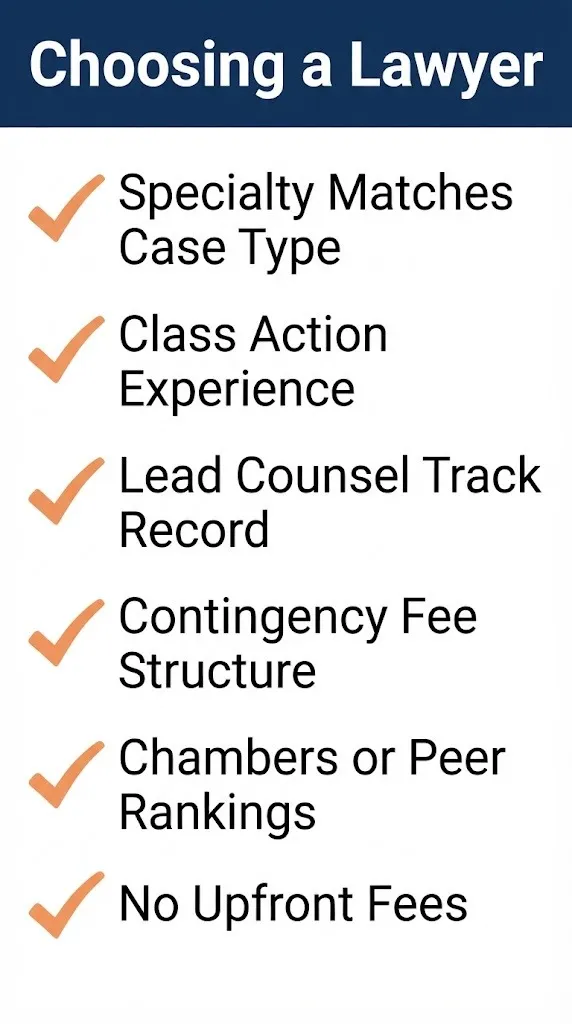
Choosing a lawyer for a class action lawsuit requires looking at firm rankings, case experience, and fee structures. The best class action firms have track records in the specific type of case you have and are ranked by independent legal directories.
Chambers and Partners ranks law firms by practice area and jurisdiction. For California class action lawyers, the 2026 rankings place Lieff Cabraser Heimann & Bernstein among the top plaintiff-side firms, with one peer noting Elizabeth Cabraser is “among the best consumer and class action lawyers in the country” . Robbins Geller Rudman & Dowd holds a Band 1 ranking in Securities nationwide and in California, recovering over $2.5 billion for investors in 2024 alone .
The rankings matter because class action practice is specialized. A firm that wins securities fraud cases may not have the expertise for a consumer product defect case. Look for firms that have served as lead or co-lead counsel in cases similar to yours.
Key questions to ask a potential class action lawyer:
- What percentage of your practice is class action work?
- Have you served as lead counsel in a similar case?
- What is your fee structure and what expenses will be deducted?
- Who will actually work on my case day to day?
- What is the realistic timeline and outcome?
How Much Does a Lawyer for Lawsuits Cost?
Most lawyers who take plaintiff-side lawsuits work on contingency, meaning you pay nothing upfront and the attorney takes a percentage of any recovery. The standard contingency fee in class actions is 25% of the common fund, though courts have discretion to adjust it .
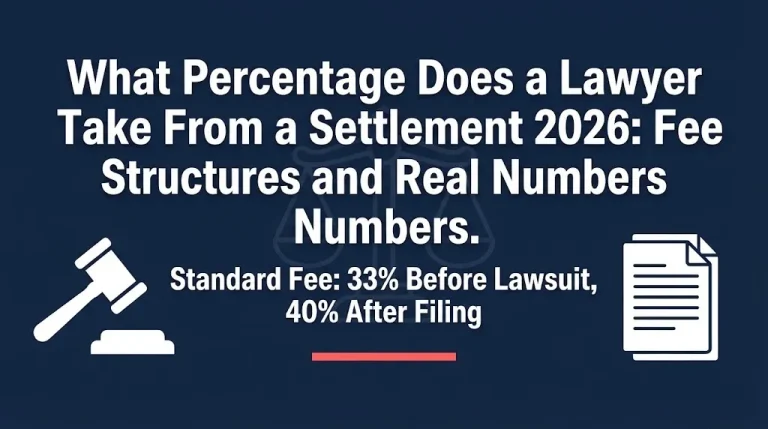
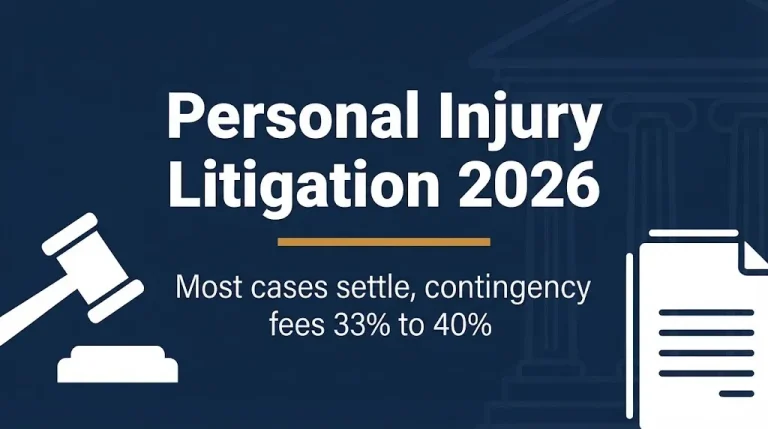
For individual personal injury and employment cases, contingency fees typically range from 33% to 40% depending on whether the case settles before trial or goes to verdict. Securities class action firms commonly charge one-third of the recovery .
Some cases use the lodestar method, where fees are calculated by multiplying attorney hours by reasonable hourly rates. Courts often compare the lodestar to the percentage-of-recovery result to check reasonableness.
You should never pay an upfront fee to a lawyer for a contingency case. Legitimate plaintiff-side firms advance all costs, including filing fees, expert witnesses, and depositions. If a lawyer asks for money before doing any work, walk away.
| Case Type | Typical Fee Structure |
|---|---|
| Class action (common fund) | 25-33% of recovery |
| Personal injury | 33-40% of recovery |
| Employment discrimination | 33-40% or hourly |
| Securities fraud | Up to one-third of recovery |
Reality Check: The “Class Action Cash” Scam
If someone calls or emails you saying you are owed money from a class action and asks for a fee to “release your funds,” it is a scam. Class action settlements are administered by court-appointed administrators, and filing a claim is always free. No legitimate lawyer or administrator will ever ask you to pay money to receive a settlement. If a lawyer promises a specific payout before reviewing your case, that is a red flag.
How Do You Find a California Class Action Lawyer?
California has one of the deepest pools of class action talent in the country. The state’s consumer protection laws, including the California Consumer Legal Remedies Act and Unfair Competition Law, make it a frequent venue for major class actions.
For California class action lawyers, start with the Chambers USA rankings, which evaluate firms based on client and peer interviews. The 2026 rankings place Lieff Cabraser, Robbins Geller, and Hueston Hennigan among the top plaintiff-side litigation firms in the state .
Cooley LLP and Gibson Dunn lead the defense side, representing major technology and life sciences companies in high-stakes class actions . Knowing who represents the other side helps you evaluate whether a plaintiff firm has the resources to go up against well-funded corporate defendants.
The Northern District of California and Central District of California are the busiest federal venues for class actions. Many of the largest settlements in U.S. history, including the $7.2 billion Enron and $6.1 billion WorldCom cases, involved California-based counsel .
What Types of Lawsuits Require Different Lawyers?
Different case types require different specialists. Hiring the wrong type of lawyer is like hiring a plumber to fix your car. The skills do not transfer.
Class action lawyers handle group claims against corporations for consumer fraud, product defects, and antitrust violations. They know the Rule 23 certification requirements and the notice and claims process.
Personal injury lawyers handle individual claims for car accidents, slip and falls, and medical malpractice. They work with medical experts and know how to value pain and suffering.
Employment lawyers take on discrimination, harassment, wage theft, and wrongful termination. They know the EEOC charge process and state labor agencies.
Securities lawyers represent investors in fraud cases. They know the PSLRA lead plaintiff process and the specialized pleading standards for securities claims .
What Happens Next in a Class Action Lawsuit?
A class action follows a predictable path. Knowing the stages helps you understand where your case stands and what to expect.
Filing and consolidation: The first complaint is filed. Related cases are consolidated before one judge.
Lead plaintiff appointment: In securities cases, the court appoints a lead plaintiff, usually the investor with the largest financial interest .
Motion to dismiss: The defendant tries to kill the case on legal grounds. This is the first major hurdle.
Class certification: The plaintiffs must show the case meets Rule 23 requirements. If certification is denied, the class action fails.
Discovery: Both sides exchange documents and take depositions. This is the longest phase.
Summary judgment: Either side can ask the judge to rule without a trial.
Trial or settlement: Most cases settle. The $100 million Equifax settlement in 2026 is one recent example .
Claims administration: Class members file claims and receive payments. The Equifax final fairness hearing is set for January 22, 2027 .
Frequently Asked Questions
How do I find the right lawyer for my lawsuit?
Match the lawyer’s specialty to your case type. Use state bar directories, Chambers rankings, and court dockets to find attorneys with experience in that specific area.
How much does a class action lawyer cost?
Most work on contingency, taking 25-33% of any recovery. You pay nothing upfront. Courts must approve the fee request, and you have the right to object.
What is the average class action settlement amount?
The average securities class action settlement in 2025 was $31.1 million, with a median of $13 million . Consumer class actions vary widely based on the number of class members and the harm alleged.
Do I need a lawyer to file a class action claim?
No. If a settlement is reached, you can file a claim yourself through the settlement administrator. But for serious personal injury or employment claims, a lawyer is essential to prove damages.
What is the difference between a class action and a mass tort?
A class action is one lawsuit representing many people with similar claims. A mass tort is many individual lawsuits consolidated for pretrial proceedings, often because each plaintiff’s damages are unique.
How long do class action lawsuits take?
Most take two to four years from filing to settlement or trial . The Equifax case took nearly four years from filing to preliminary approval .
Can I sue my employer for discrimination?
Yes, but you must first file a charge with the EEOC or a state agency. The deadline is typically 180 to 300 days from the discriminatory act, depending on the state.
What You Should Do Right Now
Gather your documents before you call a lawyer. Medical records, pay stubs, contracts, and any written communications with the other party give an attorney the information they need to evaluate your case.
The single most important number: the statute of limitations. Most claims expire in one to four years from the injury or discovery. Calendar that date today.