Personal Injury Litigation 2026: What It Involves, How It Works, and What Your Case Is Worth
Quick Answer
- Personal injury litigation is the legal process of suing someone who caused you harm through negligence.
- Most cases settle before trial, with payouts ranging from a few thousand dollars to six or seven figures.
- The most important deadline is your state’s statute of limitations, usually two to three years from the injury.
You were hurt. A car crash, a fall, a defective product. Now you are wondering if you have a case and what it is worth.
Here is the direct answer: personal injury litigation is the legal process of seeking compensation for injuries caused by someone else’s negligence. It is the most common type of civil lawsuit in the United States.
This article explains what personal injury litigation involves, how the process works, what cases are worth, and what deadlines you cannot miss.
The Facts
| Topic | Personal Injury Litigation |
| Status | Governed by state law, no federal standard |
| Typical Settlement Range | $3,000 to $75,000 for moderate injuries, higher for severe cases |
| Statute of Limitations | 2 to 3 years in most states |
| Contingency Fee | 33% to 40% of recovery |
| Trial Rate | Under 5% of filed cases |
| Proof Needed | Medical records, liability evidence, wage loss documents |
Is personal injury litigation the same as a lawsuit?
Yes. Personal injury litigation is the formal legal process of pursuing a personal injury claim through the court system.
Not every personal injury claim becomes litigation. Many settle before a lawsuit is filed. Litigation begins when a complaint is filed in court.

The term covers everything from the initial filing through discovery, motions, settlement talks, trial, and appeal if needed.
What types of cases does personal injury litigation include?
Personal injury litigation covers a wide range of injury cases.
- Car accidents and truck crashes
- Slip and fall accidents
- Medical malpractice
- Defective products
- Workplace injuries involving third parties
- Dog bites
- Wrongful death
If you were hurt because someone else was careless, your case may fall under personal injury law.
How does personal injury litigation work?
The process follows a predictable path from injury to resolution.
Here is the typical sequence.
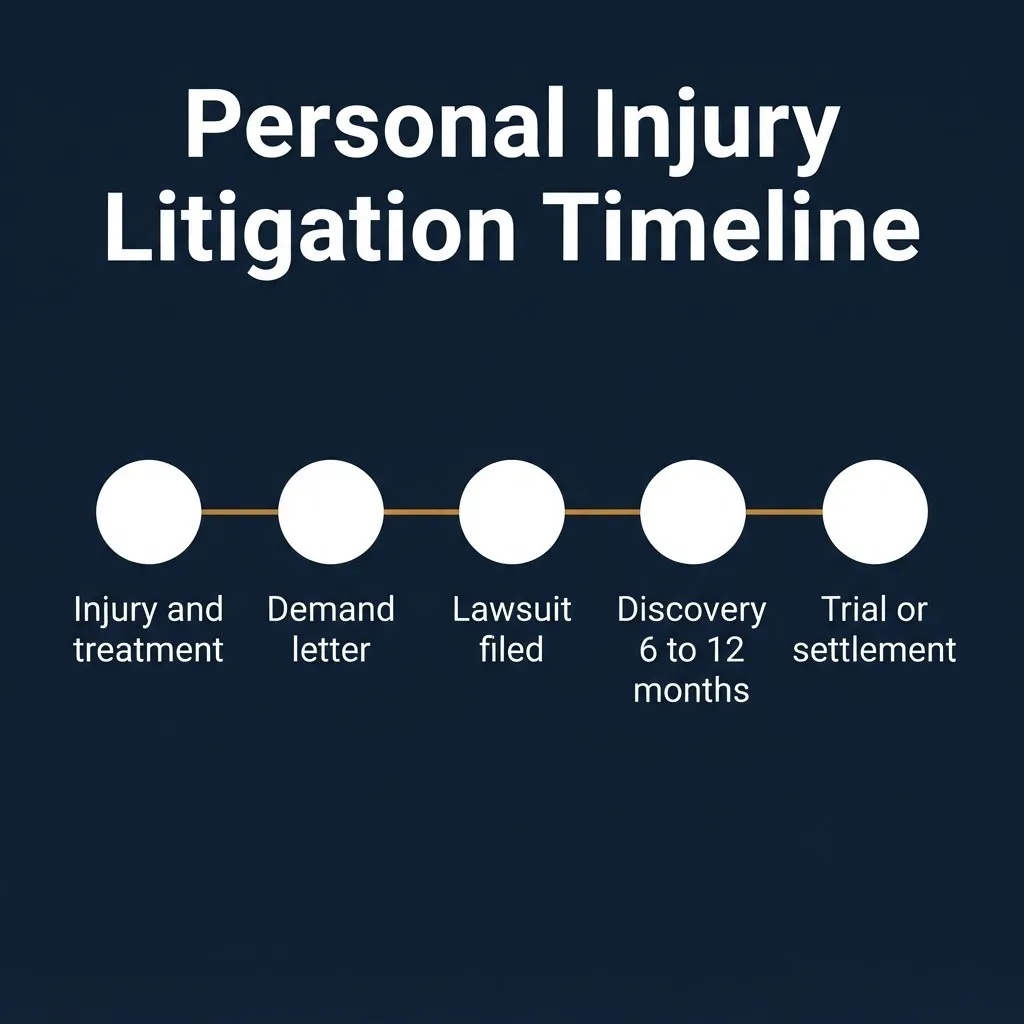
- You are injured and seek medical treatment.
- You hire a personal injury attorney.
- Your attorney investigates and gathers evidence.
- A demand letter is sent to the at-fault party’s insurer.
- Negotiations begin.
- If no settlement, a lawsuit is filed.
- Discovery and depositions occur.
- Mediation or settlement talks continue.
- Trial if no settlement.
Most cases settle before trial. Only a small percentage go to a jury.
How much is a personal injury case worth?
There is no single average. Case value depends on your injuries, your damages, and the insurance limits.
| Injury Type | Typical Settlement Range |
|---|---|
| Minor soft tissue | $3,000 to $15,000 |
| Fractures | $15,000 to $75,000 |
| Surgery required | $50,000 to $150,000 |
| Permanent disability | $100,000 to $500,000 |
| Fatal injury | $250,000 to $1,000,000+ |
These are estimates, not guarantees. Your case value depends on your specific facts.
Key Takeaway: Anyone promising you a specific settlement amount before reviewing your medical records and insurance policy is guessing. Real amounts depend on documented losses.
What damages can you recover in personal injury litigation?
Personal injury damages fall into three main categories.
- Economic damages: medical bills, lost wages, future care costs
- Non-economic damages: pain and suffering, emotional distress, loss of enjoyment of life
- Punitive damages: rare, awarded only for egregious misconduct
Economic damages are documented. Non-economic damages are subjective and often calculated as a multiple of your medical bills.
What is the statute of limitations for personal injury litigation?
The statute of limitations is the legal deadline for filing your lawsuit. It varies by state.
Most states allow two to three years from the date of injury. Some states allow as little as one year. A few allow four or more.
If you miss the deadline, your case is barred completely. The statute of limitations is the single most important date in your case.
How long does personal injury litigation take?
Most personal injury cases resolve within 6 to 18 months. Cases that go to trial take two to three years or longer.
The timeline depends on your recovery, the complexity of the case, and how hard the insurance company fights.
| Case Stage | Typical Timeframe |
|---|---|
| Medical treatment | 1 to 6 months |
| Demand and negotiation | 2 to 6 months |
| Lawsuit filing | 6 to 12 months if no settlement |
| Discovery | 6 to 12 months |
| Trial | 18 to 36 months from filing |
Reality Check: No attorney can guarantee a specific outcome or timeline. If a lawyer promises you a settlement amount before reviewing your file, walk out. Good lawyers talk ranges and probabilities, not promises.
What proof do you need for personal injury litigation?
The strength of your case depends on your documentation.
Here is what you need.
- Medical records from every treatment visit
- Photos of your injuries and the accident scene
- Police report if applicable
- Witness contact information
- Wage loss documentation from your employer
- Insurance policy information
- Receipts for out-of-pocket expenses
The paper trail is your leverage. Missing documents weaken your case.
What is the difference between a personal injury claim and litigation?
A claim is the initial demand for compensation. Litigation is the lawsuit that follows if the claim does not settle.
Most personal injury cases start as insurance claims. A demand letter is sent. The insurer responds with an offer. If the offer is too low, your attorney files a lawsuit and litigation begins.
Litigation is the formal court process. It is more expensive and slower than a claim, but it gives you leverage to force a fair settlement.
How do personal injury attorneys charge for litigation?
Most personal injury attorneys work on contingency. That means you pay nothing upfront.
The attorney takes a percentage of your recovery, usually 33% to 40%. If you lose, the attorney gets nothing. Costs like filing fees and expert witness fees are often separate.
A contingency fee aligns your attorney’s interests with yours. The more you recover, the more the attorney earns.
Key Takeaway: Personal injury litigation costs you nothing upfront. The attorney gets paid only if you win or settle, which is why these cases are accessible to people without money to pay a lawyer.
What should you do immediately after a personal injury?
The first hours and days after an injury shape your entire case.
- Get medical care immediately.
- Report the incident to the proper authority: police, property owner, or employer.
- Take photos of the scene and your injuries.
- Get witness names and contact information.
- Keep every medical record and bill.
- Do not give a recorded statement to an insurer without a lawyer.
- Contact a personal injury attorney.
The more you document, the stronger your case.
What happens next after you file a personal injury lawsuit?
Once a lawsuit is filed, the case enters formal litigation.
| Timing | Expected Stage |
|---|---|
| Month 1 | Complaint filed and served on the defendant |
| Months 2 to 4 | Defendant answers and initial disclosures exchanged |
| Months 4 to 12 | Discovery: documents, interrogatories, depositions |
| Months 12 to 18 | Mediation and settlement talks |
| Months 18 to 36 | Trial if no settlement |
Most cases settle during discovery. The closer to trial, the more pressure to settle.
Frequently Asked Questions
Is personal injury litigation worth it?
For serious injuries, yes.
A lawsuit often increases the settlement enough to justify the time and cost.
How much does a personal injury lawyer cost?
Most charge 33% to 40% on contingency.
You pay nothing upfront and nothing if you lose.
What is the average personal injury settlement?
There is no single average.
Minor cases settle for $3,000 to $15,000, severe cases for $100,000 or more.
How long do I have to file a personal injury lawsuit?
Most states allow two to three years from the injury date.
Check your state’s statute of limitations immediately.
Do most personal injury cases go to trial?
No, most settle before trial.
Only a small percentage of filed cases reach a jury.
What if I was partly at fault for my injury?
You may still recover in many states under comparative negligence rules.
Your award is reduced by your percentage of fault.
Can I file a personal injury lawsuit without a lawyer?
You can, but it is rarely a good idea.
Insurance companies have lawyers, and pro se plaintiffs usually get less.
Personal injury litigation is the formal legal process for seeking compensation after an injury caused by negligence. Most cases settle, but litigation gives you the leverage to force a fair offer.
The most important number in your case is not the settlement amount. It is the statute of limitations deadline. Know it. Watch it. File before it expires. That is how you protect your right to compensation.