Live Nation Lawsuit 2026: The DOJ Antitrust Case, Ticketmaster Refunds, and What Consumers Should Know
Quick Answer
- The DOJ sued Live Nation and Ticketmaster over alleged monopolistic practices in live event ticketing.
- No consumer refund or settlement fund has been announced as part of the federal antitrust case.
- Ticketmaster refunds for canceled events are separate and governed by the original event’s policies.
Live Nation is the largest concert promoter in the United States. Ticketmaster is its ticketing arm. Together, they control a huge share of the live event market.
The Department of Justice sued them in 2024, alleging that the company’s dominance harms consumers through higher fees and fewer choices.
That lawsuit is about antitrust law, not about refunds for individual ticket buyers. As of March 2026, no settlement in that case has been announced.
This article explains the Live Nation lawsuit, what the government is asking for, how Ticketmaster refunds actually work, and what consumers should watch for.
The Facts
| Item | Details |
|---|---|
| Defendant | Live Nation Entertainment, Ticketmaster |
| Plaintiff | U.S. Department of Justice, state attorneys general |
| Court | U.S. District Court, Southern District of New York |
| Filed | May 2024 |
| Legal Theory | Antitrust, monopolization |
| 2026 Consumer Settlement | Not yet confirmed |
| Refund Program | Not part of this case |
What Is the Live Nation Lawsuit About?
The Live Nation lawsuit is an antitrust case. The government says Live Nation used its market power to squeeze out competitors and raise prices.
The complaint alleges that Live Nation controls venues, promotes concerts, and sells tickets all at once. That vertical integration, the government says, lets it force venues and artists to use Ticketmaster.
Here are the core allegations:
| Claim | What the Government Says |
|---|---|
| Monopolization | Live Nation dominates multiple market levels |
| Exclusive contracts | Venues are locked into Ticketmaster |
| Retaliation | Venues that use competitors are punished |
| Higher fees | Consumers pay more because competition is suppressed |
Live Nation denies the allegations. The company says its fees are comparable to competitors and that the ticketing market is more competitive than the DOJ claims.
Is the Live Nation Lawsuit a Class Action?
No. The Live Nation lawsuit is a government enforcement action, not a class action.
The DOJ and state attorneys general are the plaintiffs. They are seeking to break up the company or change its business practices.
A class action would be filed by consumers seeking money damages. That is not what this case is.
Here is the difference:
| Case Type | Plaintiff | Goal |
|---|---|---|
| Government antitrust | DOJ, states | Break up or regulate |
| Consumer class action | Ticket buyers | Money damages |
| Shareholder lawsuit | Investors | Securities damages |
Will the Live Nation Lawsuit Produce a Refund?
The government’s lawsuit does not ask for consumer refunds. It asks the court to change Live Nation’s business practices.
If the DOJ wins, the result could be lower fees or more ticketing options. But that would not mean automatic refunds for past ticket purchases.
Here is what the case could produce:
| Outcome | What It Means for Consumers |
|---|---|
| DOJ wins at trial | Structural changes, maybe lower fees |
| Settlement | Behavioral changes, no consumer payout |
| DOJ loses | No changes |
| Breakup | Ticketmaster separated from Live Nation |
Key Takeaway: The Live Nation lawsuit is about changing the market, not about paying consumers. Any refund program would come from a separate case.
How Do Ticketmaster Refunds Work?
Ticketmaster refunds are governed by the event’s policy, not by the Live Nation antitrust lawsuit.
If an event is canceled, Ticketmaster typically issues automatic refunds to the original payment method. If an event is postponed, the tickets usually remain valid for the new date.
Here is how refunds work:
| Situation | Refund Policy |
|---|---|
| Event canceled | Automatic refund |
| Event postponed | Tickets roll over, refund may be optional |
| Event rescheduled | Tickets valid for new date |
| You cannot attend | Depends on the event policy |
Refunds go back to the card you used. They do not arrive as a check from a settlement administrator.
What Fees Does Ticketmaster Charge?
Ticketmaster charges several fees on top of the face value of a ticket. These fees are a major source of consumer frustration.
The fees vary by event and venue. They can add 20 to 30 percent to the ticket price.
Here are the common fees:
| Fee Type | Typical Range |
|---|---|
| Service fee | $10 to $50 per ticket |
| Order processing fee | $3 to $10 per order |
| Facility charge | $2 to $10 per ticket |
| Delivery fee | $2 to $15 per order |
The DOJ lawsuit argues these fees are higher than they would be in a competitive market.
Reality Check: No legitimate Live Nation or Ticketmaster settlement asks you to pay a fee to receive a refund. If someone demands payment to process your refund, it is a scam.
What Is the Status of the Live Nation Lawsuit in 2026?
The case remains in pretrial proceedings as of March 2026. No trial date has been publicly confirmed.
Antitrust cases of this size typically take years to resolve. Discovery, motion practice, and potential settlement negotiations all take time.
Here is the expected timeline:
| Stage | Status as of March 2026 |
|---|---|
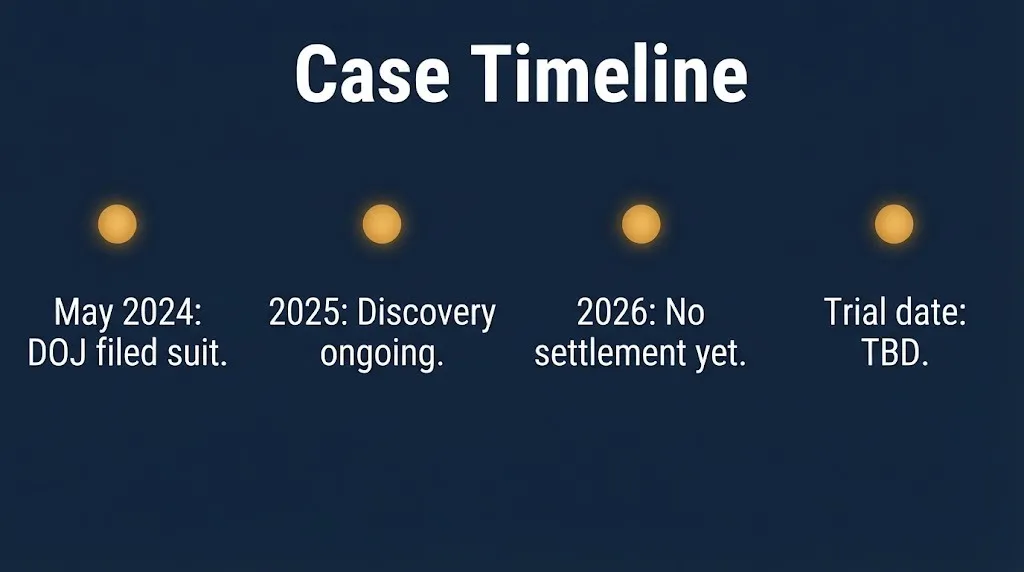
| Complaint filed | May 2024 |
| Motion to dismiss | Pending or decided |
| Discovery | Ongoing |
| Trial date | Not yet confirmed |
| Settlement | Not announced |
What Other Lawsuits Does Live Nation Face?
Live Nation and Ticketmaster face other legal actions beyond the DOJ antitrust case.
Consumer class actions have been filed over fees and ticketing practices. Some of those cases seek refunds or damages for ticket buyers.
Here are the other legal fronts:
| Case Type | Status |
|---|---|
| Consumer fee class action | Pending in various courts |
| Shareholder securities case | Status not confirmed |
| State attorney general actions | Multiple states involved |
| International competition cases | Varies by country |
How Do I Get a Refund for a Canceled Ticketmaster Event?
If your event was canceled, check your Ticketmaster account first.
Ticketmaster usually sends an email explaining the refund policy. Refunds go to the original payment method automatically in most cancellation cases.
Here is the refund process:
- Log into your Ticketmaster account.
- Find the canceled or postponed event.
- Check the event status and refund policy.
- If automatic refund applies, wait for the credit.
- If no refund appears, contact Ticketmaster support.
- Keep records of your purchase and communication.
What Happens Next
Expected 2026: The DOJ antitrust case continues through pretrial proceedings.
If a trial date is set: The case moves toward a resolution, either by verdict or settlement.
Consumer class actions: Separate cases may produce settlement notices with claim deadlines.
Your move: Watch for official court communications, not social media ads, if you bought tickets.
The Live Nation lawsuit is about monopoly power, not consumer refunds. The government wants to change how the company operates.
If you are waiting for a refund from Ticketmaster, that process is separate and depends on your event’s status.
No consumer settlement exists from the antitrust case. If that changes, a court-appointed administrator will publish a notice with a real deadline. Until then, ignore anyone claiming otherwise.