Henrietta Lacks Settlement 2026: What Is Verified, What the Family Received, and Why the Case Still Matters
Quick Answer
- The Lacks family settled with Thermo Fisher Scientific in 2023 over the use of HeLa cells.
- The settlement amount was confidential. No public payout figure exists.
- You cannot file a claim. This was a family settlement, not a class action with a claims process.
Henrietta Lacks died in 1951. Her cells, taken without consent, became one of the most important tools in medical research. The HeLa cell line helped develop vaccines, cancer treatments, and countless scientific breakthroughs. Her family received nothing for decades.
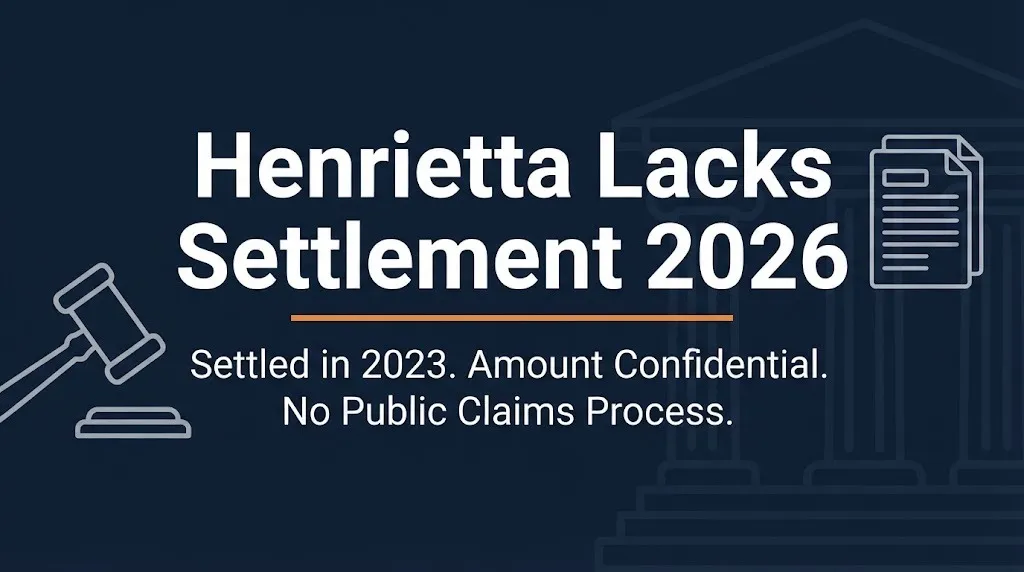
That changed in 2023. The family reached a settlement with Thermo Fisher Scientific, a company that profited from HeLa cells. The settlement was real. The amount was not disclosed. And it created no claims process for the public.
This article explains the verified facts, the legal history, and why the case still matters in 2026.
The Facts
| Fact | Verified Value |
|---|---|
| Case | Lacks family v. Thermo Fisher Scientific |
| Status | Settled in 2023 |
| Settlement Amount | Not publicly disclosed |
| Claim Deadline | None, private settlement |
| Administrator | None |
| Class Action | No |
Who was Henrietta Lacks?
Henrietta Lacks was a Black woman from Virginia. She was diagnosed with cervical cancer in 1951. She sought treatment at Johns Hopkins Hospital in Baltimore.
During her treatment, doctors took cells from her tumor without her knowledge or consent. Those cells did something no human cells had done before. They kept dividing. They became the first immortal human cell line.
The cells were named HeLa, from the first two letters of her first and last names. They became a foundation of modern medical research. They were used in the development of the polio vaccine, cancer research, gene mapping, and more.
Henrietta Lacks died in 1951. She was 31 years old. Her family did not learn about the cells until decades later.
Key Takeaway: The HeLa cells were taken without consent. That fact is not disputed. It is the foundation of the legal and ethical fight.
What is the Henrietta Lacks lawsuit about?
The Lacks family filed a lawsuit against Thermo Fisher Scientific in 2021. The lawsuit alleged that the company profited from HeLa cells without permission or compensation to the family.
The legal claim was based on unjust enrichment. The family argued that Thermo Fisher made money selling HeLa cells and products derived from them. The family received nothing.
The lawsuit was filed in federal court in Maryland. It sought damages for the company’s use of the cells. The case was closely watched because it raised questions about consent, race, and who owns human tissue.
Did the Henrietta Lacks family win the lawsuit?
The family did not win at trial. The case settled before a final judgment. The settlement was announced in 2023. The terms were confidential.
A settlement is not the same as a court victory. Neither side admitted wrongdoing. The settlement resolved the dispute without a ruling on the legal merits.
The family did achieve something significant. A major corporation agreed to pay them. The amount was not disclosed, but the settlement itself was a recognition that the family’s claim had value.
Key Takeaway: The family did not get a court ruling. They got a settlement. The difference matters.
What was the Henrietta Lacks settlement amount?
The settlement amount has not been publicly disclosed. Both sides agreed to keep the terms confidential. No verified figure exists.
Some media outlets speculated about the amount. Those speculations are not verified. The family’s lawyers have not disclosed the figure. Thermo Fisher has not disclosed it.
Any website claiming to know the exact settlement amount is not telling the truth. The number is confidential. That is common in private settlements.
Is the Henrietta Lacks settlement a class action?
No. The settlement was a private agreement between the Lacks family and Thermo Fisher Scientific. It was not a class action. There is no class of claimants and no claims process.
The general public cannot file a claim in the Henrietta Lacks settlement. You cannot receive money from it. The settlement was limited to the family.
This is different from a consumer class action, where a large group of people shares a settlement fund. The Lacks case was a family matter, resolved privately.
Key Takeaway: No claim form exists. No deadline is approaching. No money is waiting for anyone outside the Lacks family.
Why did the Lacks family sue Thermo Fisher?
Thermo Fisher is a scientific supply company. It sells laboratory products, including HeLa cells and products derived from them. The company has profited from the HeLa cell line for years.
The family argued that Thermo Fisher’s use of the cells without consent or compensation was unjust. The lawsuit said the company should not profit from cells taken without permission.
The case was part of a broader reckoning over medical ethics and racial injustice. Henrietta Lacks was a Black woman treated at a time when medical consent was not always obtained from Black patients. The case forced a conversation about who benefits from medical discoveries.
What is the legacy of Henrietta Lacks?
Henrietta Lacks changed medicine. Her cells helped develop the polio vaccine. They went into space. They were used in cancer research, AIDS research, and countless other scientific studies.
Her family received nothing for most of that history. The settlement with Thermo Fisher changed part of that story. But the broader ethical questions remain.
Johns Hopkins has said it never sold HeLa cells. The hospital has acknowledged the lack of consent and has worked with the Lacks family on educational and recognition efforts. The National Institutes of Health reached an agreement with the family in 2013 about access to HeLa genome data.
The legacy is not just about money. It is about consent, dignity, and who shares in the benefits of scientific progress.
Can I file a claim in the Henrietta Lacks settlement?
No. There is no claims process. The settlement was private. It resolved the family’s specific claims against one company. It created no fund for the public.
If you are a member of the Lacks family, you should contact the family’s legal team directly. If you are not a family member, this settlement has no relevance to you.
Any website asking you to register for a Henrietta Lacks settlement is collecting your personal information under false pretenses.
Key Takeaway: The settlement was for the family. Not for you.
What is the current legal status of HeLa cells?
HeLa cells remain in use in laboratories around the world. The cells are a standard tool in medical research. The legal status of the cells is complex.
The Lacks family settlement resolved their claim against Thermo Fisher. It did not resolve every ethical or legal question about the broader use of HeLa cells. Other companies and institutions continue to use the cells.
The NIH agreement from 2013 gave the family some oversight over genomic data from HeLa cells. That agreement remains in place. It is separate from the Thermo Fisher settlement.
What should I do if I see a Henrietta Lacks settlement ad?
Treat it as unverified. Do not enter personal information. Do not click links. The settlement is private and closed. There is no public claims process.
Fake settlement ads use well-known names to collect personal data. The Henrietta Lacks name is known worldwide. Scammers use that recognition to trick people into sharing information.
The verification rule is simple. No case number and no court-approved notice means no claim. The Lacks settlement has no open claims process.
What happens next in the Henrietta Lacks story?
The legal case is settled. The ethical conversation continues. The Lacks family has used the settlement to support education and advocacy work. The broader questions about consent and compensation in medical research remain open.
New cases may emerge. Other families may file similar lawsuits. The legal landscape is evolving. But the specific Henrietta Lacks settlement is done.
Reality Check
No one will text you about a Henrietta Lacks settlement. No legitimate administrator asks for a fee to claim money from a private family settlement. The case was not a class action. There is no fund for the public. If someone tells you otherwise, they are misleading you.
What Happens Next
| Timeline | Expected Stage |
|---|---|
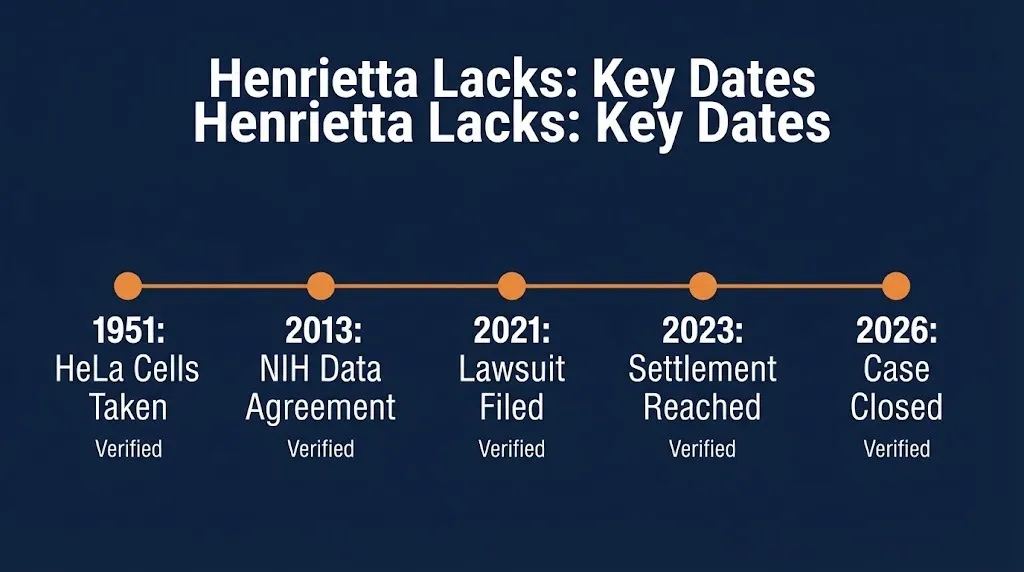
| 1951 | Henrietta Lacks dies, HeLa cells taken |
| 2013 | NIH agreement with the family on genome data |
| 2021 | Family files lawsuit against Thermo Fisher |
| 2023 | Settlement reached, terms confidential |
| 2026 | No open claims, case closed |
The case is closed. The legacy continues.
Frequently Asked Questions
Is the Henrietta Lacks settlement real?
Yes. The family settled with Thermo Fisher in 2023.
How much was the settlement?
The amount was not disclosed. No verified figure exists.
Can I file a claim in the Lacks settlement?
No. It was a private family settlement, not a class action.
What was the lawsuit about?
Thermo Fisher profited from HeLa cells taken without consent.
Who was Henrietta Lacks?
A Black woman whose cells became the first immortal human cell line.
Why is the case important?
It raised questions about consent, race, and who benefits from medical research.
Is there a class action for HeLa cells?
No. The Lacks case was a family settlement, not a class action.
What should I do if I see a Lacks settlement ad?
Treat it as unverified. Do not enter personal information.
The Legacy Is Bigger Than the Settlement
Henrietta Lacks changed medicine. Her family waited decades for recognition. The settlement was a step, not the whole journey. The ethical questions remain open.
The next time you see a HeLa cell reference, remember the woman behind the cells. That is the legacy that matters.