Settlement Fund 2026: What It Is, How It Works, and What Happens to the Money
Quick Answer
- A settlement fund is a pool of money set aside to resolve a lawsuit and pay eligible claimants.
- The fund covers claimant payouts, attorney fees, settlement administrator costs, and sometimes cy pres donations.
- You may qualify for a portion if you meet the class definition and file a timely claim.
You got a notice about a settlement fund. Or you saw an ad saying you can claim money from one. You want to know what a settlement fund actually is and how it works.
The concept is simple. A defendant agrees to pay a sum of money to resolve a lawsuit. That money goes into a fund. The fund is divided among eligible claimants, the lawyers, and the administrators who run the process.
The details matter. The fund is not free money for everyone. You must qualify. You must file. You must meet the deadline. This article explains the verified mechanics of settlement funds.
The Facts
| Fact | Verified Value |
|---|---|
| Concept | Settlement Fund |
| Purpose | Resolve litigation and pay claims |
| Funding Source | Defendant payment |
| Distribution | Claimants, attorneys, administrators |
| Claim Deadline | Set by court order |
| Administrator | Court-appointed entity |
What is a settlement fund?
A settlement fund is a pool of money created when a lawsuit settles. The defendant pays the money. The fund is held in a trust or escrow account. It is distributed according to the settlement agreement and court orders.
The fund is not a government program. It is not a rebate. It is the result of a legal agreement between the parties. The court oversees the fund to ensure the money is distributed fairly.
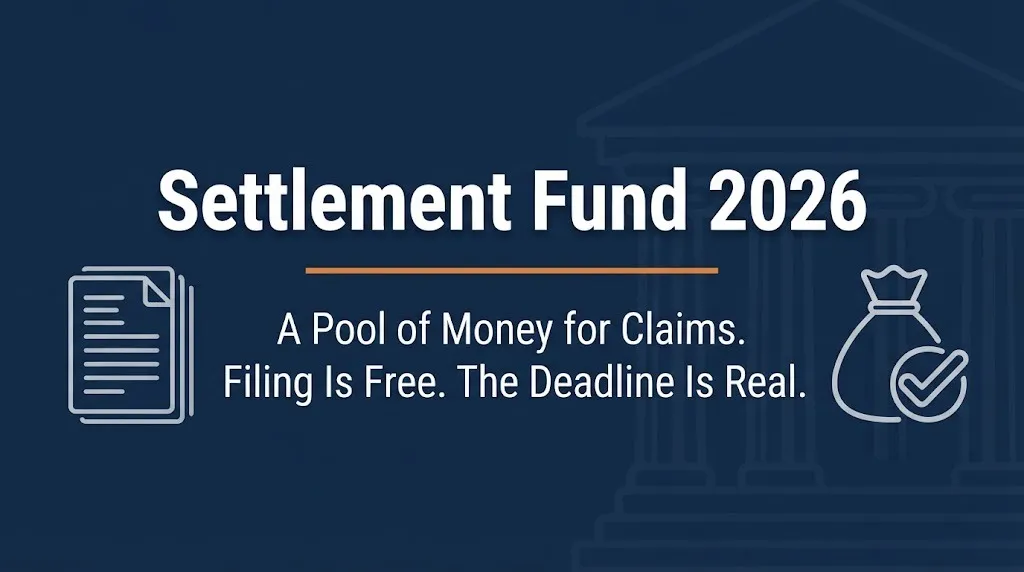
The fund covers everything the settlement promises. That includes payments to class members, attorney fees, the cost of notifying the class, and the settlement administrator’s work.
Key Takeaway: A settlement fund is a finite pool. The more people who file valid claims, the smaller each share becomes.
How does a settlement fund work?
The process starts with a settlement agreement. The defendant agrees to pay a specified amount. The court reviews the settlement for fairness. If approved, the fund is created.
The settlement administrator manages the fund. The administrator sends notices, processes claims, verifies eligibility, and distributes payments. The administrator is a neutral third party appointed by the court.
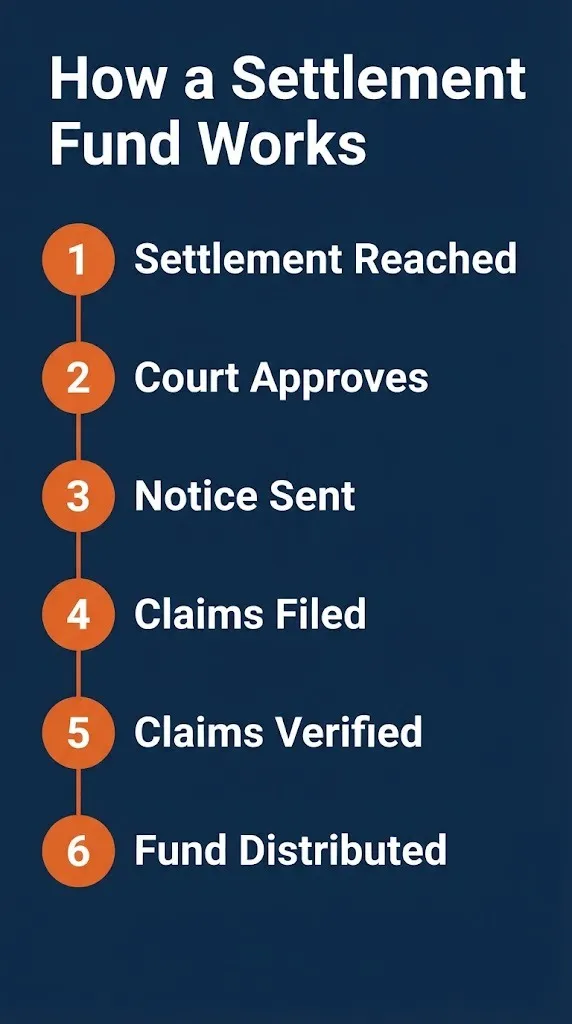
Here is the standard flow:
- Settlement agreement reached.
- Court grants preliminary approval.
- Notice sent to potential class members.
- Claim period opens.
- Claimants file claims.
- Administrator verifies claims.
- Court grants final approval.
- Fund distributed.
- Unclaimed money handled per the agreement.
What is the difference between a settlement fund and a judgment?
A settlement fund is created by agreement. The parties negotiate the amount and the terms. No trial occurs. The defendant may not admit wrongdoing.
A judgment is a court order after a trial. The court decides the amount. The defendant is found liable or not liable. A judgment may be appealed.
Most class actions settle. A settlement gives both sides certainty. The defendant knows the cost. The plaintiffs know they will receive something. A trial is riskier for everyone.
Who gets money from a settlement fund?
The class members get the money, minus deductions. Class members are the people who meet the class definition and file valid claims.
The class definition is in the settlement notice. It describes who qualifies. It may require proof of purchase, proof of injury, or other documentation.
Not everyone who sees the notice will qualify. The notice explains the criteria. If you do not meet the criteria, you do not get paid.
Here is who receives money from a typical fund:
- Eligible class members who file valid claims.
- Class counsel, for attorney fees.
- The settlement administrator, for processing costs.
- Named plaintiffs, for service awards in some cases.
- Cy pres recipients, if unclaimed money is donated.
Key Takeaway: The fund is not divided equally among everyone who hears about it. It is divided among eligible claimants.
How much will I get from a settlement fund?
The amount depends on the fund size, the number of valid claims, and the distribution formula. Some settlements pay a flat amount per claimant. Others use a point system based on the extent of harm.
The per-person payout is often small in consumer class actions. A data breach settlement may pay a few dollars. A product defect settlement may pay more. The range is wide.
Here is how the math works:
- Fund size: $10 million.
- Attorney fees: $3 million.
- Administrative costs: $500,000.
- Remaining for claimants: $6.5 million.
- Valid claims filed: 100,000.
- Per-person payout: $65.
That is a simplified example. The actual distribution may vary.
What happens to unclaimed settlement funds?
Unclaimed money is handled according to the settlement agreement. The options include:
- Second distribution to remaining claimants.
- Cy pres donation to a related charity.
- Return to the defendant.
- Escheat to the state.
Cy pres is common. The term comes from French, meaning “as near as possible.” The court directs the unclaimed money to a charity that serves the class’s interests.
The settlement agreement specifies what happens to unclaimed funds. The court must approve the plan.
Key Takeaway: Unclaimed money does not disappear. It is redistributed, donated, or returned according to the agreement.
What is a settlement administrator?
A settlement administrator is the entity that manages the fund. The administrator is neutral. It does not represent the plaintiffs or the defendant. It reports to the court.
The administrator’s duties include:
- Maintaining the settlement website.
- Sending notices to class members.
- Processing claim forms.
- Verifying eligibility.
- Calculating payments.
- Distributing checks or electronic payments.
- Handling claimant inquiries.
- Preparing reports for the court.
The administrator is paid from the fund. The cost is part of the settlement.
How do I find out if I qualify for a settlement fund?
You will usually receive a notice by mail or email. The notice explains the settlement, the class definition, and how to file a claim.
If you did not receive a notice but think you qualify, check the settlement website. The administrator maintains a site with the claim form and eligibility details. You can file online or by mail.
Here is how to check:
- Read the notice carefully.
- Identify the class definition.
- Check whether you meet the criteria.
- Note the claim deadline.
- File your claim before the deadline.
- Keep a copy of your confirmation.
What is a claim deadline?
The claim deadline is the last day to file. If you miss it, you get nothing. The deadline is set by the court and stated in the notice.
Late claims are almost never accepted. The only exception is if the court extends the deadline. That is rare.
The deadline is the single most important date in any settlement. Mark it. Calendar it. Do not miss it.
Key Takeaway: The deadline is not flexible. Missing it means you forfeit your share.
What is a class action settlement fund?
A class action settlement fund is the specific type of fund created in a class action. The defendant pays a lump sum. The fund is divided among the class members.
The class action mechanism allows many people with small claims to combine their cases. One lawsuit resolves thousands or millions of individual claims. The fund is the vehicle for paying those claims.
Class action funds are common in consumer cases, employment cases, and securities litigation. The amounts vary from a few million dollars to billions.
What is the final approval hearing?
The final approval hearing is the court proceeding where the judge decides whether to approve the settlement. The hearing happens after the notice period and claim deadline.
At the hearing, the judge reviews the settlement terms, the attorney fees, and any objections from class members. If the judge approves, the settlement becomes final. If not, the parties must renegotiate.
The hearing date is in the notice. You can attend. You can object. You can opt out if you want to preserve your own claim.
Key Takeaway: The final approval hearing is the last checkpoint before the money moves.
What is an opt-out?
An opt-out is a choice to exclude yourself from the settlement. If you opt out, you receive nothing from the fund. But you keep the right to sue the defendant on your own.
Opting out makes sense if your individual claim is worth much more than the settlement share. It is rare. Most people stay in the class.
The opt-out deadline is usually earlier than the claim deadline. The notice states both dates. Do not confuse them.
What should I do if I get a settlement notice?
Read it. The notice tells you what the case is about, who qualifies, how much money is involved, and what you need to do.
Here is the checklist:
- Read the entire notice.
- Identify the settlement fund amount.
- Check the class definition.
- Note the claim deadline.
- Note the opt-out deadline.
- Note the final approval hearing date.
- File your claim before the deadline.
- Keep your confirmation.
Do not ignore the notice. Do not assume it is a scam. Verify it first. Then act.
Reality Check
No legitimate settlement administrator will text you asking for money to release your payout. Filing a claim is always free. You never pay to receive a settlement check. If someone asks for a fee to process your claim, it is a scam. The real process is handled by a court-appointed administrator and costs nothing.
What Happens Next
| Timeline | Expected Stage |
|---|---|
| Notice received | Read and verify |
| Before deadline | File claim |
| After deadline | Administrator verifies claims |
| Final approval hearing | Court approves settlement |
| After approval | Funds distributed |
| If unclaimed | Cy pres or second distribution |
These stages are standard for most settlement funds. Your specific settlement may differ.
Frequently Asked Questions
What is a settlement fund?
A pool of money created by a settlement agreement to pay claims and costs.
Who gets money from a settlement fund?
Eligible class members who file valid claims before the deadline.
How much will I get?
It depends on the fund size, the number of claims, and the distribution formula.
What happens to unclaimed money?
It may be redistributed, donated to charity, or returned to the defendant.
Do I have to pay to file a claim?
No. Filing a claim is always free.
What is the claim deadline?
The last day to file. Missing it means you get nothing.
Can I opt out of a settlement?
Yes, but you receive no money and keep your right to sue individually.
How do I verify a settlement notice?
Check the court docket and the official settlement website.
The Fund Is Finite. The Deadline Is Real.
A settlement fund is a pool of money with a limit. The claims process is the gate. The deadline is the lock. Understanding the mechanics protects your share.
Read the notice. Check the deadline. File your claim. The money is there for people who follow the process.