What Does Annual Compensation Mean in 2026: Salary, Benefits, and Legal Definitions Explained
Quick Answer
- Annual compensation means your total earnings in one year, not just your base salary.
- It typically includes salary, bonuses, commissions, overtime, and sometimes benefits.
- Courts and agencies use different definitions for wage claims, overtime, and discrimination cases.
You saw “annual compensation” in a job offer, a lawsuit notice, or a government form. You need to know exactly what it means. The answer depends on who is asking.
For a job offer, annual compensation usually means base salary plus expected bonuses. For a wage claim, it may mean all cash earnings. For taxes, it means taxable income.
This article breaks down the legal and practical definitions of annual compensation in 2026. You will learn what counts, what does not, and how to calculate your own number.
The Facts
| Core Definition | Total earnings from an employer in one year |
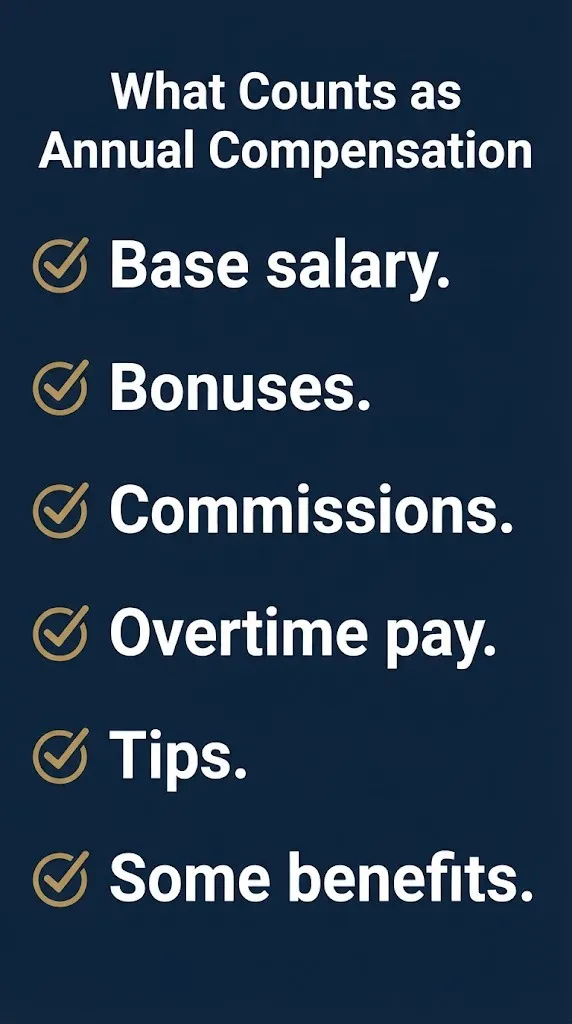
| Includes | Base salary, bonuses, commissions, overtime, tips |
| Sometimes Includes | Health insurance, retirement contributions, stock options |
| Legal Context | Varies by statute and agency |
| Tax Context | IRS Form W-2 Box 1 taxable wages |
| Common Confusion | People mistake base salary for total compensation |
What Does Annual Compensation Mean in Simple Terms?
Annual compensation means everything you earn from your job in one year.
It is not just your base salary. It includes cash payments like bonuses and commissions. It may include non-cash benefits like health insurance.
When an employer says “annual compensation,” they usually mean the total value of pay and benefits.
When a court says “annual compensation,” the definition narrows based on the specific law at issue.
What Is the Difference Between Base Salary and Annual Compensation?
Base salary is your fixed pay before extras. Annual compensation is the total.
A job posting may list a base salary of $80,000. The annual compensation could be $95,000 with bonus and retirement match.
Knowing the difference matters when comparing job offers.
It also matters in legal disputes. Wage theft claims often involve unpaid amounts beyond base salary.
| Component | Base Salary | Annual Compensation |
|---|---|---|
| Fixed pay | Yes | Yes |
| Bonuses | No | Yes |
| Commissions | No | Yes |
| Overtime | No | Yes |
| Health insurance | No | Sometimes |
| Retirement match | No | Sometimes |
| Stock options | No | Sometimes |
How Do You Calculate Annual Compensation?
You calculate annual compensation by adding all earnings and applicable benefits.
Start with your base salary. Add any bonuses you actually received. Add commissions earned. Add overtime paid.
Then decide whether to include benefits. For job comparison purposes, include health insurance premiums your employer pays and retirement contributions.
For legal purposes, follow the specific statute’s definition. The Fair Labor Standards Act uses a narrower definition than the Internal Revenue Code.
What Does the Fair Labor Standards Act Include in Annual Compensation?
The Fair Labor Standards Act, or FLSA, defines compensation for overtime and minimum wage purposes.
It includes base pay, bonuses, commissions, and certain other payments.
It excludes some benefits like health insurance and retirement contributions.
The FLSA definition matters for determining whether you are owed overtime.
Employers sometimes misclassify workers as exempt by inflating their “salary” with non-cash items. Courts look at cash earnings, not benefit value.
Key Takeaway: Annual compensation means different things in different legal contexts. Always ask which definition applies.
What Is Included in Annual Compensation for a Job Offer?
For a job offer, annual compensation typically includes base salary plus target bonus.
Some employers add the value of health benefits, retirement matching, and stock grants.
Ask for a written breakdown. Do not accept a verbal “total comp” number without details.
A $100,000 compensation package may be $80,000 salary plus a $20,000 bonus you may never earn.
This is like buying a car based on the sticker price before reading the window sticker. The details change the deal.
What Does Annual Compensation Mean for Taxes?
For federal income tax, annual compensation means your taxable wages.
The IRS uses Form W-2 Box 1 to report taxable compensation.
This includes wages, salaries, bonuses, commissions, and tips.
It excludes certain pre-tax benefits like health insurance premiums and traditional 401(k) contributions.
Your W-2 number may be lower than your total compensation because of these exclusions.
What Does Annual Compensation Mean in a Discrimination Lawsuit?
In employment discrimination cases, annual compensation may determine damages.
Back pay awards include lost wages, bonuses, and benefits you would have earned.
Front pay may extend those amounts into the future.
The court looks at your total compensation history, not just base salary.
If you are preparing a discrimination claim, gather pay stubs, bonus statements, and benefits summaries.
What Does Annual Compensation Mean in a Workers Compensation Claim?
Workers compensation uses average weekly wage, not annual compensation directly.
But your average weekly wage is calculated from your annual earnings.
Higher annual compensation means higher weekly benefits.
Include all sources of work income when reporting your earnings to the workers comp board.
Leaving out bonuses or overtime can reduce your benefit amount.
Reality Check: No one can tell you your exact annual compensation without seeing your pay records. Use your W-2, pay stubs, and benefits statement. Do not rely on memory.
What Does Annual Compensation Mean for Overtime Eligibility?
Your annual compensation can determine whether you are exempt from overtime.
The FLSA sets a salary threshold for exemption. As of 2026, the threshold is $1,128 per week, or $58,656 annually.
But that threshold applies to salary, not total compensation.
Certain highly compensated employees have a higher threshold. That definition includes total annual compensation.
Misclassification is common. If you are paid a salary but work overtime, check your actual duties and pay against the legal standard.
What Is the Highly Compensated Employee Threshold in 2026?
The FLSA has a separate exemption for highly compensated employees.
To qualify, you must earn at least $151,164 in total annual compensation.
That figure includes salary, commissions, and nondiscretionary bonuses.
It does not include benefits like health insurance or retirement contributions.
If you earn less than that, the highly compensated exemption does not apply.
What Should You Ask About Annual Compensation in a Job Offer?
Ask for the breakdown in writing.
- What is the base salary?
- What is the target bonus, and how is it calculated?
- Are commissions guaranteed or discretionary?
- What benefits are included in the total compensation figure?
- What is the retirement match?
- Is any equity or stock included?
- What was the average bonus actually paid last year?
This is like reading the fine print on a lease. The headline number is not the whole story.
Key Takeaway: Annual compensation is a package, not a single line. Break it down before you sign.
How Does Annual Compensation Affect Settlement Payouts?
In wage and hour settlements, annual compensation determines your share.
Class action settlements in wage theft cases often allocate payments based on weeks worked and pay rate.
Your annual compensation history helps the claims administrator calculate your estimated share.
In personal injury settlements, lost earning capacity may use annual compensation as a baseline.
Accurate records improve your outcome in any settlement.
What Records Prove Annual Compensation?
Your W-2 proves taxable wages.
Pay stubs show gross earnings and deductions.
Bonus statements show variable pay.
Benefits summaries show employer contributions.
Keep at least three years of records. For legal claims, keep longer.
If records are missing, request copies from your employer or the IRS.
What Is the Difference Between Annual Compensation and Total Rewards?
Annual compensation is the financial value of pay and benefits for one year.
Total rewards is a broader concept. It includes pay, benefits, work-life balance, and career development.
Some employers use “total rewards” to inflate the perceived value of a job.
Cash and benefits are measurable. Career development is not.
Focus on the measurable numbers when comparing offers.
What Happens Next if You Have a Compensation Dispute
- Step 1: Gather all pay records and the job offer letter.
- Step 2: Calculate what you were actually paid versus what was promised.
- Step 3: Ask your employer in writing to explain the difference.
- Step 4: If unresolved, contact your state labor department.
- Step 5: Consult an employment attorney if the amount is significant.
The process works best when you have documentation. Memory is not evidence.
Frequently Asked Questions
What does annual compensation mean on a job application?
It means your total expected earnings for one year, including base pay and bonuses.
Does annual compensation include health insurance?
Sometimes. Employers often include health benefits in total compensation figures.
Is annual compensation the same as gross income?
Not always. Gross income may include non-job income. Annual compensation is job-specific.
How do I calculate my annual compensation from my pay stub?
Multiply your gross pay per pay period by the number of pay periods in a year.
What is a good annual compensation package?
It depends on your industry, location, and experience. Compare total packages, not just salary.
Does annual compensation include overtime?
Yes. Overtime pay is part of your total annual cash compensation.
What is the difference between annual compensation and base salary?
Base salary is fixed pay. Annual compensation is base salary plus all other earnings and sometimes benefits.
Why does annual compensation matter in a lawsuit?
Courts use it to calculate damages, back pay, and settlement amounts.
Annual compensation is a simple concept with complicated applications. Your base salary is only part of the picture. Bonuses, commissions, overtime, and benefits all count depending on the context. When you see the term in a job offer, a tax form, or a legal notice, ask one question: what is included in this number? The answer determines what you actually earn.