Personal Injury Lawsuit Settlement 2026: Average Payouts, Car Accident Amounts, and Timeline Explained
Quick Answer
- Most personal injury cases settle before trial. Trials are rare and risky.
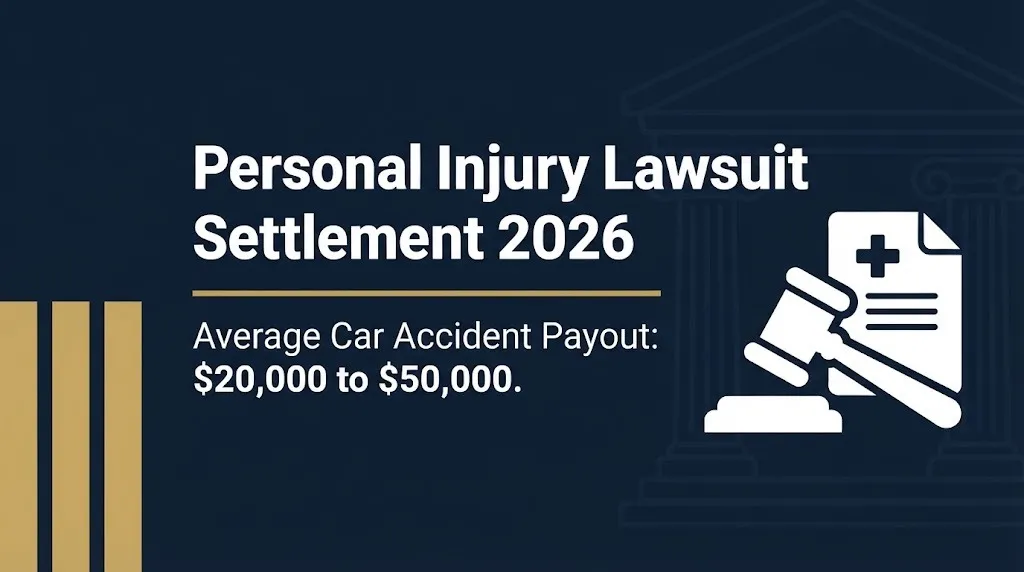
- Car accident settlements average between $20,000 and $50,000 for moderate injuries.
- A typical case takes 6 to 18 months from filing to settlement payment.
You got hurt. Someone else caused it. Now you want to know what your case is worth and how long it will take.
Personal injury lawsuit settlements are not one-size-fits-all. A fender bender with whiplash settles for thousands. A spinal cord injury from a truck crash settles for millions.
This article breaks down verified settlement ranges, the factors that move your number, and the timeline from injury to payment in 2026.
The Facts
| Case Type | Individual personal injury claims |
| Settlement Rate | Over 90 percent settle before trial |
| Average Car Accident Settlement | $20,000 to $50,000 for moderate injuries |
| Severe Injury Settlements | $100,000 to $1 million plus |
| Typical Timeline | 6 to 18 months |
| Statute of Limitations | 1 to 6 years depending on state |
| Payment Method | Lump sum or structured settlement |
Are Personal Injury Lawsuit Settlements Real?
Yes. Personal injury settlements are real and paid every day.
When someone causes you harm through negligence, their insurance company typically pays to settle your claim.
The settlement is a contract. You release your legal claims in exchange for money.
Most cases settle without ever going to trial. The system is built on negotiation.
How Much Is the Average Personal Injury Settlement?
The average personal injury settlement depends heavily on injury type.
Minor soft tissue injuries settle for $3,000 to $15,000.
Moderate injuries like fractures settle for $20,000 to $75,000.
Severe injuries like traumatic brain injury or spinal cord damage can settle for $500,000 to several million dollars.
| Injury Type | Typical Settlement Range |
|---|---|
| Minor whiplash | $3,000 to $15,000 |
| Broken bone | $20,000 to $75,000 |
| Herniated disc | $50,000 to $150,000 |
| Traumatic brain injury | $100,000 to $1 million plus |
| Spinal cord injury | $500,000 to $5 million plus |
| Wrongful death | $250,000 to $2 million plus |
Key Takeaway: Your settlement tracks your medical bills, lost wages, and pain severity. Bigger injury means bigger number.
What Is the Average Car Accident Settlement in 2026?
Car accident settlements average between $20,000 and $50,000 for moderate injuries.
That figure comes from insurance industry data and legal reporting. It is not a guarantee.
Minor accidents with no lasting injury may settle for under $10,000.
Accidents involving surgery, permanent impairment, or disability can settle for six figures or more.
What Factors Determine a Car Accident Settlement Amount?
Five main factors drive the settlement number.
First, medical costs. Higher bills mean higher settlements.
Second, lost wages. Time off work increases your claim.
Third, pain and suffering. This is calculated as a multiple of medical bills.
Fourth, fault. Clear liability strengthens your position.
Fifth, insurance limits. The at-fault driver’s policy cap may limit recovery.
| Factor | Impact |
|---|---|
| Medical bills | Directly increases settlement |
| Lost wages | Adds to economic damages |
| Pain and suffering | Multiplier of 1.5 to 5 times medical bills |
| Clear fault | Strengthens negotiation position |
| Policy limits | Caps available recovery |
Key Takeaway: Insurance adjusters use formulas. Your job is to prove your inputs deserve a higher multiplier.
How Long Does a Car Accident Settlement Take?
Most car accident settlements take 6 to 18 months.
Simple cases with clear liability and minor injuries can settle in 3 to 6 months.
Complex cases with disputed fault or severe injuries can take 2 to 3 years.
The timeline depends on medical treatment duration, negotiation pace, and court scheduling.
What Is the Car Accident Settlement Timeline?
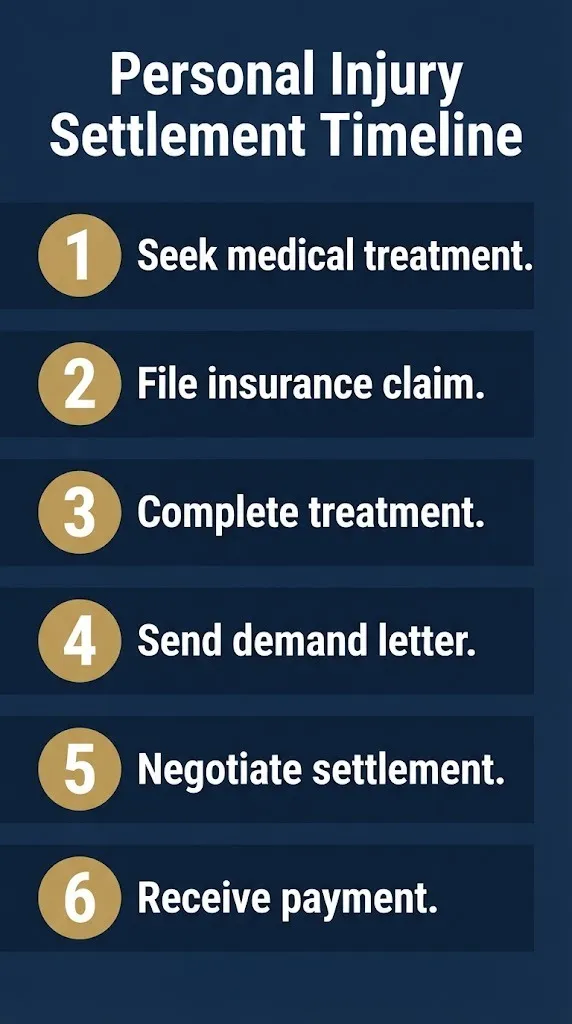
The process follows a predictable sequence.
- You seek medical treatment immediately after the accident.
- You file an insurance claim within days.
- You complete medical treatment and reach maximum medical improvement, usually 3 to 9 months.
- Your attorney sends a demand letter to the insurer.
- Negotiation begins. This can take weeks or months.
- If negotiation stalls, your attorney files a lawsuit.
- Discovery occurs. Both sides exchange evidence.
- Mediation or settlement conference is scheduled.
- Most cases settle at or before mediation.
- Payment is issued within 30 to 60 days after settlement agreement.
This is like selling a house. Preparation takes time. The closing happens fast once you agree.
Reality Check: No one is sending you settlement money via text. Insurance companies do not pay without a signed release. If someone demands a fee to release your settlement, it is a scam.
How Do Insurance Companies Calculate Settlement Offers?
Insurance companies use a formula based on economic and non-economic damages.
Economic damages are your medical bills and lost wages. These are added up.
Non-economic damages are pain and suffering. These are calculated as a multiple of economic damages, usually 1.5 to 5 times.
The insurer then applies a fault percentage if you share any blame.
The first offer is almost always low. It is a starting point, not a final number.
What Is Pain and Suffering Worth in a Settlement?
Pain and suffering is subjective. There is no fixed amount.
Insurance adjusters often use a multiplier method. Medical bills times 1.5 to 5 equals pain and suffering.
A $10,000 medical bill with a multiplier of 3 yields $30,000 for pain and suffering.
Severe injuries justify higher multipliers. Permanent injuries command top dollar.
Can I Settle My Personal Injury Case Without a Lawyer?
You can, but it rarely works out well.
Insurance adjusters negotiate for a living. You do not.
Studies from the Insurance Research Council show claimants with lawyers receive settlements 3.5 times higher on average, even after attorney fees.
For minor injuries with clear liability, self-representation may work. For anything more serious, hire a lawyer.
How Do Personal Injury Lawyer Fees Work?
Personal injury lawyers work on contingency.
You pay nothing upfront. The lawyer receives a percentage of your settlement.
Typical fees range from 33 to 40 percent.
Costs like filing fees and expert witnesses are deducted separately.
Get the fee agreement in writing before signing.
| Fee Structure | Typical Range |
|---|---|
| Contingency fee | 33 to 40 percent |
| Costs | Deducted separately |
| No recovery | No fee owed |
Key Takeaway: A lawyer’s fee comes from your settlement, not your pocket. If there is no recovery, there is no fee.
What Is the Statute of Limitations for Personal Injury Lawsuits?
The statute of limitations varies by state. Most states allow one to six years.
The clock starts on the date of injury or the date you discovered the injury.
Missing the deadline bars your claim forever.
Check your state’s specific deadline immediately after any injury.
What Happens If I Miss the Filing Deadline?
Your case is dead.
The court will dismiss it. The insurance company will not pay.
There are rare exceptions, like if you were a minor or mentally incapacitated.
Do not test the deadline. File early or consult a lawyer quickly.
What Is a Structured Settlement?
A structured settlement pays your money over time instead of in one lump sum.
Structured settlements are common in large cases.
They provide tax advantages and protect you from spending the money too fast.
You can negotiate the payment schedule before signing the settlement.
How Are Settlements Paid?
Most settlements are paid as a lump sum.
The insurance company issues a check to your attorney after you sign the release.
Your attorney deducts fees and costs, then pays you the remainder.
The process usually takes 30 to 60 days after agreement.
What Is the Difference Between a Settlement and a Verdict?
A settlement is an agreement between you and the defendant.
A verdict is a jury’s decision after trial.
Settlements are faster and less risky. Verdicts can be higher but are appealable.
Over 90 percent of personal injury cases settle before trial.
Key Takeaway: Settlements are the norm. Trials are the exception. Most cases never see a courtroom.
What Happens Next After You Agree to a Settlement
- Day 1: You sign the settlement agreement and release.
- Week 1 to 2: The insurance company processes the paperwork.
- Week 3 to 4: Your attorney receives the settlement check.
- Week 5 to 6: Your attorney deducts fees and costs, then pays you.
- Complete: Your case is closed. You cannot reopen it later.
Personal injury settlements are not a lottery. They are compensation for real losses. The amount depends on your medical bills, lost wages, and pain severity. The timeline depends on your treatment and the negotiation process. Hire a lawyer, document everything, and do not rush the process. The insurance company wants you to settle fast and cheap. Your job is to settle for what you actually deserve.
Frequently Asked Questions
How much is the average personal injury settlement?
Most personal injury settlements range from $3,000 to $75,000 depending on injury severity.
How long does a personal injury lawsuit take?
Most cases settle within 6 to 18 months. Severe injury cases take longer.
Do I need a lawyer for a personal injury settlement?
For anything beyond minor injuries, yes. Lawyers recover more on average, even after fees.
How is pain and suffering calculated?
Insurance companies multiply medical bills by 1.5 to 5 to estimate pain and suffering.
What if the at-fault driver has no insurance?
Your own uninsured motorist coverage may pay. A lawyer can explain your options.
Are personal injury settlements taxable?
Most personal injury settlements are not taxable. Punitive damages may be.
Can I reopen a settled personal injury case?
No. Once you sign the release, your case is closed permanently.
What is the deadline to file a personal injury lawsuit?
Most states allow one to six years from the injury date. Check your state law.
Personal injury settlements compensate you for medical bills, lost wages, and pain. The process rewards patience and documentation. Seek treatment immediately. Keep every record. Hire a lawyer for anything beyond a minor claim. The insurance company has a team. You should too.