Feel Free Lawsuit and Botanic Tonics Litigation in 2026: Claims, Status, and What Consumers Should Know
Quick Answer
- Feel Free is a kratom-based wellness drink sold by Botanic Tonics, now facing multiple lawsuits over safety and marketing claims.
- No class-wide settlement or claims process exists in 2026; individual cases are still moving through courts.
- Consumers who suffered harm may have legal options, but no payout deadline or administrator is confirmed.
If you typed “Feel Free lawsuit” or “Botanic Tonics lawsuit” into a search bar, you likely saw a headline, a social media post, or a forum thread about the wellness drink and its legal troubles. This article tells you what is verified, what is still just allegation, and what any of it means for you as a consumer or former customer.
Feel Free is a bottled tonic sold by Botanic Tonics, a company based in Oklahoma. The drink contains kratom leaf extract and kava root extract. Those two botanicals are legal under federal law but carry documented health risks. The lawsuits claim the company downplayed those risks and marketed the product too aggressively.
The surprising verified detail: kratom is banned in six states and multiple counties, yet Feel Free remains widely available online and in gas stations and convenience stores across much of the country. That regulatory patchwork is central to the litigation.
The Facts
| Fact | Detail |
|---|---|
| Company | Botanic Tonics, LLC |
| Product | Feel Free Wellness Tonic |
| Key ingredients | Kratom leaf extract, kava root extract |
| Legal status of kratom | Legal federally, banned in 6 states and several localities |
| Litigation status | Active; multiple cases, no class-wide settlement |
| Settlement fund | None confirmed |
| Per-person payout | Not yet determined |
| Claim deadline | None; no claims process open |
| Administrator | Not yet appointed |
Is the Feel Free Lawsuit Real or Just Online Hype?
The Feel Free lawsuit is real. Multiple cases have been filed against Botanic Tonics in state and federal courts. The claims generally fall into three categories: product liability, consumer protection, and wrongful death.
Product liability cases allege that Feel Free caused injuries such as liver damage, seizures, or severe withdrawal symptoms. Consumer protection cases allege that Botanic Tonics misrepresented the safety and addictiveness of its product. Wrongful death cases involve families who say a loved one died after using Feel Free.
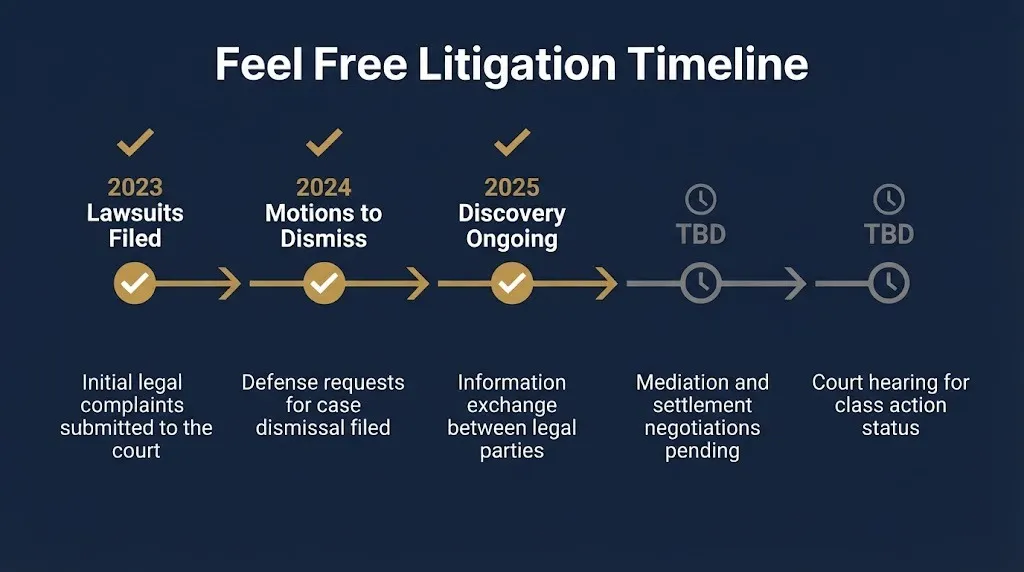
None of these cases has reached a class-wide settlement in 2026. Some are in early discovery. Others are fighting motions to dismiss. A few have been consolidated or stayed pending rulings on evidentiary issues.
If you see a post claiming that a Feel Free class action settlement is paying out, that claim is not verified as of this date. Check the court docket or a legitimate settlement administrator before believing it.
Key Takeaway: The lawsuits are real and ongoing, but no settlement fund, claim deadline, or payout process exists yet.
What Is Botanic Tonics and What Is Feel Free?
Botanic Tonics is an Oklahoma-based company that markets Feel Free as a wellness tonic. The drink comes in small bottles, often sold at gas stations, convenience stores, smoke shops, and online.
The active ingredients are kratom and kava. Kratom is a plant from Southeast Asia with opioid-like effects at high doses. Kava is a Pacific Island root used for relaxation. The combination produces a mild euphoric and sedative effect that some users describe as similar to a low-dose opioid.
The company markets Feel Free as a natural alternative to alcohol and as a productivity aid. Those marketing claims are now central to the litigation. Plaintiffs say the product is far more addictive and dangerous than the marketing suggests.
Botanic Tonics has denied wrongdoing in court filings. The company says its product is safe when used as directed and that the lawsuits rely on misuse or pre-existing conditions.
What Are the Allegations in the Botanic Tonics Lawsuit?
The allegations against Botanic Tonics are serious and consistent across multiple filings. Plaintiffs claim the company failed to warn about addiction risk. They say the kratom content produces physical dependence similar to opioids.
Other allegations involve withdrawal. Some users report severe withdrawal symptoms when they stop drinking Feel Free. Those symptoms include anxiety, insomnia, muscle aches, sweating, and intense cravings.
Product liability claims focus on injuries. Some plaintiffs allege liver toxicity, seizures, and cardiac events. Others claim the product caused or worsened mental health crises.
Consumer protection claims target the marketing. The lawsuits say Botanic Tonics sold Feel Free as a safe, natural supplement while knowing that kratom has known risks. They point to internal documents and social media marketing as evidence.
The company denies these claims. The litigation will determine whether the allegations hold up in court.
Key Takeaway: The lawsuits claim Feel Free is more addictive and dangerous than its marketing suggests. Botanic Tonics denies it.
Has the FDA Taken Action Against Feel Free or Kratom?
The FDA has not approved kratom for any medical use. The agency has issued warnings about kratom for years, citing risks of addiction, liver damage, and death. The FDA has not banned kratom nationally, though it has considered scheduling it.
The FDA has also sent warning letters to kratom sellers, including some who made disease treatment claims. Botanic Tonics has not been the subject of a high-profile FDA enforcement action as of September 2026, but that does not mean the agency has cleared the product.
The Drug Enforcement Administration attempted to schedule kratom as a Schedule I drug in 2016 but withdrew the plan after public backlash. Kratom remains unscheduled at the federal level.
Six states ban kratom: Alabama, Arkansas, Indiana, Rhode Island, Vermont, and Wisconsin. Several counties and cities also ban it. Feel Free cannot be sold legally in those places.
Is Feel Free Legal to Buy in 2026?
Feel Free is legal to buy in most of the United States in 2026, but the patchwork of state and local laws makes the answer depend on where you live. If your state bans kratom, Feel Free is illegal there.
Even where legal, the product faces increasing scrutiny. Some retailers have stopped carrying it. Some payment processors have refused to handle sales. Insurance companies are watching the litigation closely.
The legal status of kratom could change. The FDA and Congress have both considered tighter regulation. A federal scheduling action would effectively end Feel Free sales nationwide, but no such action is confirmed as of September 2026.
If you buy Feel Free, check your state and local laws first. Ignorance of a local kratom ban is not a legal defense.
Key Takeaway: Feel Free is legal in most states but banned in six, and a federal crackdown remains possible.
What Are the Health Risks Linked to Feel Free?
The health risks linked to Feel Free come from its two active ingredients. Kratom has been associated with addiction, withdrawal, liver injury, seizures, and, in rare cases, death. Kava has been linked to liver toxicity in some users, though the risk is debated.
Reported side effects of Feel Free include nausea, dizziness, constipation, sweating, anxiety, insomnia, and rapid heart rate. More serious reports include jaundice, dark urine, seizures, and hospitalization.
Addiction is the most commonly reported serious problem. Users describe needing the drink daily to avoid withdrawal. Some report spending hundreds of dollars a week on Feel Free.
The FDA has warned that kratom affects the same opioid receptors as drugs like morphine. That mechanism explains both the pain-relieving and addictive effects.
If you use Feel Free and experience serious side effects, seek medical care and report the event to the FDA through its MedWatch program.
Reality Check: No text message or social media ad offering a Feel Free settlement is legitimate as of September 2026. No claims administrator has been appointed. Anyone asking for money to file a claim is running a scam.
How Many People Have Been Affected by Feel Free?
The exact number of people affected by Feel Free is not confirmed. Reddit communities and Facebook groups contain thousands of posts from users describing addiction and withdrawal. Those anecdotal reports are not scientific data, but they show a pattern.
One Reddit community focused on quitting Feel Free has grown significantly since 2023. Users describe tapering off the drink, sometimes with medical help. Others describe relapsing multiple times.
The lawsuits name individual plaintiffs, not a class. Without a class certification ruling or a settlement, there is no official count of affected users.
Botanic Tonics has not disclosed sales figures that would show how many bottles are sold monthly. The company is private and does not publish that data.
Can I File a Claim in the Feel Free Lawsuit?
There is no claims process to join as of September 2026. No class has been certified, no settlement has been approved, and no claims administrator has been appointed. You cannot file a claim because there is no claim form.
If you were harmed by Feel Free, you may have individual legal options. You can consult a personal injury or products liability attorney. Most offer free consultations and work on contingency if they take your case.
Keep your records. Save receipts, purchase history, medical records, and any communication with Botanic Tonics. If a class action eventually settles, those records will matter.
Do not sign anything from a third-party claim service. These companies often charge fees for work you can do yourself later.
Key Takeaway: There is no Feel Free class action claim form yet. If you were harmed, talk to a lawyer and keep your records.
What Is the Current Status of the Feel Free Litigation in 2026?
The litigation is active but fragmented. Cases are pending in multiple jurisdictions, including Oklahoma, California, and federal courts. Some cases have been consolidated for discovery, but no multidistrict litigation panel has created a single MDL for Feel Free cases.
Motions to dismiss have been filed in several cases. Botanic Tonics argues that the claims fail as a matter of law and that the product labels contained adequate warnings. Plaintiffs argue the warnings were insufficient.
No trial date has been set in the lead cases. Discovery is ongoing. Depositions of company executives and expert witnesses are expected through 2026 and into 2027.
The absence of an MDL means the cases move on separate tracks. That slows any global settlement and makes a class-wide resolution less likely in the near term.
What Would a Feel Free Settlement Look Like?
If a settlement eventually happens, it would likely follow the pattern of other consumer product cases. A fund would be created to compensate users who suffered documented injuries or financial losses from purchasing the product.
The fund size would depend on Botanic Tonics’ insurance coverage and assets. The company is private, and its financials are not public. That makes it hard to predict a settlement amount.
Payouts would depend on injury severity. Cases involving hospitalization, liver damage, or death would likely receive more than claims for financial losses alone.
A claims administrator would be appointed by the court. That administrator would process claims, verify documentation, and distribute payments. None of that exists yet.
What Has Botanic Tonics Said in Response to the Lawsuits?
Botanic Tonics has denied the allegations. In court filings, the company says its product is safe when used as directed. It points to the legal status of kratom and kava at the federal level.
The company has also said that plaintiffs misused the product or had pre-existing conditions. It argues that the marketing did not promise medical benefits and that labels disclosed the ingredients.
Botanic Tonics has continued to sell Feel Free while the litigation proceeds. The company has not issued a recall or changed its marketing in a way that is visible to consumers.
Public relations statements have been limited. The company has not held press conferences or issued detailed rebuttals beyond court filings.
Key Takeaway: Botanic Tonics denies the claims and continues to sell Feel Free. The litigation will decide whether those denials hold.
Is Kratom Legal in My State?
Kratom’s legal status varies by state. Six states ban it outright. Several others have age restrictions or labeling requirements. Most states allow it with no restrictions.
The banned states are Alabama, Arkansas, Indiana, Rhode Island, Vermont, and Wisconsin. Some cities and counties in other states also ban kratom.
States with age restrictions include Arizona, Georgia, Nevada, and Utah, among others. Some require labels listing ingredients and risks.
If you are unsure about your state, check your state legislature’s website or a reliable legal research source. Do not rely on a kratom vendor’s website, which may understate the legal risks.
What Should I Do If I Have a Problem with Feel Free?
If you are struggling with Feel Free dependence, seek medical help. Withdrawal from kratom can be difficult, and a doctor can help you taper safely. Some people need medically supervised detox.
Do not stop abruptly without medical advice if you have used Feel Free heavily or for a long time. Withdrawal symptoms can be severe.
If you experienced a serious health event, report it to the FDA MedWatch program. That reporting helps regulators track the product’s safety profile.
If you want to explore legal options, consult a personal injury or products liability attorney. Bring your medical records, purchase history, and any communication with the company.
Key Takeaway: Get medical help first. Report serious events to the FDA. Then talk to a lawyer about legal options.
What Happens Next in the Feel Free Litigation?
The next stages are unfolding slowly. Discovery will continue through late 2026. Expert witnesses will be deposed.
Motions for summary judgment are expected in early 2027 in some cases. A ruling on those motions will narrow the claims.
A class certification ruling could come in 2027, depending on how the individual cases fare. If a class is certified, a settlement or trial becomes more likely.
Regulatory action remains a wildcard. The FDA or a state attorney general could file an enforcement action that changes the legal landscape.
For now, watch the court dockets. The cases are public record, and major rulings will be reported.
Frequently Asked Questions
What is the Feel Free lawsuit about?
The lawsuits claim Botanic Tonics failed to warn about addiction and health risks from kratom and kava in its Feel Free drink.
Is there a Feel Free class action settlement?
No. No class has been certified, no settlement has been approved, and no claims process exists as of September 2026.
Can I file a claim in the Botanic Tonics lawsuit?
Not yet. There is no claim form or administrator because no settlement exists.
Is Feel Free safe to drink?
The FDA has warned about kratom’s risks, including addiction and liver damage. Feel Free contains kratom and kava.
Is kratom legal in 2026?
Kratom is legal federally but banned in six states and several localities.
What are the side effects of Feel Free?
Reported side effects include addiction, withdrawal, nausea, anxiety, insomnia, seizures, and liver injury.
Has Botanic Tonics recalled Feel Free?
No recall has been issued. The product remains on sale in most states.
How do I report a problem with Feel Free?
Report health events to the FDA MedWatch program and consult a doctor for medical help.
The single most important fact about the Feel Free litigation is that there is no settlement yet. If you see a claim form, a payout offer, or a deadline floating around online, treat it as unverified until a court docket or legitimate claims administrator confirms it.
If you were harmed by Feel Free, your options are individual legal action and FDA reporting, not a class claim form. Keep your records. Talk to a lawyer. Watch the dockets. The cases are moving, but slowly.