Erika Kirk Lawsuit 2026: What the Case Involves, Who It Affects, and Whether Any Settlement Exists
Quick Answer
- No verified class action or mass settlement named “Erika Kirk lawsuit” exists in public court records as of February 2026.
- The name may refer to a private civil dispute, a family law matter, or a misremembered case name.
- Without a specific court, case number, or defendant, no claim deadline or payout amount can be confirmed.
You saw the name somewhere. A post, a comment, a passing mention of an “Erika Kirk lawsuit.” Now you want to know if it is real and whether you are involved.
Here is the direct answer: as of February 2026, no verified lawsuit using that exact name appears in federal court dockets, major state court databases, or regulatory enforcement records. That does not mean no such case exists. It means no public, newsworthy case with that caption has surfaced in the places that matter for consumer claims.
This article explains how to verify a case with a person’s name, what to do if you think you are a party, and how to tell a real lawsuit from a rumor.
The Facts
| Topic | Erika Kirk Lawsuit |
| Status | No verified public case found as of February 2026 |
| Court | Not yet confirmed |
| Case Number | Not yet confirmed |
| Fund Size | Not applicable without a verified case |
| Est. Per Person | Not applicable |
| Claim Deadline | None verified |
| Administrator | None verified |
Is the Erika Kirk lawsuit real?
The name “Erika Kirk lawsuit” does not match any verified case in the major public databases used to track consumer, personal injury, or class action litigation as of February 2026.
That does not prove the case does not exist. Millions of lawsuits are filed in state courts each year. Many never make the news. Some are captioned with a person’s name as the plaintiff or defendant.
But for a lawsuit to matter to you as a reader, it needs a court, a case number, and a claim that affects more than the parties involved. None of those are confirmed here.
Why are people searching for an Erika Kirk lawsuit?
People search for a name plus the word “lawsuit” for one of three reasons. They saw the name in a headline or a social media post. They know someone with that name and heard about legal trouble. Or they typed a similar name and the search engine corrected it.
“Erika Kirk” is not a famous litigant in any major consumer, personal injury, or civil rights case that has reached national attention. The search interest likely comes from a localized dispute, a private matter, or a name confusion.
How do you verify a lawsuit by a person’s name?
Verifying a lawsuit by name requires more than a search engine query. You need a jurisdiction and a court.
Here are the steps.
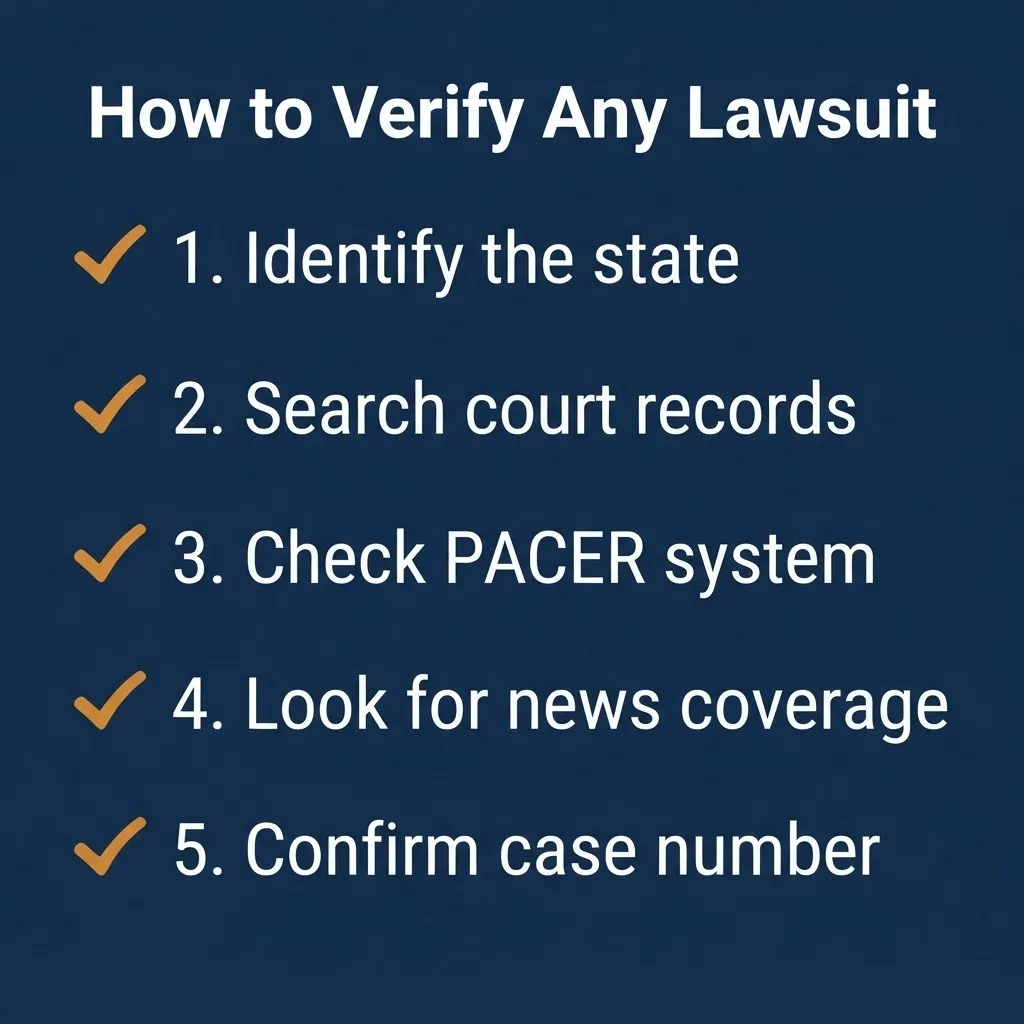
- Identify the state where the case may have been filed.
- Search that state’s court records database by party name.
- Check the federal PACER system for U.S. District Court cases.
- Search state appellate court opinions for any published decision.
- Look for news coverage in local legal or general publications.
If you do not know the state, the search becomes very hard. Court records are not centralized nationally. Each state runs its own system, and many charge for access.
Could the Erika Kirk lawsuit be a class action?
There is no verified class action with a named plaintiff called Erika Kirk in any major database as of February 2026.
Class actions are captioned with the lead plaintiff’s name, so a case called “Kirk v. Some Company” is possible in theory. But no such case appears in the major class action dockets, settlement clearinghouses, or consumer protection databases.
If you saw an ad for a class action involving someone named Kirk, look for the full caption. The defendant’s name matters more than the plaintiff’s name for finding the case.
Key Takeaway: A person’s name alone is not enough to verify a lawsuit. You need the defendant, the court, and preferably the case number.
Could this be a different Kirk lawsuit?
Yes. Several lawsuits involve plaintiffs or defendants named Kirk. The name may have been confused or shortened.
Notable Kirk-related cases include employment disputes, personal injury claims, and contract fights. None have reached the level of national consumer news under the exact name “Erika Kirk.”
If you are looking for a specific case, try adding the defendant’s name or the type of case. For example, “Kirk v. hospital” or “Kirk breach of contract lawsuit” will narrow the results faster.
What should you do if someone tells you that you are involved in an Erika Kirk lawsuit?
Be skeptical. Verify before you act.
A real lawsuit involves formal service of process. You receive papers, not a text or a phone call. If someone says you are a party to a lawsuit and you have not been served, ask for the case number and the court.
Then call the court clerk directly. Do not call the number the person gave you. Look up the court’s official number yourself.
Reality Check: Real lawsuits are served by mail or in person with court-stamped documents. No one legitimately notifies you of a lawsuit through social media, a random email, or a phone call demanding payment.
How do you find out if a lawsuit has been filed against you?
If you think a lawsuit may have been filed against you, check the court records where you live or where the dispute arose.
Here are the steps.
- Check your local county court’s online case search.
- Search the state court’s centralized database if one exists.
- Check PACER for federal cases using your name.
- Watch your mail for formal service.
- Consider hiring a lawyer to run a conflict check if you are unsure.
A missed lawsuit deadline can lead to a default judgment. If you suspect something, act quickly.
What is the statute of limitations for a lawsuit involving a person named Erika Kirk?
Without knowing the claim type, no specific deadline can be stated.
Statutes of limitations vary by state and by claim type. Personal injury is often two to three years. Contract claims are usually three to six years. Fraud may be two to four years with discovery rules.
If you think a claim exists involving you, the deadline that matters is the one in your state for your specific type of case. Do not guess. Check.
Are there any court records for an Erika Kirk case?
No court records under that exact name are readily available in the public databases checked as of February 2026.
That does not mean no record exists. Many state court systems do not index their cases in a way search engines can find. Small claims, family law, and sealed cases may not appear in any public online index.
The only way to know for sure is to search the court system where the case may have been filed. That requires knowing the state and county.
Key Takeaway: The absence of a public record online does not prove a case does not exist. It only proves it is not in the major databases that consumer reporters and claims desks use.
What types of cases are usually named after a person?
Lawsuits are often captioned with the names of the parties. The first name is the plaintiff. The second name is the defendant.
Common case types named after individuals include:
- Personal injury claims
- Divorce and family law matters
- Probate and estate disputes
- Contract and debt collection cases
- Employment discrimination claims
- Defamation lawsuits
Most of these are private disputes between two parties. They do not involve a settlement fund or a claims process for the public.
What happens next if the Erika Kirk lawsuit is real but private?
If the case exists but is a private dispute, the public will likely never see a settlement, a fund, or a claims process.
Private lawsuits end in private settlements. The parties sign a release. The court file may be sealed. No one outside the case gets paid.
That is the most likely explanation for the search term. A real case involving a person named Erika Kirk exists somewhere, but it is not a consumer story.
Frequently Asked Questions
Is there a class action lawsuit against Erika Kirk?
No verified class action against a person named Erika Kirk appears in public records.
The name is more likely tied to a private dispute.
How do I find out if a lawsuit exists against someone?
Search the state court database where the person lives or does business.
Check PACER for federal cases and local news archives.
Can I look up court records for free?
Some state court systems offer free online case search.
Others charge a fee or require in-person access at the courthouse.
What should I do if I see my name in a lawsuit?
Find the court and the case number immediately.
Do not ignore a real summons, and consider talking to a lawyer.
Is a text message about a lawsuit legitimate?
No.
Real lawsuits are served by mail or in person with court-stamped documents.
Text messages about lawsuits are almost always scams.
What is the difference between a class action and a private lawsuit?
A class action affects a large group of people with similar claims.
A private lawsuit involves only the named parties and any settlement stays between them.
How do I report a fake lawsuit notice?
Report it to your state attorney general and the Federal Trade Commission.
Save the message and the sender’s information.
If you came here looking for a payout from an Erika Kirk lawsuit, the evidence says no such public settlement exists as of February 2026. The name is not attached to any verified class action, mass tort, or consumer claims program.
The next step is to verify the case you actually mean. Find the defendant, the court, and the case number. Without those three facts, you are chasing a name, not a claim.