Lawsuit for Wrongful Death in 2026: Who Can File, What Damages Are Available, and Key Deadlines
Quick Answer
- A wrongful death lawsuit is a civil claim seeking compensation for a death caused by negligence or misconduct.
- Damages may include medical bills, funeral costs, lost income, and emotional losses.
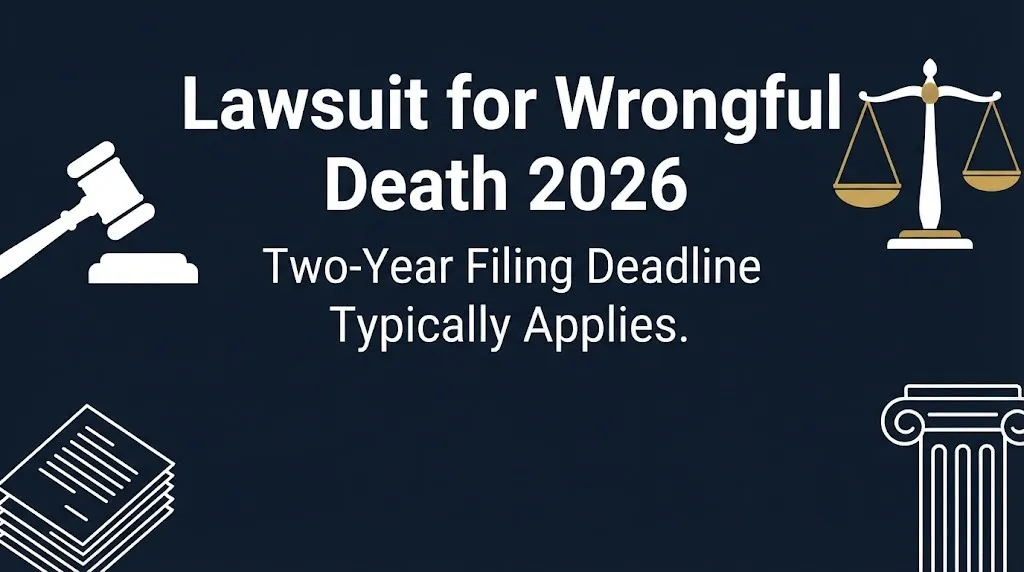
- Filing deadlines vary by state and typically run two years from the date of death.
You are searching for what a wrongful death lawsuit is because someone you love died, and you believe someone else’s actions caused it. The legal system cannot undo that loss. But it can hold the responsible party accountable and ease the financial burden left behind.
Here is the truth most headlines miss: you do not need a criminal conviction to file. The burden of proof in civil court is lower, and a wrongful death case can move forward even if prosecutors never file charges .
This article explains who can sue, what damages are recoverable, how long you have to file, and the steps involved. One detail stands out: the first person to call often loses the right to sue, because state law decides who has legal standing, not the family .
The Facts
| What It Is | Civil lawsuit for a death caused by negligence or intentional conduct |
| Who Files | Personal representative of the estate or eligible family members |
| Typical Damages | Medical bills, funeral costs, lost income, loss of companionship |
| Filing Deadline | Usually two years, varies by state |
| Proof Standard | Preponderance of the evidence (lower than criminal) |
| Criminal Case | Separate; can proceed independently |
| Proof Needed | Records, expert testimony, witness statements, financial documentation |
Is a Lawsuit for Wrongful Death Legitimate?
Yes, a lawsuit for wrongful death is a legitimate civil legal claim recognized in every state. It allows surviving family members to seek compensation when a death results from another party’s negligence or intentional wrongdoing .
This is not a criminal case. The state does not bring the charge. You and your family bring it. That distinction matters because it means the outcome does not depend on prosecutors.
A wrongful death claim can proceed even if the criminal case ends in acquittal or is never filed. The reason is simple: civil courts use a lower standard of proof. You need to show the defendant was more likely responsible than not, not guilty beyond a reasonable doubt .
Think of it like a warranty claim versus a criminal complaint. The bar for getting reimbursed is lower than the bar for jail time.
What Is the Meaning of Wrongful Death Lawsuit?
A wrongful death lawsuit meaning is a civil action that seeks monetary damages from a person or entity whose negligent, reckless, or intentional conduct caused someone’s death .
The term “wrongful” does not require proof of criminal intent. It means the death was preventable and resulted from conduct that fell below the legal standard of care. A drunk driver who kills someone commits a wrongful death. So does a nursing home that lets a patient die of dehydration .
The lawsuit is filed on behalf of the deceased person’s beneficiaries. The money recovered is not a replacement for the person. It covers the financial and emotional losses the survivors suffered because of the death.
How Much Can You Get From a Wrongful Death Lawsuit?
Not yet determined for any specific case. Wrongful death settlements vary widely based on the facts, jurisdiction, insurance coverage, and damages proven. No standard payout exists.
What is known: damages fall into two main categories. Economic damages cover measurable losses like medical bills, funeral expenses, and lost income. Non-economic damages cover intangible losses like grief, loss of companionship, and emotional suffering .
A Virginia jury awarded $2.2 million in a 2026 nursing home dehydration death case . But that is one verdict in one jurisdiction with specific facts.
The table below shows what damages typically cover.
| Damage Type | What It Covers |
|---|---|
| Medical expenses | Bills from the final injury or illness |
| Funeral and burial | Costs related to the death |
| Lost income | Wages and benefits the deceased would have earned |
| Loss of support | Financial contributions and household services |
| Loss of companionship | Emotional support, guidance, and care |
| Punitive damages | Limited cases involving reckless or intentional conduct |
Insurance coverage often caps what you can actually collect. A driver with minimum coverage may have far less than the damages justify .
Key Takeaway: Wrongful death damages include both measurable financial losses and intangible emotional harm, but recovery depends heavily on the defendant’s insurance coverage.
Reality Check: No one texts you wrongful death settlement money or asks for a fee to file your claim. Filing a wrongful death lawsuit requires an attorney and goes through the court system. Anyone contacting you out of nowhere promising compensation is running a scam.
Who Can File a Wrongful Death Lawsuit?
A wrongful death lawsuit is typically filed by the personal representative of the deceased person’s estate, on behalf of eligible beneficiaries . The right to file is not open to everyone.
State law determines who qualifies. The most common eligible parties are the surviving spouse, children, and parents. Siblings and other dependents may qualify in some states, especially if no spouse or children survive .
The personal representative is often named in a will. If there is no will, the court appoints someone, usually a close family member.
One practical point: even if the personal representative files the lawsuit, the money recovered goes to the beneficiaries, not the representative. The distribution follows a priority order set by state law .
Checklist of potential eligible parties:
- Surviving spouse or domestic partner
- Children of the deceased
- Parents of the deceased
- Siblings or other dependents in limited cases
- Personal representative of the estate
What Is the Difference Between Wrongful Death and Survival Action?
A wrongful death claim compensates survivors for their losses. A survival action compensates the estate for the deceased person’s suffering before death.
Both claims can arise from the same event. A survival action covers things like the pain and suffering the deceased experienced between injury and death. It also covers medical bills incurred during that period.
The wrongful death claim covers the family’s losses: grief, loss of income, loss of companionship. The survival action belongs to the estate.
In some cases, both claims are filed together. The same jury may hear both, but the damages are separate. A Virginia case submitted to the jury on both theories resulted in a $2.2 million verdict .
What Is the Wrongful Death Statute of Limitations?
The wrongful death statute of limitations is the deadline for filing your lawsuit. In most states, it is two years from the date of death .
But state rules vary. Some states have shorter deadlines for claims against government entities. Medical malpractice cases often carry their own timetables. The clock usually starts on the date of death, not the date you learned the cause.
If the deadline passes, you lose the right to sue. No exceptions for grief or confusion about the cause.
This is like a store return window. Miss it, and the return is refused. The difference is that this window closes on your legal rights permanently.
How Do You Prove a Wrongful Death Lawsuit?
You prove a wrongful death lawsuit by showing the defendant owed a duty of care, breached that duty, and the breach caused the death, resulting in damages .
The four elements are straightforward, but proving them requires evidence:
- Duty of care. The defendant had a legal obligation to act safely.
- Breach of duty. The defendant failed to meet that standard.
- Causation. The breach directly caused the death.
- Damages. The survivors suffered measurable losses.
Evidence can include police reports, medical records, witness statements, expert testimony, and financial documentation . In medical malpractice cases, expert testimony is almost always required.
Causation is often the hardest element. The defense may argue the death had another cause or was unavoidable. Your attorney must connect the defendant’s conduct to the death with credible evidence .
How Long Does a Wrongful Death Lawsuit Take?
A wrongful death lawsuit typically takes one to three years from filing to resolution if the case goes through litigation . Cases that settle earlier resolve faster.
The discovery phase is usually the longest part. Both sides exchange documents, take depositions, and gather expert reports. This can take a year or more in complex cases.
Many wrongful death cases settle before trial. Mediation is common. If settlement talks fail, the case proceeds to a jury, which adds months.
Key Takeaway: The wrongful death filing deadline is often two years, and the litigation process itself can take another one to three years.
What Happens Next
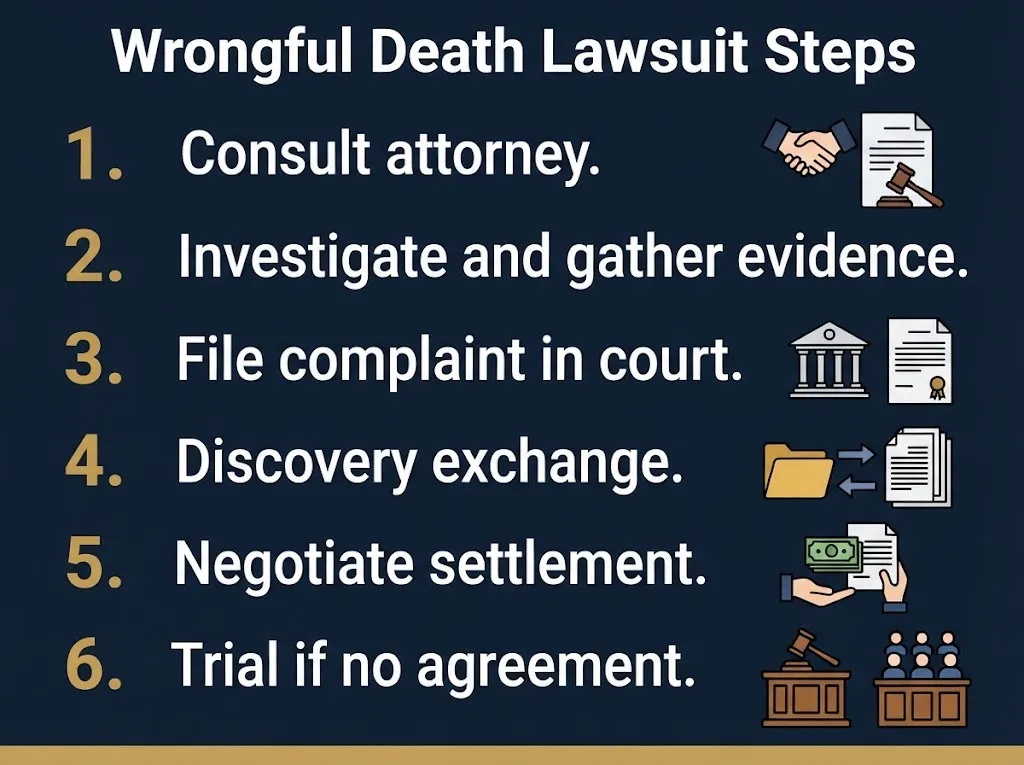
If you are considering a wrongful death lawsuit, here is the timeline ahead.
Now: Gather records including death certificate, medical bills, police reports, and financial documents.
Within 30 days: Consult a wrongful death attorney. Deadlines are strict and evidence fades.
Expected Q4 2026: Attorney investigates and determines if a valid claim exists.
Expected 2027: File the complaint if the case is viable.
Expected 2028 or later: Settlement or trial.
Frequently Asked Questions
What is a wrongful death lawsuit?
A wrongful death lawsuit is a civil claim filed by surviving family members when someone dies because of another party’s negligence or intentional conduct .
Who can file a wrongful death lawsuit?
The personal representative of the estate typically files on behalf of eligible beneficiaries, usually a spouse, children, or parents .
How long do you have to file a wrongful death lawsuit?
Most states impose a two-year deadline from the date of death, though rules vary by state and claim type .
How much can you get from a wrongful death lawsuit?
Not yet determined for any specific case. Damages depend on proven losses, insurance coverage, and jurisdiction.
Do you need a criminal conviction to file a wrongful death lawsuit?
No. Civil and criminal cases are separate. A wrongful death claim can proceed even without criminal charges .
What damages are recoverable in a wrongful death case?
Economic damages like medical bills and lost income, plus non-economic damages like grief and loss of companionship .
What is the difference between wrongful death and survival action?
Wrongful death compensates survivors for their losses. A survival action compensates the estate for the deceased’s suffering before death.
How long does a wrongful death lawsuit take?
Typically one to three years if the case goes through litigation, though many settle earlier .