Bodily Injury Settlement 2026: How Much You Can Expect, How Offers Are Calculated, and When to Accept
Quick Answer
- Bodily injury settlements compensate you for medical bills, lost wages, and pain and suffering.
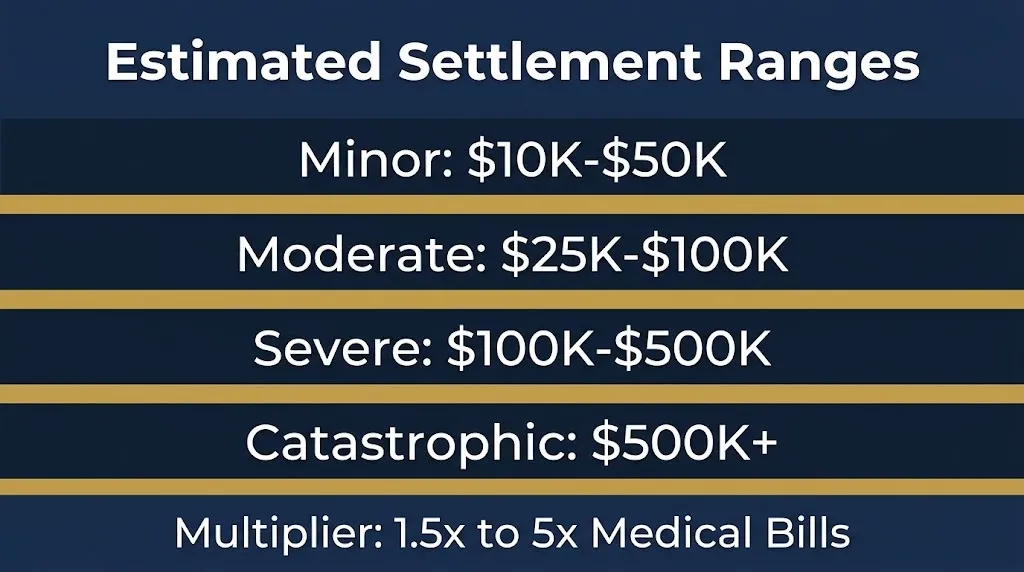
- The multiplier method, typically 1.5x to 5x medical bills, is the standard starting point for valuation.
- The first insurance offer is almost always a lowball and should not be accepted without negotiation.
You got hurt because of someone else’s negligence. The medical bills are piling up, you missed work, and now an insurance adjuster wants to talk settlement. The number they’re throwing around feels insulting, but you’re not sure what’s fair.
That uncertainty is exactly what insurance companies count on. Their initial offers are calculated to close the file cheaply, not to make you whole.
This guide breaks down how bodily injury settlements actually work in 2026. It covers the multiplier formula adjusters use, real settlement data from this year, the critical mistake of settling before maximum medical improvement, and what you need to do before accepting any offer.
The Facts
| Claim Type | Bodily injury liability claim |
| Primary Valuation Method | Multiplier of medical special damages (1.5x to 5x) |
| Typical Timeline | 2 to 4 months for claims, 12 to 36 months for lawsuits |
| Attorney Fees | Contingency, typically 33 1/3 percent |
| Critical Timing Rule | Do not settle before Maximum Medical Improvement (MMI) |
| 2026 Settlement Range | $66,745 (soft tissue) to $475,000 (catastrophic) |
| Key Risk | Medical liens reduce your net payout |
| First Offer Reality | Almost always below fair value |
Is a bodily injury settlement legit or a scam?
A bodily injury settlement is a legitimate resolution of a liability claim between an injured person and an at-fault party’s insurance company. It’s the standard way most injury claims resolve without going to court. The process is governed by insurance regulations and contract law.

That legitimacy doesn’t mean every offer is fair. Scams and bad practices exist in two main forms:
- Lowball first offers. Adjusters open with the lowest number they think you’ll accept. This isn’t a scam in the legal sense, but it’s a calculated tactic to exploit claimants who don’t know their case’s value.
- Third-party “claim helpers.” Companies that charge fees to “negotiate” your settlement are unnecessary. Legitimate personal injury attorneys work on contingency and don’t charge upfront.
No legitimate adjuster or attorney asks for payment before a settlement is reached. If someone contacts you first claiming you’re owed money from a bodily injury claim you didn’t file, that’s a scam.
How is a bodily injury settlement calculated?
A bodily injury settlement is calculated by adding economic damages (medical bills, lost wages, property damage) to non-economic damages (pain and suffering), with the non-economic portion often determined by a multiplier applied to medical special damages.
The multiplier method works like this:
| Injury Severity | Multiplier Range | Example Calculation |
|---|---|---|
| Minor (soft tissue, quick recovery) | 1.5x to 2x | $5,000 medical x 2 = $10,000 + $5,000 = $15,000 |
| Moderate (fractures, therapy) | 2.5x to 3.5x | $20,000 medical x 3 = $60,000 + $20,000 = $80,000 |
| Severe (surgery, permanent effects) | 4x to 5x | $100,000 medical x 5 = $500,000 + $100,000 = $600,000 |
| Catastrophic (TBI, spinal cord) | 5x or higher | $200,000 medical x 6 = $1.2M + $200,000 = $1.4M |
Medical special damages are the anchor. Adjusters use the amount billed, not the reduced amount your health insurer negotiated. That’s why keeping every bill and explanation of benefits matters.
Economic damages also include lost wages, out-of-pocket expenses, and future medical costs if your injury requires ongoing care. Property damage (like vehicle repair) is added on top.
Key Takeaway: The multiplier method gives you a starting negotiation range, not a final number. Adjusters apply it, then discount based on liability disputes and policy limits.
What is the average bodily injury settlement in 2026?
The average bodily injury settlement in 2026 varies widely by injury type and jurisdiction, with recent case data showing resolutions from under $70,000 for soft-tissue claims to nearly half a million dollars for catastrophic injuries.
Here are verified 2026 settlement examples:
| Case Type | Injury | Settlement | Source |
|---|---|---|---|
| Rear-end collision (Nevada) | Bodily injury, medical treatment $145,913 | $182,500 | Clark County Commission agenda |
| Hit-and-run (Illinois) | Cervical and lumbar disc protrusions, $21,745 special damages | $66,745 | Missouri Lawyers Media |
| I-70 collision (Kansas) | Catastrophic shoulder, arm, elbow, wrist injuries | $475,000 | Missouri Lawyers Media |
| Herniated disc (Illinois, with attorney) | L4-L5 disc, epidural injections | $92,000 | SetCalc Allstate example |
| Whiplash (Arizona, no attorney) | 8 weeks physical therapy | $5,800 | SetCalc Allstate example |
The gap between the no-attorney whiplash settlement ($5,800) and the attorney-represented herniated disc settlement ($92,000) isn’t just about injury severity. It reflects the difference in documentation, negotiation, and willingness to litigate.
Not yet determined applies to your specific case until your treatment stabilizes and your attorney or you can evaluate all damages.
What is Maximum Medical Improvement and why does it matter?
Maximum Medical Improvement (MMI) is the point when your doctor confirms your condition has stabilized and further significant improvement from treatment is unlikely. Settling before MMI is the single most repeated mistake in injury settlement threads.
Once you sign a release, the claim is closed permanently. If your injury turns out worse than expected, you can’t reopen it.
Waiting for MMI matters for several reasons:
- Future medical costs become clearer. If you might need surgery later, you can include that in the settlement.
- Permanent restrictions get documented. If your doctor says you’ll never lift more than 20 pounds again, that affects your earning capacity.
- Pain and suffering valuation stabilizes. The full extent of your pain and disruption is known.
The tradeoff is time. Waiting for MMI can take months. But settling early for a quick check often means leaving significant money on the table.
Reality Check: No one texts you settlement money before you’ve even filed a claim. The insurance company doesn’t reach out offering fair compensation. If someone contacts you first claiming you’re owed a bodily injury settlement, that’s a scam. Real claims start with you reporting the injury and building documentation.
How do you file a bodily injury claim?
Filing a bodily injury claim involves notifying the at-fault party’s insurer, submitting medical documentation, and negotiating a settlement. Most claims resolve without a lawsuit.
Here are the steps:
- Get medical treatment immediately. Delayed treatment weakens your claim.
- Report the incident. Police report for accidents, incident report for premises injuries.
- Notify the at-fault insurer. They’ll assign an adjuster.
- Gather documentation. Medical bills, records, wage statements, photos, witness info.
- Send a demand letter. This states your damages and settlement demand.
- Negotiate. The adjuster responds with a counteroffer.
- Settle or file suit. If negotiation fails, filing a lawsuit may pressure a better offer.
- Review liens before accepting. Medicare, Medicaid, and health insurers may claim part of your recovery.
The demand letter is critical. It should include medical records, bills, proof of lost wages, and a clear calculation of your damages. A well-documented demand backed by evidence pressures the adjuster to take your claim seriously.
What factors affect how much your settlement is worth?
Several factors determine your settlement value, and some matter far more than others.
| Factor | Impact on Settlement |
|---|---|
| Severity of injury | Higher severity = higher multiplier |
| Medical documentation | Detailed records support higher demands |
| Liability clarity | Clear fault = stronger position |
| Insurance policy limits | Caps the maximum recoverable amount |
| Attorney representation | Typically increases final settlement |
| Jurisdiction | Conservative vs. plaintiff-friendly venues |
| Pre-existing conditions | Can complicate causation arguments |
| Comparative fault | Your share of blame reduces recovery |
Policy limits are a hard cap. If the at-fault driver has $25,000 per-person coverage, that’s the maximum their insurer will pay, regardless of your damages. Your own underinsured motorist (UIM) coverage may fill the gap if you have it.
Comparative negligence rules vary by state. In pure comparative negligence states, you can recover even if you’re mostly at fault, but your award is reduced by your percentage of blame. In contributory negligence states, any fault on your part may bar recovery entirely.
What happens if you accept the first offer?
Accepting the first offer is almost always a mistake. Insurance adjusters open low because they expect negotiation. The first offer reflects the minimum they think they can get away with paying, not the fair value of your claim.
Here’s what happens when you accept too early:
- You waive future claims for the same injury.
- You can’t go back for more if complications arise.
- You may net far less than expected after liens and fees.
The Reddit consensus on this is consistent: the first offer is a floor, not a ceiling. Experienced commenters recommend countering with a documented demand and being prepared to walk away if the offer doesn’t improve.
For minor claims with no lasting effects, negotiating yourself may be reasonable. For anything involving ongoing treatment, lost work, or permanent limitations, an attorney consultation is worth the time.
How do medical liens affect your settlement payout?
Medical liens reduce your net settlement. The gross number you agree to is not what you take home. Healthcare providers, health insurers, Medicare, and Medicaid may hold claims against your recovery.
| Lien Type | What It Covers |
|---|---|
| Hospital liens | Unpaid hospital bills |
| Health insurer liens | Treatment costs the insurer paid |
| Medicare/Medicaid liens | Government-paid medical costs |
| Attorney fees | Contingency fee, typically 33 1/3% |
| Case costs | Filing fees, records, expert witnesses |
A $100,000 settlement can net significantly less after all deductions. Before accepting any offer, you need a clear accounting of what you’ll actually receive.
This is where attorney representation matters. Attorneys negotiate lien reductions and ensure you understand your net recovery before signing anything.
What happens next in a bodily injury settlement?
Immediately: Get medical treatment and document everything.
Within days: Report the incident and notify the at-fault insurer.
Within weeks: Gather medical records, bills, and wage documentation.
Within 2 to 4 months: Send demand letter and negotiate. Most claims resolve here.
If negotiation fails: File a lawsuit. Discovery and mediation may take 12 to 36 months.
After settlement: Review liens, sign release, receive net payout.
Frequently Asked Questions
How long does a bodily injury settlement take?
Most claims resolve within 2 to 4 months once all documentation is submitted. Lawsuits take 12 to 36 months. Waiting for MMI can extend the timeline.
Is the first settlement offer usually fair?
No. The first offer is almost always a lowball designed to close the file cheaply. Counter with documented evidence of your damages.
Should I settle before Maximum Medical Improvement?
No. Settling before MMI means you may not know the full extent of your injuries. Once you sign a release, you can’t reopen the claim.
How much does a bodily injury lawyer cost?
Most work on contingency, typically 33 1/3 percent of the recovery. You pay nothing upfront. Case costs may be deducted separately.
What if the at-fault driver has low insurance limits?
Their policy limits cap what their insurer will pay. Your own underinsured motorist (UIM) coverage may fill the gap if you have it.
Can I negotiate a bodily injury settlement myself?
Yes, for minor claims with clear liability and limited damages. For anything involving ongoing treatment or lost work, an attorney typically secures a higher net recovery.
What is the multiplier method?
A formula that multiplies medical special damages by 1.5 to 5 (or higher) to estimate pain and suffering. It’s a starting point for negotiation, not a guaranteed value.
How do I know if my settlement offer is fair?
Compare it against documented damages, policy limits, and comparable case outcomes. An attorney can evaluate your specific file. Online calculators provide rough estimates only.
The Bottom Line
Bodily injury settlements are negotiable. The first offer is not the final offer. Waiting for Maximum Medical Improvement protects you from settling before you know the full extent of your injuries.
Document everything, understand your liens, and don’t accept a number until you know what you’ll actually take home. If the offer doesn’t cover your damages, counter it or consult an attorney.