Eric Andre Lawsuit 2026: The $30,000 Settlement, the Airport Program He Killed, and Why You Can’t Claim a Dime
Quick Answer
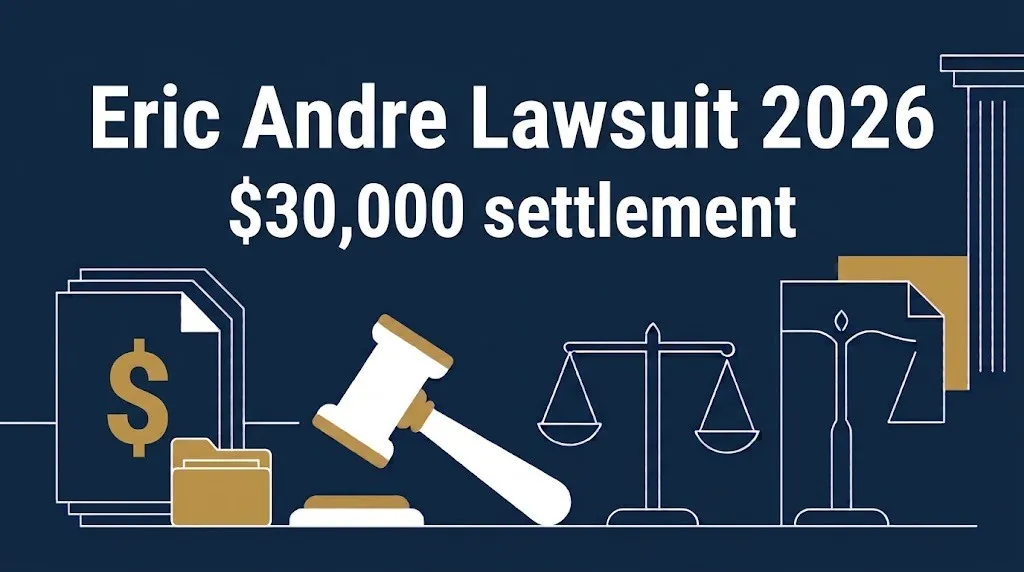
- Eric André and Clayton English settled their Clayton County airport profiling lawsuit for $30,000, with $15,000 going to each comedian .
- The settlement is private between the parties; there is no public fund, no claim form, and no deadline for anyone else to file.
- The county ended its Airport Interdiction Unit and agreed to body cameras and constitutional training for airport officers .
You searched for the Eric Andre lawsuit because you saw a headline about a comedian suing police, or you saw a page suggesting there was money to claim. The honest answer is that this case ended in a private settlement, and the only people paid were André and English. The verified figure is $30,000, authorized by the Clayton County Board of Commissioners at its August 4, 2026 meeting and split evenly . There is no class, no claims administrator, and no eligibility standard for the public.
The case itself is significant beyond the dollar amount. It forced a Georgia county to shut down a police program that stopped 402 passengers on jet bridges in eight months, 56% of whom were Black, while finding drugs in only three of those stops . That is the real story, and it is why the settlement matters more than the check.
This article breaks down the verified settlement terms, the appellate ruling that revived the case, the data that made it winnable, and what to do if you were stopped by the same program.
The Facts
| Item | What to Know |
|---|---|
| Case Name | André v. Clayton County, Georgia |
| Court | U.S. District Court, Northern District of Georgia (appealed to Eleventh Circuit) |
| Settlement Announced | August 18, 2026 |
| Settlement Amount | $30,000, split $15,000 each to André and English |
| Program Status | Clayton County ended the Airport Interdiction Unit; no plans to reactivate |
| Policy Changes | Body-worn cameras required for airport officers; constitutional limits training |
| Claim Deadline | Not applicable; no public claims process exists |
Is the Eric Andre Lawsuit Real or a Scam Risk?
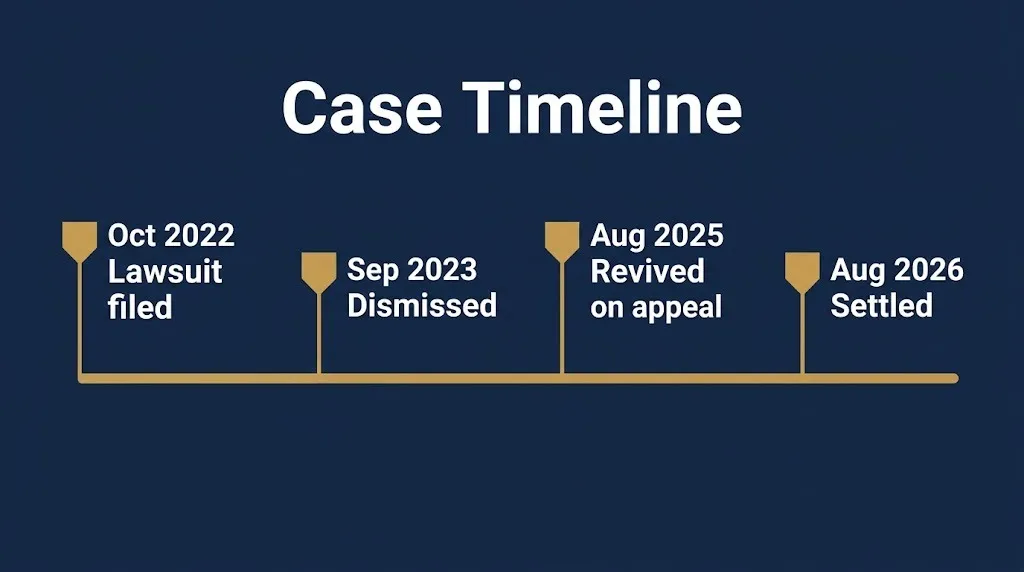
The Eric Andre lawsuit is real, and it is a settled federal civil rights case, not a class action or a consumer payout program. André and English sued Clayton County in October 2022, alleging that county police stopped them on airport jet bridges because they were Black, questioned them about drugs, and searched their belongings without reasonable suspicion . The case was dismissed in 2023, revived by the Eleventh Circuit in August 2025, and settled in August 2026 .
The scam risk comes from the settlement’s publicity. A resolved civil rights case with a celebrity plaintiff attracts pages promising “Eric Andre lawsuit payouts” or “claim your share.” There is no share to claim. The settlement is between two private individuals and a county government, and the court record does not create a fund for anyone else.
Key Takeaway: The Eric Andre lawsuit is a real, settled civil rights case, but the money went to André and English only, with no public claim process.
How Much Was the Eric Andre Lawsuit Settlement?
The Eric Andre lawsuit settlement was $30,000, with $15,000 to André and $15,000 to English, according to the Clayton County Board of Commissioners minutes from its August 4, 2026 meeting . The agreement does not include an admission of fault or liability by the county . A county spokesperson said the parties agreed it was in everyone’s interest to resolve the matter and move forward .
The dollar figure is modest, and that is worth noting. Civil rights settlements against municipalities often reflect the cost of defense and the strength of the policy-change demand, not the severity of the individual harm. The policy changes in this deal, ending the program and mandating body cameras, are the real currency.
Key Takeaway: The verified settlement is $30,000, split evenly, with no admission of liability and no public fund.
Who Qualifies for an Eric Andre Lawsuit Payout?
No one qualifies for an Eric Andre lawsuit payout because there is no payout program. The settlement resolved claims brought by two individuals, André and English, against Clayton County. It did not create a class, and it did not establish a claims process for other passengers stopped by the same program. If you were stopped on a jet bridge at Hartsfield-Jackson during the program’s operation, your legal options are separate from this settlement and would require a lawyer and a review of your own facts.
The program’s data is public and troubling. From August 30, 2020 to April 30, 2021, officers made 402 jet bridge stops, recorded race for 378 of them, and 211 of those passengers, or 56%, were Black. People of color accounted for 258 stops, or 68%. Those stops produced three drug seizures and more than $1 million in cash and money orders from 25 passengers . Those numbers describe a pattern, but they do not create automatic compensation for anyone stopped.
How Do You File an Eric Andre Lawsuit Claim?
You cannot file an Eric Andre lawsuit claim in 2026 because no claims process exists. The settlement is closed, and the court has not established a fund or administrator. If you believe you were harmed by the Clayton County airport program, the steps are different from a class action claim:
- Gather any records you have: boarding passes, dates, officer names if you noted them.
- Write down what happened while your memory is fresh.
- Consult a civil rights lawyer about whether your facts support a separate claim.
- Check the statute of limitations for Section 1983 claims in your jurisdiction.
- Do not pay any website that claims to file an “Eric Andre settlement claim” for you.
Why Was the Eric Andre Lawsuit Revived on Appeal?
The Eric Andre lawsuit was revived because the Eleventh Circuit found that André and English plausibly alleged Fourth Amendment violations by Clayton County. In a 44-page unanimous opinion issued in August 2025, the court held that the plaintiffs plausibly alleged the county’s drug interdiction program itself called for repeated unconstitutional seizures . The court found that officers blocked the men’s paths, retained their boarding passes and IDs, and questioned them without reasonable suspicion, which plausibly amounted to a seizure .
The appellate ruling did not revive everything. The court upheld dismissal of the equal protection claim, finding the complaint did not plausibly allege individual defendants acted with discriminatory purpose, and it affirmed qualified immunity for the individual officers . The county itself remained a defendant, and that is the claim that settled.
Key Takeaway: The appeals court revived the Fourth Amendment claim against the county, not the individual officers, and that ruling is what forced the settlement.
Reality Check: No one texts you money from the Eric Andre lawsuit, and no administrator is collecting claims. The settlement is closed and private. Any page asking for your information or a fee is using a celebrity case to harvest data.
What Did the Eric Andre Lawsuit Settlement Change?
The Eric Andre lawsuit settlement changed police policy at one of the busiest airports in the world. Clayton County confirmed it has ended the Airport Interdiction Unit and has no intention to reactivate it . The county also agreed to require police officers assigned to the airport to use body-worn cameras and to undergo training on constitutional limits regarding police encounters at airports .
Those changes are the part of the settlement that affects people other than André and English. A program that stopped hundreds of passengers on jet bridges with a tiny drug hit rate is now gone, and the officers who remain at the airport have new documentation and training requirements.
What Was the Clayton County Airport Program?
The Clayton County airport program was an Airport Interdiction Unit that stopped passengers on jet bridges as they were about to board flights, questioned them about drugs, and sometimes searched their bags. The stated purpose was fighting drug trafficking, but the lawsuit alleged drugs were rarely found, charges seldom resulted, and seized cash provided a financial windfall for the police department . The data supported that allegation: 402 stops, three drug seizures, and more than $1 million in cash and money orders seized from 25 passengers .
André was stopped in April 2021 during a layover in Atlanta. English was stopped in October 2020 while traveling from Atlanta to Los Angeles. Both men said officers singled them out because they were Black and questioned them about drugs while other passengers watched .
What Happens Next
Immediate: If you were stopped by the Clayton County airport unit, write down your account and gather any records you have.
Within days: Consult a civil rights lawyer about whether your facts support a separate claim under 42 U.S.C. § 1983.
Ongoing: Clayton County must implement body cameras and constitutional training for airport officers as part of the settlement .
No deadline: There is no public claim deadline because there is no public fund.
Frequently Asked Questions
How much was the Eric Andre lawsuit settlement?
The settlement was $30,000, with $15,000 to André and $15,000 to English, approved by the Clayton County Board of Commissioners .
Can I file a claim in the Eric Andre lawsuit?
No. The settlement is private between André, English, and Clayton County, and no public claims process exists.
What did Eric André sue Clayton County over?
He and Clayton English alleged they were racially profiled and illegally stopped by Clayton County police on airport jet bridges as part of a drug interdiction program .
Did the Eric Andre lawsuit go to trial?
No. It was dismissed in 2023, revived by the Eleventh Circuit in August 2025, and settled in August 2026 .
What changes did the Eric Andre settlement require?
Clayton County ended the Airport Interdiction Unit, required body-worn cameras for airport officers, and mandated training on constitutional limits for airport encounters .
Did Clayton County admit wrongdoing?
No. The settlement does not include an admission of fault or liability .
Was the airport program racially biased?
The lawsuit cited data showing 56% of recorded stops were Black passengers, despite Black travelers making up about 8% of domestic passengers .