Compensation Range in 2026: What the Term Actually Means, Where It’s Required, and What It Doesn’t Promise
Quick Answer
- What it is: A compensation range is the minimum and maximum pay an employer expects to offer for a specific job .
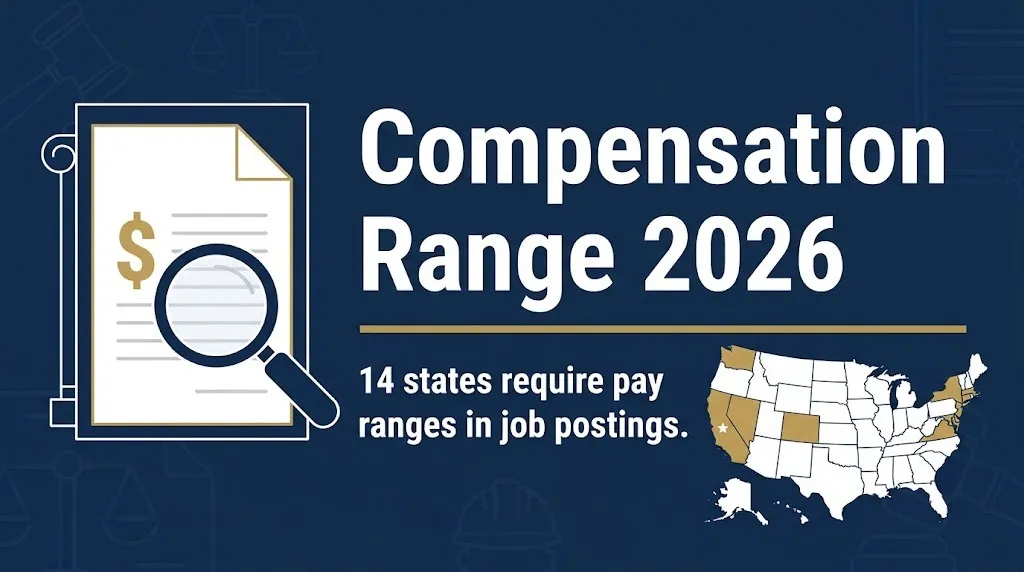
- Where it’s required: Fourteen states plus D.C. mandate ranges in job postings as of 2026, with more taking effect .
- What it doesn’t mean: A posted range is not a promise. Employers can pay more or less based on qualifications or budget .
You searched “compensation range” because you saw one in a job posting, got asked for yours in an interview, or you’re building one for a team. The term shows up everywhere now, and it means slightly different things depending on who’s using it.
Here’s the direct answer. A compensation range is the floor and ceiling of what an employer expects to pay for a role. It is not a guarantee. It is not a negotiation script. And in a growing number of states, it is not optional.
This article explains the definition, the state laws that now force disclosure, the math behind how ranges get built, and the traps that catch both job seekers and hiring managers.
The Facts
| The Facts | |
|---|---|
| Definition | Minimum and maximum annual salary or hourly wage for a job opening |
| Key components | Minimum, midpoint, maximum |
| States with posting laws | 14 states plus Washington D.C. as of 2026 |
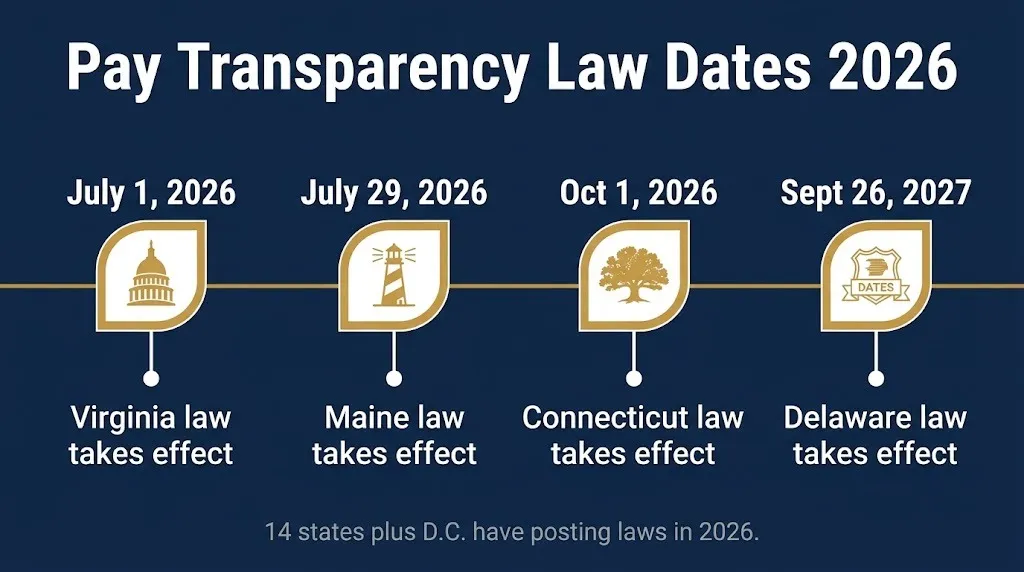
| Newest effective dates | Virginia (July 1, 2026), Maine (July 29, 2026), Connecticut (October 1, 2026) |
| Who enforces | State labor agencies, with private rights of action in some states |
| Penalty example | New York: $1,000 first violation, $2,000 second, $3,000 third |
| Remote job coverage | Varies by state; California, Colorado, and others cover certain remote roles |
What Does Compensation Range Mean?
A compensation range is the minimum and maximum pay an employer believes in good faith it will pay for a job opening. That definition comes straight from state statutes, including New York’s pay transparency law and Vermont’s disclosure rules .
The range usually has three parts. The minimum is the floor, often for new hires or candidates with limited experience. The midpoint represents the market target for a fully proficient employee. The maximum is the ceiling, reserved for extensive experience or exceptional performance .
A simple comparison: a compensation range is like a thermostat setting, not a thermometer. It shows where the temperature should land, not where it actually is right now. The actual offer depends on you.
The term applies to base salary or hourly wage in most state laws. Bonuses, stock options, and benefits may or may not need separate disclosure depending on the jurisdiction .
Where Is a Compensation Range Required in 2026?
Fourteen states plus Washington D.C. require employers to disclose a compensation range in job postings as of 2026, and the list is growing . The rules vary sharply by state, and remote roles create extra complications.
Here is the current landscape for the newest and most active jurisdictions:
| State | Effective Date | Employer Size | What Must Be Disclosed |
|---|---|---|---|
| California | Jan 1, 2021 (updated 2026) | 15+ employees | Pay scale in postings; to applicants upon request |
| Colorado | Jan 1, 2021 | 1+ employee in state | Pay range, benefits, posting duration |
| Washington | Jan 1, 2023 | 15+ employees | Wage scale and benefits description |
| New York | Sept 17, 2023 | 4+ employees | Compensation range in ads for jobs performed in NY |
| Illinois | Jan 1, 2025 | 15+ employees | Pay scale and benefits |
| Vermont | July 1, 2025 | 5+ employees | Compensation or range |
| Virginia | July 1, 2026 | Not yet confirmed | Salary ranges in postings; salary history ban |
| Maine | July 29, 2026 | 10+ employees | Salary ranges in postings |
| Connecticut | Oct 1, 2026 | Not yet confirmed | Salary ranges and benefits in every posting |
Delaware’s law takes effect September 26, 2027, for employers with 26 or more employees . The EU Pay Transparency Directive has a June 2026 target, though several member states have pushed implementation into 2027 .
How Is a Compensation Range Calculated?
A compensation range is built from market data, job requirements, internal pay equity, and budget, not from a single salary survey. Employers typically follow a five-step process, though the specifics vary by company size and industry.
The core steps look like this:
- Gather market data from salary surveys, competitor postings, and industry benchmarks.
- Evaluate the job by listing required skills, experience, and responsibilities.
- Check internal equity to ensure similar roles pay consistently.
- Set the minimum, midpoint, and maximum based on the data and budget.
- Adjust for location, company size, and industry before publishing .
According to WorldatWork, 70% of organizations adjust their compensation ranges annually . That matters because a range posted in January may be stale by December.
The width of a range varies by role level. An entry-level customer care representative might have a range of $30,000 to $40,000. A mid-level software developer might see $90,000 to $130,000. A senior manager role could stretch from $100,000 to $140,000 .
Why Do Employers Use Compensation Ranges?
Employers use compensation ranges to balance fairness, competitiveness, and budget control. The range gives hiring managers room to negotiate without blowing the payroll plan.
Internally, ranges support pay equity. If two people in the same role with similar experience are paid within the same band, the employer can defend the pay difference. If one is far outside the band, the employer has a problem.
Externally, ranges help attract candidates. A posting with no salary information gets fewer qualified applicants in states where disclosure is now standard.
The tension is real. A range that is too wide looks vague. A range that is too narrow leaves no room to reward experience. A 2026 analysis from Jackson Lewis notes that penalties for noncompliance range from modest fines to substantial penalties, and some states allow private class actions .
What Is the Difference Between a Compensation Range and a Salary Range?
The two terms are mostly interchangeable in everyday use, but the legal definition matters. A “compensation range” in state law usually means the minimum and maximum annual salary or hourly wage .
A “salary range” is often used the same way, but some states define it separately from benefits or other compensation. Washington’s law requires both the wage scale or salary range and a general description of benefits .
The practical difference shows up in enforcement. New York’s law defines “range of compensation” as the minimum and maximum annual salary or hourly range the employer believes in good faith to be accurate at the time of the advertisement . Posting only a “starting salary” is not enough.
If a posting says “$60,000 to $80,000,” that is a compensation range. If it says “$60,000+,” that is not a range under most state laws. A maximum is required.
What Happens If an Employer Doesn’t Post a Compensation Range?
Employers that skip required disclosure face civil penalties, and in some states, private lawsuits. The penalties vary by jurisdiction, but the trend is toward stricter enforcement and higher costs.
New York imposes mandatory civil penalties of $1,000 for a first violation, $2,000 for a second, and $3,000 for a third or subsequent violation . Washington allows job applicants or employees to bring civil actions and recover up to $5,000 per violation, plus attorneys’ fees .
The litigation risk is growing. Target agreed to a $2.25 million settlement in a Washington class action alleging it failed to disclose wage scales in job postings. An IHOP franchise operator agreed to a $6.3 million settlement in 2025 over similar claims .
California’s SB 642, effective January 1, 2026, tightened the standard. It requires employers to provide realistic, good faith pay ranges rather than broad ranges, and it extends the recovery period to six years .
Reality Check: No one texts you money because a job posting had a vague salary range. The enforcement process runs through state labor agencies or a private lawsuit, not a claim form. If a website offers to “claim your pay transparency settlement” for a fee, it is not legitimate. State enforcement actions do not require you to pay anyone.
What Does a Compensation Range Not Tell You?
A posted compensation range does not tell you what you will actually earn. It is an estimate, and employers are generally allowed to pay outside it under certain conditions.
Colorado’s rules state it plainly: an employer may ultimately pay more or less than the posted range if the posted range was a good-faith and reasonable estimate at the time of posting . New York’s law uses similar “good faith” language .
The range also may not include bonuses, commissions, equity, or benefits. Some states require a general description of benefits. Others do not. A posting with a $70,000 to $90,000 range may hide a 20% annual bonus that changes the real number.
And a range is not a negotiation floor. Employers can offer below the minimum if the candidate’s qualifications are lower than expected, though this is more common in states without strict enforcement.
What Happens Next
July 1, 2026: Virginia’s pay transparency law takes effect, requiring salary ranges in job postings and banning salary history inquiries .
July 29, 2026: Maine’s law takes effect for employers with 10 or more employees .
October 1, 2026: Connecticut requires salary ranges and benefits in every job posting .
September 26, 2027: Delaware’s law takes effect for employers with 26 or more employees .
Ongoing: EU member states continue implementing the Pay Transparency Directive, with several pushing compliance into 2027 .
Frequently Asked Questions
What does compensation range mean on a job posting?
It means the minimum and maximum salary or hourly wage the employer expects to pay for the role.
The definition comes from state pay transparency laws and is not a guarantee of a specific offer.
Is a compensation range legally required?
In 14 states plus Washington D.C., yes, for covered employers.
The rules vary by state, employer size, and whether the job is performed in that state.
Can an employer pay me less than the posted compensation range?
Generally yes, if the posted range was a good-faith estimate.
Some states require the range to reflect what the employer reasonably expects to pay.
What is the difference between a hiring range and a salary range?
A hiring range is the narrower band offered to new hires.
A salary range is the broader band that includes room for growth and raises.
How often should compensation ranges be updated?
Most organizations adjust ranges annually.
WorldatWork reports that 70% of organizations update their ranges every year.
Do remote jobs have to post a compensation range?
It depends on the state.
California, Colorado, and others extend disclosure requirements to certain remote roles performed for or reporting to a state office.
What is the midpoint of a compensation range?
The midpoint is the middle of the range.
It usually represents the target market value for a fully proficient employee in the role.
The One Thing to Do Now
Screenshot the compensation range on any job posting you apply to. Save it with the date and the job description.
If the offer comes in below the posted minimum, you have a dated record. If a state enforcement action or class settlement ever opens, that screenshot is your proof. The range is only useful if you can prove what it said.