Deferred Compensation Program 2026: What It Is, How It Works, and the Tax Rules That Decide Whether You Win or Lose
Quick Answer
- A deferred compensation program lets you postpone part of your salary or bonus to a later date, often retirement.
- There is no fixed payout amount. What you get depends on your deferral election, plan terms, and investment performance.
- The critical deadline is your plan’s election window, which usually closes before the year you earn the money begins.
You searched for deferred compensation program because someone offered you one, your employer just rolled one out, or you saw a headline about executive pay and wondered if this is a benefit or a trap. It can be either.
A deferred compensation program is not a class action settlement or a lawsuit. It is a pay arrangement, usually reserved for executives, directors, or highly compensated employees. You elect to give up part of your current pay, and the company credits it to a notional account that grows until a future payout date .
The number that matters most is 20%. That is the additional tax the IRS imposes if a nonqualified deferred compensation plan violates Section 409A, on top of the income tax you already owe . A badly drafted plan or a rushed election can cost you far more than the tax deferral saves.
This article explains how these programs work, who qualifies, the Section 409A rules that control everything, the real risks most articles skip, and how the NCR deferred compensation lawsuit shows what happens when a company mishandles its plan.
The Facts
| Item | Detail |
|---|---|
| Program Type | Nonqualified deferred compensation (NQDC), often paired with 457(b) or director deferral plans |
| Who Qualifies | Executives, directors, highly compensated employees selected by the plan |
| Typical Contribution | Set by plan; often a percentage of salary or bonus, sometimes capped |
| Tax Rule | IRC Section 409A governs elections, distributions, and penalties |
| Penalty for Violation | 20% additional tax plus interest and immediate income inclusion |
| Claim Deadline | Not applicable. No settlement or claims fund exists |
| Administrator | Plan administrator appointed by the employer |
Is a Deferred Compensation Program a Scam?
A deferred compensation program is not a scam, but it carries real risks that a 401(k) does not. The money is usually a general unsecured promise from your employer, not a segregated account protected from creditors. If the company goes bankrupt, you may become an unsecured creditor alongside everyone else.
Nonqualified deferred compensation plans are generally exempt from ERISA, the federal law that protects 401(k) balances and imposes fiduciary duties . That means fewer legal safeguards around how the money is held and paid.
The scam risk is not the program itself. It is a bad plan document or a slick sales pitch that hides the forfeiture rules. Read the plan document before you defer a dollar.
Key Takeaway: A deferred compensation program is legitimate, but it is an unsecured corporate promise, not a protected retirement account, and it is exempt from ERISA.
How Much Money Can You Defer in a Deferred Compensation Program?
There is no IRS dollar cap on nonqualified deferred compensation contributions, unlike the 401(k) limit. The plan sets the ceiling, and that ceiling is often a percentage of salary or bonus, or a flat dollar amount for directors.
That unlimited deferral feature is the main appeal for high earners who already max out their 401(k) and IRA. The IRS does not impose required minimum distributions on NQDC plans either, though the plan itself may require payments by a certain age or event .
| Feature | NQDC Plan | 401(k) |
|---|---|---|
| Contribution limit | Set by employer, no IRS cap | IRS annual limit |
| ERISA protection | Generally exempt | Covered |
| Creditor protection | Usually unsecured | Trust protections apply |
| Required distributions | Plan-specific | IRS RMD rules |
Not yet determined: Your specific deferral capacity. It depends entirely on your employer’s plan terms.
Reality Check
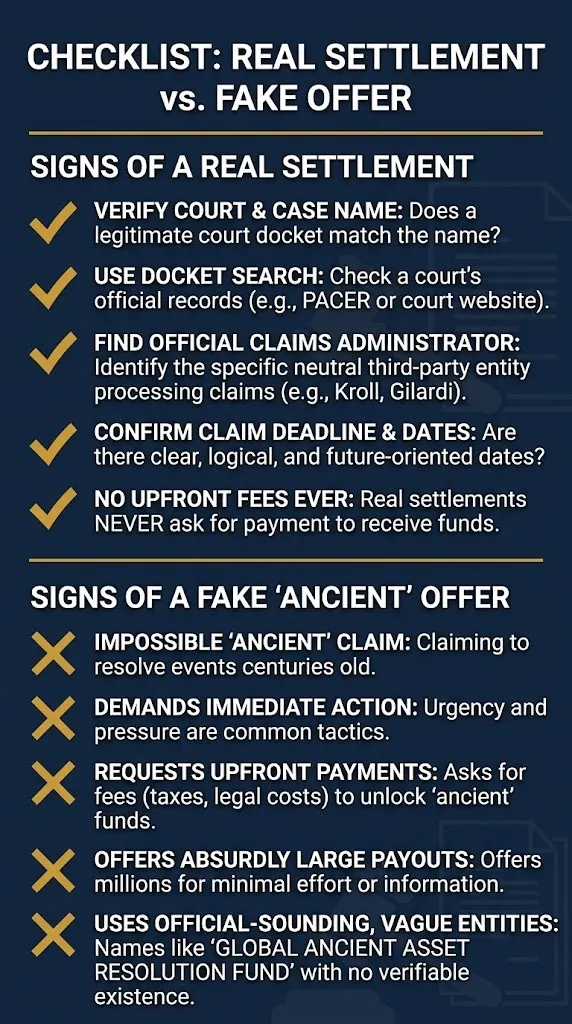
Reality Check: No deferred compensation program pays you free money, and no one texts you a deferred comp payout. The money you defer is your own pay, moved to a later date. If a page promises a guaranteed return or an “unclaimed deferred compensation” payout, it is a scam. Your plan is documented in your employer’s plan materials and your own election forms, not on a random website.
What Is a 457(b) Deferred Compensation Program?
A 457(b) plan is a deferred compensation program for employees of state and local governments and certain tax-exempt organizations. It is a qualified plan with its own contribution limits, separate from the nonqualified executive plans that dominate the news.
Governmental 457(b) plans offer something rare: no early withdrawal penalty for leaving your job before age 59½, as long as you take the money after separation from service. Distributions from governmental 457(b) plans are also eligible for rollover to an IRA or another qualified plan, subject to the standard 20% mandatory withholding on eligible rollover distributions .
Non-governmental 457(b) plans work differently. They are usually unfunded, the money remains the employer’s asset, and you cannot roll the balance to an IRA. The tax deferral is real, but the creditor risk is higher.
What Are the Section 409A Rules That Control Deferred Compensation?
Section 409A is the federal tax code section that governs nonqualified deferred compensation, and it controls three things: when you must elect to defer, when the money can be paid out, and what happens if the plan breaks the rules.
The election timing rule is strict. You must make your deferral election before the year in which you earn the compensation begins, or in limited cases within 30 days of becoming eligible. A mid-year change to your deferral amount is generally not allowed.
The distribution timing rule is equally strict. Payments can only be triggered by specific events: separation from service, disability, death, a fixed date or schedule, a change in control, or an unforeseeable emergency . A plan that allows payout on demand violates Section 409A.
| Rule | What It Requires |
|---|---|
| Election timing | Before the year of service, with narrow exceptions |
| Permissible payment events | Separation, disability, death, fixed date, change in control, emergency |
| Subsequent deferral | New election must be at least 12 months before payout and delay payment 5 more years |
| Specified employees | Six-month delay after separation for public company executives |
The penalty for a Section 409A violation is severe. The deferred amount becomes immediately taxable, plus interest, plus a 20% additional tax . That is why plan documents are drafted by tax lawyers, not HR generalists.
Key Takeaway: Section 409A sets the election and payout rules, and a violation triggers immediate taxation plus a 20% penalty, which is why the plan document matters more than the brochure.
What Happens If Your Employer Mishandles the Deferred Compensation Plan?
If your employer mishandles the plan, you may end up in federal court, as the NCR executives did. In 2026, NCR Corp. agreed to pay nearly $48 million to resolve a class action from former executives who said the company broke its promise to provide lifetime annuity payments .
The dispute centered on whether NCR could force lump-sum payments instead of the promised annuities. The Eleventh Circuit ruled that the company could not, because the plan’s drafting did not permit it . The lesson is blunt: plan language controls, and a sloppy amendment can cost a company tens of millions.
If you have a deferred compensation dispute, the case usually turns on the written plan document, not on what a recruiter told you. Keep your enrollment materials, election forms, and any plan summaries you received.
How Do You Enroll in a Deferred Compensation Program?
Enrollment follows a fixed sequence, and missing the election window can lock you out for a full year.
- Confirm you are eligible. The plan selects participants, usually executives or directors.
- Read the plan document and the election form. Do not rely on the summary alone.
- Decide how much to defer. Consider your cash flow and emergency savings first.
- Choose your distribution timing. Lump sum or installments, and the trigger event.
- Submit the election before the deadline. It is irrevocable once the year begins.
- Keep copies of everything. Election forms, plan documents, and confirmations.
- Review annually. You can change the amount each year, subject to the same deadline.
What Happens Next If You Are Considering a Deferred Compensation Program?
The next steps depend on your employer’s plan calendar, but the sequence is predictable.
Immediate: Request the plan document and election form from HR or the plan administrator.
Before year-end: Submit your election if you want to defer pay you will earn next year. The deadline is usually in December.
Expected annually: Revisit your deferral percentage and distribution election during the open enrollment window.
At separation: Confirm your payout trigger and the specified employee delay if you are a public company executive.
No public action: No claim deadline or administrator exists for this topic because it is a benefit program, not a settlement.
Frequently Asked Questions
What is a deferred compensation program?
It is a plan that lets you postpone part of your salary or bonus to a future date, usually retirement, with taxes deferred until payout.
Is deferred compensation the same as a 401(k)?
No. A 401(k) is a qualified plan with ERISA protections and IRS limits. Deferred compensation plans are usually nonqualified, uncapped, and unsecured.
How much can I contribute to a deferred compensation program?
There is no IRS cap. Your employer’s plan sets the limit, often as a percentage of salary or a flat amount.
When do I have to make my deferral election?
Generally before the year you earn the money begins. Mid-year changes are usually not allowed under Section 409A.
What happens if I leave my job before the payout date?
It depends on your plan. Separation from service is often a permissible payout trigger, but specified employees may face a six-month delay.
Is my deferred compensation protected if my employer goes bankrupt?
Usually not. Nonqualified plans are generally unsecured, so you may be treated as a general creditor.
What is the 20% penalty for deferred compensation?
It is the additional tax under Section 409A when a plan violates the rules, on top of regular income tax and interest.
What was the NCR deferred compensation lawsuit?
Former NCR executives sued over lump-sum payments replacing promised annuities. NCR agreed to pay nearly $48 million in 2026 .
The Bottom Line
A deferred compensation program is a tool for high earners to shift income into a later tax year, and it is only as good as the plan document behind it. Section 409A controls everything: when you elect, when you get paid, and what happens if the plan fails. Read the document, meet the election deadline, and do not treat the money as yours until it is actually paid.