Viatical Settlement Companies in 2026: What They Pay, Who Regulates Them, and the Risk Nobody Puts in the Brochure
Quick Answer
- Viatical settlement companies buy life insurance policies from people with terminal illness, usually a two-year life expectancy or less.
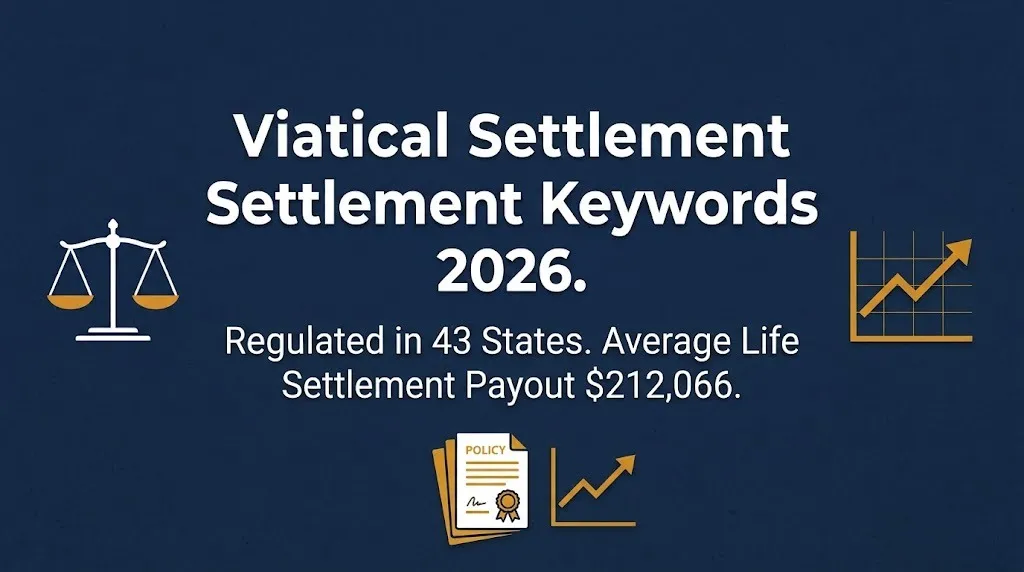
- Payouts vary by policy and prognosis, but life settlement averages hit $212,066 in 2025, per industry data.
- Regulation exists in 43 states and Puerto Rico, but five states have no specific life settlement statute.
You are probably here because someone called, mailed, or emailed you about selling your life insurance policy. Maybe you are sick. Maybe the premiums have become impossible. Maybe you just want to know if the offer on the table is real.
The viatical settlement industry is legal, licensed in most states, and genuinely useful for some policyholders. It is also an industry that profits when you die sooner, which is the part most company websites leave out.
This article covers what viatical settlement companies actually do, how they differ from life settlement companies, what regulators require them to disclose, and why the “top 10” lists you see online are mostly marketing. The surprising part: the industry’s own trade group reported a nearly 9x multiple between average settlement offers and cash surrender values in 2025 .
The Facts
| Item | Detail |
|---|---|
| What this is | Companies that buy life insurance policies from terminally ill policyholders |
| Regulated by | State insurance departments in 43 states plus Puerto Rico |
| Typical Eligibility | Life expectancy of two years or less for viatical; age 65+ or chronic illness for life settlement |
| Average Life Settlement Payout (2025) | $212,066, per LISA data cited by industry sources |
| Average Cash Surrender Value (2025) | $24,360 |
| Tax Treatment | Proceeds above premiums paid may be taxable; death benefits generally are not |
| Key Risk | Buyer profits only when you die; longer survival means lower return for them, not you |
Are Viatical Settlement Companies Legitimate or a Scam?
Viatical settlement companies are legitimate when they are licensed by your state insurance department. They are a scam risk when they operate without a license, pressure you to sign quickly, or refuse to disclose their commission.
The National Association of Insurance Commissioners defines a viatical settlement provider as the company that buys your policy, becomes the owner, pays future premiums, and collects the death benefit when you die . A viatical settlement broker represents you and shops your policy to multiple providers .
The difference matters. A broker works for you. A provider works for itself. Some companies act as both, which is legal only with disclosure.
State regulators publish lists of licensed providers and brokers. Texas, California, Iowa, and New Jersey all maintain public rosters, and a 2026 compilation of those four states found 124 licensed business entities across provider, broker, and life expectancy estimator categories . That is not a complete national count, but it shows the industry is structured enough to be tracked.
Reality Check: No legitimate viatical company asks for an upfront fee to “process” your settlement. Brokers are paid by the buyer after the sale closes. If someone wants your money before you get yours, walk away.
How Much Do Viatical Settlement Companies Pay?
Viatical settlement companies pay a lump sum that is more than your policy’s cash surrender value but less than the full death benefit. The exact amount depends on your life expectancy, the policy’s face value, the insurer’s financial strength, and the premiums still owed.
The industry does not publish a separate viatical payout average. It publishes a life settlement average, which covers the broader market. The Life Insurance Settlement Association reported that the average life settlement paid sellers $212,066 in 2025, nearly nine times the average cash surrender value of $24,360 .
For viatical cases specifically, the calculation is more compressed. A two-year life expectancy means the buyer expects a faster return, so the offer as a percentage of face value tends to be higher than a standard life settlement for a healthy 75-year-old. American Best’s consumer guide describes the price as based on death benefit size, premiums, and the insurer’s quality .
Here is how the broader market breaks down by scenario, using LISA data cited by industry analysts:
| Scenario | Age and Health | $500,000 Policy Offer Range |
|---|---|---|
| A | Age 72, good health | $50,000 to $75,000 (10% to 15%) |
| B | Age 78, moderate health issues | $100,000 to $150,000 (20% to 30%) |
| C | Age 82, significant decline | $175,000 to $250,000 (35% to 50%) |
Those figures are not viatical-specific. They illustrate how age and health move the percentage. A terminal diagnosis compresses the timeline further, which can push the percentage higher or lower depending on the buyer’s underwriting.
Key Takeaway: The “average” viatical payout is a moving target, but the industry-wide life settlement average of $212,066 is the closest verified benchmark you have.
Who Regulates Viatical Settlement Companies?
Viatical settlement companies are regulated by state insurance departments, not federal agencies. Most states follow model laws drafted by the National Association of Insurance Commissioners or the National Council of Insurance Legislators.
Forty-three states plus Puerto Rico have a regulated secondary market for life settlements, according to the European Life Settlement Association’s licensing matrix . Five states (Alabama, Missouri, South Carolina, South Dakota, and Wyoming) plus the District of Columbia have no specific life settlement statute, though other insurance or securities rules may still apply .
Michigan and New Mexico regulate viatical settlements only, meaning transactions involving terminally or chronically ill insureds . If you live in one of those states and you are not terminally ill, the life settlement side of the market is not explicitly regulated for you.
What does regulation actually require? Washington state’s rules, summarized in a regulatory database, require providers to disclose life expectancy methodology, test contract readability, and maintain a bond if they buy less than the full policy value . Violations can carry fines of $10,000 per violation in some state frameworks .
Your state insurance department is the first place to check whether a company is licensed. If the company is not on the state list, it is not operating legally in your state.
What Is the Difference Between Viatical and Life Settlements?
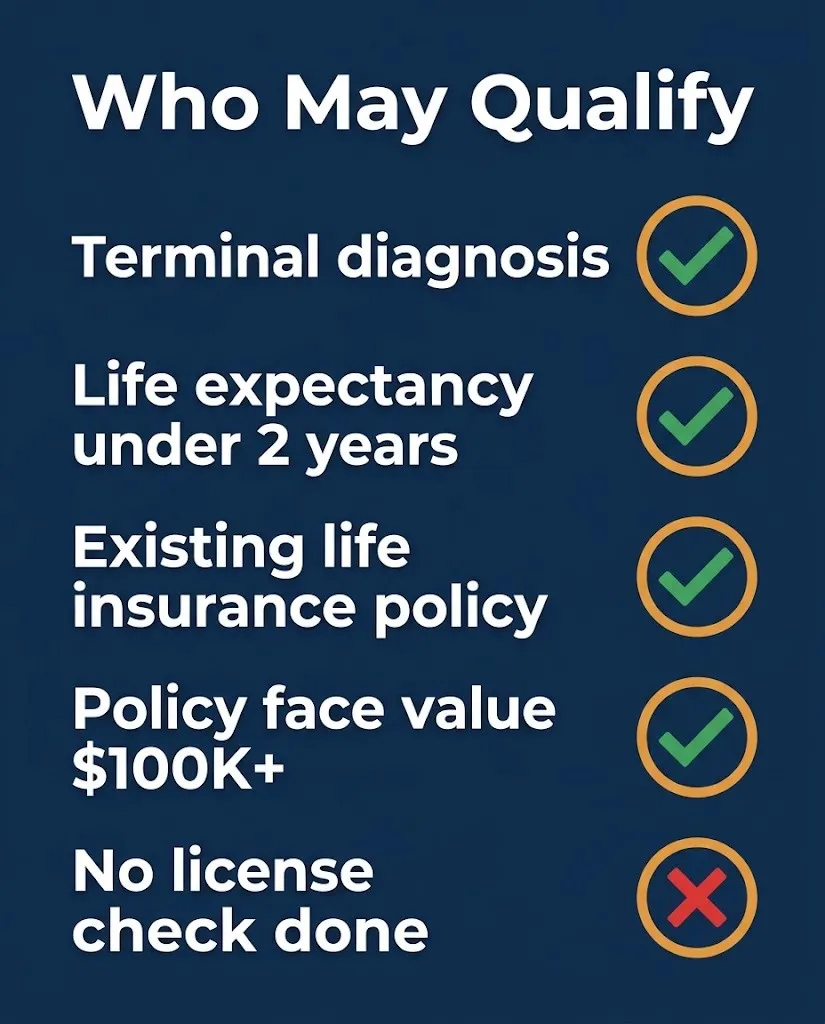
A viatical settlement is for people with terminal or life-threatening illness, typically a life expectancy of two years or less. A life settlement is for anyone who no longer needs or can afford a policy, often people 65 or older with a policy face value of $100,000 or more.
American Best’s consumer guide defines viatical explicitly around terminal illness: “a viatical settlement is not an insurance product” and is designed for people with a limited life expectancy . The buyer collects the death benefit when the insured dies, and the seller gets a lump sum now.
Life settlements cover a wider population. OvidLife, an industry participant, describes eligibility as typically age 65 or older, a policy face value of at least $100,000, and permanent coverage like whole or universal life . Convertible term policies can qualify too.
The tax treatment differs in a way that matters. A viatical or life settlement payment is generally subject to income tax to the extent it exceeds the premiums you paid. A death benefit paid to a beneficiary is generally not taxable . That is not legal advice, but it is the general rule regulators describe.
For a practical comparison: selling a policy is like selling a car you can no longer afford to insure. You get cash now, but you give up the vehicle. The buyer takes on the maintenance and gets the value later.
What Are the Top 10 Life Settlement Companies in 2026?
There is no official, regulator-published “top 10” list of life settlement companies. Any ranking you see is a commercial or editorial product, not a government certification.
What exists is a licensing structure. A 2026 compilation of Texas, California, Iowa, and New Jersey regulatory data found 124 licensed business entities, including providers, brokers, and life expectancy estimators . The same compilation noted 75 unique companies across those states, with 22 appearing in two or more state lists .
Names that appear repeatedly in regulatory filings and industry directories include:
- Abacus Settlements, LLC, a viatical-life settlement provider licensed in multiple states, and the affiliated publicly traded Abacus Life
- Coventry First LLC, a provider, and Coventry Financial LLC, a broker, both long-established in the space
- Advanced Settlements, Inc., a broker licensed in Oklahoma since 2005
- Asset Servicing Group, LLC, an Oklahoma-based viatical provider
- Berkshire Settlements, described in one directory as having a strong viatical focus with in-house medical underwriting
This is not a ranking and should not be read as an endorsement. Licensing in one state does not guarantee licensing in yours. A company can be legitimate in Texas and unlicensed in California.
The honest answer to “who are the top 10” is that the question assumes a ranking that regulators do not produce. Check your state’s list, verify the license, and compare offers from multiple licensed buyers.
How Do You Sell Your Policy to a Viatical Settlement Company?
You sell your policy by applying with a licensed provider or working through a licensed broker, submitting medical records, receiving offers, and signing a transfer agreement. The process usually takes weeks, not days, even for viatical cases.
Here are the steps that regulators and industry guides describe:
- Confirm your policy type and face value. Whole, universal, and convertible term policies are the most commonly accepted.
- Gather your medical records and prognosis documentation. The buyer will order a life expectancy report.
- Contact your state insurance department to verify the provider or broker’s license.
- Work with a broker to solicit multiple offers, or apply directly to providers.
- Review the disclosure documents, including commission and life expectancy methodology.
- Compare offers against your policy’s cash surrender value and any accelerated death benefit available from your insurer.
- Sign the settlement contract and transfer ownership.
- Receive your lump sum after the rescission period your state requires.
Accelerated death benefits are the alternative most sellers never hear about. Many life insurance policies include a rider that pays some or all of the death benefit early if you are terminally ill . That payment comes from your insurer, not a third-party buyer, and it may be more cost-effective than a viatical sale.
Ask your insurer about accelerated benefits before you sign anything with a viatical company.
What Happens Next If You Are Considering a Viatical Settlement?
Here is the sequence most sellers face, with the decision points that matter:
Now: Request your policy documents and ask your insurer whether an accelerated death benefit rider exists.
Within days: Verify any company’s license with your state insurance department.
Within weeks: Get a life expectancy estimate and at least two competing offers.
Before signing: Read the disclosure on commissions, tax treatment, and whether the buyer may learn your identity.
After signing: Your state’s rescission period applies. You can cancel within that window, but you must return the money.
The rescission right is not universal and the window varies by state. Washington’s rules, for example, include a right to return the money and cancel, but the buyer’s premiums must be repaid .
Key Takeaway: The most important call you can make is not to a viatical company. It is to your insurer, to ask about accelerated death benefits first.
Frequently Asked Questions
Are viatical settlement companies legitimate?
Yes, when licensed by your state insurance department. Unlicensed companies operating in regulated states are breaking the law.
How much will a viatical company pay for my policy?
It depends on your prognosis, policy face value, and premiums. The broader life settlement average was $212,066 in 2025.
Is a viatical settlement taxable?
Generally, proceeds above the premiums you paid may be taxable. Death benefits paid to beneficiaries usually are not.
Do I need a broker to sell my policy?
No, but a broker solicits multiple offers and represents you, not the buyer. Some states require brokers to be licensed.
What is the difference between viatical and life settlement?
Viatical is for terminal illness with a short life expectancy. Life settlement is for policyholders who no longer need or can afford coverage.
Can I sell my policy if I live in a state with no viatical law?
Maybe. Some states without specific statutes still regulate through general insurance or securities rules. Check with your state insurance department.
What is the biggest risk of a viatical settlement?
You give up the death benefit your beneficiaries would have received. The buyer profits only when you die, and you may live longer than the estimate.
The Bottom Line
Viatical settlement companies are a legal, regulated option for some terminally ill policyholders who need cash and can afford to give up the death benefit. They are not a public benefit, and they are not a charity. They are a market.
Before you sign, call your insurer about accelerated death benefits. Then verify any company’s license with your state insurance department. The license check is free, and it is the difference between a regulated transaction and a gamble.