Americor Lawsuit 2026: Debt Settlement Company Legal Status, Claims, and Consumer Protections
Quick Answer
- Americor is a real debt settlement company that has faced lawsuits and regulatory complaints.
- No class action settlement or payout fund has been verified for 2026.
- No claim deadline exists; consumers with complaints should contact regulators directly.
If you searched for an Americor lawsuit, you probably want to know whether the debt settlement company is in legal trouble and whether you can get money back. The answer starts with one verified fact: Americor has faced legal actions and consumer complaints over its debt settlement practices, but no class action settlement has been verified as of September 4, 2026.
Americor is a debt settlement company that negotiates with creditors on behalf of consumers. The company has been accused of charging improper fees, making misleading promises, and failing to deliver results.
This article explains what Americor does, what legal actions it has faced, how debt settlement regulation works, and what you can do if you have a complaint. One surprising detail: debt settlement companies like Americor are banned from charging upfront fees under federal law, and many consumer complaints center on whether that rule was followed.
The Facts
| Topic | Verified Detail |
|---|---|
| Company type | Debt settlement firm |
| Fee structure | 15 to 25 percent of enrolled debt |
| Upfront fees | Illegal under FTC rule |
| Legal status | Multiple complaints, no class settlement |
| Regulatory body | FTC and state attorneys general |
| Consumer recourse | State and federal complaints |
Is There an Americor Class Action Lawsuit?
No verified Americor class action settlement exists as of September 4, 2026. The company has faced legal actions and regulatory scrutiny, but no class-wide settlement fund has been approved.
Americor has been the subject of consumer complaints and some individual lawsuits. Those cases are not the same as a class action with a settlement fund.
If a class action settlement is ever approved, it will have a court-appointed administrator and a public claim form. None exists today.
Key Takeaway: Legal complaints against Americor are real, but a class action settlement is not.
What Is Americor and What Does It Do?
Americor is a debt settlement company that negotiates with creditors to reduce what consumers owe. The company works with clients who have significant unsecured debt, typically credit cards and personal loans.
Clients stop paying creditors and instead save money in a dedicated account. Americor negotiates lump sum settlements with creditors and takes a fee for each settled debt.
The company markets heavily online and through digital channels. It competes with National Debt Relief, Accredited Debt Relief, and other major debt settlement firms.
What Legal Actions Has Americor Faced?
Americor has faced consumer complaints, state regulatory actions, and individual lawsuits. The complaints often allege misleading marketing, excessive fees, and failure to deliver promised results.
The Consumer Financial Protection Bureau, known as the CFPB, maintains a public complaint database where consumers have filed complaints against Americor. Those complaints are searchable and public.
Some state attorneys general have also investigated debt settlement companies, including Americor, for potential violations of state consumer protection laws.
| Legal Action Type | What It Alleges |
|---|---|
| Consumer complaints | Misleading promises, poor results |
| State investigations | Possible fee and disclosure violations |
| Individual lawsuits | Breach of contract, consumer fraud |
What Are the Rules for Debt Settlement Companies?
Debt settlement companies must follow the FTC Telemarketing Sales Rule. The most important rule: no upfront fees before a debt is settled.
The rule prohibits companies from charging any fee until they have successfully renegotiated, settled, or reduced a consumer’s debt. That rule applies to Americor and every other debt settlement firm.
State laws add more requirements. Some states cap fees, require licensing, or ban for-profit debt settlement entirely.
Key Takeaway: The upfront fee ban is the single most important consumer protection in debt settlement. Any company that breaks it is violating federal law.
Can I Get Money Back from Americor?
You may be able to get a refund if Americor charged you fees improperly or failed to provide the services promised. That refund would come through a complaint or a lawsuit, not a class action settlement.
The first step is to file a complaint with the CFPB and your state attorney general. Those agencies can investigate and sometimes order refunds.
You can also consult a consumer protection attorney to discuss an individual lawsuit. Individual cases can recover fees and damages if you can prove deception or breach of contract.
Reality Check: No one is mailing Americor settlement checks right now. No class action fund exists. If someone contacts you offering an Americor settlement, verify it against court records before doing anything.
What Are the Signs of a Debt Settlement Scam?
A debt settlement scam shares these red flags.
- Demands upfront fees before settling any debt.
- Guarantees it can cut your debt by a specific percentage.
- Tells you to stop communicating with creditors entirely.
- Pressures you to sign up during the first call.
- Hides fees or refuses to provide a written agreement.
Legitimate companies explain risks, provide written disclosures, and never guarantee results. If something feels like a high-pressure sales pitch, it probably is.
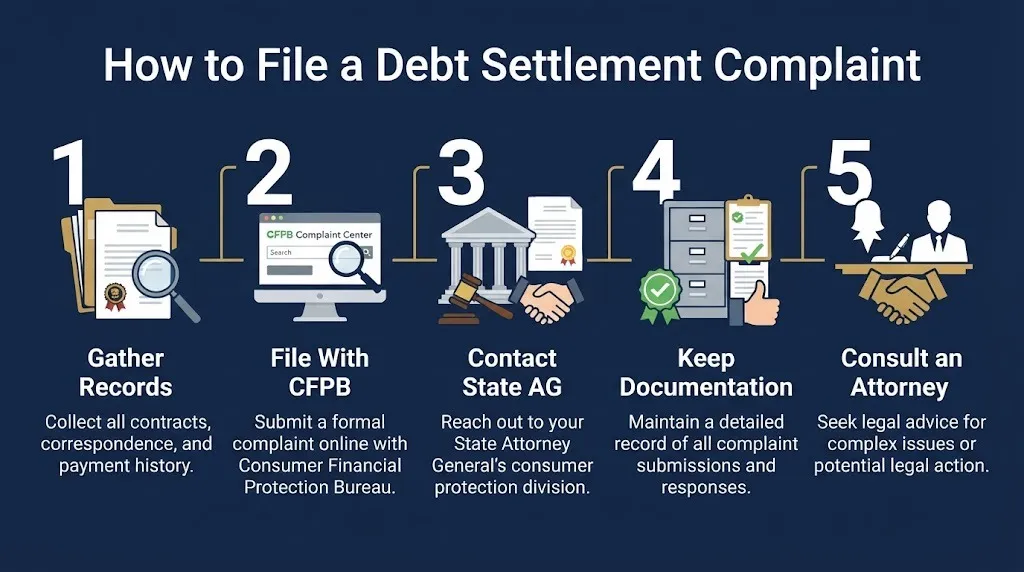
How Do I File a Complaint Against Americor?
Filing a complaint against Americor is free and takes less time than you think. Here is how.
- Gather your account records and any written agreements.
- File a complaint with the Consumer Financial Protection Bureau.
- File a complaint with your state attorney general.
- Keep copies of all communications with Americor.
- Consider consulting a consumer protection attorney.
What Is the Difference Between Debt Settlement and Credit Counseling?
Credit counseling is a nonprofit service that helps you create a budget and may enroll you in a debt management plan. Debt settlement is a for-profit negotiation that aims to reduce the total amount you owe.
A debt management plan consolidates your payments and reduces interest rates, but you pay the full principal. Debt settlement seeks to reduce the principal itself.
Credit counseling costs little or nothing and does less damage to your credit. Debt settlement costs thousands in fees and hurts your credit significantly.
Does Debt Settlement Hurt Your Credit Score?
Yes, debt settlement hurts your credit score, often by 100 points or more. The damage comes from missed payments, charged-off accounts, and the settled status on your credit report.
Creditors report missed payments while you save for settlement. Those late payments stay on your credit report for seven years.
If you are already behind on payments, the additional damage may be marginal. But if you are current and considering settlement, understand that your score will drop before it recovers.
Key Takeaway: Debt settlement is a serious financial decision with lasting credit consequences.
What Are the Alternatives to Debt Settlement?
Debt settlement is not your only option. Alternatives include credit counseling, debt management plans, debt consolidation loans, and bankruptcy.
A debt management plan through a nonprofit credit counseling agency reduces interest rates and consolidates payments without the credit damage of settlement.
A debt consolidation loan replaces multiple debts with one fixed payment. That works only if you qualify for a lower interest rate.
Bankruptcy is a legal process that can discharge many debts entirely. It carries serious long-term consequences but may be the right choice.
What Happens Next With Americor Legal Issues?
Americor will likely continue to face consumer complaints and possible regulatory action. No class action settlement is pending, but that could change if a certified class emerges.
Consumers who have complaints should file them now. The CFPB and state attorneys general use complaint data to prioritize investigations.
If a settlement is ever approved, it will be announced through official channels and a court-appointed administrator.
Expected 2026: Continued consumer complaints and possible state enforcement actions.
If a class action emerges: Court certification and notice would follow.
If settled: Administrator appointed and claim form published.
Frequently Asked Questions
Is there an Americor class action settlement?
No class action settlement has been verified as of September 4, 2026.
Can I get a refund from Americor?
You may be able to get a refund through a regulatory complaint or individual lawsuit.
What does Americor do?
Americor is a debt settlement company that negotiates reduced payments with creditors.
Are debt settlement companies legal?
Yes, but they must follow strict federal and state rules, including the upfront fee ban.
How much does Americor charge?
Debt settlement companies typically charge 15 to 25 percent of enrolled debt.
Does Americor hurt my credit score?
Yes, debt settlement causes significant credit score damage.
How do I file a complaint against Americor?
File with the CFPB and your state attorney general.
Where can I verify debt settlement lawsuits?
Check PACER for federal cases or your state court system for state cases.
Your next step is to file a complaint if you were harmed by Americor’s practices. The CFPB and your state attorney general are the right places to start. No class action settlement exists, so do not wait for a claim form that may never come.
The single most important fact: no Americor settlement fund exists, and no one should ask you to pay to file a complaint. Complaints are free, and the regulators actually read them.