Dwayne Johnson Energy Drink Lawsuit in 2026: ZOA Claims, Caffeine Content, and Legal Update
Quick Answer
- Dwayne Johnson co-founded ZOA Energy, an energy drink brand that has faced labeling and marketing complaints.
- No major ZOA class action settlement is currently accepting claims in August 2026.
- Consumers with concerns may pursue individual refunds or state consumer protection complaints.
Dwayne Johnson, also known as The Rock, co-founded ZOA Energy in 2020. The drink is marketed as a healthier energy drink with natural caffeine and vitamins. But like many energy drinks, ZOA has faced questions about its labeling and marketing claims.
If you searched for a Dwayne Johnson energy drink lawsuit, you may have seen headlines about legal trouble. The question is whether the case is real and whether you can get money. The answer in 2026 is mostly no, at least not through a class action settlement.
This guide explains what ZOA is, what the legal issues are, and how to handle concerns about the product. One fact that surprises consumers: energy drink lawsuits often fail because caffeine content is usually disclosed on the label.
The Facts
| Item | Detail |
|---|---|
| Case | No verified open class action settlement |
| Status | No active claim window |
| Fund Size | Not confirmed |
| Est. Per Person | Not applicable |
| Claim Deadline | None open |
| Administrator | None |
| Proof Needed | Not applicable |
Is the Dwayne Johnson Energy Drink Lawsuit Real?
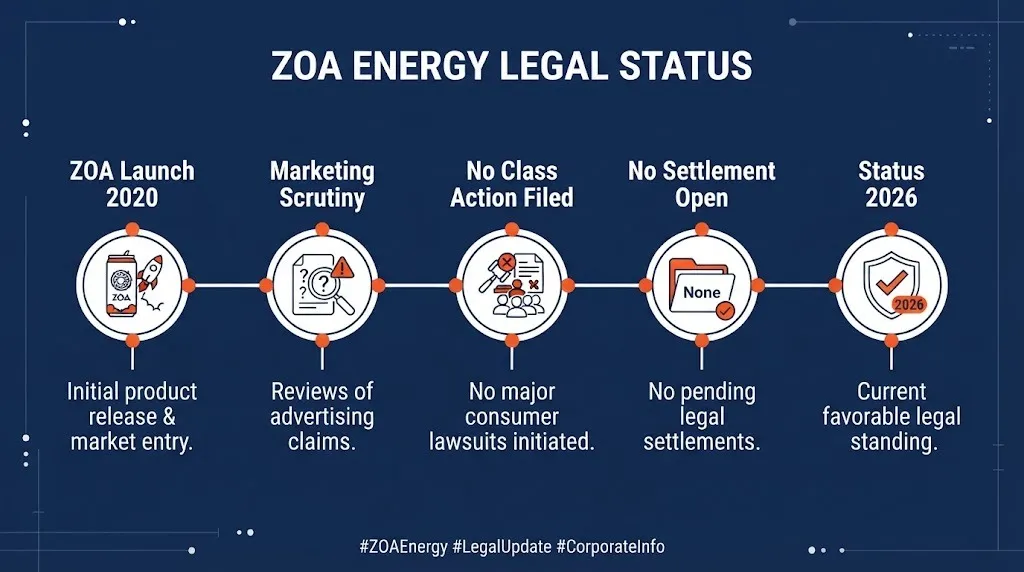
No verified class action settlement involving Dwayne Johnson’s ZOA energy drink is open for claims as of August 27, 2026. Some complaints and legal inquiries exist, but no major payout event has been confirmed.
The confusion comes from the broader energy drink industry. Many energy drink brands have faced lawsuits over caffeine content, marketing claims, and health effects. ZOA is not the only brand under scrutiny.
Dwayne Johnson’s name draws attention. A headline that says “Dwayne Johnson energy drink lawsuit” gets clicks. But the legal reality is less dramatic. No nationwide class action settlement is paying consumers.
If you see a ZOA lawsuit ad, verify it against the court docket before taking it seriously.
Key Takeaway: No verified ZOA energy drink class action settlement is open for claims in 2026.
What Is ZOA Energy?
ZOA Energy is an energy drink brand co-founded by Dwayne Johnson, Dany Garcia, and others. It launched in 2020 with a focus on health and wellness.
The drink contains caffeine, B vitamins, vitamin C, and electrolytes. It is marketed as a cleaner alternative to traditional energy drinks. The brand emphasizes immunity support and natural ingredients.
ZOA is sold in stores and online. Flavors include original, wild berry, and others. The drink competes with brands like Monster, Red Bull, and Celsius.
Dwayne Johnson is the public face of the brand. His image appears in marketing. That celebrity connection drives interest in any legal news involving the product.
What Are the ZOA Energy Drink Legal Issues?
The ZOA energy drink legal issues involve marketing claims, caffeine content, and labeling. Some consumers and watchdogs have questioned whether the drink’s health claims are supported.
The brand markets ZOA as a wellness product. Some claims involve immunity support and clean ingredients. Consumer advocates sometimes challenge those claims when the product is primarily an energy drink.
Caffeine content is another issue. ZOA contains about 160 mg of caffeine per can. That is less than some competitors but still significant. Lawsuits over caffeine usually fail because the amount is disclosed.
No major false advertising class action against ZOA has produced a settlement as of August 2026.
Can I Get a Refund for ZOA Energy?
You may be able to get a refund for ZOA Energy by contacting the retailer or the company directly. The refund policy depends on where you bought the product.
If you bought ZOA at a store, return it to the store with your receipt. Most retailers accept returns for food and beverage products within a reasonable time.
If you bought ZOA online, contact the seller’s customer service. Explain the issue and ask for a refund. Keep your order confirmation.
ZOA itself may offer refunds for defective products. Contact the company through its official website. Do not use third-party sites that charge a fee.
What Is the Caffeine Content of ZOA Energy?
ZOA Energy contains about 160 mg of caffeine per 16-ounce can. That is roughly equivalent to a strong cup of coffee or two.
The caffeine content is disclosed on the label. That disclosure is important. In most energy drink lawsuits, the caffeine claim fails because consumers can read the label and make an informed choice.
The FDA considers 400 mg of caffeine per day safe for most adults. ZOA’s 160 mg is within that limit. The issue is not legality. It is individual tolerance.
If you are sensitive to caffeine, ZOA may cause jitters, anxiety, or sleep problems. That is a personal reaction, not a legal claim.
Has Dwayne Johnson Been Sued Over ZOA?
No verified lawsuit names Dwayne Johnson personally as a defendant in a ZOA class action settlement as of August 2026. Celebrity endorsers and co-founders are sometimes named in lawsuits, but the company is the primary defendant.
The brand is owned by ZOA Energy LLC. Legal claims target the company, not Johnson individually. His name appears in marketing, not in the corporate structure as a defendant.
Johnson has not publicly addressed any ZOA lawsuit. His social media continues to promote the brand.
What Should I Do If I Had a Bad Reaction to ZOA?
If you had a bad reaction to ZOA, stop drinking it. Then document what happened. Note the time, the symptoms, and how long they lasted.
If the reaction was severe, seek medical care. A doctor can document the symptoms and rule out other causes.
Report the reaction to ZOA through its official customer service. You can also report it to the FDA through its MedWatch program for adverse events.
A bad reaction does not automatically create a lawsuit. But documentation helps if a pattern of similar reports emerges.
Reality Check
No legitimate ZOA settlement is sending text messages or emails asking for your bank details to release a payment. Energy drink class actions, when they settle, involve official court-appointed administrators. Anyone who asks for a fee to “process” your ZOA refund or settlement is running a scam.
What Are the Common Energy Drink Lawsuit Claims?
Energy drink lawsuits usually fall into a few categories. The most common are false advertising, failure to disclose caffeine risks, and marketing to minors.
False advertising claims argue that the product’s marketing overstates its benefits. The health claims do not match the product’s actual effects.
Caffeine disclosure claims argue that the label does not adequately warn about caffeine risks. These claims usually fail when the caffeine content is printed on the label.
Marketing to minors claims argue that the company targets underage consumers. Those cases are less common for premium brands like ZOA.
Most energy drink cases settle for small amounts or are dismissed. The class size is large, but individual damages are tiny.
How Do Energy Drink Class Actions Usually End?
Energy drink class actions usually end in one of three ways: dismissal, a small settlement, or a labeling change.
Dismissal happens when the court finds the label was adequate or the claims were puffery. Many energy drink cases die on motions to dismiss.
A small settlement happens when the company wants to avoid litigation costs. The payout per person is often under $20.
A labeling change happens when the company agrees to alter its marketing. No money changes hands. The change is the remedy.
ZOA has not announced any major settlement or labeling change as of August 2026.
What Is the Difference Between ZOA and Other Energy Drink Lawsuits?
ZOA is marketed as a wellness product. That makes its legal exposure different from brands like Monster or Bang.
The wellness claims invite scrutiny. If ZOA says it supports immunity, the claim must be supported. Traditional energy drinks do not make those claims.
But the caffeine disclosure is standard. ZOA’s label discloses caffeine. That weakens any caffeine-related lawsuit.
The brand’s celebrity connection also makes it a target. Plaintiff’s attorneys know that Dwayne Johnson’s name generates attention. A lawsuit involving a celebrity brand attracts press coverage.
Key Takeaway: ZOA’s wellness marketing creates legal exposure, but its caffeine disclosure protects it from the most common energy drink claims.
What Happens Next: ZOA Energy Legal Status for 2026
- September 2026: No verified ZOA class action settlement is expected to open.
- Late 2026: Any new legal filing would appear in court records.
- Early 2027: Consumer complaints may continue, but no payout event is confirmed.
- Ongoing: Shoppers should rely on official channels for refund requests.
Frequently Asked Questions
Is there a Dwayne Johnson energy drink lawsuit?
No verified ZOA class action settlement is open for claims in 2026.
Can I get money from a ZOA lawsuit?
No class action settlement exists, so no money is available.
What is the caffeine content of ZOA?
ZOA contains about 160 mg of caffeine per 16-ounce can.
Has Dwayne Johnson been sued?
No verified lawsuit names Johnson personally in a ZOA settlement.
What should I do if I had a bad reaction to ZOA?
Stop drinking it, document your symptoms, and report the reaction to ZOA and the FDA.
How do I get a ZOA refund?
Return the product to the retailer or contact ZOA customer service.
Are energy drink lawsuits common?
Yes, many energy drink brands have faced lawsuits, but most are dismissed or settle for small amounts.
Is ZOA a healthy energy drink?
ZOA contains vitamins and natural caffeine, but it is still an energy drink with 160 mg of caffeine.
Closing
No verified Dwayne Johnson energy drink lawsuit settlement is open for claims in 2026. ZOA has faced scrutiny, but no class action is paying consumers.
If you have concerns about ZOA, contact the company or return the product to the store. Do not trust ads that promise a lawsuit payout. The legal reality is quieter than the headlines suggest.