Elmiron Lawsuit 2026: Settlement Status, Payout Estimates, and Filing Deadlines
Quick Answer
- The Elmiron litigation is a real set of federal lawsuits, not a scam, alleging the drug caused permanent vision damage.
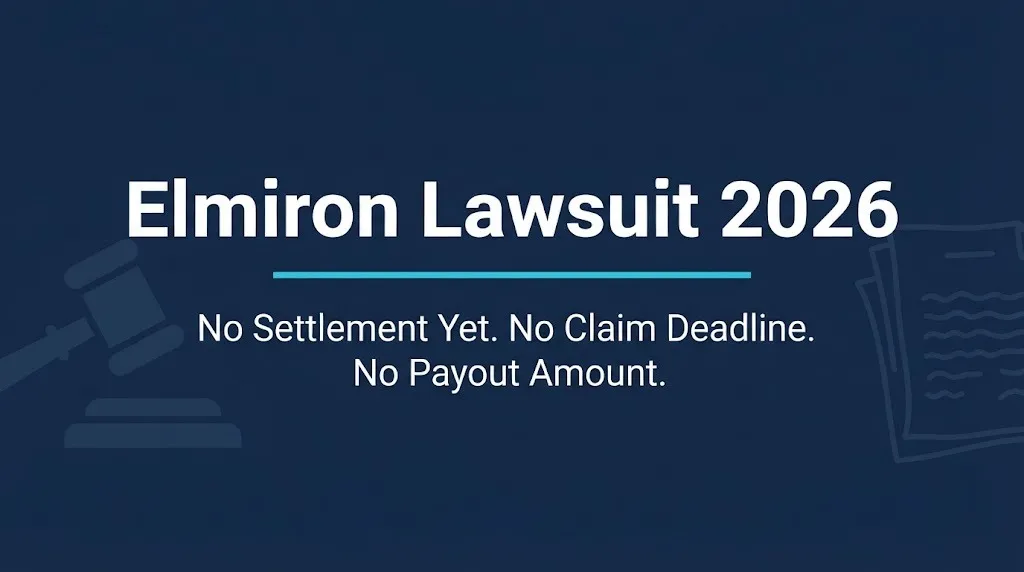
- No national settlement fund exists yet, so no per-person payout has been determined.
- No claim deadline applies because no settlement or class action has been approved as of this date.
If you took Elmiron for interstitial cystitis or bladder pain and later developed vision problems, especially retinal damage or trouble seeing in dim light, you may have a claim. But the legal process is still unfolding, and any talk of a settlement deadline or payout amount is premature. This article reports what the court records actually show and what you should do right now to protect yourself.
The Elmiron litigation is one of the largest pharmaceutical injury proceedings in recent years. Hundreds of federal cases have been consolidated in Pennsylvania. Yet despite what some aggressive ads claim, this is not a settled case with a claims administrator writing checks.
The Facts
| Detail | Verified Information |
|---|---|
| Case | In re: Elmiron (Pentosan Polysulfate Sodium) Products Liability Litigation |
| Status | Active multidistrict litigation, discovery ongoing |
| Court | U.S. District Court for the Eastern District of Pennsylvania |
| Case Number | MDL No. 2973 |
| Total Settlement Fund | Not yet established |
| Est. Per Person | Not yet determined |
| Claim Deadline | None exists as of September 2, 2026 |
| Administrator | Not appointed |
| Proof Needed | Medical records, prescription history, eye exam records |
Is the Elmiron Lawsuit Real or a Scam?
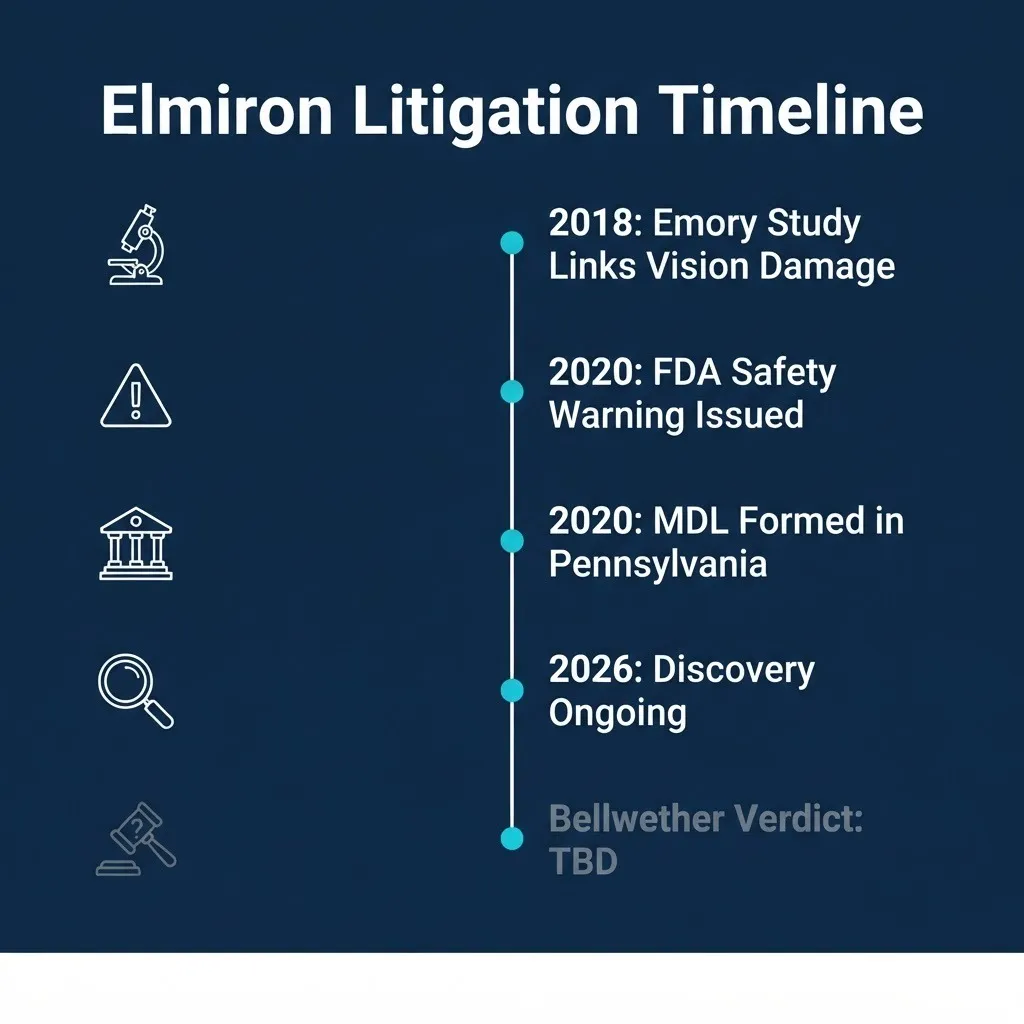
The Elmiron lawsuit is real. It is a federal multidistrict litigation, not a class action settlement and not a scam. The cases were consolidated in December 2020 before Judge Wendy Beetlestone in the Eastern District of Pennsylvania.
Over 1,800 cases were pending in the MDL at its peak. Plaintiffs allege that Janssen Pharmaceuticals, a Johnson & Johnson company, failed to adequately warn patients and doctors about the risk of pigmentary maculopathy, a specific type of retinal damage linked to long-term Elmiron use.
A 2018 study by researchers at Emory Eye Center first identified the condition in patients who had taken the drug for years. The study found distinctive retinal changes that could lead to difficulty reading, trouble adjusting to darkness, and in some cases permanent vision loss.
The litigation is legitimate. But scam artists use that legitimacy to trick people. You should know that no settlement exists, no claims administrator is accepting forms, and no law firm can guarantee you a payout.
Key Takeaway: The Elmiron litigation is real and active, but no settlement has been reached, so any website or ad promising specific payouts is misleading.
Has There Been an Elmiron Settlement in 2026?
No Elmiron settlement has been reached in 2026. There is no global settlement, no partial settlement, and no bellwether verdict that has resolved the litigation.
As of the most recent court filings, the parties remain in discovery and motion practice. The first bellwether trials, which are test cases designed to gauge how juries respond to the evidence, have not yet produced a verdict that would pressure either side to settle.
This matters because settlement amounts in pharmaceutical cases often follow bellwether outcomes. If early trials produce large verdicts for plaintiffs, the defendant faces pressure to settle remaining cases. If trials produce defense verdicts, plaintiffs’ leverage weakens.
Right now, neither scenario has played out. Any report suggesting an Elmiron settlement payout table is fabricated or based on speculation, not court records.
What a Potential Settlement Could Look Like
| Factor | Current Status |
|---|---|
| Total cases pending | Over 1,800 at peak |
| First bellwether trial | Not yet concluded |
| Settlement negotiations | Not publicly confirmed |
| Claims administrator | None appointed |
| Payout structure | Not determined |
How Much Is the Elmiron Lawsuit Worth Per Person?
No per-person payout amount has been established because no settlement exists. Any figure you see online, whether it says $50,000 or $500,000, is an estimate, a guess, or a marketing claim.
In similar pharmaceutical injury cases, settlement values vary widely based on injury severity. A person with mild retinal changes might receive a lower settlement offer than someone with significant central vision loss.
Factors that would likely influence any future payout include:
- Length of time you took Elmiron
- Total cumulative dosage
- Severity of diagnosed eye damage
- Age at diagnosis
- Impact on ability to work or perform daily tasks
- Strength of medical causation evidence
You should treat any “average payout” figure with serious skepticism. No such number exists in the court record.
Think of it like being in a car accident and asking the repair shop for a quote before the insurance adjuster has even looked at the car. The damage exists, but the number does not.
Key Takeaway: Per-person settlement amounts are not yet determined, and any specific figure circulating online is not sourced from court documents.
How to File an Elmiron Lawsuit Claim
Since no settlement class exists, you cannot file a claim for a settlement payout. Instead, you would file an individual lawsuit or join the existing federal litigation.
Here are the steps you would take if you believe Elmiron damaged your vision.
- Locate your pharmacy records showing Elmiron prescriptions and dates.
- Gather eye exam records, especially any diagnosis of maculopathy or retinal changes.
- Get a comprehensive dilated eye exam if you have not had one recently.
- Document when you first noticed vision problems.
- Consult an attorney experienced in pharmaceutical injury litigation.
- Do not sign anything from a “claims service” that charges upfront fees.
- Watch the official MDL docket for settlement developments.
The statute of limitations matters. Most states give you two to three years from the date you discovered, or reasonably should have discovered, that Elmiron caused your eye damage. If you stopped taking the drug years ago and only recently learned about the connection, your clock may have started when you made that connection.
This is why acting promptly is important. A missed deadline can bar your claim entirely.
What Are the Elmiron Lawsuit Attorneys Saying?
Elmiron lawsuit attorneys are actively accepting clients. Many law firms advertise heavily for Elmiron cases, which is why you may have seen ads or received mailers.
What attorneys are saying publicly differs from what the court record shows. Law firm websites often use phrases like “significant recovery” or “substantial settlements.” Those phrases are marketing language, not legal findings.
Some firms have reported taking on hundreds of Elmiron cases. The largest firms involved in the MDL have case counts in the hundreds. But case volume is not the same as settlement success.
When you speak with an attorney, ask these questions directly.
- How many Elmiron cases has your firm actually filed in the MDL?
- What is your track record in pharmaceutical injury trials?
- Do you work on contingency, meaning you only get paid if I recover money?
- What costs am I responsible for if the case is lost?
A reputable attorney will answer these questions without hesitation.
Reality Check: No One Can Guarantee an Elmiron Payout
No one can guarantee an Elmiron payout. The litigation is active, discovery is ongoing, and no jury has decided a bellwether case. Any website, ad, or caller promising you a specific settlement amount is not telling you the truth. Filing a claim through an official process is always free if and when a settlement is approved. Third-party services that charge upfront fees to “help” you file are unnecessary and should be avoided entirely.
Elmiron Vision Loss Lawsuit: What Injuries Qualify?
The core injury in the Elmiron litigation is pigmentary maculopathy, a distinctive form of retinal damage. But other vision problems are also alleged.
The most commonly claimed injuries include:
- Pigmentary maculopathy
- Macular degeneration
- Retinal pigment epithelium damage
- Difficulty reading or seeing in dim light
- Blurred vision
- Metamorphopsia, which is distorted vision where straight lines appear wavy
- Central vision loss
The key distinction is that these injuries must be linked to long-term Elmiron use. Most plaintiffs took the drug for years, not months. The condition typically develops after cumulative exposure.
Medical studies have found the risk increases significantly after approximately 1,000 grams of total pentosan polysulfate sodium exposure. For a typical dose of 300 mg per day, that threshold could be reached in roughly eight to nine years. But some patients developed changes sooner, and not every long-term user developed the condition.
Key Takeaway: The primary claimed injury is a specific type of retinal damage called pigmentary maculopathy, and most cases involve years of continuous Elmiron use.
Who Qualifies for an Elmiron Lawsuit?
You may qualify to bring an Elmiron lawsuit if you took the drug for a sustained period and developed vision problems consistent with the injuries alleged in the litigation.
The general criteria attorneys look for include:
- Use of Elmiron for at least two years, though longer use strengthens the case
- A diagnosis of pigmentary maculopathy or other retinal damage
- No prior diagnosis of the eye condition before starting Elmiron
- Medical records documenting both the prescription and the eye damage
- Treatment history showing no other likely cause for the eye damage
Not everyone who took Elmiron qualifies. If you took the drug briefly and have no vision problems, you likely have no claim. If you took it long-term and your eye doctor found retinal changes, you may have a case worth investigating.
The qualification process is more like a medical investigation than a simple checklist. Your attorney will need your complete pharmacy and medical history to evaluate causation.
Elmiron Lawsuits: What Is the Current Status?
The Elmiron MDL is active in the Eastern District of Pennsylvania. The most recent case management orders show the court moving cases toward bellwether selection and trial readiness.
MDL status as of 2026:
- Discovery in selected bellwether cases is complete or nearly complete.
- Daubert motions, which challenge expert testimony, have been filed.
- The court has not yet set firm trial dates for all bellwether cases.
- No settlement conference has been publicly announced.
- New cases continue to be filed, though the pace has slowed.
For someone waiting on news, this stage feels slow. That is normal for pharmaceutical MDLs. The Elmiron litigation is roughly five years into a process that often takes eight to ten years.
Compare it to waiting for a delayed tax refund. The processing timeline is long, the updates are infrequent, and the money is not coming until someone in authority approves it.
When Will Elmiron Settlement Checks Be Mailed?
No settlement checks will be mailed because no settlement exists. This is the single most important fact to remember in 2026.
If a settlement is eventually reached, the timeline would follow a predictable pattern. First, the parties would announce a tentative deal. Then the court would grant preliminary approval. Notice would go out to potential claimants. There would be a claims period, usually 60 to 180 days. After claims are processed and the court grants final approval, payments could begin. That entire process typically takes 12 to 24 months after a deal is announced.
As of September 2, 2026, none of those steps have occurred. Any email or text saying checks are ready is a scam.
Key Takeaway: No settlement means no settlement checks, and any message claiming otherwise is fraudulent.
What Happened With Elmiron and Why Is It Being Sued?
Elmiron, known generically as pentosan polysulfate sodium, was approved by the FDA in 1996 to treat interstitial cystitis, a painful bladder condition. It was the only oral medication approved for that condition for decades.
Janssen Pharmaceuticals, the current rights holder, promoted the drug for long-term use. Many patients took it for years because interstitial cystitis is chronic and few alternatives existed.
The 2018 Emory Eye Center study changed everything. Researchers identified a distinctive pattern of retinal damage in patients who had taken Elmiron long-term. Follow-up studies confirmed the finding. The condition, now called pentosan polysulfate maculopathy, was not previously known to be associated with the drug.
The lawsuits allege that Janssen knew or should have known about the risk earlier and failed to warn patients and doctors. The company updated the drug’s label in June 2020 to include pigmentary maculopathy as a possible side effect. Plaintiffs argue that warning came years too late.
Janssen has denied liability and continues to defend the litigation.
What Does the FDA Say About Elmiron and Vision Loss?
The FDA issued a drug safety communication in June 2020 about Elmiron and pigmentary maculopathy. The agency noted that patients taking the drug for longer periods faced a higher risk of the eye condition.
The FDA did not pull Elmiron from the market. The drug remains available. But the label now warns about the risk of retinal changes, and the FDA recommends that patients taking Elmiron receive regular eye exams, including retinal imaging.
The FDA’s involvement matters for the litigation. The agency’s safety communication supports the claim that the risk is real and was not well-known to patients. But the FDA did not find that Janssen violated any specific regulation, which the defense may use at trial.
What Evidence Do You Need for an Elmiron Claim?
If you pursue an Elmiron case, you will need documentation. The more complete your records, the stronger your case.
Essential evidence includes:
- Pharmacy records showing every Elmiron prescription filled
- Dates you started and stopped taking the drug
- Medical records from any eye doctor visits
- Retinal imaging, including optical coherence tomography or fundus autofluorescence
- Any diagnosis of maculopathy, macular degeneration, or retinal pigment changes
- Records showing no prior eye problems before Elmiron use
Without pharmacy records, proving you took the drug is difficult. Without eye records, proving you have the injury is impossible. Both are necessary.
Key Takeaway: Medical and pharmacy records are the foundation of an Elmiron claim, and gathering them now protects your position.
Are There Elmiron Lawsuit Lawyers Near Me?
Elmiron litigation is handled primarily by national pharmaceutical injury firms, not local general practitioners. These firms have the resources to litigate complex multi-district cases.
That does not mean you should hire the first firm you see on television. Pharmaceutical injury law is specialized. The best firm for you will have:
- Actual experience in pharmaceutical MDLs
- A record of taking cases to trial, not just settling
- Clear communication about fees and case timelines
- No pressure to sign immediately
Most reputable firms work on contingency. You pay nothing upfront. The firm receives a percentage, typically 33 to 40 percent, of any recovery. Costs are usually deducted from your portion.
Be wary of any firm that asks for money upfront. Legitimate pharmaceutical injury firms do not operate that way.
What Is the Statute of Limitations for Elmiron Lawsuits?
The statute of limitations for an Elmiron lawsuit depends on the state where you live and when you discovered your injury. Most states apply a two-year or three-year personal injury statute of limitations.
The key legal question is when the clock started. Courts typically apply a “discovery rule” in pharmaceutical cases. The clock starts when you knew or reasonably should have known that the drug caused your injury, not when you took the drug.
For many Elmiron users, that discovery happened when the 2018 study or the 2020 FDA warning brought the connection to public attention. If you learned about the link in 2020, your deadline in a three-year state might have expired in 2023. But if you were only diagnosed recently, your clock may still be running.
This is one of the most fact-specific questions in the litigation. You should not guess. An attorney can evaluate your specific timeline.
Bellwether Trials and What They Mean for Settlement
Bellwether trials are test cases. The court selects a small number of representative cases, often six to twelve, to try before juries. The outcomes help both sides evaluate the strength of their positions and often lead to settlement.
In the Elmiron MDL, bellwether selection has been underway. The court and the parties have been working through the process of choosing cases that fairly represent the broader litigation.
Bellwether outcomes in other pharmaceutical MDLs have ranged from massive plaintiff verdicts to complete defense wins. The Elmiron litigation has not yet produced a bellwether verdict.
Until it does, settlement negotiations are likely to remain stalled. Both sides are waiting for a signal about what a jury will do.
Key Takeaway: Bellwether trial outcomes are the most important upcoming event in the litigation and will likely determine whether a settlement follows.
What Happens Next
The next stages in the Elmiron litigation are predictable, even if the dates are not.
Expected late 2026: Daubert rulings on expert testimony, which will determine what evidence juries can hear.
Expected early 2027: First bellwether trial begins, unless the parties reach a settlement before trial.
Within 12 to 24 months after any bellwether verdict: Settlement negotiations would likely intensify.
After a tentative settlement: The court would need to grant preliminary and final approval, a process taking 12 to 18 months.
Payments: Only after final approval, with no payments before that point.
These dates are projections, not court orders. The litigation could move faster if a settlement happens, or slower if appeals follow any verdict.
Frequently Asked Questions
Is the Elmiron lawsuit a class action?
No. The Elmiron cases are consolidated in a multidistrict litigation, not a class action. Each plaintiff files an individual lawsuit that is grouped for pretrial efficiency.
Do I have to pay to join the Elmiron lawsuit?
No reputable attorney charges upfront fees for an Elmiron case. Firms work on contingency, taking a percentage of any recovery.
How long do I have to file an Elmiron lawsuit?
The deadline varies by state, usually two to three years from when you discovered your eye condition was linked to Elmiron. Check with an attorney immediately.
What if I already settled my Elmiron case?
If you already resolved a claim, you cannot file another. Settlement agreements release all future claims related to the drug.
Can I file an Elmiron claim if I only took it for one year?
Possibly, but most cases involve longer use. The strength of your case depends on total dosage, medical records, and your eye diagnosis.
Will Elmiron be taken off the market?
No. The FDA has not removed Elmiron from the market. The drug remains available with updated warnings about vision risks.
How do I check the status of the Elmiron MDL?
The official docket is available through the U.S. District Court for the Eastern District of Pennsylvania under MDL No. 2973. Your attorney can also provide updates.
What if I received a text about an Elmiron settlement?
Ignore it. No settlement exists, so any text or email about settlement checks is fraudulent.
Set a reminder to check the official MDL docket every few months. Gather your pharmacy and eye records now, even if you are not sure you will file. The most important date is not a deadline today. It is the day a bellwether verdict or settlement is announced, and that has not happened yet.