Kentucky Deferred Compensation 2026: Contribution Limits, Fees, and How the State 457(b) Plan Works
Quick Answer
- What it is: A voluntary 457(b) retirement plan for Kentucky state, public school, and university employees.
- How much: 2026 limit is $24,500, plus $8,000 catch-up if you are 50 or older.
- Fees: $1 monthly administrative fee, capped at $237 per year for most participants.
If you work for the Commonwealth of Kentucky or a participating public school district or university, the Kentucky deferred compensation program is one of the few retirement tools that lets you save extra without the early withdrawal penalty that comes with a 401(k) or IRA. That matters if you plan to retire before age 59 and a half, because the 457(b) structure was built for exactly that scenario.
The plan is administered by the Kentucky Public Employees’ Deferred Compensation Authority, an agency attached to the Personnel Cabinet for administrative purposes only. It covers state employees, public school and university employees, and employees of local political subdivisions that have elected to participate. If you are not sure whether your employer offers it, the answer usually depends on whether your payroll system has been unified with the state plan.
This article covers what is actually confirmed as of September 2026: current contribution limits, the fee structure, the brokerage account rollout timeline, how the plan compares to alternatives, and what public records show about the program’s growth. No speculation, no filler.
What is Kentucky deferred compensation and who is eligible?
Kentucky deferred compensation is a tax-deferred supplemental retirement plan administered by the Kentucky Public Employees’ Deferred Compensation Authority under Kentucky Revised Statutes 18A.230 through 18A.275. It is a 457(b) plan, which means it follows a different set of federal rules than a 401(k) or 403(b).
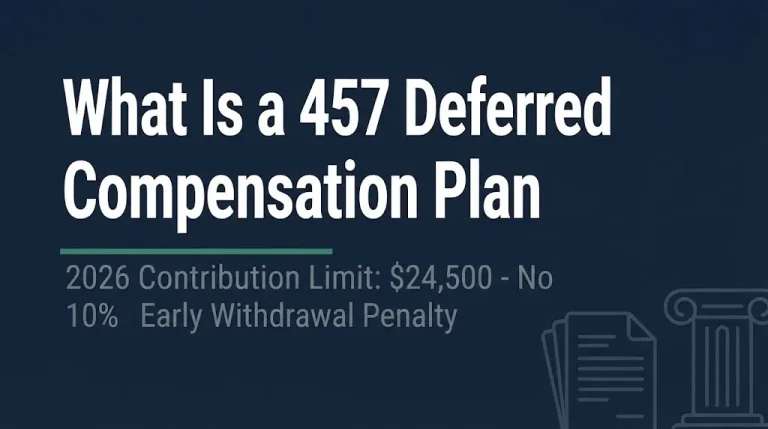
The core difference is the early withdrawal penalty. A 457(b) plan does not impose the 10 percent early distribution penalty that applies to most retirement accounts if you separate from service and withdraw before age 59 and a half. You still pay ordinary income tax on the withdrawal, but you skip the penalty. That makes the plan attractive for public employees who plan to retire in their 50s.
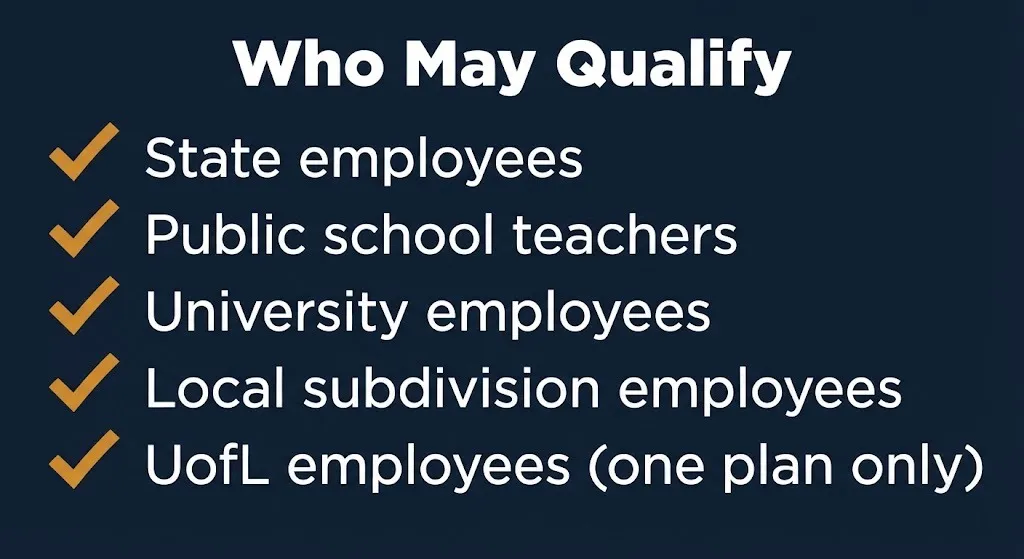
Who can participate in the Kentucky state 457(b) plan:
- State employees covered by the Personnel Cabinet
- Public school teachers and administrators
- University employees at participating institutions
- Employees of local political subdivisions that have elected to join
- University of Louisville employees, who can choose between the university plan and the state plan, but not both
The University of Louisville explicitly states that employees can participate in one of the two deferred compensation plans, but not both. If you are at a participating university, check which plan your payroll office has you enrolled in before making changes.
The plan is voluntary. You enroll through payroll, and contributions come directly out of your paycheck.
How much can you contribute to Kentucky deferred compensation in 2026?
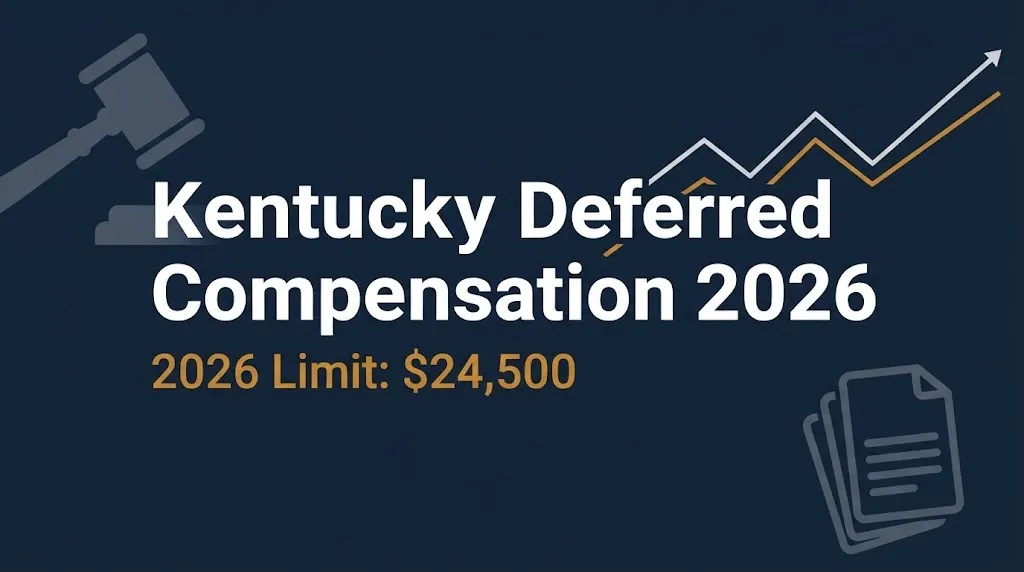
The maximum employee contribution for 2026 is $24,500 for the standard 457(b) plan, with an additional $8,000 catch-up contribution available if you are age 50 or older. The University of Louisville’s benefits page confirms the $24,500 figure for 2026.
| Contribution Type | 2026 Limit |
|---|---|
| Standard 457(b) contribution | $24,500 |
| Age 50+ catch-up | $8,000 |
| Combined maximum (age 50+) | $32,500 |
The age 50 catch-up applies beginning in the calendar year you turn 50, provided you are already contributing the maximum allowed by the plan or IRS limits. You do not need to be exactly 50 on January 1; turning 50 at any point during the year qualifies you.
SmartAsset reported the 2024 limits as $23,000 standard and $7,500 catch-up. The 2026 figures represent the latest IRS adjustments, which are indexed for inflation. If the pattern holds, those limits will continue to rise in future years, but the confirmed 2026 numbers are $24,500 and $8,000.
There is a minimum monthly contribution of $30 for all plans, according to the 2024 SmartAsset guide. Contributions are deducted from your paycheck before federal and state income tax, which reduces your taxable income for the year.
Key Takeaway: The 457(b) early withdrawal penalty exemption is the single biggest reason to use this plan over a 401(k) or traditional IRA if you expect to retire before age 59 and a half.
What fees does the Kentucky deferred compensation plan charge?
The Kentucky deferred compensation plan charges a $1 monthly administrative fee, capped at $237 per year for most participants when combined with mutual fund expenses. The KDC executive director described the fee structure during a 2026 Public Pension Oversight Board meeting, confirming the plan is currently in a fee holiday for some components.
Here is how the fee structure breaks down:
| Fee Type | Amount | Notes |
|---|---|---|
| Administrative fee | $1 per month ($12/year) | Waived for newly enrolled 457(b)/401(k) participants in first year |
| Investment fees | Varies by fund | Capped at $225 annually |
| Maximum total | $237 per year | Absent a managed account |
| Inactive small account fee | $6 per month | Accounts with $5,000 or less, inactive for six months |
The maximum total cost for a typical participant is $237 per year, which covers the $12 administrative fee plus up to $225 in investment-related charges. New enrollees in the 457(b) or 401(k) plans are exempt from the administrative fee during their first year of participation, though the exemption does not apply to deemed IRAs.
The KDC executive director also noted that prior investment lineup changes saved about $6 million annually in participant fees. That savings comes from switching to lower-cost funds, which reduces the expense ratios that participants pay through their investment returns.
A $237 annual fee on a $50,000 account works out to about 0.47 percent of assets per year. That is competitive with many small plan offerings, though large institutional 401(k) plans can sometimes beat it. If you are comparing the state plan to a private-sector option, run the math on your own account balance.
How does the self-directed brokerage account work?
The self-directed brokerage window is authorized by 2025 legislation and is being designed around a $40,000 account-balance threshold, with up to 25 percent of your balance transferable into the brokerage window. The tentative launch date is July 1, 2027, according to the KDC executive director’s report to the Public Pension Oversight Board.
The structure works like this:
- Eligibility threshold: You need at least $40,000 in your deferred compensation account to access the brokerage window.
- Transfer cap: You can move up to 25 percent of your account balance into the self-directed brokerage.
- Timeline: Tentatively July 1 of the coming year, which would be July 1, 2027, based on the board meeting date.
The brokerage window will let participants invest in a broader range of securities than the standard lineup allows. That could include individual stocks, ETFs, and mutual funds outside the core menu, though the exact menu depends on the brokerage provider selected.
A $40,000 threshold and a 25 percent cap are conservative design choices. They limit the risk that participants move too much of their retirement savings into investments they do not understand. If you have $100,000 in the plan, the most you could move into the brokerage window would be $25,000.
The launch is not guaranteed for July 1, 2027. The director described it as tentative. Implementation depends on completing the provider selection, systems integration, and payroll coordination.
Reality Check: A self-directed brokerage window is not a license to day-trade your retirement account. The 25 percent cap exists because the standard lineup already covers the core asset classes most participants need. If you do not already understand options, margin, or concentrated stock positions, the core menu is probably the better choice.
How does the free financial planning program work?
The free financial planning program has been used by roughly 3,300 to 3,500 participants with an 87 percent return rate. It is provided through Nationwide, according to the KDC executive director’s confirmation during the 2026 board update.
The “87 percent return rate” means that 87 percent of participants who use the service come back for additional sessions. That is a high engagement rate for a voluntary financial planning benefit. It suggests the service is useful enough that people choose to keep using it.
The program is free to participants. Nationwide serves as the plan’s recordkeeper and provides the CFP service as part of its contract with the state. The executive director confirmed to board members that Nationwide is the provider.
If you have not used the service, the practical question is whether it fits your situation. A free session with a Certified Financial Planner can help you figure out:
- Whether your contribution rate is on track
- How the 457(b) fits with your pension and Social Security
- Whether the Roth option makes sense for your tax situation
- How to allocate between the core funds and, eventually, the brokerage window
There is no product sales requirement mentioned in the board report. The service is described as financial planning, not a pitch for annuities or life insurance.
What is the difference between the 457(b), 401(k), and IRA options?
The Kentucky deferred compensation program offers three account types: a 457(b) plan, a 401(k) plan, and deemed IRAs. Each has different rules, and the right choice depends on your retirement timeline and tax situation.
| Feature | 457(b) | 401(k) | Deemed IRA |
|---|---|---|---|
| Early withdrawal penalty | None | 10% before 59½ | 10% before 59½ |
| 2026 contribution limit | $24,500 | $24,500 | $7,000 (under 50) |
| Catch-up (age 50+) | $8,000 | $8,000 | $1,000 |
| Roth option | Yes | Yes | Yes |
| Employer match | No | No | No |
The 457(b) plan is the standout for public employees who might retire early. A 401(k) imposes the 10 percent early distribution penalty if you withdraw before age 59 and a half, with limited exceptions. The 457(b) does not. If you separate from service at 55 and need income before 59 and a half, the 457(b) gives you penalty-free access.
The deemed IRA is a separate account with its own contribution limit. The 2026 limit for an IRA is $7,000 if you are under 50 and $8,000 if you are 50 or older. The KDC offers deemed IRAs as a supplement, not a replacement, for the 457(b) and 401(k).
None of the KDC plans includes an employer match. The state does not contribute to your deferred compensation account the way a private employer might match 401(k) contributions. The benefit is the tax deferral, the low fees, and the penalty-free access for early retirees.
SmartAsset reported that the plan offers pre-tax and Roth contribution choices across all account types. The Roth option means you pay tax now and withdraw tax-free later, which can be valuable if you expect to be in a higher tax bracket in retirement.
How do you enroll or make changes to your Kentucky deferred compensation?
You enroll through your employer’s payroll system or by contacting the KDC directly. The state plan representative can be reached at 1-800-542-2667, a number listed on both the University of Louisville benefits page and the KDC board meeting notice.
Here is the enrollment and change process:
- Confirm your eligibility. Check with your HR or payroll office to see if your employer participates in the state plan.
- Choose your account type. Decide between the 457(b), 401(k), or deemed IRA based on your retirement timeline.
- Decide on pre-tax or Roth. Pre-tax reduces your taxable income now; Roth gives you tax-free withdrawals later.
- Set your contribution amount. The minimum is $30 per month. The 2026 maximum is $24,500, or $32,500 with the age 50 catch-up.
- Select your investments. Choose from the core fund lineup. The brokerage window is not yet available.
- Submit through payroll. Contributions are deducted automatically from each paycheck.
- Review your beneficiary designations. This step is easy to skip and important to complete.
Changes to your contribution amount or investment allocation can be made through the same system you used to enroll. The KDC website and the state plan representative are the two official channels for account changes.
The KDC executive director told the Public Pension Oversight Board that the program is seeking unified payroll access to expand participation, especially among teachers. If your employer’s payroll system is not yet integrated with the state plan, that integration is in progress.
What happens next for the Kentucky deferred compensation plan?
The KDC board meets quarterly, and the next major milestones are the brokerage window launch and payroll unification. Here is the expected timeline based on the March 2026 board actions and the June 2026 oversight board update.
Expected July 2027: Self-directed brokerage window tentatively launches with a $40,000 account balance threshold and a 25 percent transfer cap.
Ongoing 2026-2027: Unified payroll access expansion continues, with a focus on increasing teacher participation.
Quarterly: KDC Board of Trustees meetings, with the next meeting scheduled after the June 12, 2026 virtual session.
Annual: IRS contribution limits for the following year are typically announced in the fall. The 2027 limits will be confirmed by the IRS, and KDC will update its plan documents accordingly.
The brokerage window is the most significant structural change coming to the plan. If you have more than $40,000 in your account and want access to a broader investment menu, that is the date to watch. If you are below the threshold, the core lineup remains your primary option.
Frequently Asked Questions
Is the Kentucky deferred compensation plan a 401(k) or a 457(b)?
The Kentucky deferred compensation plan is primarily a 457(b) plan, though the KDC also offers a 401(k) option and deemed IRAs. The 457(b) is the flagship product because it does not impose the 10 percent early withdrawal penalty on public employees who retire before age 59 and a half.
What is the 2026 contribution limit for Kentucky deferred compensation?
The 2026 limit is $24,500 for the standard 457(b) plan, plus an $8,000 catch-up contribution if you are age 50 or older. The combined maximum for participants 50 and over is $32,500.
Can I contribute to both the state 457(b) and a 401(k)?
Yes, you can contribute to both the 457(b) and the 401(k) within the KDC program, but the contribution limits are separate. The 457(b) limit is $24,500 in 2026, and the 401(k) limit is also $24,500. You cannot contribute to both the University of Louisville 457(b) plan and the state 457(b) plan simultaneously, however.
How much does Kentucky deferred compensation cost in fees?
The administrative fee is $1 per month, or $12 per year. Investment fees vary by fund and are capped at $225 annually. The maximum total for most participants is $237 per year, absent a managed account. New enrollees in the 457(b) or 401(k) plans are exempt from the administrative fee during their first year.
Is there an employer match for Kentucky deferred compensation?
No. The state does not match contributions to the deferred compensation plan. The benefit is the tax deferral, the low fee structure, and the penalty-free early withdrawal feature for the 457(b).
When will the self-directed brokerage account be available?
The brokerage window is tentatively scheduled to launch July 1, 2027, according to the KDC executive director’s June 2026 report. It will be available to participants with at least $40,000 in their account, with up to 25 percent transferable.
Can I withdraw from Kentucky deferred compensation before age 59 and a half?
Yes, if you separate from service, the 457(b) plan does not impose the 10 percent early distribution penalty. You still pay ordinary income tax on the withdrawal. This is the main advantage of the 457(b) over a 401(k) or IRA.
How do I check my Kentucky deferred compensation account balance?
You check your balance through the KDC website or by contacting the plan representative at 1-800-542-2667. The state plan uses Nationwide as its recordkeeper, so account access is through the Nationwide portal.
The Bottom Line for Kentucky Public Employees
The Kentucky deferred compensation plan is a low-cost, penalty-friendly way to save extra for retirement if you work for the state or a participating public employer. The 2026 contribution limit is $24,500, the fees cap at $237 per year, and the 457(b) structure lets you withdraw penalty-free after separation from service, even before age 59 and a half.
The self-directed brokerage window is coming, tentatively in July 2027, but only for accounts with $40,000 or more. Until then, the core fund lineup and the free financial planning service are your main tools.
If you are not enrolled, the first step is a call to your payroll office to confirm eligibility. If you are enrolled but contributing less than the maximum, the next step is deciding whether pre-tax or Roth fits your tax situation better. The deadline for 2026 contributions is December 31, 2026, for payroll deferrals.