Keurig Settlement 2026: K-Cup Recyclability Claims, Lawsuit Status, and What Consumers Should Know
Quick Answer
- The Keurig lawsuit is real and alleges the company misled consumers by labeling K-Cup pods as recyclable.
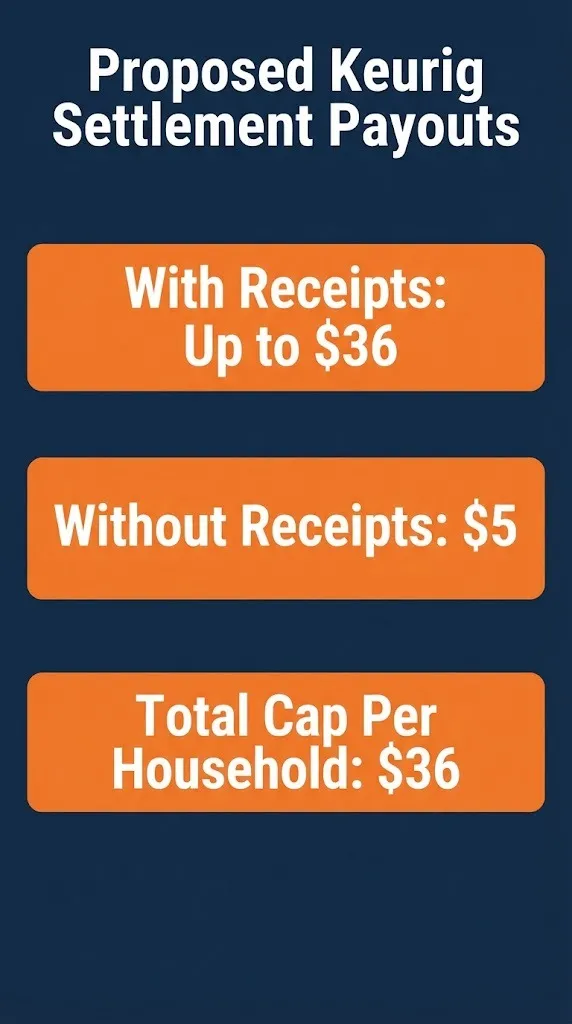
- Settlement amounts are not yet finalized; proposed payouts range from $5 to $36 per household depending on proof.
- No claim deadline has been set because the settlement has not received final court approval.
The Keurig settlement you are searching for in 2026 is real but not yet open for claims. The lawsuit against Keurig Dr Pepper alleges the company labeled its K-Cup pods as recyclable when most municipal recycling facilities could not actually process them. The case is a proposed class action pending in federal court.
A proposed settlement was filed, according to court records. But the judge has not granted final approval. No claim form is live. No payment date exists. Anyone telling you to file a Keurig claim right now is jumping ahead of the court.
This article explains what is verified: the allegations, the proposed settlement terms, who may qualify, and how to prepare. One fact that surprises many consumers: the lawsuit covers a specific time period of purchases, not all Keurig pods ever sold, and the payout structure depends on whether you kept receipts.
The Facts
| Case | Proposed class action against Keurig Dr Pepper over K-Cup recyclability claims |
| Status | Active litigation, proposed settlement filed, final approval pending |
| Fund Size | $10 million proposed settlement fund, not yet approved |
| Est. Per Person | $5 to $36 per household, depending on proof of purchase |
| Claim Deadline | Not yet set |
| Administrator | Not yet confirmed |
| Proof Needed | Likely receipts or a sworn statement of purchases |
Is the Keurig settlement real or a scam?
The Keurig settlement is real. It is a proposed class action settlement that has been filed in federal court. The case is pending in the U.S. District Court for the Southern District of New York. The docket is public. The proposed settlement terms are documented in court filings.
The lawsuit alleges Keurig Dr Pepper violated consumer protection laws by marketing K-Cup pods as recyclable when they were not accepted by most curbside recycling programs. The company denies the allegations but agreed to the proposed settlement to avoid continued litigation.
What is a scam: any website, text, or email asking you to pay to file a Keurig claim. Class action claims are always free. No administrator has been appointed yet. No claim form exists. If someone asks for your credit card to register you for the Keurig settlement, that is a scam.
The proposed settlement fund is $10 million. That number is from court filings. It is not yet approved. The final amount could change if the court rejects the proposal or if the parties amend the terms.
Key Takeaway: The Keurig settlement is a real proposed class action resolution, but it has not been approved, and no claim process is open yet.
How much could the Keurig settlement pay per person?
The proposed payout structure has not been finalized. Court filings describe a tiered system based on proof of purchase. Here is what the proposed terms suggest, subject to court approval.
| Claim Type | Proposed Payout | Proof Required |
|---|---|---|
| No proof of purchase | $5 per household | Sworn statement of purchases |
| With proof of purchase | $6 to $36 per household | Receipts or purchase records |
| Multiple claims with strong proof | Up to $36 total cap | Receipts showing multiple purchases |
These numbers are from the proposed settlement. They are not final. The court could adjust them. If more people file claims than expected, the per-person amount could drop.
The proposed $10 million fund also covers attorney fees, administrative costs, and notice expenses. That means the amount available for consumer payments is less than the headline number. Class counsel will likely request fees from the fund, typically 25 to 30 percent.
The payout is not designed to make anyone whole. It is a small compensation for an alleged deceptive label. If you bought Keurig pods during the covered period, the most you could realistically receive is around $36, and that assumes you have receipts.
Reality Check: No one will contact you by phone to confirm a Keurig payment. Filing a claim is free. Third-party services that charge a fee to file on your behalf are unnecessary and may be phishing operations.
Who qualifies for the Keurig class action settlement?
The proposed class has not been formally certified. The proposed settlement describes the class as consumers who purchased Keurig K-Cup pods in the United States during the covered period. The exact dates are in the settlement agreement and have not been widely publicized yet.
The covered period likely runs from approximately 2016 through the present, based on when the recyclability labeling began and when the lawsuit was filed. The precise dates will appear in the court-approved notice.
Here are the likely qualification factors.
- You purchased Keurig-branded K-Cup pods for personal use.
- The purchase occurred in the United States.
- The purchase happened during the covered period set by the settlement.
- You did not purchase the pods for resale.
Businesses and resellers are typically excluded. Government entities are excluded. People who only bought Keurig brewers but not pods may not qualify.
The final class definition will appear in the settlement notice. Do not assume you qualify until the official notice is published.
Key Takeaway: The proposed class covers U.S. consumers who bought Keurig K-Cup pods during a specific period, but the exact dates and final definitions are not yet approved.
How do I file a Keurig settlement claim?
You cannot file yet. No claim form is available. No administrator has been appointed. The process will open only after the court grants preliminary approval to the settlement.
When the claim window opens, here is the process you can expect.
- The court grants preliminary approval to the settlement.
- A settlement administrator is appointed.
- A notice program reaches consumers by email, publication, and possibly retail channels.
- You visit the official settlement website.
- You complete the claim form with your contact and purchase information.
- You upload proof of purchase if you have it, or file a no-proof claim.
- You submit before the claim deadline.
- The court holds a final approval hearing.
- Payments are issued after final approval and any appeals.
The process is like a store rebate. You need the receipt to get the higher amount. Without a receipt, you get the lower amount. The deadline will be firm.
What is the Keurig lawsuit about?
The Keurig lawsuit centers on recyclability claims. The plaintiffs allege Keurig Dr Pepper labeled K-Cup pods as recyclable when most municipal recycling programs could not process them. The pods are made of plastic with a foil lid and a filter inside. That multi-material construction makes them difficult to recycle in standard single-stream facilities.
The lawsuit alleges the recyclability labels misled consumers into buying a product they believed was environmentally friendly. The legal claims include violations of state consumer protection laws and breach of express warranty.
Keurig Dr Pepper has maintained that its pods can be recycled when consumers disassemble them and follow specific instructions. The company has invested in developing a polypropylene pod that is more widely recyclable. The proposed settlement does not require the company to admit wrongdoing.
The case is similar to other greenwashing lawsuits filed against consumer product companies. The theory is that environmental marketing creates a price premium, and misleading environmental claims violate consumer protection laws.
Key Takeaway: The lawsuit challenges Keurig’s recyclability marketing, alleging the pods were not practically recyclable in most municipal systems despite labels suggesting otherwise.
When will Keurig settlement checks be mailed?
No checks have been mailed. No payment date exists. The proposed settlement is still pending court approval. The earliest realistic payment window is late 2027 or 2028.
Here is the expected timeline.
| Milestone | Expected Timing |
|---|---|
| Preliminary approval | Late 2026 |
| Notice and claim window | Early to mid 2027 |
| Claim deadline | Mid to late 2027 |
| Final approval hearing | Late 2027 |
| Payments issued | 2028 |
This timeline is an estimate based on similar consumer class action settlements. The court could move faster or slower. Appeals could delay payments further.
When payments are issued, the method will likely include digital options and paper checks. Digital payments are faster and more secure. Paper checks are slower and more vulnerable to loss or fraud.
Key Takeaway: The earliest realistic payment window is 2028, and that assumes preliminary approval happens in late 2026 with no appeals.
Is Keurig still making recyclable K-Cups?
Keurig has transitioned much of its K-Cup line to polypropylene pods, which are more widely recyclable than the earlier multi-material pods. The company has stated publicly that its goal is to make all K-Cups recyclable in major municipal programs.
The lawsuit does not challenge the current labeling. It challenges historical labeling on the older pods. The proposed settlement covers purchases during the period when the older pods were sold with recyclability claims.
The company has also developed a K-Cup recycling program in some markets. Consumers can mail used pods to a processing facility. That program is separate from the settlement and does not affect your claim eligibility.
If you buy Keurig pods today, check the packaging. The current labels may differ from the labels at issue in the lawsuit. The class period will specify which labels and time periods are covered.
What should I do now about the Keurig lawsuit?
The only action that matters now is keeping records. If you bought Keurig K-Cup pods during the likely covered period, save your receipts or digital order history. Most people do not keep coffee pod receipts. That is fine. The proposed settlement includes a no-proof option.
Here is a simple checklist.
- Check your email for Amazon, Walmart, Target, or grocery delivery receipts showing K-Cup purchases.
- Check loyalty card accounts for purchase history.
- Save any physical receipts if you still have them.
- Do not pay anyone to register you for the settlement.
- Watch for official court notices if the settlement is approved.
- Ignore social media posts claiming you can sign up now.
The case is not at a stage where consumer action matters. If it settles, the notice program will reach you through email, publication, or retail channels.
What proof do I need for a Keurig claim?
No proof requirements are final. The proposed settlement describes a two-tier structure. The no-proof tier requires a sworn statement of purchases. The proof tier requires receipts or purchase records.
Acceptable proof will likely include store receipts, online order confirmations, credit card statements showing Keurig purchases, or loyalty card records. The exact requirements will appear in the claim form.
The proof tier pays more per household. But the difference is modest. The proposed range is $5 without proof and $6 to $36 with proof. For most consumers, the effort of gathering receipts may not justify the higher payout.
The comparison is like a store return without a receipt. The store will still take the return, but you get less back. Here, the no-proof option gets you the minimum, and the proof option gets you a modest bump.
What is the current status of the Keurig settlement in 2026?
The status is pending. A proposed settlement was filed with the court. The judge has not granted preliminary approval. No claim window has opened. No administrator has been appointed.
The case is one of several greenwashing class actions working through federal courts. These cases move slowly. The settlement approval process alone can take 12 to 18 months from the filing of the proposed settlement to final approval.
The court’s next step is the preliminary approval hearing. That hearing has not been scheduled on the public docket as of August 2026. Once scheduled, the hearing will determine whether the settlement is fair enough to proceed to notice and claims.
The final approval hearing will follow the claim window. That hearing is where the court decides whether to grant final approval. Objections from class members are considered at that stage.
Key Takeaway: The Keurig settlement is pending preliminary approval, and no claim window, deadline, or payment date has been set.
What Happens Next
Late 2026: The court may schedule and hold a preliminary approval hearing.
Early 2027: If preliminary approval is granted, the notice program and claim window would open.
Mid to late 2027: The claim deadline would pass.
Late 2027: The final approval hearing would take place.
2028: Payments would be issued, assuming no successful appeals.
These dates are estimates based on the current docket. They can change.
Frequently Asked Questions
Is the Keurig settlement approved?
No. A proposed settlement has been filed, but the court has not granted final approval.
Can I file a Keurig claim now?
No. No claim form is available. The claim window will open only after preliminary approval.
How much will I get from the Keurig settlement?
The proposed range is $5 to $36 per household, depending on proof of purchase. The final amount is not set.
What if I don’t have Keurig receipts?
You may still qualify for the no-proof tier, which is proposed at $5 per household.
What is the Keurig lawsuit about?
It alleges the company misled consumers by labeling K-Cup pods as recyclable when most municipal programs could not process them.
Where is the Keurig lawsuit pending?
The case is pending in the U.S. District Court for the Southern District of New York.
Who is included in the Keurig class action?
The proposed class covers U.S. consumers who purchased Keurig K-Cup pods during the covered period. The exact dates are not yet confirmed.
Will Keurig admit wrongdoing?
No. The proposed settlement does not require an admission of liability. The company denies the allegations.
The Keurig settlement is real but not open. No claim form exists. No deadline is set. No checks are coming this year. The proposed $10 million fund and the $5 to $36 payout range are subject to court approval. The best thing you can do is keep your receipts and wait for the official notice. If the settlement is approved, the claim process will be free and straightforward. Anyone asking for money to help you file is a scam.