PAM Cooking Spray Lawsuit 2026: Benzene Claims, Settlement Status, and What You Need to Know
Quick Answer
- PAM cooking spray lawsuits are real, claiming benzene contamination in certain propellant-based spray products.
- No class settlement has been approved in 2026, so no per-person payout amount exists.
- Consumers may still file individual cases, but statutes of limitations vary by state.
You saw a headline about PAM cooking spray and benzene. Now you are wondering if the spray in your pantry is dangerous, whether you qualify for a lawsuit, and if any settlement money is coming.
The short answer: the lawsuits are real, but no settlement exists. The claims center on benzene, a known carcinogen, found in some aerosol cooking spray products. The manufacturer, Conagra Brands, faces multiple proposed class actions.
This article breaks down what is verified, what is still being litigated, and what you should do if you used PAM regularly.
| The Facts | |
|---|---|
| Case | Multiple proposed class actions against Conagra Brands |
| Product | PAM cooking spray, propellant-based cans |
| Contaminant | Benzene |
| Status | Active litigation; no class certification |
| Fund Size | No settlement fund |
| Est. Per Person | Not yet determined |
| Claim Deadline | None; individual filing deadlines apply |
| Administrator | Not yet appointed |
| Proof Needed | Purchase records, medical records if injury claimed |
Is the PAM Cooking Spray Lawsuit Real?
Yes, the PAM cooking spray lawsuit is real. Multiple proposed class actions have been filed against Conagra Brands over benzene contamination.
The lawsuits gained traction after independent testing found benzene in certain lots of PAM and other aerosol cooking sprays. Benzene is a known human carcinogen linked to leukemia and other blood disorders.
Conagra has not admitted liability. The company has stated it is reviewing the claims and stands by its products.
No court has certified a class. No settlement has been reached. The litigation remains in early stages across several federal and state courts.
How Much Could a PAM Lawsuit Pay?
PAM lawsuit payouts are not yet determined because no settlement or jury verdict has established a value for these claims.
If the cases proceed, potential damages could include refunds for purchased products, medical monitoring for people with significant exposure, and compensatory damages for diagnosed illnesses linked to benzene.
| Claim Type | Potential Recovery |
|---|---|
| Product refund | Purchase price only |
| Medical monitoring | Cost of testing, if ordered |
| Personal injury | Medical costs, lost wages, pain and suffering |
| Wrongful death | Case-specific, highest value |
No settlement amounts exist yet. Any dollar figure you see in an ad is a guess, not a guarantee.
Key Takeaway: No PAM settlement exists in 2026, and any payout estimate is speculative until a court or jury sets a value.
What Is the PAM Cooking Spray Lawsuit About?
The PAM cooking spray lawsuit is about benzene contamination in propellant-based aerosol sprays.
Benzene is not an intentional ingredient. It forms as a byproduct or contaminant in the propellant used to push the oil out of the can. Testing has found benzene in several brands of aerosol sprays, not just PAM.
The legal claims focus on failure to warn. Plaintiffs argue Conagra knew or should have known about benzene contamination and did not tell consumers.
The cases seek refunds for people who bought the product and damages for people who suffered health effects.
What Is Benzene and Why Does It Matter?
Benzene is a chemical compound classified as a known human carcinogen by the U.S. Environmental Protection Agency and the International Agency for Research on Cancer.
Long-term exposure to benzene is linked to leukemia, particularly acute myeloid leukemia, and other blood cancers. Short-term exposure can cause dizziness, headaches, and respiratory irritation.
The concern with cooking spray is inhalation. When you spray PAM near a hot pan, some of the aerosol lingers in the air. You breathe it in.
The level of benzene found in most tested cans is low. But the legal argument is that no safe level of a known carcinogen belongs in a consumer food product.
Which PAM Products Are Named in the Lawsuits?
The lawsuits target propellant-based PAM cooking sprays, not the pump spray versions.
The products named in various complaints include:
- PAM Original cooking spray
- PAM Butter flavor spray
- PAM Olive Oil spray
- PAM Baking spray
The common thread is the aerosol propellant. Pump sprays do not use the same propellant and are not typically included in the claims.
What Did Independent Testing Find?
Independent testing found benzene in multiple batches of PAM and other aerosol cooking sprays.
A 2021 study by Valisure, a private laboratory, detected benzene in several brands of aerosol sprays. PAM was among the products flagged.
Subsequent testing by other groups confirmed the presence of benzene in some lots. The amounts varied by batch and product.
Conagra has disputed the testing methods and results. The company says its products meet federal safety standards.
Key Takeaway: Independent testing found benzene in some PAM cans, but Conagra disputes the findings, and no court has resolved the scientific dispute yet.
Who Qualifies for the PAM Cooking Spray Lawsuit?
You may qualify for a PAM cooking spray lawsuit if you purchased the product and seek a refund, or if you used it regularly and developed a benzene-linked illness.
The proposed classes generally include:
- People who bought PAM cooking spray during the class period
- People who used the product and seek medical monitoring
- People diagnosed with leukemia or other benzene-related conditions after regular use
The class period, the exact products covered, and the qualifying criteria have not been finalized by any court.
Reality Check: A PAM lawsuit will not pay you for simply owning a can of cooking spray. Refund claims are worth a few dollars. Personal injury claims require a diagnosed illness and medical proof.
How to File a PAM Cooking Spray Claim
You cannot file a claim right now because no settlement exists and no claims administrator has been appointed.
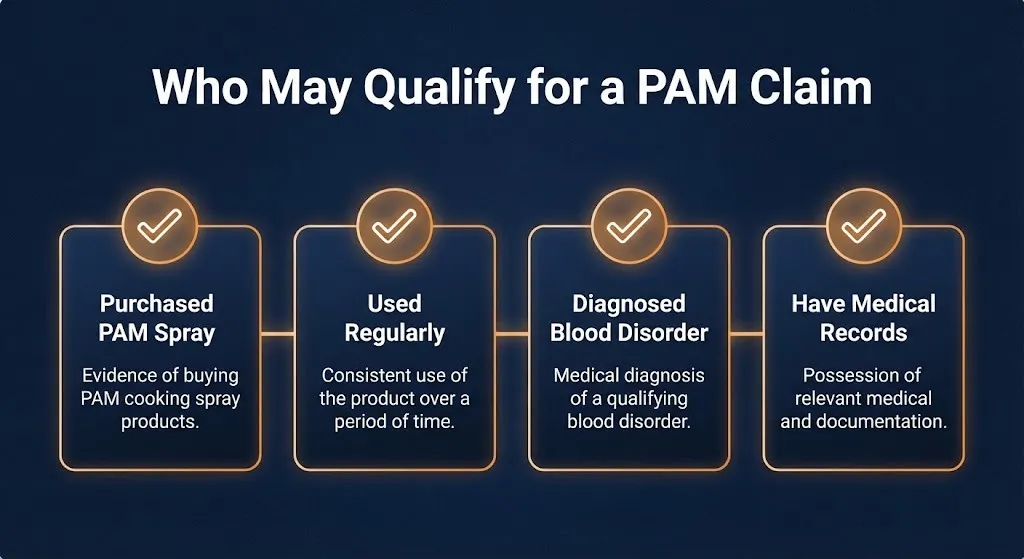
If you believe you have a claim, here is what you can do now:
- Keep your PAM cans and any purchase receipts.
- Document when and how often you used the product.
- Get medical records if you have a diagnosed blood disorder or cancer.
- Consult an attorney with experience in toxic exposure or consumer class actions.
- Watch for official court notices about class certification.
The process is not an online claim form. It is litigation that will take years to resolve.
What Is the Difference Between a Class Action and Individual Lawsuit Here?
A class action would cover a large group of purchasers seeking refunds or medical monitoring. An individual lawsuit is for someone with a diagnosed illness.
The PAM litigation includes both proposed class actions and potential individual personal injury cases.
| Case Type | Who It Covers | Typical Recovery |
|---|---|---|
| Consumer class action | Product purchasers | Refund or small payment |
| Medical monitoring class | Regular users | Testing costs |
| Individual injury lawsuit | Diagnosed illness | Medical costs, lost wages |
If you are healthy, your claim is likely limited to a refund. If you are sick, your claim is different and requires separate legal representation.
What Has Conagra Said About the PAM Lawsuits?
Conagra has denied the allegations and stated its products are safe when used as directed.
The company has pointed to its own testing and regulatory compliance. It has not admitted that benzene in any level poses a health risk to consumers.
Conagra’s defense strategy is still developing in the courts. No settlement offers or admissions have been made public.
What Is the Statute of Limitations for a PAM Lawsuit?
The statute of limitations for a PAM lawsuit varies by state and depends on whether you claim injury or just seek a refund.
For personal injury claims, the clock usually starts when the injury is discovered or should have been discovered. For a leukemia diagnosis, that could be years after exposure.
| Claim Type | Typical Deadline |
|---|---|
| Consumer refund | 2 to 4 years from purchase |
| Personal injury | 1 to 6 years from diagnosis |
| Wrongful death | 1 to 3 years from death |
Do not guess at your deadline. An attorney in your state must calculate it.
Key Takeaway: Your filing deadline is personal to you and runs regardless of what happens with any class action.
What Are the Other Cooking Spray Lawsuits?
PAM is not the only cooking spray brand facing benzene litigation.
Several other aerosol spray brands have been tested and named in proposed class actions. The same Valisure testing that flagged PAM also found benzene in competitors’ products.
The legal and scientific questions apply across the entire aerosol cooking spray category. If the benzene theory holds, it affects the whole industry.
What Happens Next in the PAM Litigation?
The PAM litigation will take years to resolve. The next stages are motion practice, discovery, and class certification fights.
- Late 2026: Courts hear motions to dismiss and class certification arguments
- Expected 2027: Discovery into benzene testing and manufacturing processes
- Expected 2028: Possible class certification rulings
- Expected 2029 or later: Trial or settlement
These dates are estimates based on typical toxic exposure litigation timelines. None are confirmed.
Frequently Asked Questions
Is the PAM cooking spray lawsuit a scam?
The lawsuits are real, but no settlement exists.
Any site asking for money to file a claim is a scam.
How do I join the PAM class action?
You do not need to join now.
If a class is certified, you will receive notice automatically if you qualify.
How much will I get from the PAM settlement?
No amount has been determined.
Refund claims would likely pay only a few dollars per product.
Can I sue PAM if I have cancer?
You may have a personal injury claim.
You need medical records linking your illness to benzene exposure.
Is PAM cooking spray dangerous?
The benzene levels found are low but above what many scientists consider safe.
The legal and scientific disputes remain unresolved.
Do I need a lawyer for a PAM lawsuit?
For a refund claim, no lawyer is needed if a class settlement occurs.
For a personal injury claim, you need an experienced attorney.
The Bottom Line
The PAM cooking spray lawsuit is real but unresolved. No settlement, no payout, no claims process.
If you bought PAM and want a refund, keep your receipts and wait for official notice. If you used PAM for years and have a blood disorder, talk to a toxic exposure attorney now.
The single most important fact is this: benzene is a known carcinogen, and the legal system is still deciding whether the levels found in PAM matter enough to force a settlement.