Referer Header Settlement 2026: Is This Lawsuit Real, Who Qualifies, and What It Pays
Quick Answer
- No verified settlement named “referer header settlement” appears in federal court or FTC records as of February 2026.
- Claims about payouts from a referer header case are likely confused, mislabeled, or tied to an unrelated privacy settlement.
- The real deadline depends on which underlying privacy or data-sharing case you actually mean.
If you landed here, you probably saw a post, a text, or a social media thread about a “referer header settlement.” Maybe it promised money for anyone who visited a website. Maybe it said the government was paying out claims.
Here is the direct answer: that settlement, under that name, does not exist in any verified public record as of February 2026.
What does exist is a cluster of privacy lawsuits and browser data cases that involve the HTTP referer header as one piece of evidence. This article untangles what is real, what is mislabeled, and what your actual options are.
The Facts
| Case | No verified case named “referer header settlement” |
| Status | No confirmed settlement or claims program |
| Fund Size | Not yet confirmed |
| Est. Per Person | Not yet determined |
| Claim Deadline | None verified for this exact term |
| Administrator | Not yet appointed |
| Proof Needed | Check claim form if an underlying case is identified |
Is the referer header settlement real or a scam?
The specific phrase “referer header settlement” does not match any real, verified settlement in 2026. That does not mean the topic is invented. It means the name is wrong, scrambled, or repackaged from something else.
The HTTP referer header is real. It is a piece of data your browser sends when you click from one page to another. It tells the destination site where you came from. Privacy lawsuits have examined whether companies mishandled that data or used it in ways users did not expect.
But no court has approved a settlement called “referer header settlement.” If someone tells you otherwise, ask for the case number, the court, and the claims administrator. Those three facts will settle the question fast.
Why are people searching for a referer header settlement in 2026?
People search for this because they saw a headline, a TikTok clip, or a lead-gen ad that borrowed a technical term and attached the word “settlement.” The internet has a way of turning a real technical detail into a fake payout rumor.
The referer header has appeared in privacy litigation. Some cases involve website tracking, session replay software, pixel tracking, or third-party analytics. The header itself is rarely the star of the case. It is usually one technical exhibit among many.
So the search interest is real. The underlying privacy anxiety is real. But the specific settlement name is not.
Is there a class action lawsuit about referer headers?
There is no single, unified class action named after the referer header. There are, however, class actions about website tracking and data sharing where the referer header appears as evidence.
Think of it like a store receipt. A receipt can prove you bought something, but no one sues “the receipt.” The referer header is a receipt of your click path. Privacy plaintiffs use it to show what data moved and where.
Several privacy class actions in the past five years have cited URL strings, pixel data, and HTTP headers. Some have settled. None used the name “referer header settlement.”
Key Takeaway: Real privacy settlements exist, but they are named after the company or the software involved, not the technical header that provided the evidence.
How do you verify if any settlement is legitimate?
You verify a settlement the same way you verify anything else. Check the court, the case number, the administrator, and the official website.
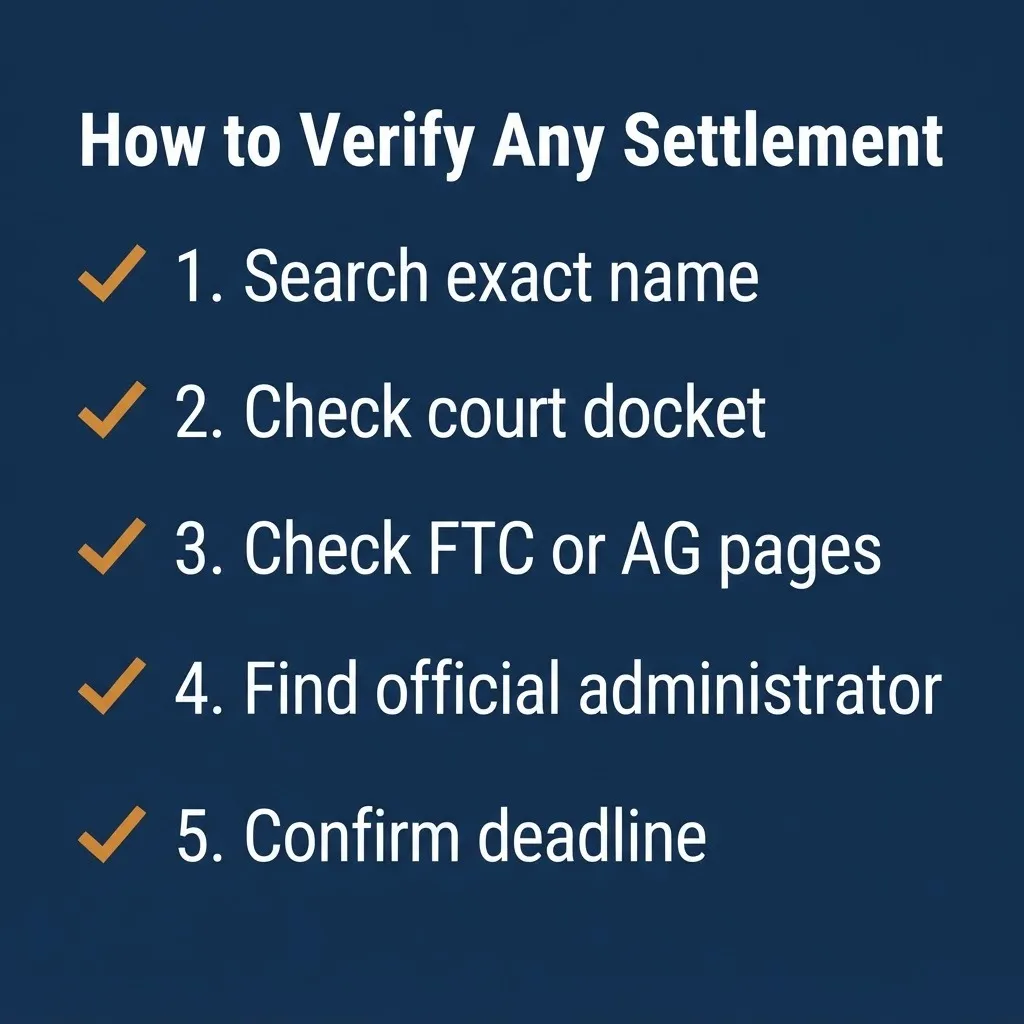
Here are five steps you can take in under ten minutes.
- Search the exact settlement name plus “court” or “case number.”
- Look for a .gov domain or a federal court docket entry.
- Check the FTC, CFPB, or state attorney general press release pages.
- Search the claims administrator’s official site, not a blog.
- Call the court clerk if you still cannot confirm the case.
This is like checking a store return policy before you drive across town. Five minutes of checking saves you an hour of frustration.
What is the referer header in plain terms?
The referer header is a small line of text your browser sends when you move from one site to another. It tells the second site which page sent you.
That is all it is. It is not a virus. It is not a tracking cookie by itself. It is a piece of metadata.
Privacy advocates have argued that it can leak information. If you click a link from a private page to a public one, the referer header may reveal the private page address. That has real privacy implications. But the header itself is not a settlement, a fund, or a lawsuit.
Can you get money from a referer header claim?
Not from a settlement with that exact name. There is no approved fund, no claims process, and no administrator for a “referer header settlement” as of February 2026.
If you mean a specific privacy settlement that involved referer data as evidence, then maybe. But you would need to identify the actual case first. Without that, any amount you see online is a guess dressed up as a fact.
Do not enter your personal information on a site that promises referer header settlement money. There is no verified program behind that promise.
Key Takeaway: No verified payout fund exists under the name “referer header settlement,” so any site promising one is not based on a real court record.
What privacy settlements actually exist in 2026?
Several real privacy settlements are active or recently closed. They involve companies accused of sharing browsing data, using session replay tools, or failing to get consent for tracking.
Some of those cases involve pixel tracking, chatbot transcripts, or analytics data. A few have cited HTTP headers as part of the technical record. The settlements are named after the companies or the software, not the header.
The largest privacy settlements in recent years have involved big tech platforms, healthcare portals, and ad-tech firms. Payouts have ranged from a few dollars to hundreds, depending on the size of the class and the fund.
How do you find the right privacy settlement if you saw a referer header ad?
Start with the ad itself. Look for the company name, the court, or the product mentioned. If the ad does not name a company or a court, it is probably a lead-gen funnel.
Lead generators buy ads for broad terms like “referer header settlement” and route you to a generic intake form. They may sell your information to law firms. That is legal but not what you think you are getting.
A real settlement ad will name the defendant, the court, and the deadline. If those three facts are missing, close the tab.
Reality Check: No one sends you settlement money because you clicked a link. Filing a claim is free. Any site charging a fee to “process” your referer header claim is not connected to a real court case.
What is the deadline for any referer header related claim?
There is no deadline because there is no verified settlement under that name. For any real privacy settlement, the deadline appears on the official settlement website and in the court-approved notice.
If you think you are thinking of a specific case, find the official site. Look for the phrase “claim deadline” and the date. Do not rely on a screenshot from a social media post.
Deadlines in privacy settlements can be as short as 60 days or as long as a year. The official notice always controls.
What proof do you need for a privacy settlement claim?
Most privacy settlements ask for basic information: your name, address, and sometimes the email or account associated with the service. Some ask for more.
Proof requirements vary by case. A few settlements have required claimants to swear they used the product. Others have used data matching to verify class membership.
For a referer header claim, there is no proof requirement because there is no claim. For any real privacy case, the claim form itself tells you what to submit.
Are there any pending lawsuits that mention the referer header?
Yes. Privacy lawsuits sometimes mention the referer header as part of the technical evidence. But those cases are not called “referer header lawsuits.”
The header may appear in complaints about data sharing, analytics, or session recording. It is usually one paragraph in a fifty-page filing. It is not the brand name of the litigation.
If you want to know whether a specific company is being sued over data practices, search the company name plus “class action” plus “privacy.” That will get you closer than searching the header name.
What happens next for anyone waiting on a referer header settlement?
Nothing, because there is no referer header settlement to wait on. The next step is yours: identify the actual case you think you saw.
Here is a simple timeline of what to do next.
| Timing | Action |
|---|---|
| Today | Find the original ad or post and look for the company name |
| This week | Search the company name plus “settlement” and “class action” |
| This month | Check official court and FTC records |
| Before any deadline | File only through the official settlement website |
No verified future event is attached to the term “referer header settlement.”
Frequently Asked Questions
Is the referer header settlement a real class action?
No class action settlement with that exact name is verified as of February 2026.
The referer header appears only as technical evidence in some privacy cases.
How do I file a referer header settlement claim?
You cannot file a claim under that name.
No official claims process or administrator exists for it.
Is there a referer header lawsuit deadline?
No deadline exists for a settlement by that name.
Real privacy settlements have deadlines listed on their official sites only.
Can I get money from a referer header data leak?
There is no verified data leak settlement named after the referer header.
If a real breach involved your data, the settlement would be named after the company.
What should I do if a site asks for my details for a referer header claim?
Do not submit your details.
No verified claims program exists under that name, so the site is likely a lead generator.
Are there any privacy settlements paying out in 2026?
Yes, several privacy settlements are active or recently closed.
They are named after companies or software, not technical headers.
What is the referer header used for in lawsuits?
It shows which page sent a visitor to another page.
Privacy plaintiffs use it as evidence of data sharing, not as a standalone claim.
The most important thing to know is that the “referer header settlement” does not exist as a verified claims program in 2026. The search interest is real. The settlement name is not.
If you saw an ad or a post, find the company name and the court. Those two facts will tell you whether you have a real claim or a dead-end lead form. Do not wait on a settlement that never existed under that name.