Whole Foods Lawsuit in 2026: Class Actions, Settlements, and What Shoppers Should Know
Quick Answer
- Whole Foods class actions are real and have challenged product labeling, pricing accuracy, and ingredient claims.
- Past settlements paid $5 to $50 per shopper on average, with some cases paying more.
- No major Whole Foods settlement is currently accepting claims in August 2026.
Whole Foods has been sued over what it puts on shelves and what it puts on labels. If you shop there, you may have seen headlines about lawsuits over “natural” claims, honey, or pricing. The question is whether any money is available to you.
The answer in 2026 is mostly no. Several Whole Foods class actions settled in the past. Those claim windows are closed. A few cases are still pending, but none are at the claim stage.
This guide breaks down the major Whole Foods lawsuits, what they paid, who qualified, and how to spot a real settlement notice. One fact that surprises shoppers: Whole Foods has paid millions in settlements, but individual payouts are usually small.
The Facts
| Item | Detail |
|---|---|
| Case | Multiple class actions against Whole Foods Market |
| Status | Some settled, some pending |
| Fund Size | Varies by case, some over $1 million |
| Est. Per Person | $5 to $50 typical |
| Claim Deadline | Varies by case, most closed |
| Administrator | Various, case-specific |
| Proof Needed | Receipts, product labels, purchase records |
Is the Whole Foods Class Action Lawsuit Real?
Yes, Whole Foods class action lawsuits are real. The company has been sued multiple times over product labeling, pricing practices, and ingredient disclosures.
The cases are not internet rumors. They are court-filed lawsuits with case numbers, judges, and official settlement administrators when they resolve. Some settlements have paid real money to real shoppers.
The most common claims involve “natural” labeling on products that contain synthetic ingredients. Other cases have challenged honey origins, vanilla flavoring, and weight or pricing accuracy.
If you received a notice about a Whole Foods settlement, it was likely legitimate. The question is whether the claim window is still open.
Key Takeaway: Whole Foods class actions are real and court-documented, but most claim deadlines have passed.
How Much Did the Whole Foods Settlement Pay?
Whole Foods settlement payouts have been modest. Most shoppers received $5 to $50 per claim. A few cases paid more for documented purchases.
The reason is the size of the class. Whole Foods has millions of customers. A settlement fund of $1 million divided among hundreds of thousands of claimants produces small checks.
Here is a typical payout structure for Whole Foods cases:
| Claim Type | Typical Payout |
|---|---|
| Basic claim, no receipt | $5 to $15 |
| Claim with receipt | $10 to $30 |
| Multiple purchases documented | $30 to $75 |
| Product refund claim | Up to full purchase price |
These ranges are based on reported settlements. Your actual payment depended on the case and the proof you submitted.
What Is the Whole Foods “Natural” Labeling Lawsuit?
The Whole Foods “natural” labeling lawsuit challenged products marketed as natural that contained synthetic ingredients. Plaintiffs argued the label misled shoppers into paying more.
The case settled. Shoppers who bought certain products during the class period could file claims for a small payment. The claim deadline has passed.
The settlement did not require Whole Foods to admit wrongdoing. The company agreed to pay the fund and possibly adjust some labeling practices.
If you bought Whole Foods products labeled “natural” years ago, that settlement may have applied to you. But the window is closed now.
What Is the Whole Foods Honey Lawsuit?
The Whole Foods honey lawsuit involved claims that store-brand honey was not as pure as labeled. Plaintiffs alleged the honey contained additives or was not sourced as stated.
The case followed a pattern seen across the grocery industry. Honey fraud is a known problem. Class actions target retailers who sell mislabeled honey.
The Whole Foods honey case may have settled or been dismissed. No open claim window exists in 2026. If you bought Whole Foods honey, a past settlement may have applied, but the deadline has passed.
What Is the Whole Foods Pricing Lawsuit?
The Whole Foods pricing lawsuit challenged the accuracy of store pricing. Plaintiffs claimed that posted prices did not match checkout prices, or that package weights were overstated.
Pricing class actions are common against grocery chains. The damages are small per shopper because the overcharge is usually pennies or a few dollars per trip.
A typical pricing settlement pays a flat amount, like $5 or $10, to each claimant who files. The claim deadline for any Whole Foods pricing settlement has passed.
Can I Still File a Whole Foods Claim?
No major Whole Foods settlement is open for claims as of August 27, 2026. Past claim deadlines have passed. Pending cases are in early litigation, not at the claim stage.
If you think you were affected by a Whole Foods practice, check the official settlement website for that specific case. If a deadline is open, the site will say so. If it is closed, the site will confirm that.
Do not pay anyone to file a late claim. Late claims are almost never accepted. A third-party service that charges to “recover” your settlement is taking money you could keep yourself.
What Whole Foods Class Action Is Pending in 2026?
No single major Whole Foods class action settlement is pending claim distribution in 2026. The company continues to face litigation over product claims, but none have reached the settlement claim stage.
New cases may be filed. The grocery industry faces constant legal challenges over labeling, sourcing, and pricing. Whole Foods is a frequent target because of its premium brand and health-conscious marketing.
If a new case settles, you will receive a notice if you are a class member. The notice will include the deadline and the official website. Until then, there is nothing to file.
How Do I Check My Whole Foods Settlement Status?
You check your Whole Foods settlement status on the official settlement website for the specific case. Each case had its own administrator and portal.
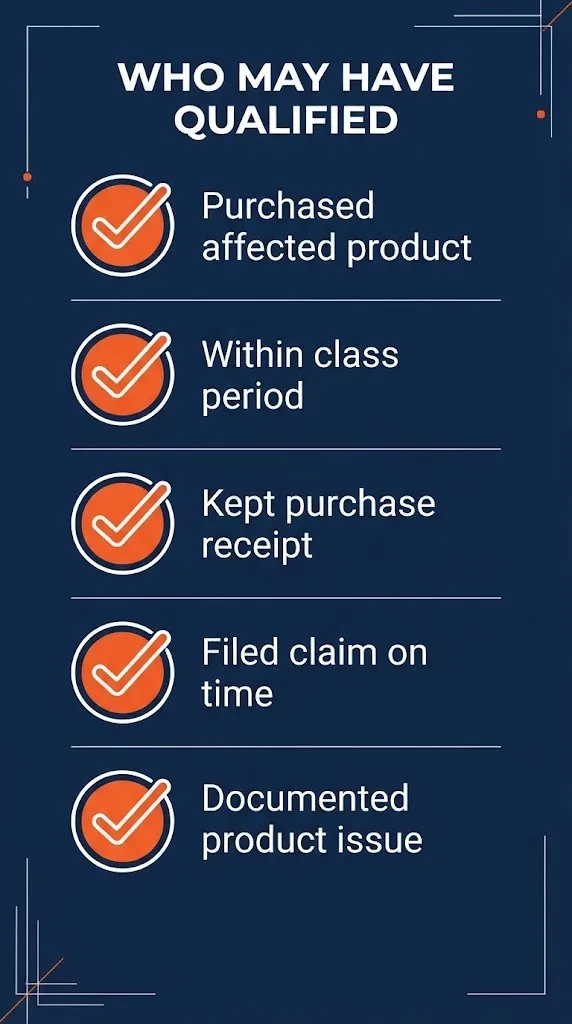
If you filed a claim in a past settlement and want to know if it was approved, find the settlement website. Enter your claim number or the email address you used. The portal shows your status.
If you lost your claim number, the website can usually resend it. You will need your name and the contact information you used when filing.
For automatic payment cases, no status check was needed. The administrator mailed checks or issued electronic payments directly.
What Is the Whole Foods Vanilla Lawsuit?
The Whole Foods vanilla lawsuit involved claims that store-brand vanilla products contained artificial vanillin instead of real vanilla. The label may have implied real vanilla.
Vanilla class actions are common across the food industry. The cases settle for small amounts because individual damages are tiny. A bottle of vanilla extract costs a few dollars.
The Whole Foods vanilla case, if it settled, paid a small amount per claim. The deadline has passed. No open claim window exists in 2026.
Reality Check
No legitimate Whole Foods settlement will ever text you, call you, or email you asking for a fee to release your payment. Filing a claim is always free. Anyone who asks for payment to “process” your settlement is running a scam. The real administrator pays you, never the other way around.
What Whole Foods Products Were Involved in Lawsuits?
Several Whole Foods products have been the subject of lawsuits over the years. The most common include:
- Store-brand honey
- Products labeled “natural”
- Vanilla extract and flavoring
- Packaged goods with weight discrepancies
- Prepared foods with labeling issues
If you bought these types of products, you may have been part of a past settlement class. But the class period matters. Not every purchase qualifies for every case.
What Should I Do If I Bought a Mislabeled Whole Foods Product?
If you bought a mislabeled Whole Foods product, keep your receipt. If a class action settles in the future, the receipt will strengthen your claim.
You can also contact Whole Foods customer service directly. The company may issue a refund for a specific product issue. That is a faster resolution than waiting for a lawsuit.
Do not expect a class action to produce a large payout. Grocery class actions typically pay small amounts. The value is in the collective pressure on the company, not the individual check.
Key Takeaway: Keep your receipt and contact customer service for immediate issues. A lawsuit is a slow path to a small check.
What Happens Next: Whole Foods Lawsuit Timeline for 2026 and Beyond
- September 2026: Pending Whole Foods litigation continues through discovery and motion practice.
- Late 2026: Possible rulings on motions to dismiss in newer cases.
- Early 2027: If new classes are certified, settlement talks may begin.
- Mid 2027: Any new settlement would set a claim deadline and payout process.
- Ongoing: Grocery industry labeling litigation continues across the sector.
Frequently Asked Questions
Is there a Whole Foods lawsuit I can join?
No major Whole Foods settlement is open for claims as of August 2026.
How much did past Whole Foods settlements pay?
Most paid $5 to $50 per claimant, depending on the case and proof.
What was the Whole Foods natural labeling lawsuit?
It challenged products labeled natural that contained synthetic ingredients.
Can I still file a Whole Foods claim?
Most deadlines have passed. Check the specific settlement website for confirmation.
What if I bought mislabeled Whole Foods products?
Keep your receipt and contact customer service for a possible refund.
Has Whole Foods admitted wrongdoing?
No, most settlements include no admission of liability.
Will I get a check from a Whole Foods lawsuit?
Only if you filed a valid claim in a past settlement, and the deadline has passed for most cases.
Are grocery class actions worth filing?
They pay small amounts, but filing is free and takes minutes if you qualify.
Closing
Whole Foods class actions are real, but most claim windows are closed. No major settlement is open in 2026.
The smart move is to keep your receipts and contact customer service for immediate issues. If a new settlement opens, you will get official notice. Until then, do not pay anyone for help.