Telecom Data Settlement in 2026: Is It Legit, How to Apply, and AT&T Claim Status
Quick Answer
- Telecom data settlements are real, court-approved agreements over data breaches and privacy violations.
- AT&T settlements have paid $25 to $500 per claimant, depending on documented losses.
- The AT&T claim deadline has passed for the main 2024 breach case, but other telecom settlements may still be open.
Telecom companies have paid millions to settle data breach and privacy lawsuits. If you received a notice about a telecom data settlement, you may wonder if it is real or a scam. The answer depends on the specific case.
Some settlements are legitimate and paying claims. Others are closed. A few are in early stages. The key is verifying the case against the official settlement website and the court docket.
This guide explains how to tell a real telecom settlement from a fake one, how to apply if a deadline is still open, and what to know about the AT&T settlement in 2026. One fact that surprises people: legitimate settlements never charge a filing fee.
The Facts
| Item | Detail |
|---|---|
| Case | Multiple telecom data breach class actions |
| Status | Some settled and paying, others closed |
| Fund Size | Varies by case, some over $10 million |
| Est. Per Person | $25 to $500 typical |
| Claim Deadline | Varies by case, some closed |
| Administrator | Various, case-specific |
| Proof Needed | Account records, identity theft reports |
Is the Telecom Data Settlement Legit?
Yes, many telecom data settlements are legitimate. Courts have approved settlements with AT&T, T-Mobile, Verizon, and other carriers over data breaches and privacy violations.
The legitimacy comes from the court process. A judge reviews the settlement. A claims administrator handles the distribution. Class members receive notice by mail or email.
Scam attempts exist. Fake settlement notices try to steal personal information. The difference is in the details. Real notices include a case name, court, and official website. Fake notices are vague and ask for payment.
If you received a notice, verify it. Search the case name and court. Check the official settlement website. Do not click links in suspicious emails.
Key Takeaway: Telecom data settlements are real when they come from a court-approved process. Verify any notice before sharing personal information.
How Much Can I Get from a Telecom Data Settlement?
Telecom data settlement payouts typically range from $25 to $500 per person. The amount depends on the case, the type of harm, and the proof you submit.
Data breach cases often pay less because proving actual harm is hard. A basic claim with no documented loss might pay $25 to $75. A claim with documented identity theft or fraud might pay $200 to $500 or more.
Here is a typical payout structure for telecom data settlements:
| Claim Type | Typical Payout |
|---|---|
| Basic claim, no proof | $25 to $75 |
| Documented time spent | $100 to $250 |
| Out-of-pocket losses | $200 to $500 |
| Identity theft losses | $500 to $2,500 |
| Credit monitoring | Non-cash benefit |
These ranges are based on reported telecom settlements. Your actual payment depends on the specific case and the number of claims filed.
What Is the AT&T Settlement 2026?
The AT&T settlement 2026 refers to the resolution of a data breach case. AT&T agreed to pay millions to settle claims that it failed to protect customer data.
The settlement covers customers affected by a specific data breach. The exact breach and claim details depend on the case. Some AT&T settlements have closed. Others may still be in the payout phase.
The claim deadline for the main AT&T data breach settlement has passed. If you did not file by the deadline, you cannot file now. But other AT&T settlements may have different deadlines.
Check the official AT&T settlement website for the specific case affecting you. The site will confirm whether claims are still open.
How Do I Apply for the AT&T Settlement?
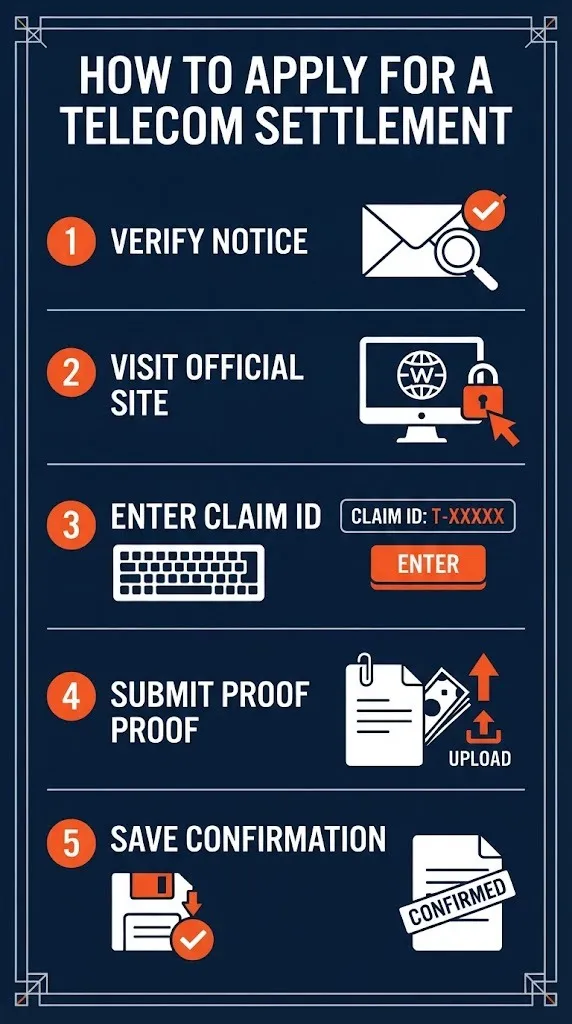
You apply for an AT&T settlement through the official settlement website. The process is online and free.
Here are the steps to apply if a deadline is still open:
- Visit the official settlement website for the AT&T case.
- Enter your Claim ID or Class Member ID from your notice.
- Confirm your eligibility based on the class definition.
- Provide proof of loss if you are claiming documented damages.
- Choose your payment method: check, PayPal, Venmo, or direct deposit.
- Review your claim for accuracy.
- Submit and save your confirmation number.
If the deadline has passed, the website will tell you. Do not pay anyone to file a late claim. Late claims are almost never accepted.
What Proof Do I Need for a Telecom Data Settlement?
The proof you need for a telecom data settlement depends on the claim type. A basic claim may need no proof. A documented loss claim needs receipts, bills, or reports.
For identity theft claims, you may need a police report, a Federal Trade Commission identity theft report, or letters from creditors. For time-spent claims, you may need a description of the hours you spent dealing with the breach.
Keep your documents organized. A denied claim is often the result of missing proof. Submit exactly what the claim form asks for. Do not over-submit, but do not leave gaps.
Is the AT&T Data Breach Settlement Legit?
Yes, the AT&T data breach settlement is legitimate. It resulted from a real class action lawsuit over a real data breach. The court approved the settlement, and a claims administrator managed the payout.
The legitimacy is documented in the court record. The case has a name, a court, and a case number. The settlement website is run by a court-appointed administrator.
If you received an AT&T settlement notice, check the case name against the court docket. The official website will match the notice. Scam sites use similar names but different URLs.
Key Takeaway: The AT&T data breach settlement is court-approved and legitimate, but its claim deadline has passed for the main case.
What Was the AT&T Data Breach?
The AT&T data breach involved the exposure of customer information. The details vary by incident. Some breaches exposed names, addresses, and phone numbers. Others exposed account details or call records.
The breach led to class action lawsuits. Customers claimed AT&T failed to protect their data and did not notify them quickly enough. The settlement resolved those claims.
The breach is separate from the settlement. The breach is the event. The settlement is the resolution. If you were affected, you may have received a notice.
How Do I Check My AT&T Settlement Status?
You check your AT&T settlement status on the official settlement website. The site has a status lookup tool. Enter your Claim ID or the email address you used to file.
The status tool shows whether your claim was received, validated, approved, or paid. If your status shows “Paid” but you have not received money, contact the administrator.
If you lost your Claim ID, the website can resend it. You will need your name and the email address or mailing address you used.
What Other Telecom Settlements Are Open in 2026?
Several telecom settlements may be open in 2026, depending on the case. T-Mobile, Verizon, and other carriers have faced data breach and privacy lawsuits.
No single deadline applies to all telecom settlements. Each case has its own timeline. The best way to find open settlements is to check official settlement websites and court dockets.
You can also watch for notices in the mail. If a settlement affects you, the administrator will send a notice. That notice includes the deadline and the official website.
Reality Check
No legitimate telecom settlement will ever text you, call you, or email you asking for a fee to release your payment. Filing a claim is always free. Anyone who asks for payment to “process” or “expedite” your settlement is running a scam. The real administrator pays you, never the other way around.
How Do I Spot a Fake Telecom Settlement Notice?
Fake telecom settlement notices try to look real. They use logos, legal language, and urgent deadlines. But they have telltale signs.
A real notice includes a specific case name, a court name, and a claim deadline. It directs you to a secure official website. It never asks for your bank password or a payment.
A fake notice is vague. It may say “telecom settlement” without naming the case. It may ask for your Social Security number upfront. It may demand a fee to file.
If you are unsure, search the case name online. The official settlement website will appear. The court docket will confirm the case exists.
What Happens Next: Telecom Data Settlement Timeline for 2026
- September 2026: Some telecom settlement claim deadlines close.
- October 2026: Administrators begin validating claims for recent settlements.
- November 2026: Final approval hearings scheduled for pending telecom cases.
- December 2026: Approved settlements begin payment processing.
- Early 2027: Checks and electronic payments issue for valid claims.
Frequently Asked Questions
Is the telecom data settlement real?
Yes, many telecom data settlements are court-approved and legitimate.
How do I apply for the AT&T settlement?
Apply through the official settlement website if the deadline is still open.
What is the AT&T settlement deadline?
The main AT&T data breach settlement deadline has passed. Check the specific case for confirmation.
How much will I get from the AT&T settlement?
Typical payouts were $25 to $500, depending on the claim type and proof.
Do I need a lawyer to file a telecom settlement claim?
No, you can file on your own for free.
What if I lost my settlement notice?
You can look up your claim on the official settlement website using your name and email.
Is my telecom settlement payment taxable?
Most small settlement payments are not taxable, but check with a tax professional.
How do I know if a settlement notice is fake?
A real notice names the case and court. A fake notice asks for payment or sensitive data upfront.
Closing
Telecom data settlements are real, but not all are open. The AT&T settlement paid real money, but its main claim window has closed. Other telecom settlements may still be accepting claims.
The smart move is to verify any notice against the official settlement website and the court docket. File for free before the deadline. Never pay anyone for help.