Workers Compensation Jobs in 2026: Salaries, Top Employers, and How to Get Hired
Quick Answer
- Workers compensation jobs are legitimate insurance and legal careers with verified 2026 salary data.
- Claims adjusters earn $55,500 to $109,000; case managers earn $80,000 to $110,000.
- Most adjuster roles require state licensing and 1 to 5 years of claims experience.
The workers compensation job market in 2026 is not a single settlement or class action. It’s a living, breathing industry with thousands of open roles across insurance carriers, third-party administrators, and law firms.
If you’re searching for workers compensation jobs, you’re likely asking one of two questions: how much can I make, and what does it take to get hired?
Those are fair questions. The industry doesn’t always make the answers easy to find.
This article pulls verified salary data from active 2026 job postings, names the companies hiring right now, and breaks down the exact qualifications that separate a callback from a rejection.
The Facts
| Industry | Insurance, Legal, Healthcare Administration |
| Status | Active hiring across all 50 states |
| Salary Range | $55,500 to $200,000+ (role dependent) |
| Top Employers | Sedgwick, Gallagher Bassett, CorVel, Baxter, Cottingham & Butler |
| Licensing Required | Yes, for adjusters (state-specific) |
| Experience Needed | 1 to 7+ years (role dependent) |
What Are Workers Compensation Jobs and Who Hires for Them?
Workers compensation jobs are roles that manage, investigate, or litigate insurance claims filed by employees injured on the job. The work sits at the intersection of insurance, healthcare, and law.
The main employers fall into four buckets:
- Insurance carriers: Companies like Amerisure, Pie Insurance, and Brotherhood Mutual directly employ adjusters and claims specialists.
- Third-party administrators (TPAs): Sedgwick, Gallagher Bassett, and CorVel handle claims on behalf of employers who self-insure.
- Corporations: Large employers like Baxter hire internal coordinators to manage their own workers comp programs.
- Law firms: Both applicant and defense firms hire attorneys and paralegals for workers compensation cases.
Each bucket offers different career paths. Insurance carriers tend to offer more stability. TPAs often pay more but carry higher caseloads. Corporate roles emphasize program management. Law firm positions can be the most lucrative for attorneys.
Key Takeaway: Workers compensation jobs span insurance, corporate HR, and legal sectors, with TPAs like Sedgwick and Gallagher Bassett among the largest employers.
How Much Do Workers Compensation Jobs Pay in 2026?
Workers compensation jobs pay between $55,500 and $200,000+ annually in 2026, depending on the role, experience level, and jurisdiction. Claims adjusters typically earn $60,000 to $100,000, while experienced attorneys can exceed $200,000.
Here’s the verified salary breakdown from active 2026 job postings:
| Role | Salary Range | Source |
|---|---|---|
| Claims Adjuster (entry to mid) | $60,000 to $81,000 | Cottingham & Butler posting |
| Claims Examiner (remote) | $63,404 to $85,000 | Sedgwick posting |
| Senior Indemnity Specialist | $61,053 to $98,334 | CorVel posting |
| Global Injury Coordinator | $80,000 to $110,000 | Baxter posting |
| Workers Comp Case Manager | $80,000 to $110,000 | Acrisure posting |
| Claims Adjuster (Alaska) | $70,000 to $100,000 | Alaska Public Risk Alliance |
| Workers Comp Attorney (senior) | $180,000 to $200,000 | Mastagni Holstedt posting |
| WC Judge (California) | $127,056 to $183,156 | CA Dept of Industrial Relations |
Location matters. The same adjuster role in San Diego might pay $62,000 to $96,000, while a comparable position in New York could reach $94,500 .
Reality Check: No legitimate workers compensation employer charges you a fee to apply. If a recruiter or “job placement service” asks for money upfront, it’s a scam. All applications listed here are free to submit directly through employer websites.
What Qualifications Do You Need for Workers Compensation Jobs?
Most workers compensation jobs require a high school diploma at minimum, with bachelor’s degrees preferred for adjuster and specialist roles. Clinical positions require active RN licenses. Attorneys need a Juris Doctor and state bar admission.
The specific requirements vary sharply by role type:
Claims Adjuster Roles
- Education: High school diploma or GED required; bachelor’s preferred
- Experience: 1 to 5 years of claims handling
- Licensing: State adjuster license required (varies by jurisdiction)
- Skills: Negotiation, medical terminology, claims software proficiency
Case Manager Roles
- Education: Bachelor of Science in Nursing (BSN) required
- Experience: 2 to 5+ years in occupational health or case management
- Licensing: Active RN license, compact license preferred
- Certifications: CCM, COHN, or CDMS preferred
Attorney Roles
- Education: Juris Doctor from accredited law school
- Experience: 2 to 7+ years in workers compensation practice
- Licensing: Active state bar membership
- Skills: Litigation, negotiation, medical-legal terminology
Sedgwick, one of the largest TPAs, requires 5 years of claims management experience for its remote examiner roles and prefers professional certifications . CorVel asks for 3 years minimum and a state adjuster license .
Key Takeaway: Adjuster roles are the most accessible entry point with 1 to 2 years of experience, while case management and attorney positions require specialized credentials.
How to Get Hired for Workers Compensation Jobs
Getting hired for a workers compensation job requires a targeted approach. The industry values demonstrated claims knowledge more than general customer service experience.
Step-by-Step Hiring Process
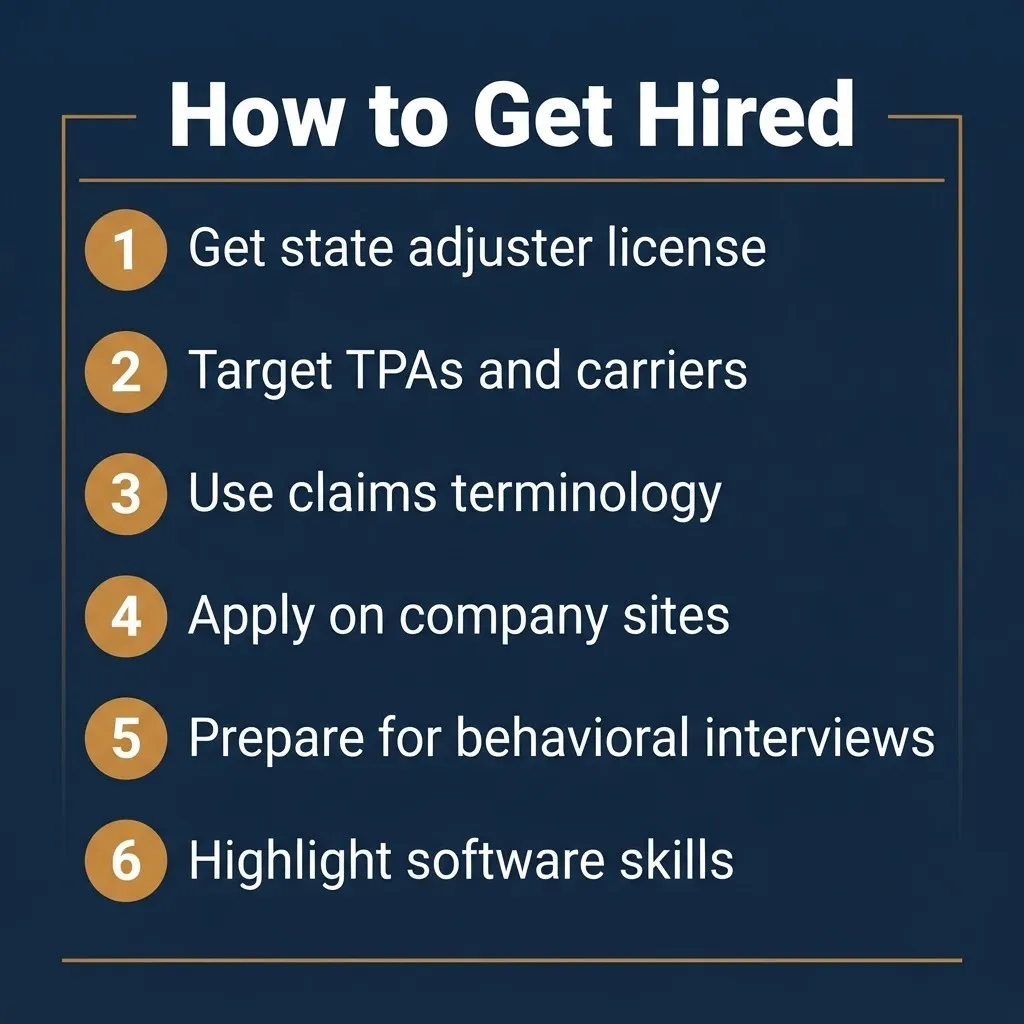
- Get your state adjuster license. Most states require a specific license. Some offer reciprocity.
- Target the right employers. TPAs like Sedgwick and Gallagher Bassett hire continuously.
- Tailor your resume to claims language. Use terms like subrogation, reserves, and compensability.
- Apply directly on company career pages. Skip third-party job boards when possible.
- Prepare for behavioral interviews. Expect questions about handling angry claimants or disputed claims.
- Highlight software proficiency. Claims management systems, Excel, and Microsoft Office are standard.
- Consider remote roles. Many adjuster positions are fully remote, expanding your options.
Cottingham & Butler’s posting notes that experience handling claims in multiple jurisdictions is vital for success . If you only know one state’s rules, start there and expand.
Bilingual skills, especially Spanish, are “highly beneficial” for case manager roles according to Acrisure’s posting .
Which Companies Are Hiring for Workers Compensation Jobs in 2026?
The largest workers compensation employers in 2026 include Sedgwick, Gallagher Bassett, CorVel, Baxter, and Cottingham & Butler. These companies posted active openings across multiple states and remote locations throughout the year.
Here’s a breakdown of verified 2026 openings:
Sedgwick
- Multiple remote claims examiner roles
- Salary ranges: $60,000 to $85,000
- Requires 4 to 5 years experience
- Locations: Nationwide remote
Gallagher Bassett
- Adjuster positions in San Diego, Portland, New York, and New Jersey
- Salary ranges: $55,500 to $98,000
- Multiple experience levels
CorVel
- Senior Indemnity Claims Specialist (remote)
- Salary: $61,053 to $98,334
- Requires 3+ years and state certification
Cottingham & Butler
- Work Comp Adjuster (Midwest region, remote)
- Salary: $63,000 to $81,000
- Requires 1+ year experience
Baxter
- Global Injury & Claim Coordinator (remote)
- Salary: $80,000 to $110,000
- Requires BSN and 5+ years
American Conservation Experience
- Worker’s Compensation Specialist (part-time, remote)
- Salary: $25 to $30 per hour
- Application deadline: October 1, 2026
The part-time ACE role is notable because it may convert to full-time in January 2027 with budget approval . That’s a realistic entry point for someone with 2 years of experience and a bachelor’s degree.
Workers Compensation Jobs vs Other Insurance Careers: How Do They Compare?
Workers compensation jobs offer competitive pay and strong job security compared to other insurance claims roles. The specialization commands a premium because the legal and medical complexity is higher.
Compared to auto claims adjusters, workers comp adjusters typically earn 10% to 20% more. The trade-off is a steeper learning curve. You need to understand state-specific workers comp statutes, medical terminology, and disability rating systems.
Compared to general liability claims, workers comp roles are more process-driven. There’s less variance in how claims proceed because state regulations dictate much of the timeline and benefit structure.
The career path is well-defined:
- Entry: Claims Assistant or Trainee ($45,000 to $55,000)
- Mid: Claims Adjuster or Examiner ($60,000 to $85,000)
- Senior: Senior Adjuster or Specialist ($85,000 to $110,000)
- Management: Claims Manager or Director ($110,000 to $150,000+)
For attorneys, the path is different but equally structured. Applicant-side workers comp attorneys often earn base salaries plus bonuses tied to case volume. Defense attorneys at established firms can reach $200,000 to $300,000 at senior levels .
What Happens Next: Workers Compensation Hiring Trends for Late 2026
- Now through December 2026: Continued hiring for remote adjuster roles at TPAs.
- October 1, 2026: Application deadline for American Conservation Experience specialist role .
- Expected Q1 2027: ACE may convert part-time role to full-time with budget approval.
- Ongoing: State licensing requirements drive demand for licensed adjusters in California, New York, and Texas.
- 2027 outlook: Aging workforce retirements expected to create more openings in senior adjuster roles.
The workers compensation industry isn’t contracting. If anything, claims volume is steady and the need for qualified adjusters remains constant. The barrier to entry is licensing and experience, not demand.
Frequently Asked Questions
How much do workers compensation jobs pay?
Workers compensation jobs pay between $55,500 and $200,000+ annually. Claims adjusters average $60,000 to $100,000, while senior attorneys can exceed $200,000.
Do you need a license to work in workers compensation?
Yes, most claims adjuster roles require a state adjuster license. Attorneys need state bar admission. Case managers need active RN licenses in most cases.
Can you work remotely in workers compensation?
Yes, many workers compensation jobs are fully remote. Sedgwick, CorVel, and Cottingham & Butler all posted remote adjuster positions in 2026.
What experience do you need for a workers compensation adjuster job?
Most adjuster roles require 1 to 5 years of claims handling experience. Entry-level trainee programs exist at some carriers for candidates with strong customer service backgrounds.
Is workers compensation a good career?
Workers compensation offers stable demand, competitive salaries, and clear advancement paths. The specialization commands higher pay than general claims roles in many markets.
How long does it take to get hired for a workers compensation job?
The hiring process typically takes 2 to 6 weeks from application to offer, depending on the employer’s background check and licensing verification timeline.
What companies hire the most workers compensation professionals?
Sedgwick, Gallagher Bassett, CorVel, and major insurance carriers like Amerisure and Pie Insurance are among the largest employers in 2026.
Do workers compensation jobs require a degree?
Adjuster roles often accept a high school diploma with relevant experience. Case manager and attorney roles require specific degrees (BSN or JD).
The most important number to remember: $80,000 to $110,000. That’s the verified salary range for case manager and senior coordinator roles at Baxter and Acrisure in 2026 . If you have the clinical or claims background, those roles are actively hiring. Check the official company career pages directly and skip any third-party service that asks for payment.