Wrongful Death Lawsuit 2026: What Families Can Actually Recover and How Long You Have to File
Quick Answer
- A wrongful death lawsuit lets surviving family members sue for compensation when someone dies due to another party’s negligence or wrongdoing.
- Settlement amounts vary widely: Maryland’s median payout is $294,728, while a Seattle case settled for $29 million in February 2026.
- Filing deadlines are strict and vary by state, generally one to three years from the date of death, with much shorter windows for government-related deaths.
If you’ve lost a family member because of someone else’s negligence, a wrongful death lawsuit is the legal path for pursuing compensation, separate from any criminal case. This is a civil claim, filed by surviving family members or an estate representative, not by prosecutors.
This affects any family where a death resulted from a car crash, medical error, workplace incident, defective product, or intentional harm. The single most important fact to know right now: most states give you only one to three years to file, and missing that window generally bars the claim permanently, no matter how strong the evidence is.
This article covers what these cases actually pay, real settlement examples from 2026, and how state law shapes both your deadline and the compensation cap that may apply. One detail often missed: a death involving a government employee can shrink your filing window to as little as six months.
The Facts
| Case | Wrongful death lawsuit (civil claim, not a single case or class action) |
| Status | Available in all 50 states as an ongoing legal option |
| Fund Size | Not applicable. Each case is valued individually, there is no shared settlement pool |
| Est. Per Person | Varies widely by state and facts, from roughly $294,728 median in Maryland to $29 million in high-profile cases |
| Claim Deadline | Varies by state, generally 1 to 3 years from the date of death |
| Administrator | Not applicable. Filed individually through the civil court system, not a claims administrator |
| Proof Needed | Proof of death, your legal relationship to the deceased, and evidence of negligence or wrongdoing |
What Is a Wrongful Death Lawsuit?
A wrongful death lawsuit is a civil legal claim filed by surviving family members or an estate representative when someone’s death was caused by another party’s negligence, recklessness, or intentional act.
Unlike a criminal case, which the government brings to punish wrongdoing, a wrongful death lawsuit seeks financial compensation for the survivors. The two cases can run separately and don’t depend on each other’s outcome.
Common causes behind wrongful death lawsuits include car and truck accidents, medical malpractice, defective products, workplace incidents, and asbestos exposure leading to conditions like mesothelioma. Each state has its own wrongful death statute defining who can sue and what damages are recoverable.
Is a Wrongful Death Lawsuit Different From Criminal Charges?
Yes. A wrongful death lawsuit is a separate civil case from any criminal prosecution, even when they arise from the same death.
Criminal charges are filed by a prosecutor on behalf of the state, aiming for penalties like prison time. A wrongful death lawsuit is filed privately by the family, aiming for financial compensation, and uses a lower burden of proof than a criminal trial.
That means a defendant can be acquitted criminally and still be found liable in a wrongful death civil case, since civil cases only require a preponderance of the evidence, not proof beyond a reasonable doubt. The two processes proceed independently and on separate timelines.
Wrongful Death Litigation: Is It Worth Filing?
Whether wrongful death litigation is worth filing depends on the strength of the negligence evidence and the financial and emotional losses your family actually experienced.
These cases can compensate for lost income, medical and funeral expenses, loss of companionship, and in some states, the deceased’s pain and suffering before death. For many families, litigation is also about accountability, not just money.
Not yet determined: whether litigation makes sense for your specific situation, since that depends entirely on facts unique to your case, including evidence of negligence and applicable state caps.
Litigated cases that don’t settle took a median of about 23 months to reach trial in a recent national study, while cases that do settle typically pay out faster.
Key Takeaway: A wrongful death lawsuit is a distinct civil claim from criminal prosecution, and whether it’s worth pursuing depends heavily on your state’s specific negligence and damages rules.
Wrongful Death Lawsuit Settlement Amounts: What Can Families Actually Recover
Wrongful death settlement amounts vary enormously by state, cause of death, and the deceased’s income and family situation, with no single national average.
Verified Settlement Data by State or Case Type
| Jurisdiction or Case Type | Recovery Figure | Source Detail |
|---|---|---|
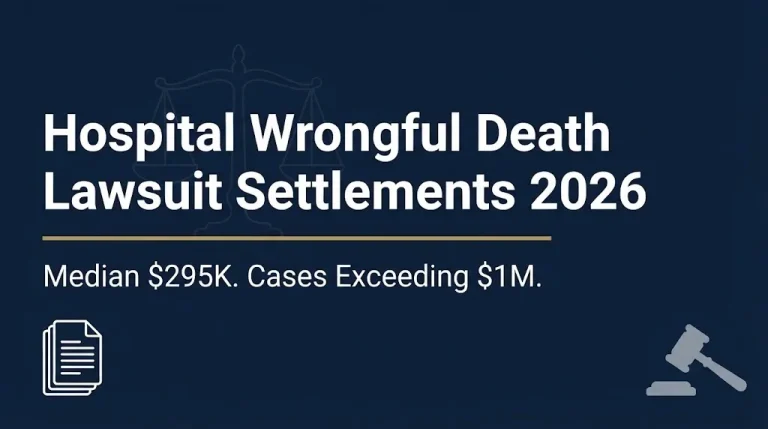
| Maryland (2019-2024 case analysis) | $294,728 median, $973,054 average | Based on 956 analyzed cases |
| Texas (typical case) | Around $500,000 | Varies substantially by circumstances |
| Seattle police vehicle case (2026) | $29 million | Settled February 2026 |
| California Bronstein police custody case | $24 million | Settled 2023 |
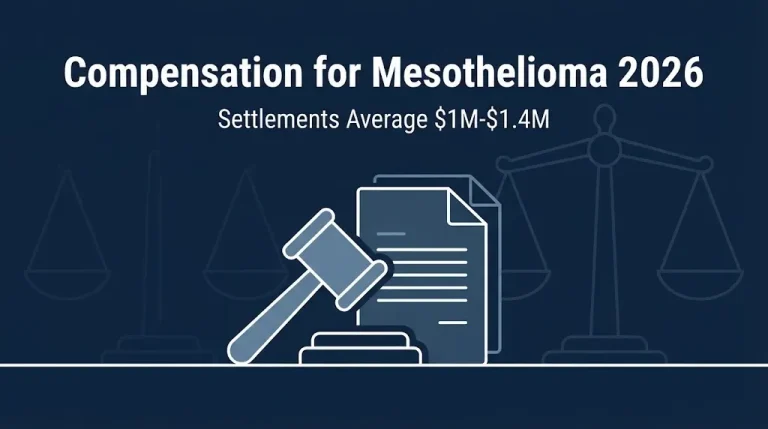
| Mesothelioma wrongful death cases | $1 million to $1.4 million average | Based on asbestos litigation firm data |
Families can typically recover economic damages, like lost income and medical or funeral costs, and non-economic damages, like loss of companionship. Some states allow punitive damages in cases involving especially reckless conduct.
Key Takeaway: There is no fixed or typical wrongful death payout, individual case values swing from the low hundreds of thousands to tens of millions depending on state law and the facts involved.
Are There Caps on Wrongful Death Settlements?
Some states cap certain types of wrongful death damages, but the specific limits and what they apply to vary significantly by state.
Maryland imposes an $875,000 cap on non-economic damages as of 2025, adjusted annually, under its Courts and Judicial Proceedings Article. California applies a graduated cap only in medical malpractice wrongful death cases: the non-economic damages cap started at $500,000 in 2023 and increases by $50,000 annually until reaching $1,000,000 in 2033.
Importantly, these caps generally apply only to non-economic damages, like pain and suffering or loss of companionship. Economic damages, such as lost income and medical expenses, typically remain uncapped in most states, including California.
- Check whether your state caps non-economic damages, punitive damages, or both.
- Confirm whether the cap applies to standard negligence cases or only specific case types like medical malpractice.
- Ask whether the cap adjusts annually, as California’s and Maryland’s currently do.
Reality Check
No legitimate law firm or court process requires you to pay money upfront to “unlock” a wrongful death settlement. Most personal injury and wrongful death attorneys work on contingency, meaning they only get paid if your case wins or settles. Be cautious of anyone contacting you unsolicited promising a guaranteed payout amount before reviewing your actual case facts, since no honest attorney can promise a specific dollar figure without that review.
How to File a Wrongful Death Lawsuit
Filing a wrongful death lawsuit means establishing your legal standing, gathering evidence of negligence, and filing within your state’s specific deadline.
- Confirm you have legal standing to file under your state’s wrongful death statute, typically spouses, children, or parents.
- Gather evidence connecting the death directly to another party’s negligence or wrongdoing.
- Collect financial documentation, including medical bills, funeral costs, and lost income records.
- Consult a wrongful death lawsuit attorney to evaluate your case and confirm your state’s specific deadline.
- File a government tort claim first if a government entity or employee was involved, often within six months.
- File the formal wrongful death complaint in civil court before your state’s statute of limitations expires.
- Prepare for potential settlement negotiation or trial, which can take one to three years depending on complexity.
When Do You Need a Wrongful Death Lawsuit Attorney?
You generally need a wrongful death lawsuit attorney as soon as possible after the death, especially if a government entity, medical provider, or complex corporate defendant is involved.
Cases involving multiple surviving heirs, disputed liability, or short government-claim deadlines benefit most from early legal involvement. Missing a six-month government tort claim deadline, for example, can permanently bar an otherwise valid case.
Think of it like a warranty claim with a hard cutoff date. Waiting even a few weeks past a short administrative deadline can eliminate your entire claim, regardless of how strong the underlying case is.
Key Takeaway: Government-related deaths carry dramatically shorter deadlines, sometimes just six months, making early legal consultation especially urgent in those cases.
Wrongful Death Lawsuit Deadlines: How Long Do You Have to File?
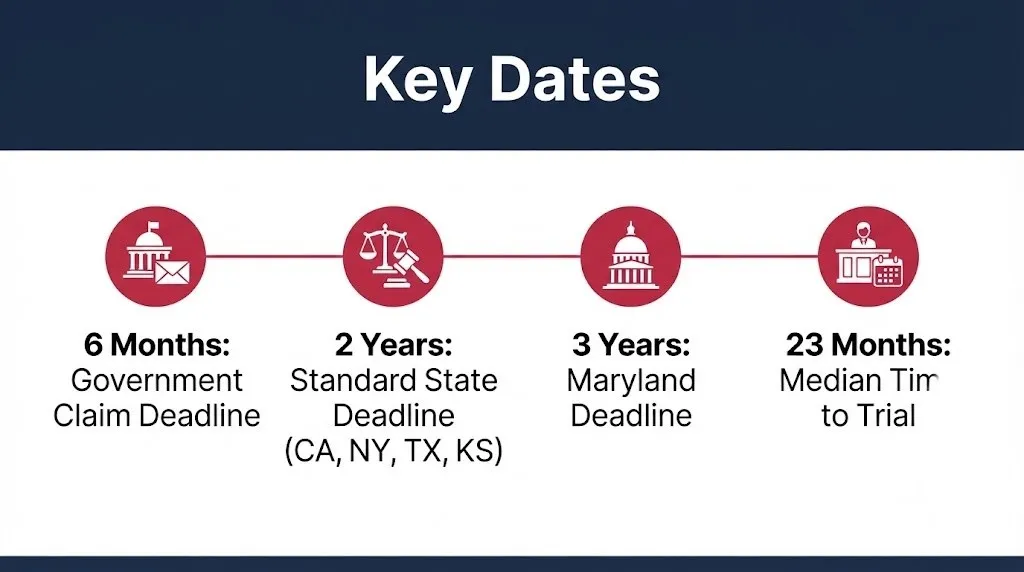
Wrongful death filing deadlines vary by state but generally fall between one and three years from the date of death.
Confirmed State Statute of Limitations Examples
| State | Standard Deadline | Special Exception |
|---|---|---|
| California | 2 years from date of death (CCP §335.1) | 6 months for government tort claims |
| New York | 2 years from date of death (EPTL §5-4.1) | None specified |
| Texas | 2 years from date of death | Different rules apply for medical malpractice |
| Kansas | 2 years from date of death | None specified |
| Maryland | 3 years from date of death (CJP §3-902) | None specified |
Medical malpractice wrongful death cases often follow separate, more complex rules. In California, for example, malpractice claims generally must be filed within three years of the injury or one year of discovering the negligence, but no more than one year from the date of death.
Key Takeaway: Most states give families one to three years to file, but government-related deaths can shrink that window to just six months, making early action critical.
How Long Does a Wrongful Death Lawsuit Take in 2026?
A wrongful death lawsuit that goes to trial typically takes around 23 months from filing to trial, based on recent national litigation data.
Cases that settle before trial generally move faster. Once a settlement is reached and a release is signed, payout usually arrives within four to six weeks, before attorney fees and any liens are deducted.
Several factors affect timeline:
- Complexity of proving negligence or fault
- Number of surviving heirs who must agree to a settlement
- Whether the defendant is a private party, corporation, or government entity
- Whether the case settles or proceeds to a full trial
Not yet determined: an exact timeline for any individual case, since these depend heavily on court schedules, case complexity, and whether both sides reach a negotiated settlement.
Who Can File a Wrongful Death Lawsuit?
Eligibility to file a wrongful death lawsuit is defined by each state’s specific statute, typically prioritizing spouses, children, and sometimes parents or dependent family members.
Under California’s framework, for example, a surviving spouse or domestic partner and children have first priority to file. If none of those relatives survive, parents, siblings, and financially dependent stepchildren may qualify next.
Most states require all eligible surviving heirs to join a single wrongful death action rather than filing separate lawsuits. This structure prevents duplicate lawsuits and conflicting verdicts, though it can create disagreements among family members from different relationships over settlement strategy.
A personal representative of the deceased’s estate can often file on behalf of survivors in states like Kansas, handling the legal process and ensuring funds reach the appropriate family members once resolved.
Wrongful Death Lawsuit Lawyers: What They Actually Do
Wrongful death lawsuit lawyers investigate the cause of death, gather evidence of negligence, and negotiate or litigate on behalf of surviving family members.
Their work typically includes reviewing medical records, accident reports, or workplace safety data, consulting expert witnesses, calculating economic and non-economic damages, and managing settlement negotiations with insurance companies or opposing counsel.
Most wrongful death attorneys work on a contingency fee basis, meaning families don’t pay upfront legal fees. The attorney’s fee comes out of any settlement or verdict, so there’s typically no cost to consult one about whether you have a viable case.
Recent Wrongful Death Lawsuit Verdicts and Settlements in 2026
Several notable wrongful death settlements have made headlines in 2026, illustrating just how widely case values can swing.
In February 2026, the City of Seattle agreed to a $29 million settlement resolving a wrongful death lawsuit involving a police vehicle incident, described as one of the largest known settlements of its kind in recent U.S. history.
This follows a pattern seen in other high-profile police-related wrongful death cases, including a 2023 settlement of $24 million involving a California man who died in police custody after an arrest. These outsized settlements remain uncommon compared to the median figures seen in more typical wrongful death cases nationwide.
Not yet confirmed: whether either case has any pending appeal or additional related litigation, since neither source confirmed post-settlement developments.
Wrongful Death vs Personal Injury Lawsuit: What’s the Difference?
A wrongful death lawsuit is filed by survivors after someone dies from another party’s negligence, while a personal injury lawsuit is filed by the injured person themselves while still alive.
If a person is injured by negligence and later dies from that injury, the case typically converts from a personal injury claim into a wrongful death claim, filed on behalf of survivors instead of the original injured person.
Damages differ too. Personal injury cases compensate the injured individual directly for their own losses. Wrongful death cases compensate surviving family members for their losses, including lost financial support, loss of companionship, and funeral expenses tied to the death itself.
What Happens Next
Immediately after a death: Families should identify potential government tort claim deadlines, sometimes as short as six months.
Within the state statute of limitations (1 to 3 years typical): The formal wrongful death lawsuit must be filed in civil court.
During litigation (up to roughly 23 months for cases going to trial): Discovery, evidence gathering, and settlement negotiations proceed.
After settlement or verdict: Payout typically follows within 4 to 6 weeks of a signed release, before fees and liens are deducted.
Ongoing: State legislatures continue adjusting damage caps and statutes, such as California’s annually increasing MICRA cap and Maryland’s annually adjusted non-economic damages limit.
Frequently Asked Questions
What is a wrongful death lawsuit?
A wrongful death lawsuit is a civil claim filed by surviving family members when a death was caused by another party’s negligence or wrongdoing.
It seeks financial compensation, separate from any criminal prosecution related to the same death.
Each state has its own statute defining who can file and what damages are recoverable.
How much is the average wrongful death settlement?
There is no single national average, figures vary enormously by state and case type.
Maryland’s median recovery is $294,728, while some high-profile cases, like a 2026 Seattle settlement, reached $29 million.
Your specific case value depends on state law, income loss, and the strength of the negligence evidence.
How long do I have to file a wrongful death lawsuit?
Most states give families one to three years from the date of death to file.
California, New York, Texas, and Kansas each use a 2-year deadline, while Maryland allows 3 years.
Deaths involving government entities often carry much shorter deadlines, sometimes just six months.
Who can file a wrongful death lawsuit?
Eligibility typically prioritizes a surviving spouse, domestic partner, and children.
If no spouse or children exist, parents, siblings, or dependent stepchildren may qualify in many states.
A personal representative of the deceased’s estate can often file on behalf of all survivors.
Are wrongful death settlements capped?
Some states cap certain damages, but the specifics vary significantly.
Maryland caps non-economic damages at $875,000 as of 2025, adjusted annually, while California applies a graduated cap only in medical malpractice cases.
Economic damages like lost income typically remain uncapped in most states.
How long does a wrongful death lawsuit take?
Cases that go to trial took a median of about 23 months in a recent national study.
Cases that settle typically resolve faster, with payout arriving 4 to 6 weeks after a signed release.
Complexity, number of heirs, and defendant type all affect the actual timeline.
Do I need a lawyer to file a wrongful death lawsuit?
You are not legally required to hire an attorney, but complex cases benefit significantly from legal representation.
Most wrongful death attorneys work on contingency, meaning there’s no upfront cost to consult one.
Cases involving government entities or short filing deadlines especially benefit from early legal guidance.
If you’ve lost a loved one to another party’s negligence, the most important first step is confirming your state’s specific filing deadline before it passes. Consult a licensed attorney in your state promptly, since missing a wrongful death deadline, sometimes as short as six months, generally bars the claim permanently.