Wrongful Termination Settlement Calculator 2026: How Payouts Are Really Estimated
Quick Answer
- Is it a real tool? No single calculator exists. Settlement values are built from documented economic losses, not a formula.
- How much can you get? Back pay plus front pay, lost benefits, and possibly stock compensation. Amounts depend on your salary and case facts.
- What matters most? Document your losses. Your pay stubs, benefits records, and mitigation efforts drive the number.
What Is a Wrongful Termination Settlement Calculator?
A wrongful termination settlement calculator does not exist as a single verified tool. Settlement values in wrongful termination cases are calculated by economic experts who examine your specific financial losses, not by plugging numbers into an online form.
The confusion comes from generic severance calculators that appear in search results. Those tools estimate severance packages based on formulas like one week of pay per year of service. Wrongful termination settlements are different. They compensate you for what you lost because the termination was illegal.
Calculating a wrongful termination settlement means building a damages model. Economic experts consider lost earnings, benefits, stock compensation, and tax consequences. Each piece requires documentation and often expert testimony.
How Is a Wrongful Termination Settlement Calculated?
A wrongful termination settlement is calculated by adding together your documented economic losses from the date of termination through the expected resolution, plus projected future losses. There is no universal percentage or multiplier that applies to all cases.
The calculation starts with your earnings history. Experts want to see several years of pay records before the termination date. They factor in raises, promotions, and bonuses you would have received if you had stayed employed.
Then they subtract what you earned or could have earned elsewhere. This is called mitigation. If you found a comparable job quickly, your back pay claim shrinks. If the job market for your role is tight, your claim grows.
Front pay covers the period after trial or settlement when you still have not found comparable work. Judges award front pay at their discretion when reinstatement is not feasible. There is no specific formula for front pay, and factors include your age, health, job market conditions, and how long you worked for the employer.
Key Takeaway: A wrongful termination settlement calculator is really a damages model built from your pay records, mitigation efforts, and expert projections, not a simple online formula.
What Damages Can You Recover in a Wrongful Termination Case?
You can recover several categories of economic damages in a wrongful termination case, and each one gets calculated separately. The main categories are back pay, front pay, lost benefits, and lost stock compensation.
Here is what each category covers and how experts value it:
| Damages Category | What It Covers | How It Is Calculated |
|---|---|---|
| Back Pay | Wages lost from termination to trial or settlement | Pay stubs, historical earnings, expected raises |
| Front Pay | Projected wages after trial until comparable work is found | Age, health, job market, tenure, salary at termination |
| Health Insurance | Lost coverage or increased premiums | COBRA costs, replacement plan premiums |
| Retirement Benefits | Lost employer contributions and vesting | Plan documents, employer match formulas |
| Stock Compensation | Lost vesting, option value, restricted stock | Grant agreements, vesting schedules, market prices |
| Tax Consequences | Higher tax liability from lump-sum payment | Income tax analysis, expert calculation |
Health insurance losses are valued based on what you paid to replace coverage or what COBRA would have cost. Retirement losses depend on whether you had a defined contribution plan like a 401(k) or a defined benefit pension.
Stock-based compensation adds complexity. You may have lost unvested equity, or you may have been forced to exercise options sooner than planned. Experts model the value using grant prices, market prices, and expiration dates.
Reality Check: No legitimate wrongful termination settlement happens without documentation. If someone promises a specific payout amount before reviewing your pay stubs, benefits records, and termination letter, they are guessing or scamming you. Real calculations require real records.
What Factors Change the Settlement Amount?
Several factors change the final settlement number in a wrongful termination case, and some push it higher while others push it lower. Understanding these factors helps you set realistic expectations.
Factors that increase settlement value:
- Long tenure with the employer
- High salary and valuable benefits
- Difficulty finding comparable work
- Employer misconduct that supports punitive damages
- Strong evidence of discrimination or retaliation
Factors that decrease settlement value:
- Quick reemployment at similar pay
- Short tenure with the employer
- Failure to document job search efforts
- Weak evidence that the termination was illegal
Mitigation is the biggest swing factor. You have a duty to look for new work. If you do not, your back pay claim gets reduced or eliminated. Keep records of every application, interview, and rejection.
The job market matters too. In a tight market for your role, front pay awards increase because it will take longer to replace your income. In a strong market, the opposite happens.
Key Takeaway: Your settlement value depends as much on your mitigation efforts and documentation as it does on the facts of your termination.
How Do You Estimate Your Wrongful Termination Settlement?
You can estimate your wrongful termination settlement yourself by gathering the right records and walking through the same steps an economic expert would use. The estimate will not be exact, but it gives you a realistic range.
Here are the steps:
- Gather your pay records. Collect pay stubs, W-2s, and bonus statements from at least three years before termination.
- Calculate your back pay. Multiply your lost wages from termination to today, including raises you would have received.
- Estimate your front pay. Project forward wages based on how long comparable work takes in your market.
- Add lost benefits. Calculate COBRA costs, 401(k) match losses, and any unvested retirement contributions.
- Value your stock compensation. Review grant agreements for unvested shares or options and calculate their current value.
- Subtract your mitigation earnings. Deduct any income you earned or could have earned since termination.
- Document everything. Keep a folder with job applications, interview notes, and rejection emails.
This estimate is not a legal calculation. It is a starting point for conversations with an employment attorney.
Reality Check: No legitimate wrongful termination settlement happens without documentation. If someone promises a specific payout amount before reviewing your pay stubs, benefits records, and termination letter, they are guessing or scamming you. Real calculations require real records.
Do You Need a Lawyer to Calculate a Wrongful Termination Settlement?
No, you do not need a lawyer to estimate your own damages, but the calculation gets complicated fast. Economic experts in employment litigation bring training and software that most individuals do not have.
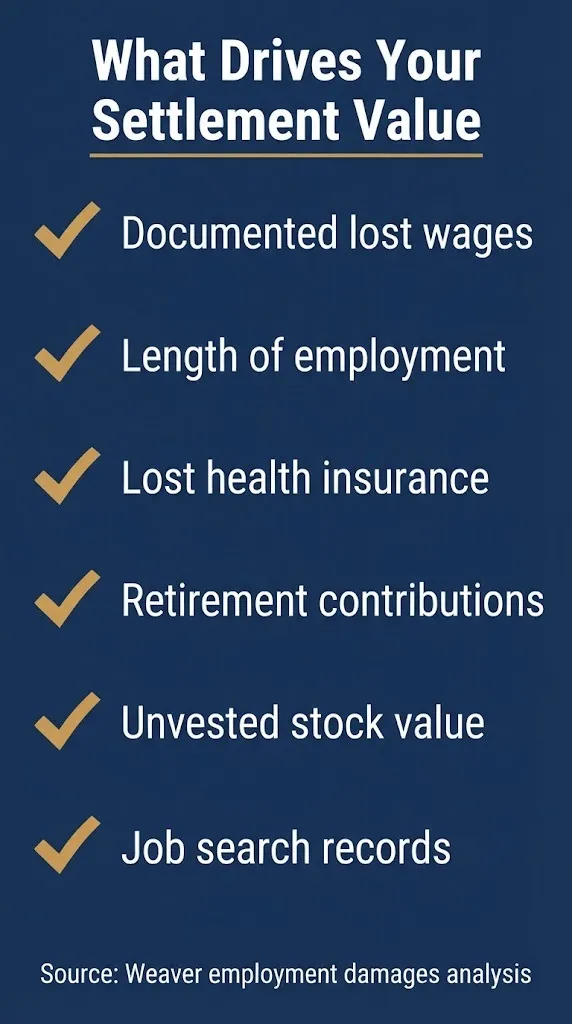
Attorneys often hire forensic economists to build damages models. Those experts produce reports that courts and opposing counsel accept. For smaller cases, your attorney may handle the calculation directly.
The bigger question is whether you need a lawyer at all. Employment attorneys typically work on contingency for wrongful termination cases. You pay nothing upfront, and the attorney takes a percentage of any settlement or award.
For straightforward cases with clear evidence, you may be able to negotiate a severance or settlement on your own. For cases involving discrimination, retaliation, or significant economic losses, an attorney is worth the cost.
What Happens Next in a Wrongful Termination Case?
The timeline for a wrongful termination case depends on whether you negotiate a settlement or file a lawsuit. Here are the typical stages:
Immediate (now): Document everything. Pay stubs, performance reviews, termination letters, emails, and witness names.
Weeks 1 to 4: Consult an employment attorney. Most offer free initial consultations. Bring your records.
Months 1 to 3: Attorney sends a demand letter. The employer responds, and settlement negotiations begin.
Months 3 to 12: If no settlement, file a charge with the EEOC or state agency (for discrimination cases) or file a lawsuit directly.
Months 12 to 24: Discovery phase. Both sides exchange documents and take depositions. Damages models get finalized.
Expected 2027 or later: Trial or settlement. Most cases settle before trial.
Key Takeaway: Wrongful termination cases rarely go to trial. Most settle after discovery, when both sides see the damages evidence.
Frequently Asked Questions
Is there an official wrongful termination settlement calculator?
No. Settlement values are calculated by economic experts who review your pay records, benefits, and job search efforts.
How much can I get from a wrongful termination settlement?
Amounts depend on your salary, tenure, benefits, and mitigation. There is no standard payout or formula.
What is the difference between back pay and front pay?
Back pay covers wages lost from termination to trial. Front pay covers projected future wages after trial.
Can I calculate my own settlement amount?
You can estimate a range by gathering pay records and documenting your losses, but attorneys use experts for accurate numbers.
Do I need a lawyer for a wrongful termination case?
Not always. Simple cases may settle without one. Discrimination and retaliation cases benefit from legal representation.
What records do I need for a settlement calculation?
Pay stubs, W-2s, bonus statements, benefits enrollment, stock grant agreements, and job search documentation.
How long does a wrongful termination settlement take?
Most cases settle within 12 to 24 months. Complex cases can take longer.
Is my settlement taxable?
Yes, settlement payments are generally subject to income tax. Consult a tax professional about your specific situation.
Start gathering your records today. Pay stubs, termination letters, and benefits documentation are the foundation of any settlement calculation. The sooner you have them organized, the faster you can get a realistic estimate of what your case may be worth.