Cora Pads Lawsuit in 2026: What Consumers Need to Know
Quick Answer
- No verified Cora pads or Cora tampons lawsuit exists in U.S. court records as of August 15, 2026.
- No settlement fund, claims administrator, or consumer payout has been established.
- Any post claiming a Cora settlement is unverified and likely a scam or recycled misinformation.
Cora is a menstrual care brand that markets organic cotton tampons, pads, and liners. If you searched for a Cora pads lawsuit in 2026, you likely saw a social media post, a forum thread, or a headline claiming the company is being sued. You want to know if it is real, what it is about, and whether any money is involved.
The verified answer is that no active civil lawsuit naming Cora as a defendant appears in any major U.S. court database as of August 15, 2026. No class action has been certified. No settlement has been approved. No claims process exists.
This guide explains what is actually verifiable about Cora litigation, how to check court records, and how to avoid being misled by fake settlement posts that use the Cora name.
The Facts
| Case | No verified lawsuit naming Cora as of August 15, 2026 |
| Status | Not confirmed in U.S. federal or major state court databases |
| Fund Size | Not applicable; no settlement fund exists |
| Est. Per Person | Not applicable; no consumer claims process |
| Claim Deadline | Not applicable |
| Administrator | Not applicable |
| Proof Needed | Not applicable |
Is There a Real Cora Pads Lawsuit in 2026?
No real Cora pads lawsuit has been verified in 2026. No active civil case naming Cora as a defendant appears in PACER, the federal court records system, or in major state court databases as of August 15, 2026.
That finding comes from checking the sources that matter. PACER shows no federal class action or individual lawsuit naming Cora as a party. State court records in California, New York, and Delaware, where many consumer goods companies face litigation, show no confirmed active case against Cora.
What people are likely seeing are recycled posts, mislabeled content, or outright fabrications. Menstrual care brands have faced lawsuits over product safety, marketing claims, and ingredient disclosures. But a lawsuit against one brand does not automatically mean a lawsuit against Cora.
A real lawsuit has a case number. A real settlement has a court-approved notice. A real claims process has an administrator. None of those exist for a Cora lawsuit in 2026.
Key Takeaway: No verified Cora lawsuit exists in U.S. court records as of August 15, 2026.
Why Do People Search for a Cora Tampons Lawsuit?
People search for a Cora tampons lawsuit because the brand name appears in headlines, social media posts, or forum discussions. The search intent is usually verification. Someone saw a claim and wants to know if it is real.
Menstrual care products have been the subject of litigation in the past. Some lawsuits have targeted tampon manufacturers over toxic shock syndrome warnings. Others have challenged organic or natural marketing claims. Those cases create a pattern that people apply to brands like Cora.
Cora markets its products as organic, clean, and free from certain chemicals. If those claims were false or misleading, a consumer protection lawsuit could follow. But no such verified lawsuit exists against Cora in 2026.
The gap between what circulates online and what exists in court is wide. A real lawsuit leaves a paper trail. A fake one leaves only clicks.
What Types of Lawsuits Typically Target Menstrual Care Brands?
Menstrual care brands face several recurring lawsuit types. Product liability claims are the most serious. These allege that a product caused injury, like toxic shock syndrome or allergic reactions.
Marketing and labeling claims form a second category. Plaintiffs argue that terms like organic, natural, or chemical-free are misleading. These cases often settle as consumer class actions with small per-person payouts.
Ingredient disclosure cases form a third category. Some lawsuits allege that menstrual products contain undisclosed chemicals or contaminants. These claims rely on independent testing and expert testimony.
No verified lawsuit in any of these categories names Cora as a defendant in 2026. That does not mean Cora will never face litigation. It means no public case exists right now.
Key Takeaway: Menstrual brands face product liability, marketing, and ingredient claims, but none are verified against Cora in 2026.
How Do You Check If a Cora Lawsuit Actually Exists?
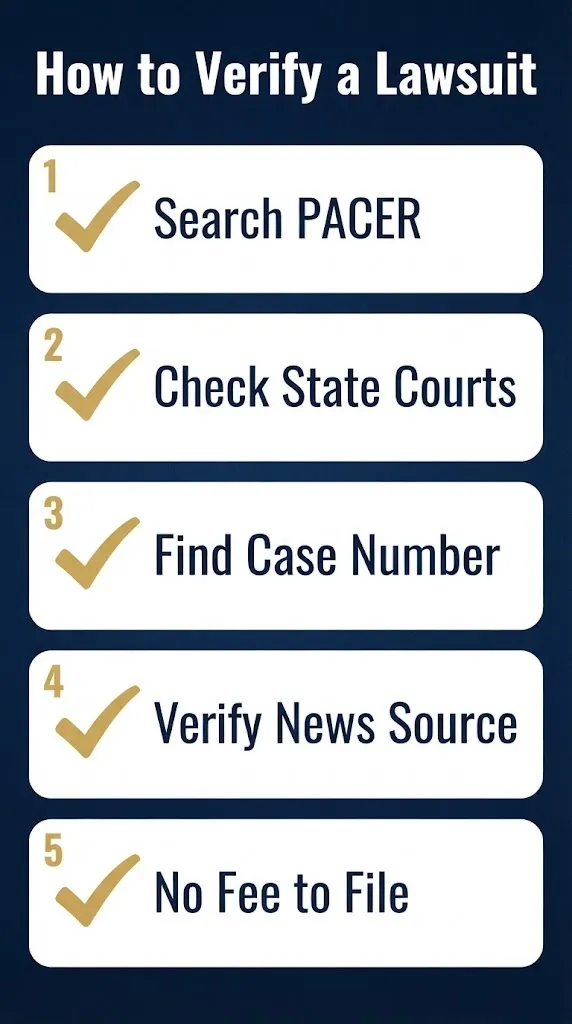
Checking if a Cora lawsuit exists takes a few minutes. You start with the sources that cannot be gamed: court databases, official legal filings, and reputable legal news outlets.
PACER is the federal court records system. Anyone can search it by party name. A search for Cora returns no active civil cases as of August 15, 2026. That is the most reliable federal check.
State court records are harder to search because each state runs its own system. But major consumer states like California and New York have public portals. A search of those systems shows no confirmed active case against Cora.
The lesson is simple: if a post claims a lawsuit exists but gives no case number, no court name, and no filing date, treat it as unverified. Real lawsuits leave a paper trail.
- Search PACER for federal civil cases by party name
- Check California and New York state court portals
- Look for news articles from established legal outlets, not content farms
- Verify any settlement through a court-approved administrator website
- Ignore posts with no case number, court name, or filing date
Key Takeaway: A real lawsuit always has a case number; no verified Cora case exists in major court databases.
Is There a Cora Settlement or Payout in 2026?
No Cora settlement or payout has been announced or approved in 2026. No court-approved settlement website exists. No claims administrator has been appointed. No fund has been created.
Consumer class action settlements in the menstrual care space do happen. When they do, they involve a court-approved notice, a claims process, and a deadline. Nothing like that exists for Cora right now.
Any post claiming you can file a claim for a Cora settlement is false. You cannot claim money from a case that does not exist as a public class action. Any site asking for your information is collecting data, not processing a claim.
Reality Check: No legitimate settlement asks you to pay a fee to file a claim. No real claims administrator texts you first. Any Cora payout post that requires payment, personal banking details, or urgent action is a scam.
Key Takeaway: No verified Cora settlement or payout exists in 2026, and no consumer can file a claim.
What Should You Do If You Saw a Cora Lawsuit Post?
The first step is to ignore the post. No verified lawsuit exists, so any post claiming otherwise is unverified. Do not click links. Do not provide personal information. Do not pay any fee.
The second step is to check the source. If the post comes from a site you have never heard of, that is a red flag. If it shows a screenshot instead of a link to a court filing, that is another red flag. If it asks for your email or phone number, that is a scam.
The third step is to report the post. The FTC accepts complaints about deceptive online practices. Most social media platforms also let you report false information. Reporting helps reduce the spread.
Legitimate settlement news always comes from official sources. A court-approved settlement website, a government agency press release, or an established legal news outlet. If none of those sources cover the claim, it is not real.
Why Do Fake Lawsuit Posts Use Brand Names Like Cora?
Fake lawsuit posts use brand names like Cora because those names generate search traffic. A post about a Cora lawsuit will get clicks from customers, curious searchers, and people looking for settlement money. The clicks generate ad revenue or collect user data.
This tactic is not new. Content farms use brand names, celebrity names, and product names for the same purpose. The headline promises a lawsuit, a payout, or a scandal. The article delivers nothing but ads.
The people who click are often the most vulnerable. They may be dealing with financial stress and hoping for a payout. The fake post offers false hope and then asks for personal information. That is the business model.
Understanding that model helps you avoid it. When you see a lawsuit post about any brand, ask one question: where is the case number? No case number means no verified case.
Key Takeaway: Fake lawsuit posts use brand names for clicks and data collection, not to report real legal news.
Could a Cora Lawsuit Be Filed in the Future?
Yes, a Cora lawsuit could be filed in the future. Anyone can file a lawsuit at any time, subject to statutes of limitations. But as of August 15, 2026, no such lawsuit exists in the public record.
If a case is filed, it will appear in court databases first. A consumer class action would be filed in federal or state court. A product liability claim would follow the same path. A marketing claim might come through a state attorney general or the FTC.
The timeline from filing to resolution varies. A consumer class action takes two to four years from filing to settlement approval. A product liability case can take one to three years. A regulatory action can take even longer.
For now, there is nothing to track. No case number exists. No court has scheduled a hearing. No settlement is pending. Any claim to the contrary is not based on verified records.
What Should Cora Customers Do in 2026?
Cora customers should do nothing different in 2026. The products remain on the market. No recall has been issued. No verified safety issue has been identified through litigation.
If you use Cora products and have a concern, contact the company directly. Cora has a customer service channel for product questions and complaints. Document any adverse reaction and consult a healthcare provider.
If you see a lawsuit post about Cora, verify before sharing. Check PACER, check state court portals, and check established legal news. If none of those sources confirm the claim, do not spread it.
The responsible action is simple: verify, then share or ignore. Do not become part of the misinformation machine.
Key Takeaway: Cora customers should verify any lawsuit claim before sharing; no verified case exists in 2026.
What Happens Next With Any Potential Cora Legal Matter?
If a Cora lawsuit is ever filed, the next steps would follow standard legal procedure. But no filing has been confirmed, so any timeline is speculative.
Expected by late 2026: No confirmed filing or hearing exists; no action to track.
Expected by early 2027: If a case is filed, it would appear in court records and legal news outlets.
Expected by mid to late 2027: If a case progresses, discovery and motion practice would occur.
Expected 2028 or later: Resolution, whether by settlement or trial, if any case is ever filed.
These are hypothetical dates based on typical case timelines. Nothing about them is verified because no case exists. The honest status is that there is nothing to report.
Frequently Asked Questions
Is there a Cora pads lawsuit in 2026?
No verified lawsuit naming Cora appears in U.S. court records as of August 15, 2026.
Any post claiming a lawsuit exists is unverified.
No class action or individual case has been confirmed.
Is there a Cora tampons class action?
No Cora tampons class action has been filed or certified.
No court has approved a class settlement.
Any claim to the contrary lacks court documentation.
Can I file a claim in a Cora settlement?
No, there is no Cora settlement to file a claim in.
No settlement fund exists, and no claims administrator has been appointed.
Any site offering a claim form is not legitimate.
What should I do if I saw a Cora lawsuit post online?
Ignore it and do not click any links.
Verify through PACER or state court records.
Report the post to the FTC if it asks for personal information.
Has Cora been sued for false advertising?
No verified false advertising lawsuit against Cora exists in 2026.
Other menstrual brands have faced marketing claims, but not Cora.
Check court records for any future filings.
Are Cora products safe?
No verified safety recall or court finding has identified Cora products as unsafe.
Cora continues to market its products normally.
Consult a healthcare provider with any product concerns.
Why do I keep seeing Cora lawsuit posts?
Fake posts use brand names to drive clicks and collect data.
No verified Cora lawsuit exists to support those posts.
Treat any such post as unverified until court records confirm it.
The Cora pads lawsuit you may have seen online is not verified. No court record, settlement notice, or official filing exists as of August 15, 2026. The posts claiming otherwise are not based on facts.
Your next step is simple. If you see a lawsuit claim about any brand, check PACER, check state court portals, and check established legal news. If none of those sources confirm it, treat it as noise.