What Does Workers Compensation Cover in 2026: Medical Care, Wage Replacement, and What It Excludes
Quick Answer
- Workers’ compensation covers medical treatment and about two-thirds of lost wages for work-related injuries.
- It does not cover pain and suffering, property damage, or injuries from intoxication or horseplay.
- The most important deadline is reporting the injury to your employer, often within 30 to 120 days.
You got hurt at work. You want to know what the system will pay for.
Here is the direct answer: workers’ compensation covers medical care and a portion of lost wages for injuries and illnesses caused by your job. It does not cover pain and suffering, and it does not cover every type of injury.
This article explains exactly what workers’ compensation covers, what it excludes, and how the system works in 2026.
The Facts
| Topic | What Does Workers Compensation Cover |
| Status | State-run, no federal standard |
| Medical Coverage | 100% of reasonable and necessary treatment |
| Wage Replacement | Usually 66.67% of average weekly wage |
| Exclusions | Pain and suffering, property damage, intoxication, horseplay |
| Reporting Deadline | 30 to 120 days depending on state |
| Claim Filing Deadline | 1 to 3 years depending on state |
What does workers’ compensation cover?
Workers’ compensation covers two main things: medical care and partial wage replacement for work-related injuries and illnesses.
Medical coverage is usually 100%. The insurer pays for doctor visits, hospital stays, surgery, physical therapy, prescriptions, and medical equipment. You do not pay a copay or deductible for approved treatment.
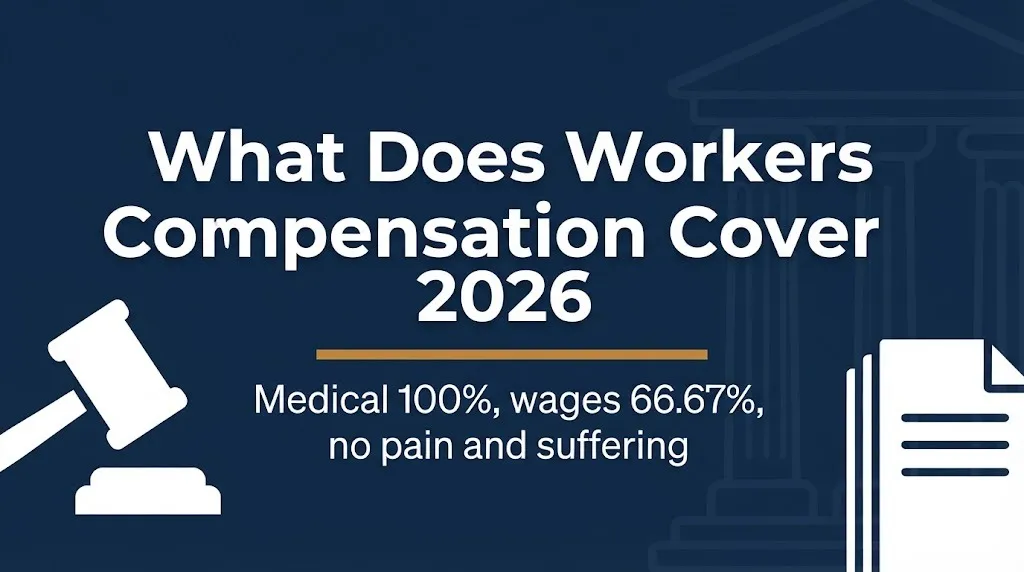
Wage replacement is partial. Most states pay about two-thirds of your average weekly wage while you are unable to work. The exact percentage and maximum weekly amount vary by state.
What medical expenses does workers’ compensation cover?
Workers’ compensation pays for all reasonable and necessary medical treatment related to your work injury.
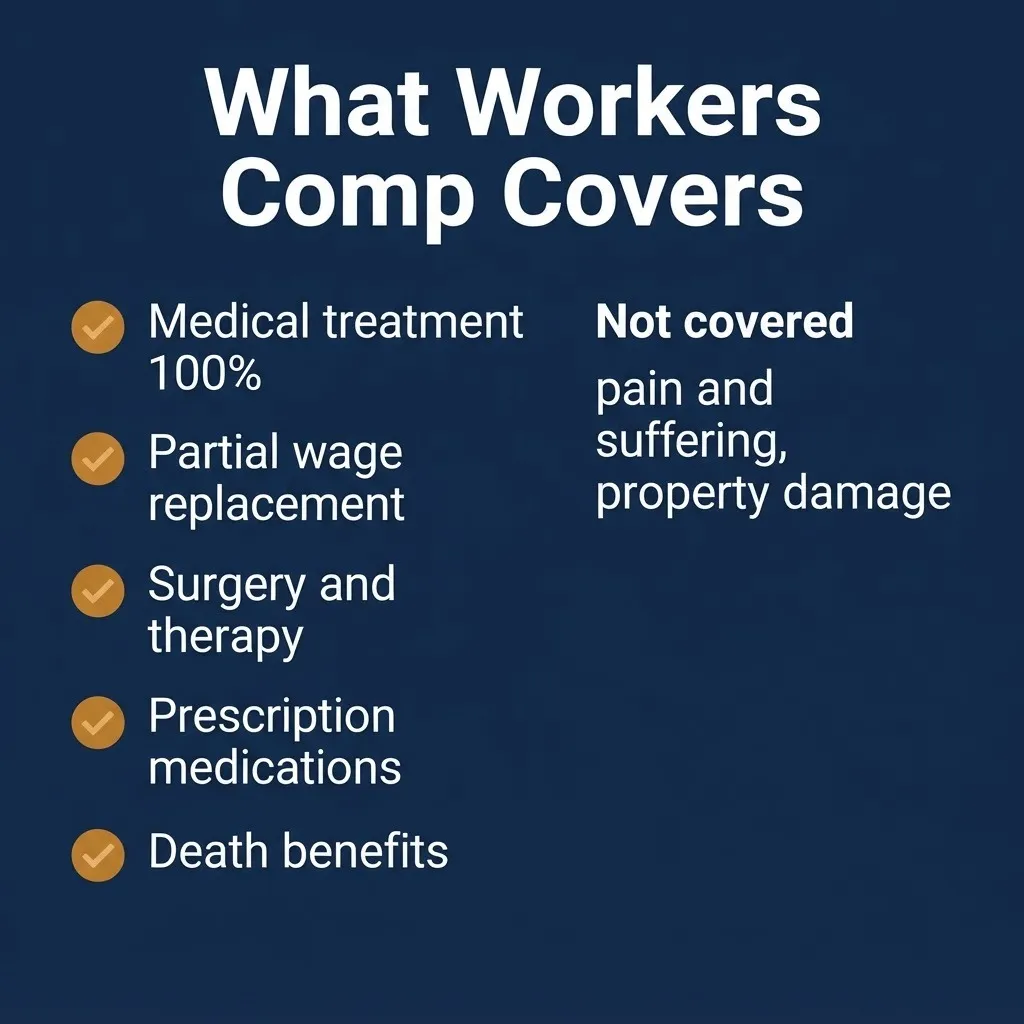
Covered medical expenses include:
- Emergency room visits and ambulance transport
- Doctor appointments and specialist care
- Surgery and hospitalization
- Physical therapy and rehabilitation
- Prescription medications
- Medical equipment like crutches, braces, or wheelchairs
- Diagnostic tests like X-rays, MRIs, and CT scans
- Mileage to and from medical appointments in many states
The treatment must be related to the work injury. The insurer may review treatment plans and deny care it considers unnecessary.
How much of your wages does workers’ compensation cover?
Workers’ compensation replaces a portion of your lost wages, not all of them.
Most states pay about 66.67% of your average weekly wage. Some pay 60%. A few pay 70% or more. The benefit is subject to a state maximum that adjusts annually.
If you earned $1,000 per week and your state pays 66.67%, your weekly benefit would be about $667, assuming that is below the state cap.
What is not covered by workers’ compensation?
Workers’ compensation has clear exclusions. Knowing them prevents surprises.
Excluded items include:
- Pain and suffering
- Property damage to personal items
- Injuries from intoxication or drug use
- Self-inflicted injuries
- Injuries from horseplay or fighting
- Injuries that happen off the job
- Purely emotional injuries without a physical cause in most states
- Independent contractor injuries in many cases
The injury must arise out of and in the course of your employment. If it does not, it is not covered.
Key Takeaway: Workers’ compensation covers medical bills and partial wages. It does not pay for pain and suffering, and it excludes injuries from intoxication, horseplay, or off-duty conduct.
What is covered under workers’ compensation insurance?
Workers’ compensation insurance covers the employer’s legal obligation to pay benefits for work injuries.
The policy pays for:
- Medical treatment for injured workers
- Wage replacement during recovery
- Permanent disability benefits for lasting impairments
- Vocational rehabilitation if you cannot return to your old job
- Death benefits for families of workers killed on the job
The insurance protects the employer from lawsuits and provides a safety net for workers.
How does workers’ compensation insurance work?
Workers’ compensation insurance works like a no-fault system. You do not have to prove your employer was negligent.
Here is the basic flow.
- You are injured at work.
- You report the injury to your employer.
- Your employer files a claim with its workers’ comp insurer.
- The insurer approves or denies the claim.
- If approved, the insurer pays medical bills and wage benefits.
- If denied, you can appeal.
The system is designed to be faster than a lawsuit. It trades the right to sue for guaranteed benefits.
Does workers’ compensation cover occupational diseases?
Yes, workers’ compensation covers occupational diseases that develop over time from workplace exposure.
Covered occupational diseases include:
- Asbestosis and mesothelioma from asbestos exposure
- Carpal tunnel syndrome from repetitive motion
- Hearing loss from workplace noise
- Lung diseases from chemical exposure
- Skin conditions from workplace irritants
The challenge is proving the disease is work-related. The burden is on you to show the connection.
Does workers’ compensation cover mental health conditions?
In most states, workers’ compensation covers mental health conditions only if they are tied to a physical work injury.
A physical injury that causes depression or anxiety may be covered. A purely psychological injury, like stress from a hostile work environment, is usually not covered.
A few states allow mental-only claims in specific situations, like first responders with PTSD. But the general rule is that mental health coverage requires a physical trigger.
Does workers’ compensation cover death benefits?
Yes. If a worker dies from a work-related injury or illness, the family may receive death benefits.
Death benefits typically include:
- A portion of the worker’s wages paid to surviving dependents
- Funeral and burial expenses
- Medical expenses related to the final injury
The exact amount and duration vary by state. Spouses and dependent children are the primary recipients.
Key Takeaway: Workers’ compensation includes death benefits for families of workers killed on the job. The benefit amount and duration depend on your state’s rules.
What should you do if your workers’ compensation claim is denied?
A denial is not the end. You have the right to appeal.
The steps are:
- Read the denial letter carefully.
- Note the deadline to appeal.
- Gather additional medical evidence.
- File an appeal with your state workers’ comp board.
- Request a hearing before an administrative judge.
- Present your case with witnesses and records.
Many denials are overturned on appeal. But the process takes time.
What happens next after you file a workers’ compensation claim?
Once you file, the insurer investigates and issues a decision.
| Timing | Expected Stage |
|---|---|
| Week 1 | Report the injury and file the claim |
| Week 2 to 4 | Insurer reviews medical records and wage data |
| Month 1 to 2 | Insurer approves or denies the claim |
| Month 2 to 6 | Medical treatment and wage payments begin |
| Month 6 and beyond | Claim continues until maximum medical improvement |
The timeline varies by state and claim complexity.
Frequently Asked Questions
What does workers’ compensation cover?
It covers medical treatment and partial wage replacement for work injuries.
It does not cover pain and suffering or property damage.
How much of my wages will I receive?
Most states pay about two-thirds of your average weekly wage.
The exact amount depends on your state and your pre-injury earnings.
Does workers’ comp cover all medical bills?
It covers reasonable and necessary treatment related to the work injury.
The insurer may deny treatment it considers unnecessary.
What is not covered by workers’ compensation?
Pain and suffering, property damage, intoxication, horseplay, and off-duty injuries.
Mental health conditions without a physical trigger are also often excluded.
Can I choose my own doctor?
In many states, your employer designates a medical provider for initial treatment.
After a certain period, you may be able to choose your own doctor.
How long do I have to report a work injury?
Most states require notice within 30 to 120 days.
Report immediately to protect your claim.
What if my claim is denied?
You can appeal through your state workers’ compensation board.
Many denials are overturned with additional evidence.
Workers’ compensation covers medical care and partial wages for work injuries. It is a no-fault system, which means you do not have to prove your employer was careless. But it does not cover everything, and the deadlines are strict.
The most important thing you can do after a work injury is report it immediately. The clock is already running. Know what is covered, document everything, and file your claim before the deadline expires.