Litigation Attorney Dallas 2026: How to Choose the Right Civil Litigator for Your Case
Quick Answer
- What they do: Dallas litigation attorneys handle civil disputes including contract fights, business breakups, personal injury, and employment claims.
- How much: Hourly rates range from $60 to $600, with contingency fees typically capped at 35% under Texas law.
- Key deadline: Texas statutes of limitations range from 1 year for defamation to 4 years for breach of contract.
If you need a litigation attorney in Dallas, you are likely facing a dispute that has escalated beyond a simple demand letter. Maybe a business partner breached a contract. Maybe an insurer denied a legitimate claim. Maybe you were injured and the other side is stonewalling.
Dallas has thousands of lawyers. Martindale-Hubbell alone lists over 3,400 law firms in the city. Finding the right one for your specific dispute requires more than a Google search. You need to understand what litigation attorneys actually do, how they charge, and what separates a good litigator from a great one.
This article breaks down the Dallas legal market, typical fees in 2026, the difference between litigators and trial lawyers, and the questions you should ask before hiring anyone.
The Facts
| Market Size | Over 3,400 law firms in Dallas |
|---|---|
| Typical Hourly Rates | $60 to $600 depending on experience |
| Contingency Fee Cap | 35% under Texas Government Code |
| Statute of Limitations | 1 to 4 years depending on claim type |
| Key Courts | Dallas County District Courts, Northern District of Texas |
| Bar Association | Dallas Bar Association, State Bar of Texas |
What Does a Dallas Litigation Attorney Do?
A Dallas litigation attorney handles civil disputes that may go to trial but usually settle before then. They file lawsuits, gather evidence, conduct discovery, argue motions, and negotiate settlements on behalf of clients.

The work starts long before a courtroom is involved. Litigators investigate claims, interview witnesses, review documents, and build the factual record that supports your position. They file petitions and answers, respond to discovery requests, and take depositions.
Dallas litigators practice across a wide range of civil disputes. Common areas include:
- Business litigation: Contract disputes, partnership breakups, fraud claims, breach of fiduciary duty
- Personal injury: Car accidents, premises liability, product defects, wrongful death
- Employment disputes: Wrongful termination, discrimination, non-compete violations, trade secret misappropriation
- Real estate: Landlord-tenant disputes, construction defects, boundary conflicts
- Insurance claims: Denied coverage, bad faith, underpayment
The Dallas legal market includes solo practitioners handling straightforward disputes and large firms managing complex commercial cases worth millions. The right choice depends on what you are fighting about and how much is at stake.
How Much Do Dallas Litigation Attorneys Cost in 2026?
Dallas litigation attorneys charge between $60 and $600 per hour in 2026, depending on experience, firm size, and case type. Contingency fees for personal injury and some business cases are capped at 35% under Texas law.
Here are the verified rates from Martindale-Hubbell profiles:
| Attorney/Firm | Hourly Rate |
|---|---|
| Charles Irwin Kaplan | $80 to $300 |
| James David Piel (Thompson Law) | $500 to $600 |
| Hamid Naraghi (Ashmore Law Firm) | $425 |
| Robert Half contract litigation roles | $60 to $95 |
The spread reflects the difference between junior attorneys, mid-level litigators, and senior trial lawyers at established firms. A solo practitioner handling a straightforward contract dispute may charge $200 per hour. A partner at a firm handling bet-the-company litigation charges $600 or more.
Contingency fee arrangements are common in personal injury cases and available in some commercial disputes. Texas Government Code Section 2254.103 limits contingent fees to 35% of the amount recovered, and the contract must state the percentage clearly .
Some firms offer hybrid arrangements, combining a reduced hourly rate with a contingency component. This structure can work well when the client wants to control costs but the attorney believes the case has strong upside.
Reality Check: The Cheapest Attorney Is Not the Best Value
Reality Check: Hiring the lowest hourly rate can cost you more in the long run. A $150 per hour attorney who takes three times as long to resolve your case costs more than a $400 per hour attorney who knows the Dallas courts and closes the matter efficiently. Focus on outcomes and experience, not just the rate.
What Is the Difference Between a Litigator and a Trial Attorney?
A litigator prepares cases for trial while a trial attorney actually presents them in court. Most Dallas attorneys who call themselves litigators handle both roles, but the distinction matters when your case heads to a jury.
Litigators manage the pre-trial process. They file pleadings, conduct discovery, take depositions, and file motions. Their goal is often to position the case for a favorable settlement. Most civil cases settle before trial, so litigators who never step into a courtroom can still deliver excellent results .
Trial attorneys specialize in courtroom presentation. They select juries, deliver opening statements, examine witnesses, and argue to the judge and jury. This requires a different skill set: persuasive public speaking, quick thinking under pressure, and the ability to connect with jurors .
In Dallas, many experienced litigators are also trial attorneys. They prepare every case as if it will go to verdict, which gives them leverage in settlement negotiations. Opposing counsel knows they are willing and able to try the case.
When hiring a Dallas attorney, ask directly: How many cases have you tried to verdict? A litigator who has never tried a case may still be excellent, but you should know what you are getting if settlement talks fail.
What Are the Texas Statutes of Limitations for Civil Claims?
Texas statutes of limitations for civil claims range from one year for defamation to four years for breach of contract and fraud. Filing after the deadline bars your claim entirely.
Here are the key deadlines under the Texas Civil Practice and Remedies Code :
| Claim Type | Deadline |
|---|---|
| Libel, slander, malicious prosecution | 1 year |
| Personal injury, wrongful death, property damage, trespass | 2 years |
| Breach of contract, fraud, breach of fiduciary duty, debt collection | 4 years |
The clock starts when the cause of action accrues, usually when the injury or breach occurs. For some claims, the discovery rule can delay accrual until you knew or should have known about the harm.
Missing the deadline is fatal. A Dallas court recently affirmed summary judgment against a plaintiff who filed suit three days before the deadline but failed to serve the defendant until three months after limitations expired. The court held that diligence in service is required to interrupt the limitations period .
If you are close to a deadline, contact a Dallas litigation attorney immediately. Do not wait.
Key Takeaway: Texas statutes of limitations range from one to four years, and filing alone does not stop the clock if service is delayed.
What Should You Look For in a Dallas Litigation Attorney?
You should look for experience in your specific type of dispute, a track record of results, and clear communication about fees and strategy. Dallas has specialists in every area of civil litigation.
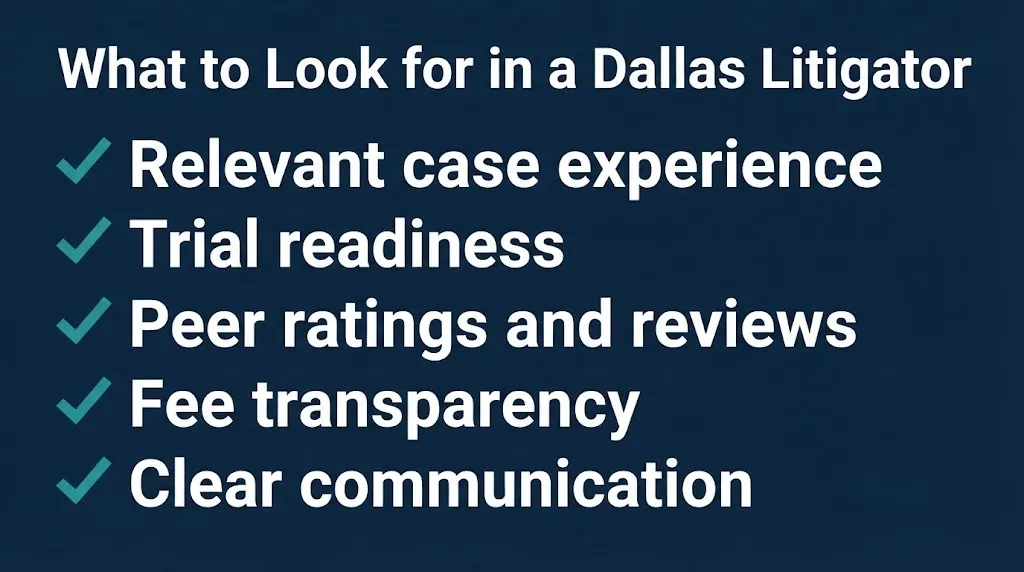
Here are the key factors to evaluate:
- Relevant experience: A business litigation firm may not be the right choice for a personal injury case. Look for attorneys who routinely handle your type of dispute.
- Trial readiness: Ask how many cases they have taken to verdict. Even if your case settles, opposing counsel negotiates differently with a lawyer who tries cases.
- Peer ratings: Martindale-Hubbell peer reviews provide insight into how other attorneys view a lawyer’s legal ability. Look for AV Preeminent ratings, the highest available.
- Fee transparency: Get the fee structure in writing. Understand whether expenses are separate, who pays for expert witnesses, and what happens if the case settles early.
- Communication: A good litigator explains the process clearly and keeps you informed. If you cannot reach your attorney, that is a red flag.
The State Bar of Texas and Dallas Bar Association offer referral services if you need help identifying qualified attorneys.
What Questions Should You Ask a Dallas Litigation Attorney?
You should ask about experience, fees, strategy, and communication before hiring any Dallas attorney. These questions reveal whether the attorney is the right fit for your case.
Ask these questions during your consultation:
- How many cases like mine have you handled in Dallas courts?
- What is your assessment of my case’s strengths and weaknesses?
- How do you charge, and what are the likely total costs?
- Who will actually handle my case day-to-day?
- How often do you take cases to trial?
- What is your strategy for resolving this dispute?
- How will you keep me informed about case developments?
- What do you expect the timeline to look like?
A good attorney will answer directly. If they promise a specific outcome or avoid discussing fees, find someone else.
What Are the 2026 Trends in Dallas Litigation?
Dallas litigation in 2026 is shaped by the new Texas Business Courts, increased use of technology in discovery, and continued strength in energy and construction disputes.
The Texas Business Courts launched in 2024 and now handle complex commercial cases statewide. One prominent Dallas litigator secured the first merits decision in the Texas business courts, a total defense victory in a $300 million investor dispute . These specialized courts aim to provide faster, more predictable resolution of business disputes.
Energy litigation remains a major practice area in Dallas. The February 2021 Winter Storm Uri generated a wave of force majeure cases that are still working through the courts. Estes Thorne Ewing & Payne represented Shell Energy North America in litigation against NextEra arising from the storm .
Technology is changing how Dallas litigators work. E-discovery tools, AI-assisted document review, and remote depositions have become standard. Attorneys who master these tools deliver better results at lower cost.
What Happens Next in a Dallas Civil Lawsuit?
Filing: Your attorney files a petition in the appropriate Dallas court. The defendant has 20 days to respond (or 30 days if served by mail).
Discovery: Both sides exchange documents, answer interrogatories, and take depositions. This phase often takes six months to a year.
Mediation: Most Dallas courts require mediation before trial. Many cases settle at this stage.
Trial: If settlement fails, the case goes to trial. Dallas County District Courts handle civil cases over $200,000.
Post-trial: Either side can appeal. Appeals can add years to the process.
Frequently Asked Questions
How much does a litigation attorney cost in Dallas?
Hourly rates range from $60 to $600 depending on experience. Contingency fees are capped at 35% under Texas law.
What is the difference between a litigation attorney and a trial attorney?
Litigators prepare cases for trial and often settle them. Trial attorneys present cases in court before judges and juries.
How long do I have to file a civil lawsuit in Texas?
It depends on the claim. Personal injury has a 2-year deadline. Breach of contract has 4 years. Defamation has 1 year.
Do I need a Dallas attorney if I live elsewhere?
If your case involves Dallas courts or events in Dallas, a local attorney who knows the judges and procedures is essential.
What types of cases do Dallas litigation attorneys handle?
Business disputes, personal injury, employment claims, real estate conflicts, insurance disputes, and more.
How do I check an attorney’s record?
Use Martindale-Hubbell peer reviews, the State Bar of Texas disciplinary records, and ask for references from past clients.
What happens if I miss the statute of limitations?
Your claim is barred. You cannot recover damages, regardless of how strong your case was.
How long does a Dallas civil lawsuit take?
Most cases settle within one to two years. Cases that go to trial can take three years or more including appeals.
What You Should Do Next
Gather your documents, contracts, and any evidence related to your dispute. Write down the timeline of events. Then consult at least two Dallas litigation attorneys before choosing one.
The single most important fact: Texas statutes of limitations range from one to four years, and missing the deadline destroys your claim. If you are close to the deadline, act immediately.