Nursing Home Neglect Settlement Cases 2026: Average Payouts, Verdict Data, and the Evidence That Drives Value
Quick Answer
- Is it legit: Yes. Nursing home neglect settlements are real individual payouts, not a class action fund. No claim form exists.
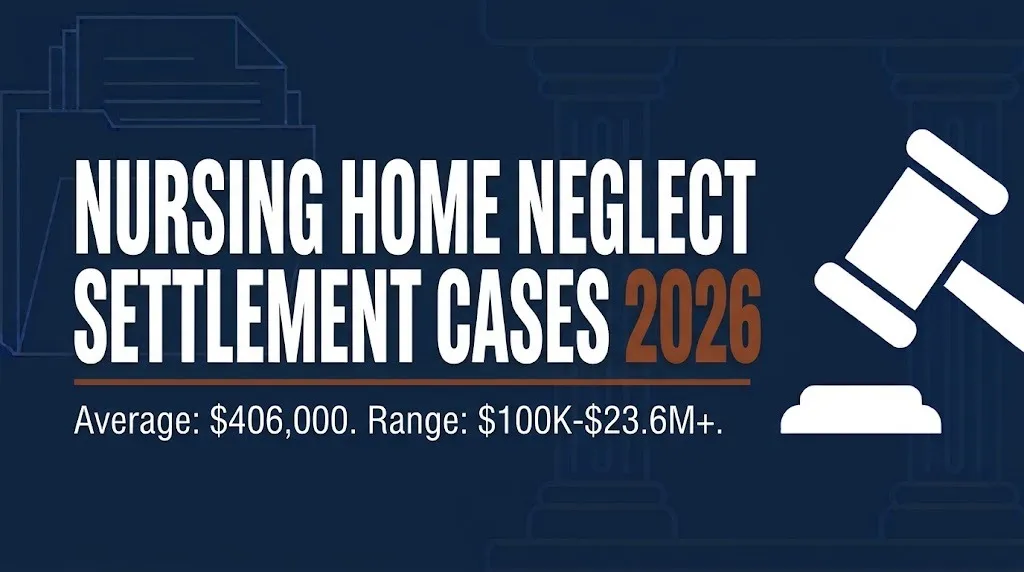
- How much: Average is $406,000. Severe bedsore and wrongful death cases reach $1 million to $23 million+ .
- Deadline: State statutes of limitations control, ranging from 1 year (Tennessee) to 6 years (Minnesota) .
If you searched for “nursing home neglect settlement cases,” you are likely watching someone you love decline in a facility and wondering whether the system will ever hold anyone accountable. You want numbers, not sympathy. The numbers exist, but they are scattered across individual case outcomes, not a single public fund.
The verified average is $406,000 . That figure hides enormous range. A Stage II bedsore that infected and killed a resident settled for $500,000 . A Georgia jury awarded $23.6 million in 2026 after a resident was given unprescribed morphine, lorazepam, and hydrocodone . The difference between those outcomes is not luck. It is evidence, staffing records, and whether the facility’s chart matches what the family saw.
This article breaks down the verified settlement ranges, the state-by-state deadlines that end claims, and the documentation that moves a case from average to seven figures.
The Facts
| Item | Verified Detail |
|---|---|
| Claim Type | Individual nursing home negligence lawsuit, not a class action |
| Average Settlement (2026) | $406,000 |
| Typical Range | $100,000 to $500,000 for common neglect cases |
| Severe Injury Range | $1 million to $23.6 million+ for wrongful death and egregious neglect |
| Deadline | State-specific, 1 to 6 years |
| Government Facility Notice | As short as 90 days in some states |
| Key Evidence | Medical records, staffing logs, photos, inspection citations |
Is Nursing Home Neglect Litigation Real or a Scam?
Nursing home neglect litigation is real. It is an individual personal injury or wrongful death lawsuit filed against a facility, its operators, and sometimes its corporate owners. There is no “nursing home neglect settlement fund” and no claim form to submit online.
The scam risk sits with anyone promising a specific payout before reviewing the chart. Sokolove Law, which publishes the $406,000 average, is a real firm with published case results . But the average is a marketing number as much as a data point. It tells you the middle of a range, not what your case is worth.
What you should know: these cases settle or go to trial based on documented negligence. A facility that charted turning a resident every two hours, even if the chart is false, has a defense. A facility whose records show chronic understaffing and falsified wound notes does not. The Massachusetts Attorney General secured a $2.75 million settlement in 2026 against an operator for systematic understaffing that caused pressure ulcers, medication errors, and falls . That is the regulatory version of the same evidence families use in civil court.
Key Takeaway: Nursing home neglect settlements are individual payouts, not a public fund. The average is $406,000, but the range runs from low six figures to eight figures depending on evidence.
How Much Is the Average Nursing Home Neglect Settlement?
The average nursing home neglect settlement is $406,000 in 2026 . Common neglect cases without catastrophic injury typically settle between $100,000 and $500,000 .
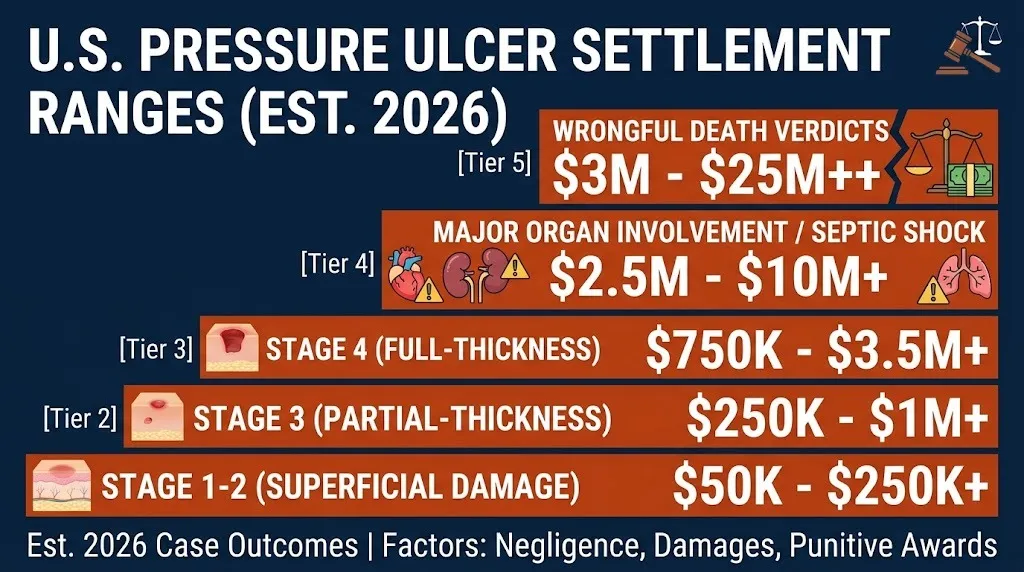
Severity drives the number. A case involving a Stage III or IV pressure ulcer, malnutrition, or a fall with fracture moves into a higher bracket. Wrongful death cases with clear evidence of neglect can exceed $1 million and, in egregious cases, reach eight figures.
| Injury Severity | Typical Settlement Range |
|---|---|
| Neglect, no lasting harm | $25,000 to $100,000 |
| Stage 3-4 pressure ulcers | $100,000 to $400,000 |
| Falls with fractures / malnutrition | $150,000 to $500,000 |
| Abuse or death cases | $500,000 to $2,000,000+ |
| Egregious neglect with falsified records | $2 million to $23.6 million |
The published case results show the top of the range. Dudensing Law secured $1.75 million in 2025 for a patient who developed a pressure ulcer during a 38-day stay, after the facility failed to use heel protectors or a low air loss mattress . A Georgia jury awarded $23.6 million in 2026 in a case where a resident tested positive for three unprescribed drugs and the facility failed to preserve surveillance footage .
Reality Check: No one texts you settlement money first. A legitimate nursing home neglect claim starts with medical records, photographs, and a facility’s inspection history. Any message promising a payout before reviewing that evidence is a scam.
What Is the Deadline to File a Nursing Home Neglect Lawsuit?
The deadline to file a nursing home neglect lawsuit is set by each state’s statute of limitations. Most states allow two to three years from the date of injury or discovery, but the range runs from one year in Tennessee to six years in Minnesota .
The discovery rule matters in neglect cases. Pressure ulcers, malnutrition, and infections often develop gradually. In many states, the clock starts when the injury is discovered or should have been discovered, not when the neglect began .
Government-run facilities have shorter deadlines. Claims against county, state, or city facilities often require a formal notice of claim within as little as 90 days, and missing that notice can bar the lawsuit entirely .
| State | Neglect Statute of Limitations | Wrongful Death |
|---|---|---|
| California | 2 years | 2 years |
| Texas | 2 years | 2 years |
| New York | 3 years | 2 years |
| Tennessee | 1 year | 1 year |
| Minnesota | 6 years | 3 years |
| Massachusetts | 3 years | 3 years |
Key Takeaway: The deadline ranges from one to six years depending on the state. Government facilities can require notice in 90 days.
How Do You File a Nursing Home Neglect Lawsuit?
Filing a nursing home neglect lawsuit means documenting the injury, obtaining the facility’s records, and filing a complaint in the correct court. The steps below are the general sequence, not legal advice for your specific case.
- Photograph the injury immediately. Date-stamped photos of pressure ulcers, bruises, or unsanitary conditions are the strongest evidence.
- Request the complete medical chart. You are entitled to the records as the resident or legal representative.
- Preserve staffing and care records. Turn schedules, repositioning logs, and skin assessments show whether the facility followed its own care plan.
- Check the facility’s inspection history. Prior citations for understaffing or wound care strengthen the case .
- Report the neglect. Contact the long-term care ombudsman or Adult Protective Services. The report creates a paper trail.
- Consult a nursing home attorney about the deadline. Statutes of limitations vary by state and can be as short as one year.
- File the complaint. The petition states the negligence, the harm, and the remedy sought.
- Prepare for discovery. Staffing data, internal emails, and personnel files become central evidence .
What Evidence Increases a Nursing Home Neglect Settlement?
The evidence that increases a nursing home neglect settlement is proof that the facility knew the risk and ignored it. Documented understaffing, falsified charts, and prior regulatory citations move cases from average ranges into seven figures.
The Georgia case that produced a $23.6 million verdict turned on three pieces of evidence. First, the resident tested positive for morphine, lorazepam, and hydrocodone that were never prescribed to him. Second, the facility’s medical director flagged the results and was terminated after trying to add them to the chart. Third, surveillance footage from the night the drugs were allegedly administered was not preserved . That combination of chemical restraint, retaliation, and missing evidence is what juries punish.
The Massachusetts AG case shows the regulatory parallel. Investigators found that between April 2021 and December 2025, Bear Mountain facilities failed to meet minimum staffing levels. The state alleged that understaffing led to pressure ulcers, medication errors, falls with fractures, and malnutrition. The company paid $2.75 million and agreed to a three-year independent monitoring program .
| Evidence Type | Why It Matters |
|---|---|
| Admission skin assessment | Shows whether the wound was present on arrival |
| Turn and reposition logs | Proves whether care plan was followed |
| Staffing records | Supports understaffing claims |
| Prior inspection citations | Shows facility knew the risk |
| Family photographs | Corroborates severity and timeline |
What Happens Next After a Nursing Home Neglect Settlement?
The next stages after a nursing home neglect settlement depend on whether the case settles or goes to trial. Most settle, but the timeline varies with the severity of the injury and the strength of the evidence.
Immediately: Photograph the injury. Request the chart. Report the neglect to the ombudsman.
Weeks 1 to 4: Consult an attorney. The attorney reviews records and determines whether the deadline is approaching.
Months 1 to 6: Demand letter or complaint filed. The facility’s insurer investigates.
Months 6 to 18: Negotiation or discovery. Most cases settle in this window.
If no settlement: Trial. The Georgia $23.6 million verdict and the California $15.75 million verdict both came after trials, not settlements .
Frequently Asked Questions
What is the average settlement for nursing home neglect?
The average is $406,000 in 2026 . Common cases settle between $100,000 and $500,000 .
How long do I have to file a nursing home neglect lawsuit?
It depends on the state. Most allow two to three years. The range runs from one year in Tennessee to six years in Minnesota .
Can you sue a nursing home for bedsores?
Yes. Pressure ulcers are one of the most common bases for nursing home neglect claims. A Stage IV bedsore with infection can produce settlements of $1 million or more .
What evidence do I need for a nursing home neglect case?
Medical records, photographs, staffing logs, and the facility’s prior inspection citations. Falsified charts and understaffing records are the strongest evidence .
Do most nursing home neglect cases settle or go to trial?
Most settle. But cases with clear evidence of falsified records or chemical restraint can produce large verdicts if the facility refuses to pay a fair amount .
Can a nursing home be sued for wrongful death?
Yes. If neglect caused or contributed to a resident’s death, the family can file a wrongful death claim. Wrongful death deadlines may differ from standard neglect deadlines .
What if the nursing home is owned by a corporation?
Corporate owners can be named as defendants. The Georgia verdict included the facility owner and a corporate management company . The Massachusetts settlement bound the ownership group and its affiliates .
Nursing home neglect settlements are not a public fund. They are individual payouts built from records, photographs, and staffing data. The average is $406,000, but the range runs from low six figures to eight figures depending on what the evidence shows .
Photograph the injury. Get the chart. Check the inspection history. The one-year to six-year deadline is the backstop, but the evidence that decides the case is in the facility’s files right now.