Dank Demoss Lawsuit 2026: What’s Confirmed About the Lyft Settlement, and What Isn’t
Quick Answer
- Yes, the lawsuit was real. Rapper Dank Demoss sued Lyft after a driver refused her a ride over her weight.
- The case settled privately in summer 2025. The exact payout amount was never disclosed publicly.
- There’s no public claim process tied to this case. It was an individual lawsuit, not a class action others can join.
If you’ve searched “Dank Demoss lawsuit,” here’s the direct answer. Detroit rapper Dajua Blanding, known professionally as Dank Demoss, sued Lyft in January 2025 after a driver refused to let her into his car because of her weight.
That case is what matters most right now, because it’s already over. Court records and her attorney confirmed the lawsuit settled in summer 2025, and the case shows as closed as of early 2026.
This article separates what’s actually confirmed, the filing, the legal claims, and the settlement, from what’s still rumor, mainly the dollar amount. One detail most headlines skip: the driver’s identity was never confirmed in the same way in every report.
The Facts
| Case | Dajua Blanding (Dank Demoss) v. Lyft, Inc. and driver identified in the complaint as “John Doe” |
| Status | Settled and closed, confirmed by plaintiff’s attorney |
| Fund Size | Not applicable, this was not a class action settlement fund |
| Est. Per Person | Not applicable, this was an individual lawsuit with an undisclosed payout |
| Claim Deadline | Not applicable, no public claims process exists for this case |
| Administrator | Not applicable |
| Proof Needed | Not applicable, this case is closed to new claimants |
Is the Dank Demoss Lawsuit Real?
Yes, the lawsuit was a real, formally filed civil case, not internet speculation. Blanding filed suit against Lyft in Michigan’s Circuit Court for Wayne County on January 27, 2025.
The complaint named Lyft, Inc. and the driver, identified in court filings as “John Doe,” as defendants. It alleged the driver refused Blanding a ride and locked his car doors as she tried to enter.
The lawsuit accused Lyft of violating Michigan’s Elliott-Larsen Civil Rights Act, a state law that bars discrimination based on protected characteristics including weight. Blanding’s attorneys, Jonathan Marko and Zach Runyan, represented her in the filing.
Did Dank Demoss Win or Lose Her Lawsuit Against Lyft?
Neither term fits cleanly, because the case settled out of court rather than going to trial. A settlement isn’t legally a win or a loss in the traditional sense.
Some social media posts and video titles claimed Demoss “lost” her lawsuit. That characterization isn’t supported by the confirmed court record.
Her attorney, Zach Runyan, told Fox 2 Detroit the case was “resolved,” language attorneys typically use to describe a settlement. A settlement generally means both sides agreed to terms rather than a judge or jury ruling for either party.
Key Takeaway: The case ended in a negotiated settlement, not a courtroom loss, despite viral claims to the contrary.
How Much Was the Dank Demoss Settlement Worth?
Not yet determined. No court filing, attorney statement, or verified source has confirmed a specific settlement dollar amount.
Blanding’s attorneys confirmed the case was resolved but declined to share financial specifics, citing confidentiality tied to the agreement. That’s standard practice in civil settlements involving companies like Lyft.
Some outlets described the original filing as a “multi-million dollar lawsuit,” referring to the damages Blanding’s complaint sought, not a confirmed payout. A requested damages figure in a complaint is not the same as what a case actually settles for.
- Requested damages in the original complaint: described by some outlets as seeking millions, not independently verified as a specific figure
- Final settlement amount: confirmed as undisclosed by her legal team
- Public court record showing the number: not available
Treat every specific dollar figure you see online for this case as speculation unless it traces back to a court filing or Blanding’s own attorneys.
Can You File a Claim in the Dank Demoss Lyft Lawsuit?
No. This was an individual civil lawsuit, not a class action, so there is no claims process the public can join.
That distinction matters because search interest in “settlement” terms often assumes a claims fund exists, similar to a class action payout. This case never worked that way.
Blanding sued on her own behalf over a single incident on January 18, 2025. The lawsuit didn’t seek to represent other passengers or create a broader compensation fund for anyone else affected by similar treatment.
Reality Check: No legitimate claim form exists for this case because it was never a class action, so any site or message offering to “help you file a Dank Demoss lawsuit claim” is not connected to a real process. If you experienced similar treatment from a rideshare driver, that would require your own separate legal claim, not a link to this case.
What Laws Did Dank Demoss Sue Lyft Under?
Blanding’s lawsuit relied on Michigan’s Elliott-Larsen Civil Rights Act, a state law prohibiting discrimination based on several protected categories. Weight and height are both listed among them.
The law bars discriminatory treatment in employment, housing, and public accommodations based on religion, race, color, age, sex, height, weight, and familial status. Rideshare service falls under the public accommodations umbrella her attorneys argued.
Her attorney Jonathan Marko compared the driver’s alleged conduct to denying someone service based on race or religion, arguing weight discrimination carries the same legal weight under Michigan law. That argument formed the core legal theory of the complaint.
Key Takeaway: Michigan is one of a small number of states where weight is an explicitly protected characteristic under civil rights law, which is exactly why this case had legal standing.
What Happened Between Dank Demoss and the Lyft Driver?
On January 18, 2025, Blanding booked a Lyft ride from her Detroit home to a Detroit Lions watch party at her cousin’s house. The driver arrived in a sedan and refused to let her enter.
According to the complaint, the driver said his car was too small and that his tires couldn’t handle her weight. Blanding recorded part of the exchange, telling the driver, “I can fit in this car,” while he insisted she needed a larger vehicle.
The driver then canceled the ride and left, according to the lawsuit, and Blanding was unable to attend the watch party. She says the incident left her humiliated and caused stress and emotional distress, similar to being turned away at a store with no clear policy explanation.
Who Is Dank Demoss?
Dank Demoss is the stage name of Dajua Blanding, a Detroit-based rapper who gained wider attention after this incident went viral. She’s roughly 29 years old and has described her weight as close to 500 pounds in public interviews.
Video of her exchange with the Lyft driver spread quickly across Instagram, TikTok, and X after she posted it on January 19, 2025. That visibility turned a canceled ride into a national conversation about weight-based discrimination in everyday services.
What Did Lyft Say About the Incident?
Lyft publicly stated it condemns discrimination and does not tolerate it on its platform. The company said it was reviewing the matter after the incident drew widespread attention.
Lyft’s public statements didn’t confirm or deny the driver’s specific actions in detail. Instead, the company emphasized its general policy against discriminatory treatment of riders.
Lyft has separately faced other legal and regulatory issues in recent years, including a $19.4 million settlement with New Jersey in September 2025 over driver labor classification. That case is unrelated to Blanding’s lawsuit but reflects broader scrutiny of the company’s practices.
Key Takeaway: Lyft never publicly confirmed the driver’s specific conduct in detail, even after settling the underlying case.
What Is the Latest Update on the Dank Demoss Lawsuit in 2026?
The most recent confirmed update shows the case closed, with the settlement finalized as of early 2026. No further court proceedings related to this specific lawsuit have been reported.
Legal commentary published in March 2026 described the matter as concluded, noting the settlement terms remain confidential under what appears to be a standard non-disclosure agreement. No new filings or appeals have surfaced since.
For readers checking whether this case is still active or generating new developments, the answer is no. It moved from filing to resolution within roughly a year and a half, a comparatively fast timeline for civil litigation.
When Was the Dank Demoss Lawsuit Filed and Settled?
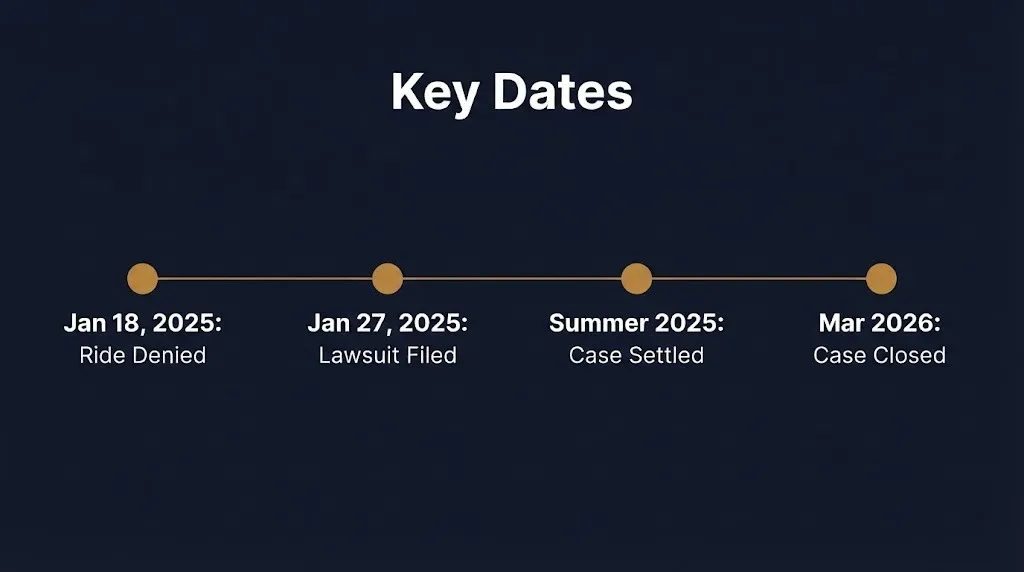
The lawsuit was filed January 27, 2025, and settled during the summer of 2025, according to her attorney’s confirmation to Fox 2 Detroit. That’s roughly a six-month window from filing to resolution.
Here’s the confirmed timeline:
- January 18, 2025: The Lyft ride is refused, incident occurs.
- January 19, 2025: Blanding shares video of the exchange publicly.
- January 27, 2025: Lawsuit formally filed in Wayne County Circuit Court.
- Summer 2025: Case settles, confirmed by attorney Zach Runyan.
- Early 2026: Settlement reported finalized and case closed.
What Is Michigan’s Elliott-Larsen Civil Rights Act?
The Elliott-Larsen Civil Rights Act is a Michigan state law banning discrimination in employment, housing, education, and public accommodations. It’s one of the few state civil rights laws that explicitly names weight and height as protected characteristics.
Most states don’t include weight as a protected class under civil rights law, which makes Michigan somewhat unusual. That gap is part of why weight discrimination claims like this one are harder to bring successfully in many other states.
The law has existed since 1976 and covers a wide range of discriminatory conduct beyond transportation services, including workplace and housing discrimination.
Are There Other Weight Discrimination Lawsuits Against Rideshare Companies?
Isolated incidents involving rideshare drivers and passenger size have surfaced in public discussion, but no broader class action against Lyft or Uber specifically over weight discrimination has been confirmed. Blanding’s case remains a standalone lawsuit, not part of a consolidated action.
Rideshare companies generally rely on independent contractor drivers, which complicates direct liability questions in discrimination cases. That structure is part of why individual lawsuits, rather than large class actions, tend to be the more common legal path in these situations.
What Does the Dank Demoss Case Mean for Other Rideshare Passengers?
This case doesn’t create automatic rights or compensation for other passengers who experience similar treatment. Each situation would require its own separate legal claim under applicable state law.
The case does illustrate that weight-based discrimination claims can proceed in states like Michigan where weight is a protected category. It doesn’t set binding precedent the way an appellate court ruling would, since it settled before reaching a verdict.
Key Takeaway: If you experienced similar treatment from a rideshare driver, this case doesn’t file a claim for you. You’d need to consult an attorney about your own situation and your state’s specific civil rights laws.
What Happens Next
January 27, 2025: Lawsuit formally filed in Wayne County Circuit Court.
Summer 2025: Settlement reached, confirmed by plaintiff’s attorney.
March 2026: Case reported as officially closed with finalized settlement terms.
Ongoing, unconfirmed: Broader legislative or policy discussion about weight-based accommodations in rideshare services continues in some public commentary, though no confirmed new legislation has resulted directly from this case.
Frequently Asked Questions
Did Dank Demoss actually sue Lyft?
Yes, she filed a formal lawsuit in Michigan’s Wayne County Circuit Court on January 27, 2025.
The suit named Lyft and the driver, identified in court filings as “John Doe.”
Did Dank Demoss win her case against Lyft?
The case settled out of court rather than ending in a trial verdict.
Her attorney confirmed the matter was “resolved” through a negotiated settlement.
How much did Dank Demoss get from the Lyft settlement?
The exact amount was never publicly disclosed.
Her legal team cited confidentiality tied to the settlement agreement.
Can I file a claim in the Dank Demoss lawsuit?
No, this was an individual lawsuit, not a class action open to other claimants.
There is no public claims process connected to this case.
What law did Dank Demoss sue Lyft under?
She sued under Michigan’s Elliott-Larsen Civil Rights Act, which lists weight as a protected characteristic.
That law covers discrimination in public accommodations, including transportation services.
Is the Dank Demoss lawsuit still active in 2026?
No, the case is confirmed closed, with the settlement finalized as of early 2026.
No further proceedings related to this specific lawsuit have been reported.
Was the Lyft driver fired after the incident?
Some entertainment outlets reported the driver was let go, though this detail hasn’t been confirmed through court records or Lyft’s official statements.
Treat this specific claim as unconfirmed until an official source verifies it.
Did other passengers get money from this lawsuit?
No, this case never created a fund or payout process for other passengers.
Any claim suggesting otherwise is not accurate.
The Dank Demoss lawsuit against Lyft is closed, with a confidential settlement confirmed by her own attorneys. If you’re researching this case for legal guidance on your own situation, consult an attorney directly rather than relying on unverified dollar figures online.
The one fact worth remembering: this case settled in summer 2025, and no public claims process was ever attached to it.