Foundation Settlement 2026: What It Means, When It Matters, and How to Protect Your Claim
Quick Answer
- Foundation settlement is the movement of a home’s foundation, not a legal settlement.
- No national foundation repair class action settlement is open for claims in 2026.
- Homeowners may have warranty, insurance, or builder claims depending on cause and state law.
If you searched for foundation settlement, you may have expected a payout. The term means two very different things depending on context.
One meaning is structural: your house is sinking or shifting. The other meaning, in legal news, would be a class action over defective foundations. This article covers both.
You likely need to know whether you can file a claim for foundation damage. The answer depends on where you live, what caused the movement, and whether a specific builder or material is already the subject of litigation.
| The Facts | |
|---|---|
| Case | No national foundation settlement class action open in 2026 |
| Status | No active consumer settlement fund |
| Fund Size | Not applicable |
| Est. Per Person | Not determined, no fund exists |
| Claim Deadline | None, depends on state law and builder warranty |
| Administrator | None, no settlement administrator appointed |
| Proof Needed | Engineering report, photos, repair estimates, purchase records |
Is Foundation Settlement a Lawsuit or a Structural Problem?
Foundation settlement is primarily a structural engineering term. It describes what happens when the soil under a home compresses or shifts.
Most of the time, the phrase has nothing to do with a legal case. A contractor, engineer, or home inspector uses it to describe cracking walls, uneven floors, or sticking doors.
In some places, foundation settlement becomes a legal issue. That happens when a builder used defective concrete, a developer built on bad soil, or a known material failed. Those cases can turn into class actions, but they are regional and fact-specific.
What Does Foundation Settlement Mean for a Homeowner?
Foundation settlement means your home is moving downward or sideways in a way it was not designed to do. That movement can cause visible damage.
Common signs include cracks in drywall, gaps around windows, doors that no longer close, and sloping floors. Not every crack means structural failure.
A structural engineer can tell the difference between normal shrinkage and actual settlement. The cost of that inspection is small compared to the cost of guessing wrong.
How Much Does Foundation Settlement Repair Cost?
Foundation repair costs vary widely by region, soil type, and the method used. In 2026, typical repair jobs range from $3,000 to over $30,000.
Piering and underpinning, the most common fixes for significant settlement, sit at the higher end. Minor crack filling and drainage correction cost far less.
Get at least three written estimates before you pay for any repair. A contractor who demands full payment upfront or claims your house is about to collapse is a red flag.
| Repair Method | Typical Use | Rough Cost Range |
|---|---|---|
| Crack filling | Minor cosmetic cracks | $300 to $1,500 |
| Drainage correction | Water-related soil movement | $1,500 to $6,000 |
| Concrete piers | Significant settlement | $10,000 to $30,000+ |
| Full underpinning | Severe structural movement | $20,000 to $50,000+ |
Does Homeowners Insurance Cover Foundation Settlement?
Standard homeowners insurance does not cover foundation settlement caused by normal soil movement. Most policies exclude earth movement.
The exclusion applies to settling, cracking, shrinking, bulging, or expanding of foundations. That means a slow sink caused by expansive clay is usually not covered.
You may have coverage if a covered peril caused the damage. A burst pipe washing out soil, a fire, or a vehicle hitting the house are different situations. Check your policy language.
Key Takeaway: Foundation settlement is usually an out-of-pocket repair for homeowners. Insurance covers sudden events, not slow soil movement.
What Causes Foundation Settlement?
Foundation settlement has several common causes. The biggest is expansive soil that swells when wet and shrinks when dry.
Other causes include poor compaction before the slab was poured, leaking plumbing under the slab, tree roots pulling moisture from the soil, and drainage problems that let water pool near the foundation.
In some regions, a mineral called pyrrhotite has caused concrete foundations to crack and fail. That specific issue has led to real lawsuits and state assistance programs.
Is There a Foundation Settlement Class Action?
No national foundation settlement class action is open for claims in 2026. But several regional cases have settled or are pending over defective concrete.
Connecticut and Massachusetts have seen major litigation over pyrrhotite in residential foundations. Those cases involved specific quarries and concrete suppliers.
If you live in a state with known defective concrete problems, check your state attorney general’s office or a local legal aid group for active claim programs.
What Is the Pyrrhotite Foundation Settlement?
Pyrrhotite is an iron sulfide mineral that reacts with water and oxygen. In concrete, it causes cracking and crumbling over time.
Thousands of homes in northeastern Connecticut and parts of Massachusetts have been affected. The damage can be severe enough to require full foundation replacement.
Some homeowners have received help through state programs, insurance claims, or litigation against quarries and suppliers. The details vary by case and funding availability.
Are There State Programs for Foundation Settlement Damage?
Some states have created assistance programs for homeowners with defective concrete foundations. Connecticut runs a captive insurance program for pyrrhotite damage.
Massachusetts has explored similar assistance. These programs are not open to every homeowner. They apply only to specific failure types and geographic areas.
If you think your foundation failure is tied to a known defect, contact your state housing agency or consumer protection office. Ask directly whether a program exists.
Reality Check: A contractor who knocks on your door and says your foundation is failing may be running a scam. Get an independent structural engineer’s report before you sign anything. Free inspections from repair companies are often sales calls in disguise.
How to Check If Your Home Has Foundation Settlement
Here is a simple process to assess your situation.
- Walk the exterior and look for cracks wider than a quarter inch.
- Check interior walls and ceilings for diagonal cracks.
- Test doors and windows to see if they stick or gap.
- Look for sloping or uneven floors.
- Inspect the soil around the foundation for pooling water.
- Hire a licensed structural engineer for an independent report.
- Get repair estimates only after the engineer confirms the cause.
Can You Sue a Builder for Foundation Settlement?
You may have a claim against a builder if the settlement stems from defective work or materials. The strength of that claim depends on your state’s statute of limitations and repose.
Many states give homeowners a limited window to sue for construction defects. That window often starts when the problem is discovered, but a separate repose period can cut off claims after a set number of years.
A local construction defect attorney can tell you whether your claim is still alive. Do not rely on online advice for a legal deadline this important.
What Is the Statute of Limitations for Foundation Settlement Claims?
The statute of limitations varies by state and by the type of claim. Most states allow between two and ten years for construction defect or fraud claims.
A statute of repose is different. It sets an absolute deadline, often six to ten years after construction, regardless of when the damage appeared.
Some states have extended repose periods for latent defects, but others have not. Check your state’s specific law before assuming you are out of time.
Does a Home Warranty Cover Foundation Settlement?
Most home warranties exclude structural foundation movement. The standard home warranty covers appliances and systems, not the foundation itself.
Some new construction warranties do cover structural defects for a set period, often ten years. Builders in certain states must provide a warranty that includes the foundation.
Read your warranty document. If it says structural coverage, confirm what triggers it and how to file a claim before the deadline.
Key Takeaway: Legal claims for foundation settlement depend on cause, state law, and deadlines. An engineer’s report is the first step, not a lawyer’s letter.
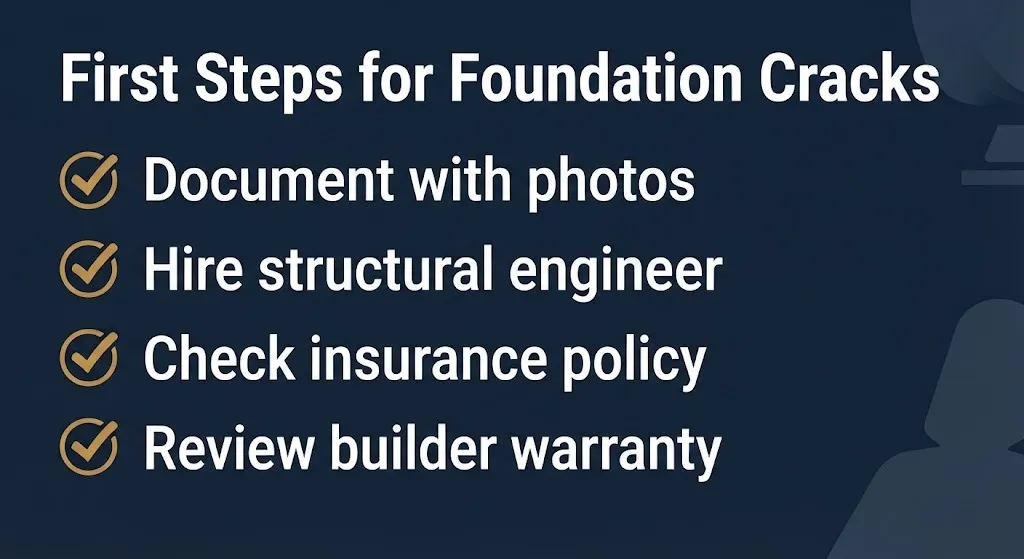
What Should You Do First If You See Foundation Cracks?
Document everything before you call anyone. Photos, dates, and measurements matter.
Do not immediately hire the first repair company that knocks on your door. Get an independent structural engineer to evaluate the cause.
If the engineer finds a covered cause, check your insurance, warranty, or state program. Then decide whether a legal claim makes sense.
What Happens Next
Mid-2026: States with pyrrhotite programs continue processing claims under existing funding.
Late 2026: Any new defective concrete litigation would likely surface in state courts, not federal class actions.
If a builder-specific foundation settlement is approved, affected homeowners would receive direct notice by mail.
Frequently Asked Questions
Is foundation settlement covered by insurance?
Usually not. Standard policies exclude earth movement and settling.
How do I know if my foundation is settling or just cracking?
A licensed structural engineer can tell the difference with an on-site inspection.
Is there a class action for foundation settlement?
No national class action is open in 2026, but regional pyrrhotite cases exist.
What is the average cost to fix foundation settlement?
Repairs range from a few thousand dollars to over $30,000 depending on severity.
Can I sue my builder for foundation problems?
Maybe. It depends on your state’s statute of limitations and the cause of the damage.
What is pyrrhotite foundation damage?
Pyrrhotite is a mineral that causes concrete to crack and crumble over time.
Does a home warranty cover foundation settlement?
Most do not, but new construction warranties may include structural coverage.
How long do I have to file a foundation claim?
Deadlines vary by state, often two to ten years, with separate repose periods.
Foundation settlement is a house problem first and a legal problem second. The legal path exists only when a specific defect or bad builder caused the movement.
Get the engineer’s report, check your state programs, and watch your deadlines. That order protects both your house and your wallet.