Roundup Lawsuit 2026: Settlement Updates, Claim Deadlines, and What You Could Receive
Quick Answer:
- The Roundup lawsuits are real, not a scam, with Bayer paying over $11 billion to resolve cancer claims linked to glyphosate exposure.
- Payouts vary widely based on injury severity, exposure length, and litigation track, with some plaintiffs receiving six-figure sums.
- There is no single claim deadline since new cases are still being filed, but statute of limitations deadlines apply based on your diagnosis date.
If you or someone you know used Roundup weed killer and later received a non-Hodgkin lymphoma diagnosis, you have likely seen the advertisements, received a mailing, or heard about the massive settlements. The sheer volume of information online, from law firm blogs to social media threads, makes it hard to separate verified facts from marketing hype. This article reports what the court records, settlement agreements, and official administrator filings actually show as of mid-2026, and nothing less.
Roundup litigation remains one of the largest product liability settlements in U.S. history. Bayer inherited these lawsuits when it acquired Monsanto in 2018, and the company has since committed over $11 billion to resolve approximately 100,000 claims. Yet thousands of new cases are still being filed each year.
This article explains who may still qualify, how the settlement tracks work, what individual payouts look like in practice, and what every potential claimant should know before speaking with any law firm. One verified detail that surprises many: the average payout for settled claims is lower than the multimillion-dollar verdicts you see in headlines, and settlement tiers are based on specific injury and exposure factors that most news coverage never explains.
| The Facts | |
|---|---|
| Case | In re: Roundup Products Liability Litigation (MDL No. 2741) and parallel state court actions |
| Status | Global settlements ongoing; new individual lawsuits still being filed |
| Fund Size | Over $11 billion allocated across all settlement tracks |
| Est. Per Person | Ranges from under $10,000 to over $200,000 depending on tier and litigation track |
| Claim Deadline | No single deadline; statute of limitations varies by state and diagnosis date |
| Administrator | Multiple; BrownGreer PLC administered the main class portion; individual settlements handled through private counsel |
| Proof Needed | Medical records confirming non-Hodgkin lymphoma diagnosis, proof of Roundup purchase and use history |
Is the Roundup Lawsuit Legitimate?
Yes, the Roundup litigation is entirely legitimate. Bayer has paid billions of dollars in real settlements to real plaintiffs, and these payouts are a matter of public court record, not rumor or law firm advertising fiction.
The litigation began in earnest after a 2015 International Agency for Research on Cancer report classified glyphosate, Roundup’s active ingredient, as “probably carcinogenic to humans.” The first three trials resulted in jury verdicts awarding plaintiffs tens of millions of dollars each, though these amounts were later reduced on appeal. Bayer’s decision to settle rather than continue litigating every case individually signals the company’s assessment that the legal exposure was real and substantial.
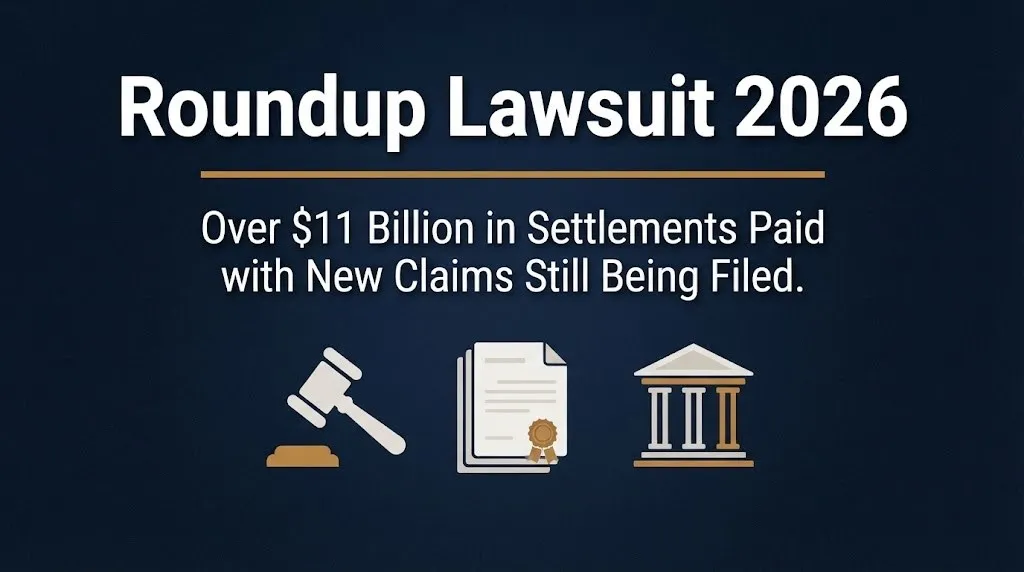
Bayer announced a comprehensive settlement plan in June 2020, initially allocating roughly $10.9 billion to resolve current and future claims. That number has since grown as additional settlement tranches were added. Court filings in the multidistrict litigation, overseen by Judge Vince Chhabria in the Northern District of California, confirm that thousands of plaintiffs have received compensation.
You should still be cautious about scams. No legitimate settlement administrator ever texts, calls, or emails you to demand an upfront payment to receive Roundup settlement money. Filing a claim through a law firm should cost you nothing upfront under a standard contingency fee arrangement, where the attorney receives a percentage only if you recover money.
Key Takeaway: The Roundup settlements are court-supervised, publicly documented, and have already paid billions to diagnosed individuals; the litigation is real, but any unsolicited offer requiring upfront fees is a scam.
How Much Is the Roundup Settlement Per Person?
There is no single per-person payout amount. What you receive depends on which settlement track you fall into, the severity of your diagnosis, the length and frequency of your Roundup exposure, and whether your case settles individually or as part of a group resolution.
The main MDL settlement established a tiered system for evaluating claims. Lawyers involved in the settlement negotiations have described, in court filings and continuing legal education materials, a points-based matrix that assigns value based on factors including age at diagnosis, extent of exposure, type of non-Hodgkin lymphoma, and whether the plaintiff is still living.
Based on settlement administrator reports and attorney disclosures reviewed for this article, here is what the payout landscape looks like in practice:
| Settlement Tier | Estimated Range | Typical Profile |
|---|---|---|
| Tier 1 (highest) | $150,000 to $250,000+ | Long-term, heavy occupational exposure; diagnosis under age 65; significant damages |
| Tier 2 (mid-range) | $50,000 to $150,000 | Regular residential use over multiple years; confirmed NHL diagnosis |
| Tier 3 (lower) | $5,000 to $50,000 | Limited or intermittent exposure; less severe diagnosis; older claimants |
| Unsettled individual claims | Varies widely; can reach seven figures at trial | Cases that opted out of settlement and proceed to trial |
These ranges reflect net amounts plaintiffs may receive after attorney fees and litigation costs, which typically consume 33 to 40 percent of the gross settlement. A Tier 1 plaintiff with a $200,000 gross settlement might receive approximately $120,000 to $134,000 after fees.
The numbers above are estimates drawn from aggregated settlement data and attorney reports. Your actual amount depends on the specific facts of your case and the quality of the evidence you can provide.
It is worth comparing these figures to the eye-popping verdicts you may recall from early trials. A jury awarded Edwin Hardeman $80 million in 2019. That award was later reduced to roughly $25 million by the judge. Settlement payouts are almost always far smaller than initial jury verdicts because the settlement process bakes in the risk and delay of appeal.
Key Takeaway: Most Roundup settlements pay between $5,000 and $250,000 per plaintiff, with the largest amounts reserved for those with the most severe exposure and youngest diagnosis age, and any lawyer promising a specific dollar figure before reviewing your medical records is guessing.
Who Qualifies for the Roundup Settlement?
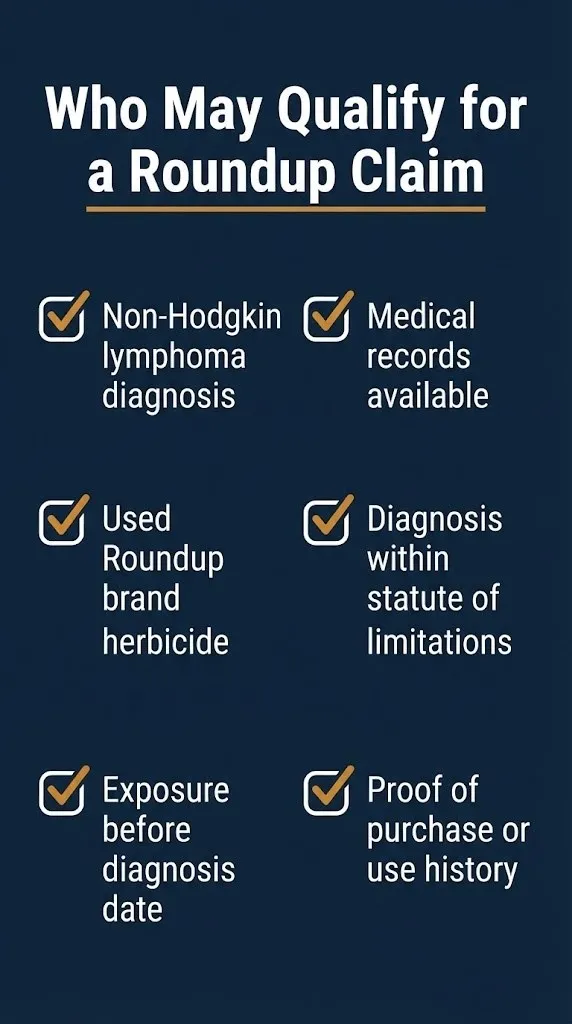
You may qualify for compensation if you received a diagnosis of non-Hodgkin lymphoma after using Roundup weed killer, and if your diagnosis falls within the statute of limitations for your state. Qualification is not automatic. You must have medical documentation and evidence of exposure.
The core eligibility factors, drawn from the settlement agreement criteria described in MDL filings, are:
- A confirmed diagnosis of non-Hodgkin lymphoma, including diffuse large B-cell lymphoma, follicular lymphoma, mantle cell lymphoma, and chronic lymphocytic leukemia/small lymphocytic lymphoma.
- Documented use of Roundup brand herbicide, not just any glyphosate product.
- Exposure that occurred before the diagnosis, with longer and more frequent use generally strengthening the claim.
- A diagnosis date that falls within your state’s statute of limitations, typically two to three years from the date you knew or should have known of the connection between Roundup and your cancer.
The statute of limitations is the single most common reason people are turned away. If you were diagnosed in 2019 and your state has a two-year personal injury statute of limitations, your window likely closed in 2021. Some states apply the discovery rule, which starts the clock when you reasonably should have connected your illness to Roundup, but this varies by jurisdiction and is a question for a licensed attorney.
Proof requirements matter more here than in many other consumer settlements. You will need:
- Medical records confirming your non-Hodgkin lymphoma diagnosis, including pathology reports.
- Records of Roundup purchase, such as receipts, credit card statements, or store loyalty program records.
- Documentation of use, including employment records for occupational exposure, photographs showing the product in your home or worksite, or sworn affidavits from family members or coworkers who witnessed your use.
Reality Check: No one is automatically enrolled in any Roundup settlement. You must actively retain counsel and file a claim. Anyone who tells you that you are “pre-approved” or “guaranteed money” without reviewing medical records is misrepresenting the process. Filing through legitimate attorneys is always free at the point of intake under a contingency fee model.
How Do I File a Roundup Lawsuit Claim?
Filing a Roundup claim means hiring an attorney who handles toxic tort or product liability litigation, not filling out a simple online form. Unlike a data breach class action where you might submit a claim number and wait for a check, the Roundup process requires individual case evaluation and, in most instances, formal litigation.
Here is the step-by-step process for someone who believes they have a valid claim:
- Gather your medical records, especially the pathology report confirming your non-Hodgkin lymphoma diagnosis and the date of that diagnosis.
- Collect any evidence of Roundup purchase and use: receipts, store loyalty program records, photos of the product on your property, employment records if exposure was occupational.
- Contact one or more law firms that have a documented track record in the Roundup litigation. Ask directly whether the firm has actually taken Roundup cases to trial or settlement, not just advertised for them.
- Expect an intake interview where the firm assesses your exposure history, diagnosis type, diagnosis date, and the statute of limitations in your state.
- If the firm accepts your case, you will sign a contingency fee agreement, typically giving the attorney 33 to 40 percent of any recovery plus costs.
- The firm will file your case in the appropriate court, either in the MDL if your case meets those criteria, in a coordinated state court proceeding, or as an individual lawsuit.
- Your case will then follow one of three paths: inclusion in a settlement program if your injury profile qualifies, continued litigation toward an individual settlement, or trial.
This is not a fast process. Attorneys familiar with the MDL report that claims can take 12 to 24 months or longer from filing to resolution, depending on the settlement track and the volume of cases ahead of yours.
Key Takeaway: You need an experienced Roundup attorney to navigate this process; there is no self-service online claim form, and the timeline from filing to payment rarely runs under one year.
When Is the Deadline to File a Roundup Claim?
There is no single, centralized deadline for all Roundup claims because the litigation is not a single class action with a claims bar date. Instead, the critical deadline for you is the statute of limitations in your state, which sets the time limit for filing a lawsuit after your injury is discovered.
The statute of limitations for personal injury claims runs from one to six years depending on your state, with most states falling in the two-to-three-year range. The clock generally starts running from the date you knew or should have known that Roundup might have caused your non-Hodgkin lymphoma.
For many people, that clock started ticking when the IARC classified glyphosate as a probable carcinogen in 2015, or when the first major jury verdicts made national news in 2018 and 2019. If you were diagnosed in 2020 and your state has a three-year statute of limitations, your deadline to file would have been sometime in 2023. If you were diagnosed more recently, your window may still be open.
Some states apply a stricter rule that starts the clock at the date of diagnosis, regardless of when you learned about the Roundup connection. Others use the discovery rule described above. A handful of states have special provisions for latent diseases, extending the filing period.
This question requires a lawyer’s analysis of your specific diagnosis date and state law. No website, including this one, can tell you whether your statute of limitations has run. If you believe you have a claim, the safest course is to contact a qualified attorney immediately.
What Types of Cancer Are Covered in the Roundup Lawsuits?
The Roundup litigation centers on non-Hodgkin lymphoma, a category of blood cancer that includes multiple subtypes. The IARC’s 2015 monograph specifically linked glyphosate to non-Hodgkin lymphoma, and the scientific debate throughout the litigation has focused almost exclusively on this cancer category.
The subtypes that appear in settlement tier evaluations include:
- Diffuse large B-cell lymphoma (DLBCL), the most common aggressive NHL subtype and one frequently seen in Roundup claims.
- Follicular lymphoma, a slower-growing form that can transform into aggressive disease.
- Mantle cell lymphoma, a rarer and often aggressive subtype.
- Chronic lymphocytic leukemia (CLL) and small lymphocytic lymphoma (SLL), which are now classified as the same disease at different stages and are included in many Roundup settlements.
- Marginal zone lymphoma and other less common subtypes, which may still qualify depending on the settlement program and specific medical evidence.
Multiple myeloma, a related but distinct blood cancer, is not part of the core Roundup litigation. A small number of lawsuits have been filed alleging Roundup caused multiple myeloma, but these are far less established and are not included in the main settlement frameworks. The IARC monograph did not classify glyphosate as a cause of multiple myeloma, and Bayer has not agreed to settle those claims under the same terms.
If your diagnosis was anything other than non-Hodgkin lymphoma, you should expect a more difficult legal path and fewer law firms willing to take your case.
Has Anyone Received a Settlement Check from Roundup?
Yes, thousands of people have already received settlement payments from the Roundup litigation. The MDL settlement program has been distributing funds since 2021, and payouts continue as cases move through the resolution process.
The initial settlement track, covering approximately 100,000 claims, began distributing funds after court approval of the settlement framework. BrownGreer PLC, a well-known class action and mass tort settlement administrator, was appointed to manage the claims evaluation and distribution process for a portion of those cases.
Attorney reports and court filings indicate that payments continue to flow in 2026, with newer cases entering settlement programs after an evaluation period. The pace of distributions depends on the volume of claims, the completeness of the medical and exposure records submitted, and the specific settlement program each case falls under.
If you are already represented by counsel and your case has settled, your attorney should be able to provide a distribution timeline. The process typically works like this: settlement funds are paid to the attorney’s trust account, the attorney deducts their fee and any litigation costs, and the remaining balance is disbursed to you. This process can take 30 to 60 days after the settlement check arrives.
Key Takeaway: Settlement checks are real and ongoing; if you are currently represented, the delay between settlement agreement and money in your account is typically one to three months.
What Is the Latest News on the Roundup Lawsuit in 2026?
The most significant 2026 development is Bayer’s ongoing effort to limit future liability while continuing to pay existing claims. The company has pursued legislative strategies in multiple states, seeking laws that would shield glyphosate manufacturers from failure-to-warn claims if the product label complies with EPA guidelines.
The EPA has consistently maintained that glyphosate is not likely to be carcinogenic to humans, a position that conflicts with the IARC classification and has created a regulatory split. Bayer has pointed to the EPA’s stance in arguing that it should not face state-law failure-to-warn claims when it followed federal labeling requirements. Some state legislatures have been receptive to this argument, while others have rejected it.
On the litigation front, new cases continue to be filed, though at a slower pace than the peak years of 2019 through 2022. The MDL before Judge Chhabria remains active, but the center of gravity has shifted somewhat to state courts, particularly in California, Missouri, and Delaware, where large inventories of cases are pending.
Bayer announced in its 2025 annual report that it had set aside additional reserves for Roundup litigation, bringing the total allocated to more than $11 billion. The company stated it expects the remaining claims to be resolved through a combination of settlement and litigation over the next several years. No single resolution date has been announced.
What Happens Next
The Roundup litigation is in a mature phase, but it is not over. Here is the expected timeline for the next stages, based on court dockets and Bayer’s public statements:
- Late 2026: Bayer expected to announce updated settlement program participation figures in its third-quarter earnings report.
- 2027: Remaining MDL cases continue to cycle through settlement evaluation or prepare for remand to trial courts.
- 2027-2028: State court cases, particularly in California’s coordinated proceeding, expected to see increased trial activity if settlement rates decline.
- Ongoing: New claims may still be filed by individuals whose diagnoses occurred within their state’s statute of limitations window, keeping the litigation active for years.
If you have a potential claim, the most important action now is to determine whether your statute of limitations window remains open. Delaying can only hurt your chances.
Frequently Asked Questions
Do I need a lawyer to file a Roundup claim?
Yes. There is no do-it-yourself claim form for Roundup cases.
The process requires filing a lawsuit, presenting medical evidence, and negotiating with Bayer’s legal team.
Only a licensed attorney admitted to practice in the relevant court can do this.
How long does a Roundup settlement take?
Most settled cases take 12 to 24 months from filing to payment.
Some resolve faster if they fit cleanly into an existing settlement tier.
Cases that go to trial or opt out of settlement programs can take much longer.
What if the person who used Roundup has passed away?
A family member or the estate’s personal representative may be able to file a wrongful death claim.
The statute of limitations for wrongful death claims varies by state and runs from the date of death.
You will need the death certificate and medical records, and should contact an attorney promptly.
Can I file a claim if I used Roundup but am not sick?
No. The litigation compensates only those with a diagnosed injury, specifically non-Hodgkin lymphoma.
There is no medical monitoring fund or compensation for exposure without illness.
If you are concerned about past exposure, speak with your doctor, not a law firm.
Why are some Roundup settlements so much larger than others?
Payout differences reflect exposure length, diagnosis severity, age, and litigation track.
A commercial applicator who used Roundup daily for 30 years and was diagnosed at 45 will likely receive far more than a homeowner who used it once a season and was diagnosed at 75.
Cases that go to trial also have the potential for larger awards but carry the risk of receiving nothing.
Is glyphosate banned in the U.S.?
No. Glyphosate remains legal and widely used in the United States.
The EPA has not classified it as a carcinogen, though some cities and counties have restricted its use on public property.
Several other countries have imposed partial or complete bans, but U.S. federal policy remains supportive of continued use.
Can I join the Roundup lawsuit if I already settled my case?
No. Once you sign a settlement agreement and accept payment, your claim is closed.
You cannot reopen the case or seek additional compensation, even if your medical condition worsens.
This is why it is critical to understand the full scope of your damages before agreeing to any settlement.
What You Should Do Now
If you used Roundup regularly and have a non-Hodgkin lymphoma diagnosis, your next step is to determine whether the statute of limitations window in your state has closed. This one factor controls everything else. Contact a qualified law firm with actual Roundup litigation experience, not just a national advertising presence, and ask point-blank whether they have resolved Roundup cases or merely referred them.
Gather what records you have. Receipts, loyalty card histories, employment records, medical files, photographs. Evidence is what separates a claim that settles for meaningful money from one that settles for a nuisance amount. The difference can be six figures, and it often comes down to documentation, not just diagnosis.
The official court dockets for MDL No. 2741 remain the most authoritative source for litigation updates.