Trust Litigation Attorneys 2026: Fees, Grounds to Sue, and How to Choose
Quick Answer
- Trust litigation attorneys handle disputes between beneficiaries, trustees, and third parties over trust administration, breach of fiduciary duty, and trust validity.
- Costs range from $3,500 for simple filings to $150,000+ for complex trials. Fee-shifting rules vary by state.
- The statute of limitations for breach of trust is typically 1 to 5 years depending on the state and whether the trustee provided adequate disclosure.
If you’re searching for trust litigation attorneys, you likely have a dispute involving a trust. Maybe a trustee won’t provide accounting. Maybe you believe assets were misappropriated. Maybe you’re a trustee being accused of something you didn’t do.
Trust litigation is different from ordinary business litigation. The stakes are personal. The money often represents a family legacy. And the rules are specialized.
This article explains what trust litigation attorneys do, what they charge, the grounds for suing a trustee, and how to choose the right lawyer for your situation. You’ll also see the fee-shifting rules that can make or break your decision to pursue a claim.
The Facts
| Case | Trust litigation is case-specific. No class action or settlement fund exists |
|---|---|
| Jurisdiction | State probate and chancery courts. Rules vary by state |
| Status | Active. Each case is individual |
| Fund Size | Not applicable. Trust assets are at stake, not a settlement fund |
| Est. Per Person | Depends on trust value and claim type |
| Claim Deadline | Varies by state. Typically 1 to 5 years from discovery or termination |
| Administrator | Not applicable. Court-supervised process |
| Proof Needed | Trust documents, accountings, financial records, medical records if capacity is disputed |
What do trust litigation attorneys do?
Trust litigation attorneys represent beneficiaries, trustees, and third parties in disputes involving trusts. They file petitions, conduct discovery, negotiate settlements, and try cases in probate or chancery court.

Their work falls into a few main categories:
Beneficiary representation:
- Suing trustees for breach of fiduciary duty
- Compelling an accounting or disclosure of trust records
- Removing a trustee who is unfit or hostile
- Challenging trust amendments made under undue influence
- Defending against trustee claims
Trustee representation:
- Defending against beneficiary claims
- Seeking court instructions on how to administer the trust
- Petitions to modify or terminate trusts
- Defending accountings and distributions
Third-party disputes:
- Claims against advisors who gave negligent trust advice
- Disputes with third parties over trust assets
- Creditor claims against trust interests
Trust litigation is personal. One attorney who handles these cases described the challenge as dealing with family dynamics where “everything is very personal” and family members with long histories of conflict have difficulty being objective.
How much do trust litigation attorneys cost in 2026?
Trust litigation costs range from $3,500 for a simple filing or motion to $150,000 or more for a fully litigated trial. The total depends on complexity, discovery, experts, and whether the case settles.
Here’s a breakdown of typical costs by case stage and type:
| Case Type | Cost Range |
|---|---|
| Initial filing, demand letter, document review | $3,500 to $5,000 |
| Case settling in mediation (4 to 8 months) | $10,000 to $25,000 |
| Full discovery, depositions, settling before trial | $25,000 to $75,000 |
| Trial with expert witnesses | $75,000 to $150,000+ |
| Trust litigation retainer (upfront) | $5,000 to $20,000 |
| Trustee removal action | $25,000 to $100,000+ |
These figures come from published cost analyses for Florida and California trust disputes. Complex cases with multiple parties, out-of-state discovery, or forensic accounting can exceed $200,000.
Hourly rates for trust litigation attorneys typically run $500 to $1,000 per hour. Some attorneys offer flat fees for defined tasks like filing a petition for accounting.
What drives costs up:
- Forensic accounting to trace missing assets
- Medical experts for capacity disputes
- Multiple beneficiaries with separate counsel
- Cross-border or offshore trust issues
- Appeals after trial
Key Takeaway: Trust litigation is expensive. A simple accounting dispute may cost $5,000 to $10,000. A contested trustee removal trial can exceed $100,000. Budget for the worst case before you file.
Who pays attorney fees in trust litigation?
The party who ultimately pays attorney fees depends on state law, the trustee’s conduct, and who wins. In many states, courts have discretion to shift fees.
Three common outcomes:
- The trust pays: Most likely when the trustee acted reasonably and the litigation benefited all beneficiaries. This is common in accounting disputes where the trustee did nothing wrong but the court ordered disclosure.
- The trustee pays personally: This happens when the trustee breached fiduciary duty, obstructed beneficiaries, or caused unnecessary litigation. Courts punish bad conduct with personal fee liability.
- The beneficiary pays: If the beneficiary brought a meritless contest or acted in bad faith, they may owe the trustee’s fees.
State-by-state fee rules:
| State | Fee-Shifting Rule |
|---|---|
| Texas | Court discretion under Trust Code § 114.064. Trustee who obstructs may pay personally |
| Florida | Broad fee-shifting under § 736.1004. Prevailing party may recover from losing party personally |
| California | Court discretion. Trustee removal actions often result in personal liability for bad conduct |
The general rule: a beneficiary usually fronts the money first, then hopes the court shifts fees. A trustee who acted in good faith may get reimbursement from trust assets. A trustee who hid records or stonewalled beneficiaries can end up paying out of pocket.
What are the grounds for suing a trustee?
You can sue a trustee for breach of fiduciary duty, failure to account, self-dealing, imprudent investment, or failing to follow the trust terms. The specific grounds depend on the trust document and state law.
Common grounds for trust litigation include:
Breach of trust claims:
- Failure to provide an accounting or disclose trust records
- Self-dealing or conflicts of interest
- Imprudent investments that lost money
- Failure to make required distributions
- Excessive trustee fees
- Favoring one beneficiary over another
Trust validity claims:
- Lack of capacity when the trust was created or amended
- Undue influence by a family member or advisor
- Fraud or forgery
- Improper execution or witness requirements
- Sham trust claims
Other claims:
- Trustee removal for misconduct or incapacity
- Petitions to modify or terminate a trust
- Third-party claims against advisors who gave bad advice
- Creditor claims against trust interests
A UK trust disputes firm lists breach of trust, removal of trustees, disputes about trustee powers, validity challenges, disclosure of documents, and applications to vary trusts as the core categories of trust litigation.
What is the statute of limitations for trust litigation?
The statute of limitations for trust litigation ranges from 1 to 5 years depending on your state and whether the trustee disclosed the relevant facts. Missing the deadline can bar your claim permanently.
How the clock works:
In many states, the limitations period for breach of trust starts when:
- The trustee provides a report that adequately discloses facts indicating a claim exists
- The trustee is removed, resigns, or dies
- The beneficiary’s interest terminates
- The trust terminates
Tennessee’s trust code, for example, has a one-year or three-year limitation depending on whether the trustee gave adequate disclosure. The three-year period starts when the first of these events occurs: removal or death of the trustee, termination of the beneficiary’s interest, or termination of the trust.
A Tennessee appellate court held that breach of trust claims expired three years after the trust terminated, even though the beneficiary argued the discovery rule and fraudulent concealment tolled the deadline. The court ruled that the trust code’s specific accrual rules override the general discovery rule.
State comparison:
| State | Limitations Period for Breach of Trust |
|---|---|
| Tennessee | 1 or 3 years from disclosure, removal, or termination |
| Arkansas | 5 years from removal or termination (post-2005 Trust Code) |
| Texas | 2 or 4 years for most claims. Discovery rule rarely applies |
| Florida | Varies. Fee-shifting available under § 736.1004 |
Reality Check: Do not assume you have years to file. Some states have one-year deadlines if the trustee provided an accounting. Others have five-year windows. Talk to an attorney immediately if you suspect a claim.
How do you choose a trust litigation attorney?
You should choose a trust litigation attorney with specific experience in your state’s probate and trust laws, a track record in contested trust cases, and a clear explanation of how fees will work.
Here’s what to look for:
Questions to ask:
- How many trust litigation cases have you handled in this county?
- Have you tried a trustee removal case to verdict?
- What is your hourly rate, and what is a realistic total budget?
- Do you work with forensic accountants or medical experts?
- How do you handle fee-shifting if we win?
- Who will handle my case day to day?
Trust litigation is specialized. An attorney who does general estate planning may not have the courtroom experience you need. One prominent trust litigator built his practice through client need, not initial career planning, and now handles multi-million-dollar estates and high-profile families.
What to avoid:
- Attorneys who promise a specific outcome
- Lawyers who do not explain fee-shifting rules in your state
- Firms that won’t give you a written fee agreement
- Anyone who claims they can “guarantee” trustee removal
What happens next in trust litigation?
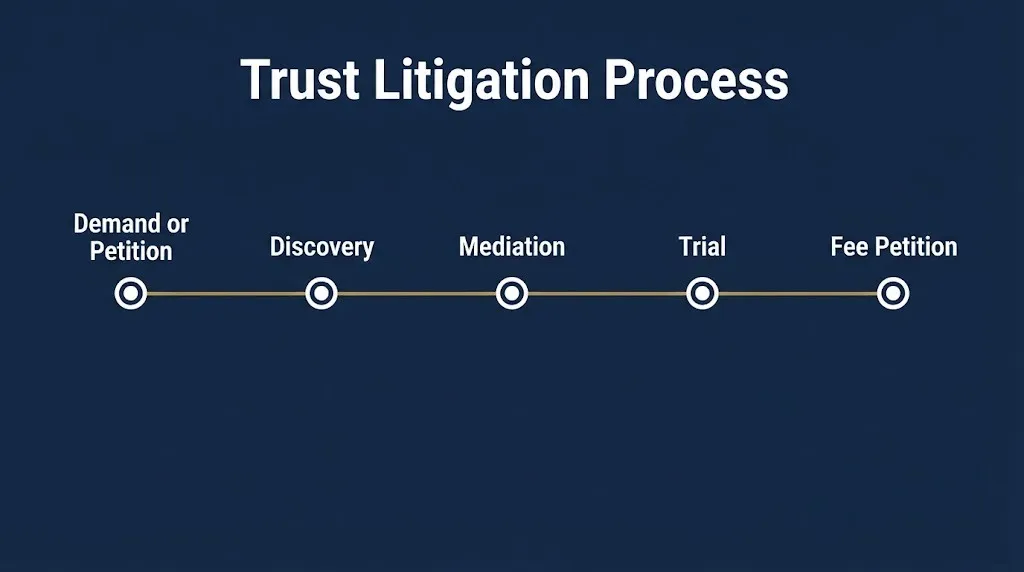
The timeline depends on the type of dispute and whether the parties settle. A simple accounting demand may resolve in weeks. A contested trustee removal trial can take years.
Expected timeline:
- Weeks 1 to 4: Demand letter or petition filed. Retainer paid.
- Months 2 to 6: Discovery. Trust documents, accountings, and financial records exchanged.
- Months 6 to 12: Mediation or settlement negotiations.
- Months 12 to 24: Trial if no settlement. Expert testimony and witness examination.
- Post-trial: Fee petitions and possible appeals.
Trust litigation is slow. The stakes are high. The family dynamics make settlement difficult. But for beneficiaries who believe a trustee is hiding money or acting in bad faith, litigation may be the only way to get answers.
Frequently Asked Questions
How much does trust litigation cost?
Typical costs range from $3,500 for a simple filing to $150,000+ for a full trial with experts. Complex multi-party cases can exceed $200,000.
Do I need a lawyer to sue a trustee?
Yes. Trust litigation involves specialized statutes, court procedures, and fee-shifting rules. Representing yourself against an experienced trustee attorney is risky.
What is the statute of limitations for trust litigation?
It varies by state. Common periods are 1 to 5 years from discovery, trustee removal, or trust termination. Some states have specific accrual rules that override the discovery rule.
Can I recover attorney fees if I win a trust lawsuit?
In many states, yes. Courts have discretion to award fees from the trust or from the trustee personally if misconduct is found. Florida has particularly broad fee-shifting under § 736.1004.
What is a breach of fiduciary duty in trust law?
It means the trustee failed to act in the beneficiaries’ best interests. Examples include self-dealing, failure to account, imprudent investments, and favoring one beneficiary over another.
Can a trustee be removed?
Yes. Courts can remove trustees for misconduct, incapacity, prolonged absence, conflict of interest, or sufficient friction with beneficiaries that prevents effective administration.
How long does trust litigation take?
Simple matters may resolve in months through mediation. Contested trials can take 1 to 3 years or longer, especially with appeals.
What is a no-contest clause in a trust?
It is language that says a beneficiary who challenges the trust forfeits their inheritance. Florida does not enforce these clauses for good-faith challenges. Other states vary.