Commercial Litigation Law Firm: 2026 Guide to Hiring, Costs, and Contract Disputes
Quick Answer
- A commercial litigation law firm handles business disputes, contract breaches, and corporate conflicts.
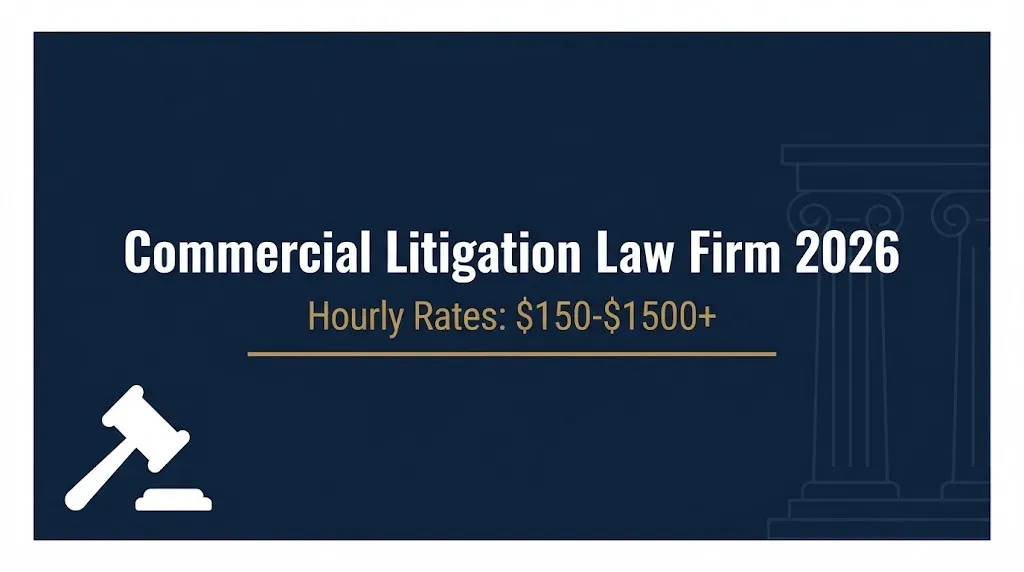
- Hourly rates range from $150 for junior associates to $1,500+ for senior partners.
- For a contract dispute, contact a litigator as soon as you receive a written demand or threat.
A commercial litigation law firm represents businesses in disputes that can’t be resolved through negotiation. That includes breach of contract claims, shareholder conflicts, partnership disagreements, and regulatory matters.
Most businesses don’t need a litigator for every disagreement. You need one when the dispute turns adversarial and settlement becomes uncertain. The difference between a general business lawyer and a litigator is like the difference between a family doctor and a surgeon: one manages your ongoing health, the other steps in when you need a procedure.
This guide covers what commercial litigators do, what they charge in 2026, how to find one near you, and when to make the call.
The Facts
| Case | Commercial litigation services, 2026 market rates |
|---|---|
| Status | Active, rates rising across all experience levels |
| Fund Size | N/A (legal services market) |
| Est. Per Person | $150-$1,500+ per hour depending on seniority |
| Claim Deadline | Varies by dispute type and jurisdiction |
| Administrator | N/A |
| Proof Needed | Contract documents, correspondence, evidence of damages |
Is a Commercial Litigation Law Firm Legitimate?
Yes. Commercial litigation is a recognized legal practice area, and the attorneys who practice it are licensed by state bars. But not every lawyer who claims litigation experience is a true specialist.
The legitimate commercial litigator handles disputes that go to court. They know procedural rules, evidence standards, and how to run a case through trial if settlement fails . A general business lawyer drafts contracts and advises on transactions. A litigator fights when those contracts break down.
The line between the two matters for your wallet. Bringing in a litigator early, before proceedings are filed, often costs less than hiring one after positions have hardened and evidence has deteriorated .
Key Takeaway: Commercial litigation is a legitimate legal specialty, but you should verify that any attorney you hire actually handles courtroom disputes, not just business transactions.
How Much Does a Commercial Litigation Law Firm Cost in 2026?
Commercial litigation is typically billed hourly, with rates that vary dramatically by experience level and market. Unlike personal injury cases, which usually work on contingency, commercial disputes require you to pay as the case progresses.
| Experience Level | 2026 Hourly Rate | Retainer Range |
|---|---|---|
| Junior (0-3 years) | $150-$275 | $2,500-$10,000 |
| Mid-level (3-7 years) | $275-$450 | $5,000-$25,000 |
| Senior (7-15 years) | $450-$700 | $10,000-$50,000 |
| Partner / Specialist | $700-$1,500+ | $25,000-$100,000+ |
Top partners at elite US firms now charge up to $4,000 per hour . That’s the extreme end. Most commercial disputes are handled by attorneys in the mid-level to senior range.
Some firms offer alternative fee arrangements. Flat fees work for predictable matters like contract review or simple filings. Fixed-fee litigation is less common because cases are dynamic. If a firm offers a fixed fee, ask what happens when the case goes off script.
The retainer isn’t the total cost. It’s a deposit against future work. When the retainer runs out, you’ll be asked to replenish it. Budget for total costs that can reach $50,000 to $500,000 for a case that goes through discovery and trial.
What Does a Contract Litigation Attorney Near Me Actually Do?
A contract litigation attorney handles disputes over broken agreements. That includes breach of contract claims, enforcement of non-compete clauses, partnership disputes, and collection of unpaid invoices.
The work starts before any lawsuit is filed. Your attorney will review the contract, examine the correspondence, and assess your leverage . They’ll tell you whether a demand letter is worth sending or whether it would just escalate the fight.
If litigation becomes necessary, they’ll draft the complaint, manage discovery, take depositions, and argue motions. Most contract cases settle before trial. But settlement only happens on good terms if the other side believes you’re prepared to go all the way.
A good contract litigator knows how to apply pressure while keeping settlement options open. They draft correspondence carefully, because every letter and email becomes part of the litigation record .
How Do You Choose the Right Commercial Litigation Law Firm?
Choosing a commercial litigator is like hiring a contractor for a major renovation. You need someone with the right experience, clear communication, and a realistic budget.
Check for relevant experience. A firm that handles construction disputes may not be the right fit for a shareholder conflict. Ask about specific cases similar to yours.
Ask about communication. You should know who’s working on your case and what they’ll cost. One client told World Trademark Review that firms should “put the budget clearly in writing” and flag overages before they happen .
Verify courtroom experience. A litigator who has never tried a case may not have the credibility to get you a good settlement. Opposing counsel knows who goes to trial and who folds.
Understand the fee structure. Hourly billing in six-minute increments is standard. Ask for a written budget and periodic updates on how the case is tracking against it .
Trust your instincts. If a lawyer hesitates when you ask whether they can handle your case, that hesitation tells you something .
When Should You Hire a Commercial Litigation Attorney?
You should hire a commercial litigation attorney as soon as a dispute involves written legal demands, threats of a lawsuit, or significant money at risk . Waiting costs you leverage.
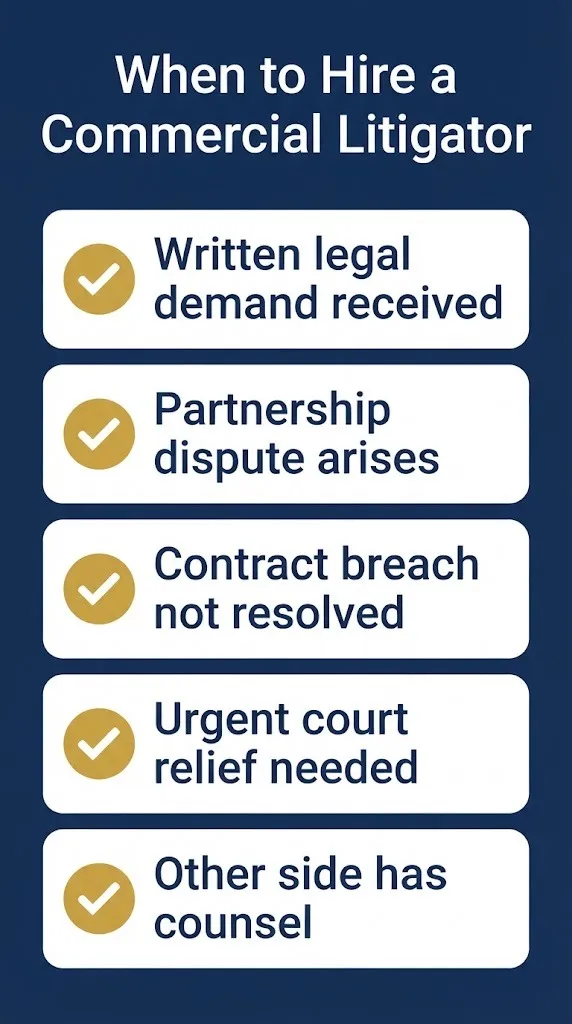
Here’s when to make the call:
- You receive a demand letter or notice of breach.
- A business partner or shareholder disputes your authority.
- A contract counterparty fails to perform and won’t negotiate.
- You need urgent relief, like an injunction or temporary restraining order.
- The other side has already hired a lawyer.
- Your general business lawyer says the matter is beyond their expertise.
The pre-litigation phase is when settlement is most likely. Both sides are uncertain about their chances. Once proceedings are filed, costs escalate and positions harden .
Key Takeaway: Hiring a commercial litigator early, before a lawsuit is filed, preserves evidence, protects your negotiating position, and often costs less than waiting.
Reality Check
No legitimate commercial litigator guarantees outcomes. If a lawyer promises you’ll win or quotes a specific settlement amount before reviewing your documents, walk away. Litigation is uncertain by nature. Your attorney can assess risks and strategies, but they cannot control judges, juries, or opposing counsel.
What Is the Difference Between a Litigation Specialist and a General Lawyer?
A litigation specialist handles court procedures, evidence rules, and trial strategy. A general lawyer handles transactions, contracts, and routine business matters. The distinction matters when your dispute turns adversarial.
Your general business lawyer can probably handle a straightforward contract negotiation. But when the other side stops negotiating in good faith, you need someone who knows how to file motions and manage discovery .
Signs it’s time to bring in a specialist:
- The dispute has become adversarial and settlement is uncertain.
- Multiple parties or cross-claims are involved.
- You need emergency court relief.
- Your general lawyer is researching basic court rules.
- The cost exposure has grown beyond routine business advice .
A good general lawyer will recognize when to bring in help. If yours doesn’t, you need to make the call yourself.
How Do You Find a Contract Litigation Attorney Near You?
Finding the right attorney starts with knowing what you’re looking for. Use these steps:
- Check your state bar association’s lawyer referral service.
- Ask other business owners for recommendations.
- Search professional directories for attorneys who list commercial litigation as a practice area.
- Verify bar admission and disciplinary history.
- Schedule consultations with at least two or three candidates.
- Ask specific questions about your type of dispute.
- Request a written fee agreement before hiring.
Directories like FindLaw list attorneys by practice area and location . But directories are a starting point, not an endorsement. Do your own due diligence.
What Happens Next in Your Commercial Dispute?
The path from dispute to resolution follows predictable stages, though timing varies by jurisdiction and complexity.
Immediate: Send or respond to a demand letter. Preserve all relevant documents.
Within 30-60 days: Your attorney assesses the case, drafts a litigation strategy, and advises on settlement options.
If settlement fails: File the complaint or answer the other side’s filing. This starts formal discovery.
Discovery phase: Both sides exchange documents, take depositions, and build their cases. This can take 6 to 18 months.
Pre-trial motions: Attorneys file motions to dismiss or for summary judgment. Some cases end here.
Trial or settlement: Most commercial cases settle before trial. If they don’t, trial follows.
Frequently Asked Questions
How much does a commercial litigation law firm charge?
Most commercial litigators bill hourly, from $150 for junior associates to $1,500 or more for partners. Top partners at elite firms can charge up to $4,000 per hour.
Do I need a commercial litigation attorney for a contract dispute?
You need one if the dispute involves written legal demands, threats of a lawsuit, or significant money at risk. Waiting too long can compromise your position.
What’s the difference between a commercial litigator and a business lawyer?
A business lawyer handles transactions, contracts, and routine advice. A commercial litigator handles courtroom disputes, evidence, and trial strategy.
How long does commercial litigation take?
Most commercial cases take 1 to 3 years from filing to resolution. Cases that settle early resolve faster. Cases that go to trial take longer.
Can I recover attorney fees in a commercial dispute?
It depends on your contract and jurisdiction. Many commercial contracts include attorney fee provisions. Without one, the American rule generally requires each side to pay their own fees.
What should I bring to my first meeting with a litigation attorney?
Bring the contract, all correspondence with the other side, any evidence of damages, and a written summary of what happened. Organize documents by date.
How do I know if my lawyer is qualified to handle my commercial dispute?
Ask about their experience with cases like yours. Check whether they’ve tried cases to verdict. Verify their bar standing. Trust your instincts if they seem uncertain.
What happens if I lose my commercial litigation case?
You’ll owe your own attorney fees and potentially the other side’s fees if the contract or statute allows. You may also face a judgment that can be collected against your business assets.